 By Ayesha Khan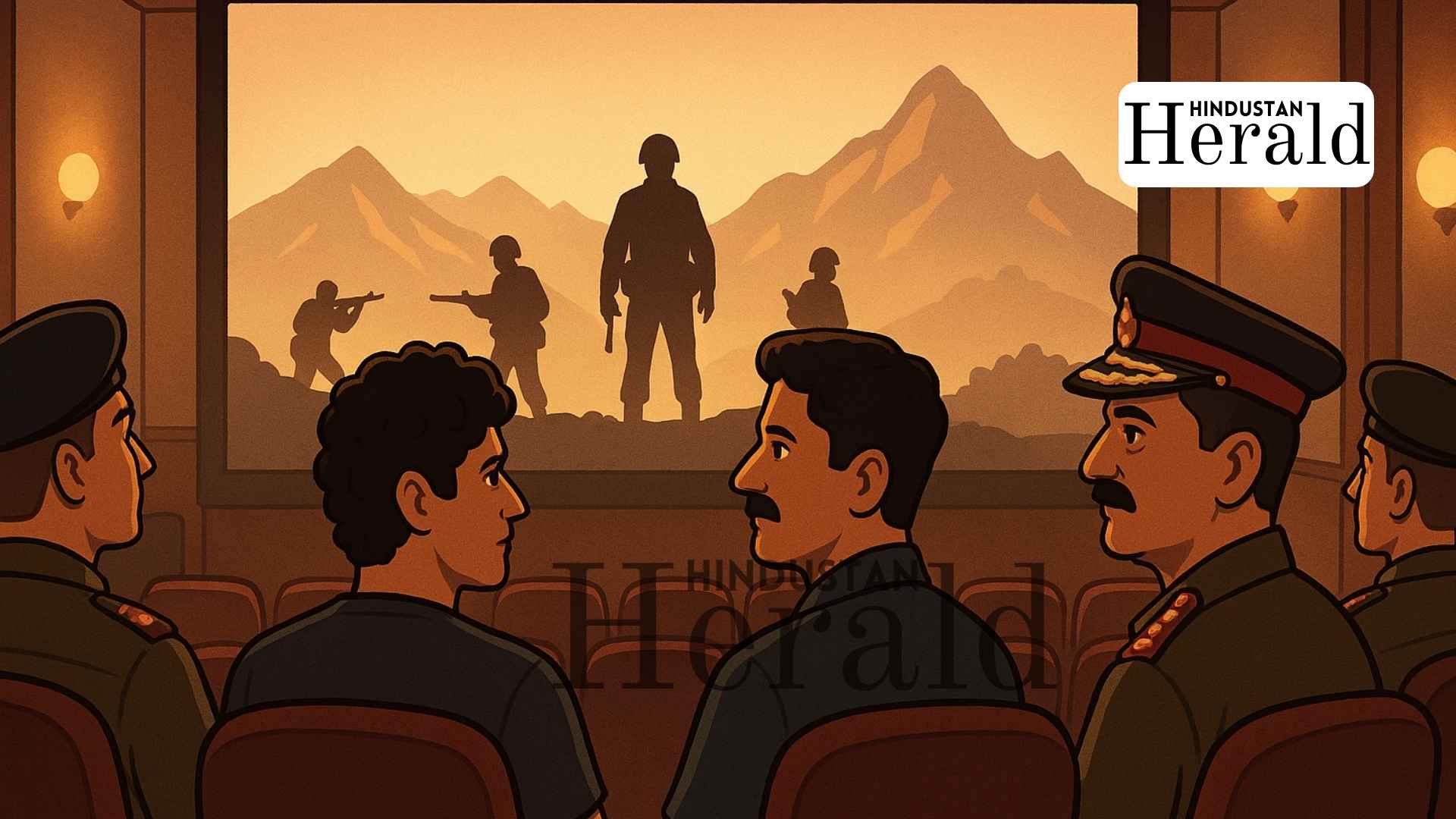
New Delhi, November 19: The screening of 120 Bahadur in Delhi on 18 November was supposed to be a regular preview, at least on paper, but it didn’t play out that way. People walked in quietly, almost like they were entering a hall for a memorial rather than a film event. The date probably explains it. It was the eve of the 63rd anniversary of the Battle of Rezang La, and as Bollywood Hungama confirmed, that timing wasn’t a coincidence.
When Chief of Army Staff General Upendra Dwivedi, PVSM, AVSM, arrived with a small wave of brigadiers, major generals, other officers, and their families, you could feel the room adjust. Not stiffness. Just a certain awareness. A few officers in the back rows sat with their arms folded, waiting, not entirely relaxed. It was that kind of evening.

The Army Chief Kept It Simple, Which Somehow Made It Hit Harder
After the film ended, General Dwivedi spoke for a moment. Amar Ujala quoted him saying the film “shows the reality” and that people should understand “how a soldier fights” along with “the sacrifice of the family and earlier generation.” Nothing dramatic in the phrasing. If anything, the simplicity made people listen more closely.
His appreciation for the film, also reported by Bollywood Hungama, didn’t feel like routine politeness. Several officers nodded along while he was speaking. One elderly veteran wiped his eyes quickly, hoping no one noticed. These things aren’t usually visible in polished press photos, but they were there last night.
What The Film Tries To Do
120 Bahadur, directed by Razneesh Razy Ghai and produced by Farhan Akhtar, Ritesh Sidhwani, and Amit Chandrra, goes back to 18 November 1962, when C Company, 13 Kumaon Regiment, roughly 120 soldiers, held their ground at Rezang La. A freezing, windswept pass in Ladakh, high enough that many people get breathless just standing still.
According to The Indian Express, most of the men died. They held off a much larger Chinese force. The figures vary. NDTV has referenced numbers suggesting more than 1,300 Chinese casualties, though the exact count is still debated. What isn’t debated is the courage.
Watching the film, you could see the makers trying to avoid the usual heroic gloss. The silences felt longer. The camera didn’t rush. A few younger viewers shifted uncomfortably during the quieter stretches, but the older officers barely moved. The production outfits, Excel Entertainment and Trigger Happy Studios, seem to have chased authenticity over high drama.
The Story Has Lived Outside Textbooks For Decades
The name Rezang La still stirs something in people connected to the Army. As The Indian Express has documented, families of the soldiers kept the story alive long before it became part of broader public history. The battle sits in the middle of a war that India remembers with a mix of pain and pride. Rezang La tends to represent pride.
The terrain alone is punishing. The odds were worse. But for the regiment, it became a symbol of what grit looks like in its raw form. When the film recreated certain moments, you could hear a pin drop.
Why The Timing Mattered More Than Any Promotion
Holding the screening on 18 November, confirmed by Amar Ujala, wasn’t just symbolic. It grounded the event in something real. The Army takes dates seriously. Anniversaries aren’t decorative. They’re reminders. On this particular one, watching a film about 120 men who didn’t give up their post carried a weight the filmmakers couldn’t have created artificially.
And maybe that’s why no one treated the evening like a publicity stop. The officers sat through the end credits instead of getting up early. Families waited outside in small groups, talking quietly. The usual buzz of film events just wasn’t there.
The Release Comes At A Moment When People Might Actually Pay Attention
The film releases on 21 November 2025, as per Fandango. Only a few days after the anniversary. The timing might help viewers walk in with at least some sense of context. Whether the film strikes the same chord with the wider audience is hard to predict. War films in India often turn into shouting matches online about patriotism or accuracy.
But the Army’s early response gives the film a certain footing. It sets a tone. It doesn’t guarantee anything, but it matters.
What Stayed With People As They Left
When the crowd began filing out, a few officers lingered near the aisles, talking about scenes they remembered differently from their own readings of the battle. Some younger soldiers were looking up details on their phones as they walked. A middle aged woman, likely related to one of the officers, said under her breath that she wished schools taught this story better. No cameras caught that moment, but it summed up the evening.
India still struggles with how to talk about its military history. Some stories get spotlighted. Others stay buried. Rezang La has never fully faded, and a film like 120 Bahadur might pull it forward again, not in a glossy patriotic sense but in a quiet, uncomfortable, necessary way.
And maybe that is enough.
Stay ahead with Hindustan Herald — bringing you trusted news, sharp analysis, and stories that matter across Politics, Business, Technology, Sports, Entertainment, Lifestyle, and more.
Connect with us on Facebook, Instagram, X (Twitter), LinkedIn, YouTube, and join our Telegram community @hindustanherald for real-time updates.

Covers films, television, streaming, and celebrity culture with a focus on storytelling trends.
- Ayesha Khan

- Ayesha Khan
- Ayesha Khan
- Ayesha Khan