 By Prakash Nair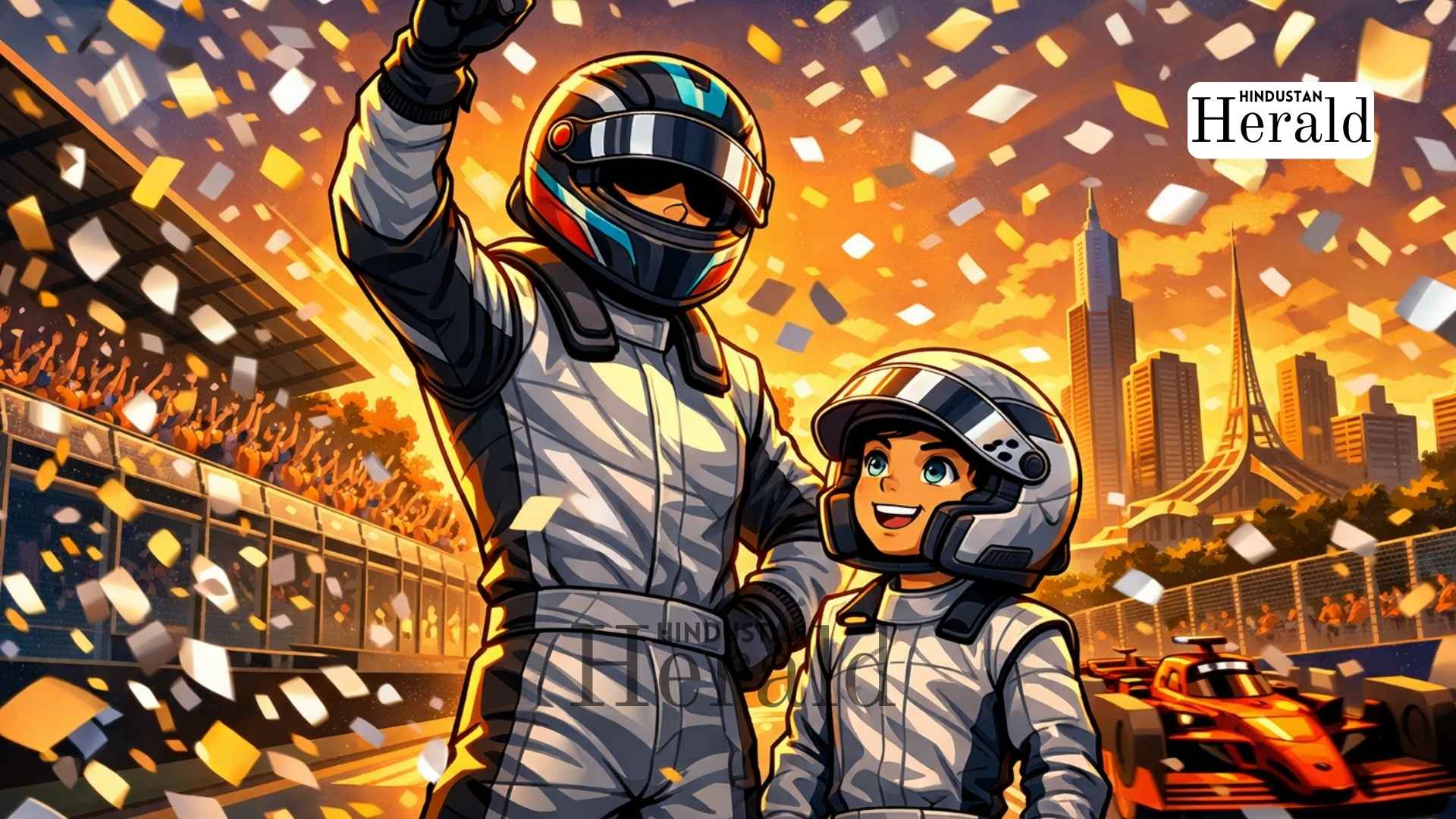
Melbourne, March 9: Formula 1 woke up to a new world on Sunday. Not just because the chequered flag at Albert Park brought down the curtain on the sport’s most extensive regulation overhaul in a generation, but because the race itself delivered everything the architects of the 2026 rules had promised, and then ignited a furious debate about whether any of it was real.
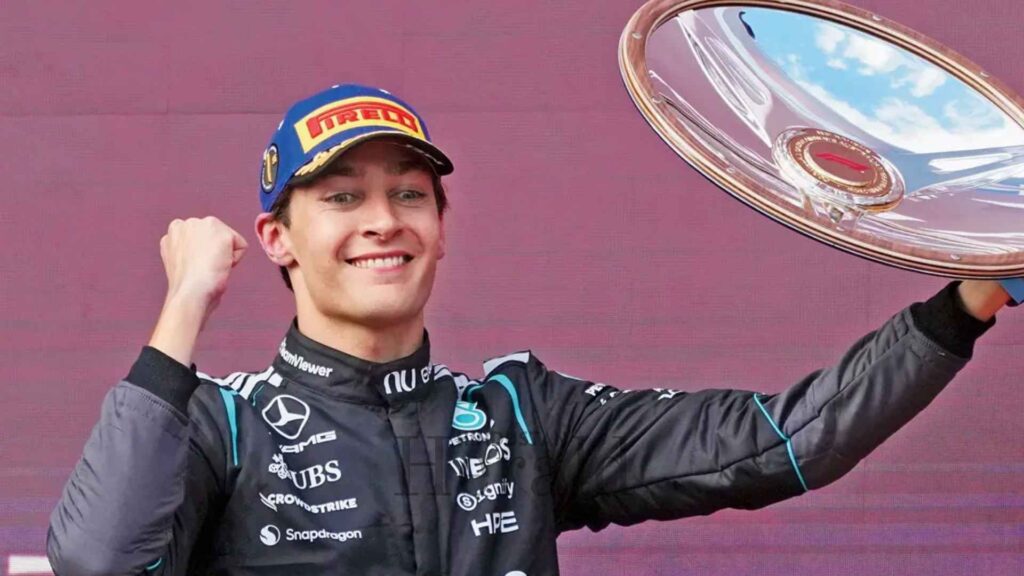
George Russell drove away from the chaos with a victory. Mercedes drove away from Melbourne with both championship leads. And the rest of the paddock drove away with far more questions than answers.
Russell and Antonelli Announce a Silver Era
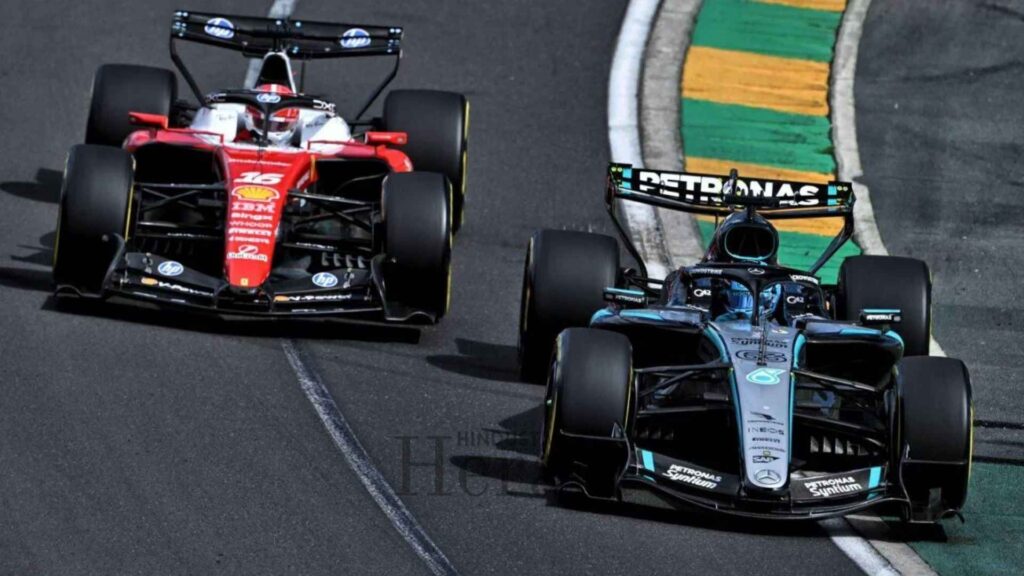
The race was not straightforward for Mercedes, even if the result flattered them. Russell, starting from pole, was immediately swallowed at the first corner by Ferrari’s Charles Leclerc, who launched off the grid from fourth as if assisted by rocket propulsion. Over the opening nine laps, Russell and Leclerc traded the lead seven times in what became the defining sequence of the race, a frantic, almost disorienting passage of wheel-to-wheel racing that left even seasoned observers struggling to follow who was ahead and why.
At the start, the Ferrari cars shot forward, aided by their turbocharger design, which the Italian team had designed specially for the new start procedures. Russell, for his part, used his electric boost aggressively to claw back positions, but doing so drained his battery, which allowed Leclerc to hit back. The exchange went back and forth across those frantic opening laps, a live demonstration of how the new energy-deployment rules had fundamentally rewritten the grammar of Formula 1 racing.
The decisive moment came on Lap 11. When a Virtual Safety Car was deployed due to Red Bull’s Isack Hadjar pulling off the track, both Mercedes cars pitted while the Ferraris opted to stay out. Ferrari gambled on track position, Mercedes gambled on fresh rubber, and when the dust settled from a second VSC caused by Cadillac’s Valtteri Bottas retiring, the Silver Arrows were back at the front and the Ferraris were in trouble. The Scuderia’s late stops left Leclerc and Lewis Hamilton without the tyre life to challenge their rivals in the closing stages.
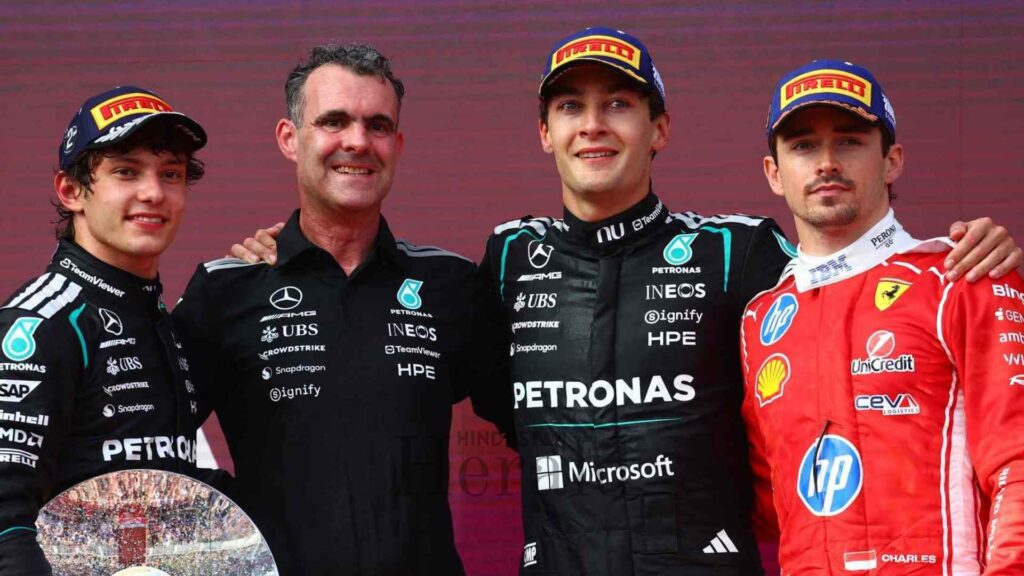
Russell held on for the win. Antonelli was second after recovering from a poor start, with Leclerc third and Hamilton fourth. It was a result that sent a clear message. Mercedes had not only mastered the new hybrid architecture; they had read the race more intelligently than a Ferrari team that had, on raw pace, looked genuinely competitive.
For Hamilton, the result carried its own significance. His competitive debut for Ferrari ended with fourth place, less than a second behind his own teammate, and he chose to see it as confirmation rather than disappointment. “Of course we are not as fast as Mercedes and we have work to do but we are right in the fight,” Hamilton said. “It was a really fun race. A couple more laps and I would have had Charles, so I had great pace. Lots of positives to take from today.”
The Boost Button Debate: Exciting Racing or a Video Game?
If there is one storyline from Melbourne that will follow Formula 1 through the weeks ahead, it is the question of what exactly everyone watched on Sunday afternoon.
The 2026 cars have dispensed with DRS entirely. In its place sits a combination of active aerodynamics and a driver-controlled energy deployment setting called Overtake Mode. When a driver is within one second of the car ahead, they can deploy extra battery power to help initiate an overtake. Unlike DRS, which was visible to viewers as a rear wing flapping open, Overtake Mode is invisible. A burst of electrical energy surges through the powertrain, and the chasing car either completes the move or does not.
The new system produced an extraordinary volume of overtakes at Albert Park. Whether those overtakes represented genuine racing, though, is a question that split the paddock right down the middle after the chequered flag.
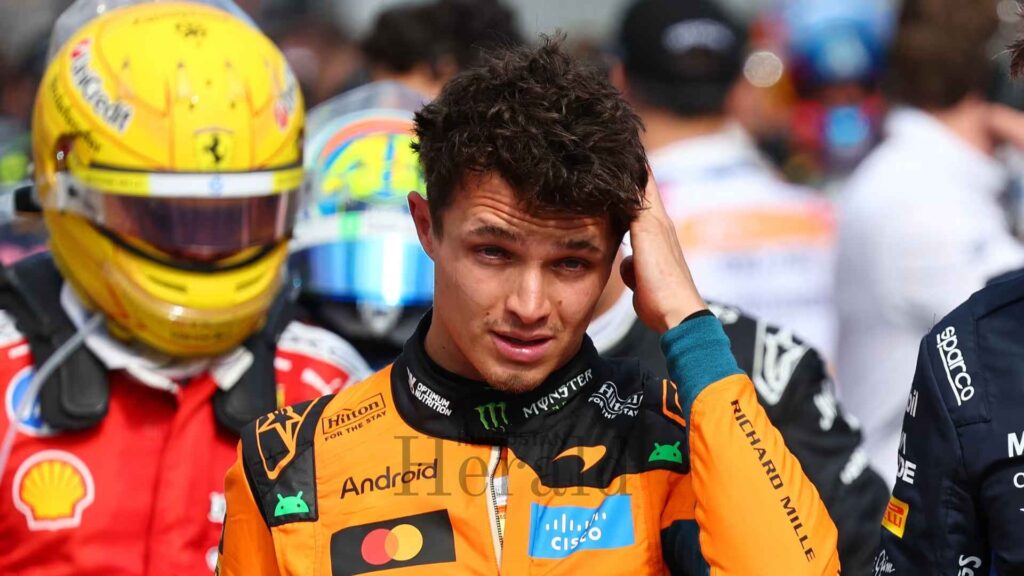
Lando Norris was among the most critical. “It’s chaos, you’re going to have a big accident, which is a shame,” he said. “It’s very artificial, depending on what the power unit decides to do and randomly does at times. You just get overtaken by five cars or you can just do nothing about it sometimes. There’s nothing we can change about it.”
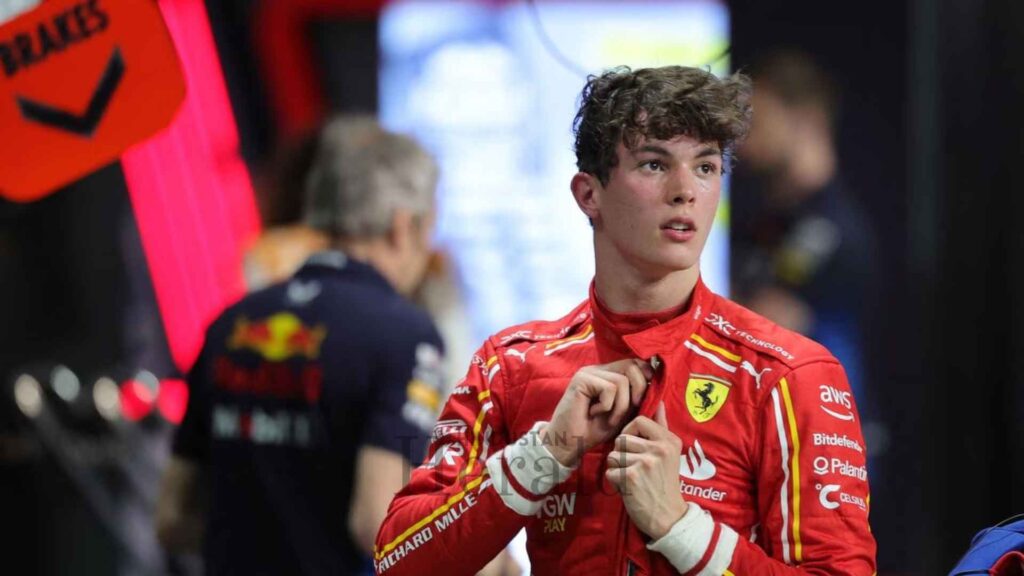
Oliver Bearman of Haas described the experience in blunter terms. “It was like I was in F1 and everyone else was in F2,” he said about the boost mode. “It’s a bit ridiculous to have that much delta in a button, and to lose that much on the next straight. So unless you basically complete the move at the start of the straight, the next straight they’re going to get you back.”
Not everyone was unhappy. Russell himself loved it. “I personally loved it. I thought the race was really fun to drive. I thought the car was really, really fun to drive. I watched the cars ahead; there was good battling back and forth. So far, so good,” he said.
Leclerc took a more philosophical view, noting that the new system had changed the cognitive demands of racing. “Before, it was more about who is the bravest at breaking the latest. Maybe now, there’s a bit more of a strategic mind behind every move you make because every boost button activation, you know, you’re going to pay the price big time after that. You always try to think multiple steps ahead.”
The debate cuts to something deeper than driver preference. When a driver made a pass with DRS, fans could see the rear wing dropping. With Overtake Mode, aside from an early message from race control stating ‘Overtake Mode active’, viewers received no information about the system. The crucial information about when drivers were using it was absent. That invisibility is arguably a bigger problem than the system itself. Racing fans watching at home had no way of knowing whether the overtake they just witnessed was a product of skill, strategy, tyre delta, or simply a button pressed at the right moment.
The five Straight Mode sections spread across the 2026 Albert Park layout represent a wholesale rethinking of how aerodynamic freedom is distributed around a lap, operating continuously across more of the circuit than DRS ever reached and placing considerably more decision-making in the hands of the driver. Whether that complexity translates into better entertainment remains very much unresolved.
Piastri’s Heartbreak and a Crowd Left Stunned
The day’s most gut-wrenching moment came before the lights even went out. Oscar Piastri crashed his McLaren before the race start after obtaining an unexpected engine surge when he clipped the kerb into Turn 4 on his out-lap to the grid, damaging the car and putting him out of his home race.
The image of Australia’s biggest Formula 1 star watching helplessly from the barriers as his race ended before it had begun, in front of a record crowd that had come specifically to see him, was one of the most painful in recent memory. There was heartbreak for a record home crowd as Piastri crashed out before the Australian Grand Prix had even begun.
It also exposed what may be a structural problem for McLaren in this new era. The team runs as a customer of a manufacturer’s power unit, and the energy surge issue that hit Piastri’s car suggests a reliability and integration challenge that factory-backed teams do not face in quite the same way. With Mercedes clearly ahead in power unit development, the gap to the top could be larger than McLaren’s 2025 form suggests.
Verstappen’s Recovery and Norris’s Championship Tone
Max Verstappen recovered to sixth behind world champion Lando Norris after his qualifying crash. Still, Norris’s McLaren team-mate Piastri missed the race entirely, having crashed on his way to the grid. Verstappen’s Lap 1 charge from the very back of the grid was vintage, but Red Bull’s underlying pace deficit to Mercedes was impossible to disguise. The four-time champion was not challenging for the podium. He was managing damage limitation.
Norris’s fifth place, meanwhile, positions him as a threat in the championship standings, but the McLaren appears to have taken a step back relative to last season’s dominant machine. The Briton’s post-race criticism of the new boost system was revealing. A driver who finished fifth and still came away sounding frustrated is usually a driver who knows his car is not yet where it needs to be.
Debutants, Milestones, and a Moment for Audi
Amid the front-running drama, the back half of the field offered its own storylines. All five British drivers in the 2026 field finished in the top eight. Haas’s Oliver Bearman was seventh while 18-year-old debutant Arvid Lindblad capped a stellar debut in F1 with a fine eighth for Racing Bulls. Audi’s Gabriel Bortoleto, whose team-mate Nico Hulkenberg did not take the start on technical grounds, was ninth ahead of Alpine’s Pierre Gasly in 10th.
Bortoleto’s ninth place made history. It was Audi’s first-ever points finish as a works Formula 1 constructor, a milestone that would have been celebrated far more loudly had it not been slightly overshadowed by the front-of-grid drama.
Aston Martin’s Nightmare: When Racing Becomes a Health Risk
The most sobering storyline of the entire weekend belonged to Aston Martin. What the team endured in Melbourne was not simply poor performance. At points, it crossed into a concern for driver safety that sat uneasily alongside the sport’s usual championship narratives.
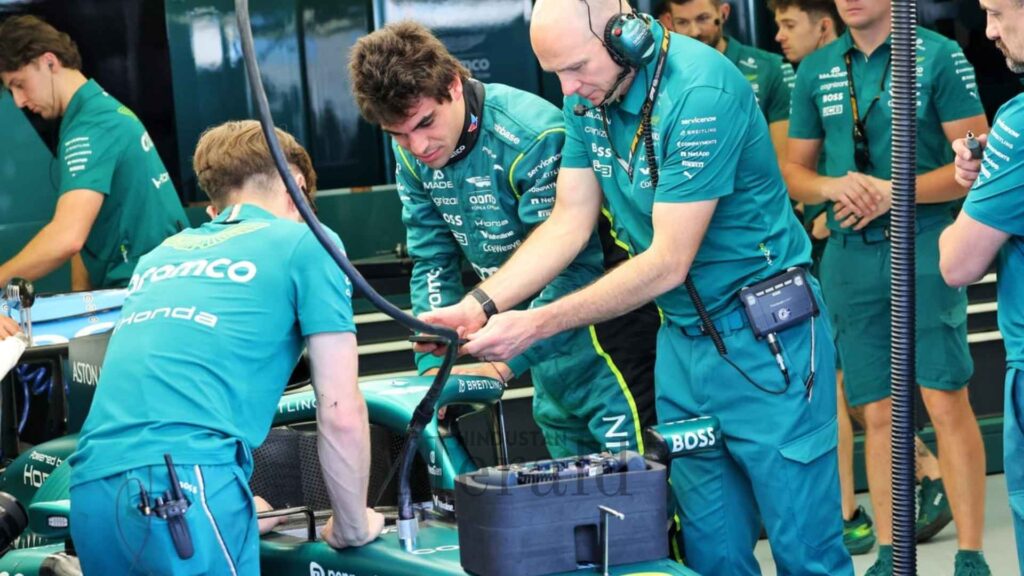
It had become clear during pre-season testing in Bahrain that the team were experiencing major issues with their Honda power unit, with the vibration problem not only impacting the functionality of the car but also the safety of drivers Fernando Alonso and Lance Stroll.
Ahead of the grand prix, team principal Adrian Newey revealed that Alonso believed he could complete only 25 laps and Stroll 15 due to the risk of permanent nerve damage in their hands caused by severe vibrations. In a 58-lap race, that meant both cars were essentially expected to retire well before half-distance purely as a precaution against physical injury. That is not a setup problem or a development deficit. That is a power unit producing sensations its own drivers described in alarming terms.
Stroll painted a grim picture when asked to compare the sensation to something a normal person might understand, likening it to being electrocuted in a chair. Alonso, meanwhile, reported feeling numbness in his fingers and feet from the continuous low-frequency vibration.
What unfolded during the race was chaotic in its own right. Alonso initially retired on Lap 11 after being told to stop by the team, but the two-time world champion returned to the circuit later on following changes to his car, before retiring once again at Lap 32. Stroll similarly rejoined after stopping and was 12 laps down by the flag, finishing 17th. The back-and-forth retirements were, as reported by GPFans, largely a data-gathering exercise, with the team attempting to accumulate as many laps as possible to help diagnose the problem.
Newey has consistently laid the blame at Honda’s door, leaving little doubt over who he holds responsible. The story behind that blame is a complicated one. Honda had pulled out of Formula 1 at the end of 2021, and when they reformed for the 2026 project, much of the original workforce had disbanded, meaning a significant portion of the team working on the RA626H power unit lacked previous Formula 1 experience.
Alonso was direct about his expectations ahead of Shanghai, saying there would be no improvement: “No different, we have the same car, the same power unit next weekend. So I expect another tough weekend. But meanwhile, we cannot give up.”
What Comes Next
Formula 1 heads to Shanghai for the first Sprint weekend of the 2026 season at the Chinese Grand Prix from March 13 to 15. The sprint format adds a layer of complexity at a circuit that will again test the new energy management systems under very different conditions from Melbourne.
For Mercedes, the question is whether their mastery of the new regulations is a permanent advantage or a first-race anomaly. For Ferrari, the strategic error under the VSC will be studied and regretted. For Red Bull and McLaren, the development curve is steep. For Aston Martin, the task is simply to make their car safe enough to race.
And for Formula 1 itself, the Overtake Mode debate is only just beginning. One race does not settle a regulatory argument. But the volume and passion of the reaction from drivers, fans, and analysts suggest this conversation will not be going away quietly.
Stay ahead with Hindustan Herald — bringing you trusted news, sharp analysis, and stories that matter across Politics, Business, Technology, Sports, Entertainment, Lifestyle, and more.
Connect with us on Facebook, Instagram, X (Twitter), LinkedIn, YouTube, and join our Telegram community @hindustanherald for real-time updates.
Sports reporter covering cricket, football, and Olympic disciplines, with on-ground event experience.
- Prakash Nair

- Prakash Nair
- Prakash Nair
- Prakash Nair