
 By Rajiv Menon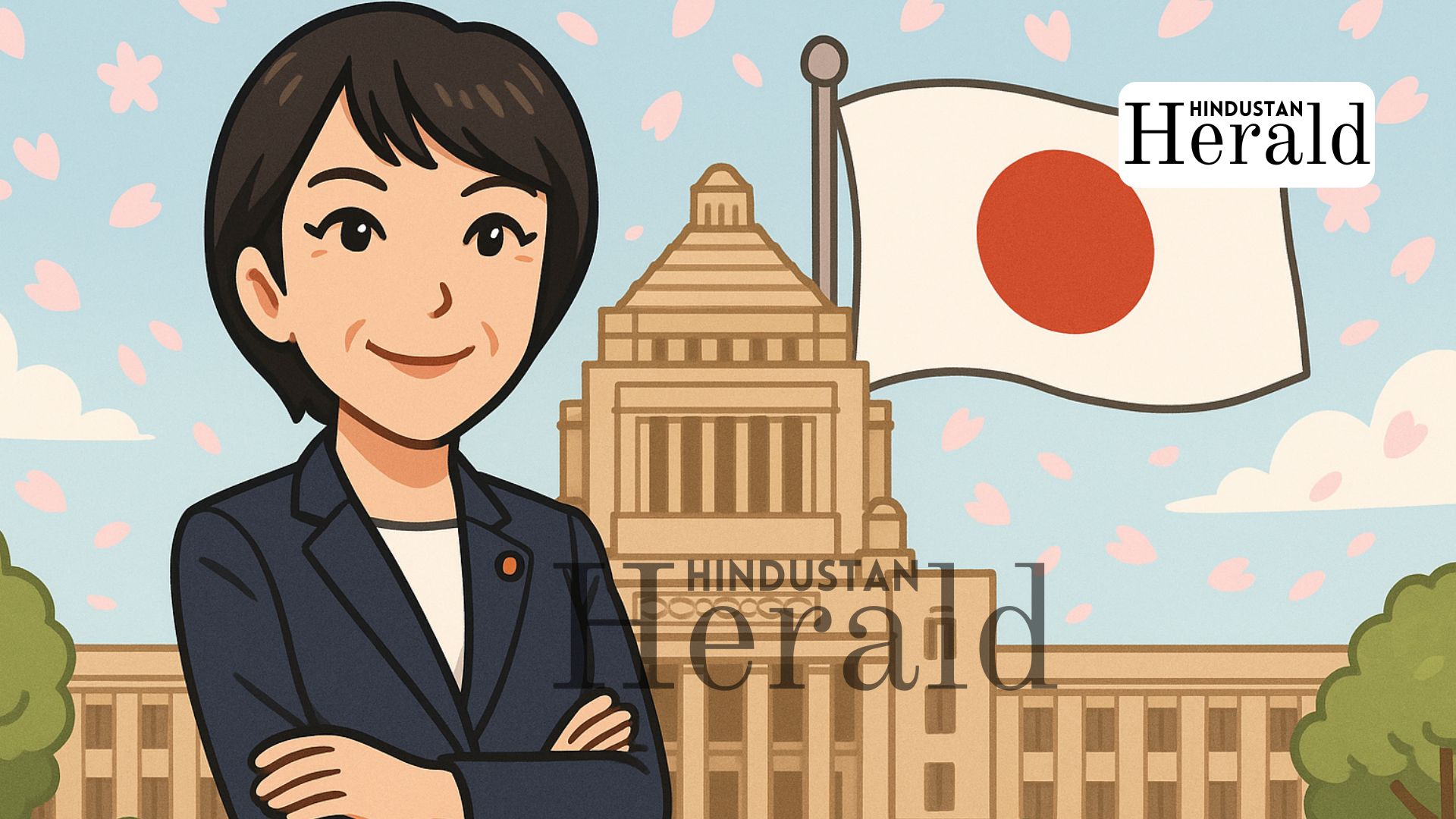
Tokyo, October 4: Sanae Takaichi walked into the Liberal Democratic Party headquarters today as a veteran politician. She walked out as a piece of Japanese history. The 63-year-old conservative has just been elected leader of the LDP, which makes her almost certain to become Japan’s first female prime minister when parliament votes in mid-October.
It’s a moment that many in Japan thought would never come and, to some, one that came in an unexpected form.
The Conservative Who Shattered a Ceiling
Takaichi’s win over Shinjiro Koizumi, the youthful agriculture minister, wasn’t just a generational clash. It was a statement about where Japan’s ruling party stands: steady, traditional, a bit wary of change. She represents the old guard in almost every sense a fierce nationalist, a protégé of Shinzo Abe, and a politician who rarely minces words.
She’s spoken against same-sex marriage, against letting couples keep separate surnames, and for rewriting Japan’s pacifist constitution. None of that screams “progressive.” Yet she will now lead a country that’s been criticised for its near-total absence of women at the top.
Japan ranks 125th out of 146 in global gender equality, according to the World Economic Forum. Less than a tenth of its lower-house lawmakers are women. And so, Takaichi’s rise is jarring a conservative face on a moment of supposed progress.
More Symbol Than Revolution
Those who know her career aren’t surprised. Takaichi has been around forever, starting in smaller political circles before fighting her way into the LDP machine. Her reputation is one of hard work and harder conviction. In a country that values loyalty and caution, she’s somehow managed to be both establishment and maverick.
But what her gender represents, and what her politics allow, are two very different questions. “She’s a pioneer, yes,” said Koichi Nakano, a political scientist in Tokyo. “But she’s also a symbol of continuity.”
She has never promised to champion women’s rights. She’s running on “stability and strength.” In Japan’s political lexicon, that usually means more of the same.
The Numbers She Inherits
The economic picture she steps into isn’t kind. Inflation has been hovering around 3%, the yen is weak, and Japan’s national debt is still above 260% of GDP, the highest in the developed world. Ordinary families are feeling the bite of higher prices. Small businesses, still recovering from the pandemic, complain of dwindling support.
Takaichi wants to revive parts of Abenomics with new stimulus and push for more domestic manufacturing in semiconductors and defense. But her plans for extra spending run into the same wall every Japanese leader hits: there’s no money left.
“She’s walking a fiscal tightrope,” former Bank of Japan board member Sayuri Shirai told Reuters. “She wants stimulus, she wants defense expansion, and she wants fiscal discipline. You can’t have all three.”
A Hawk Abroad
On the world stage, Takaichi is expected to speak loudly. She has little patience for China’s military build-up or North Korea’s missile tests. She’s an unapologetic advocate of raising defense spending and deepening Japan’s role in the Quad, the security framework linking Japan, India, Australia, and the United States.
Her record includes visits to the Yasukuni Shrine, where Japan’s war dead, including convicted war criminals,are honored. Every visit sparks fury in Beijing and Seoul. If she repeats it as prime minister, expect diplomatic friction to flare again.
Still, in Washington, she’ll be seen as a dependable ally, assertive, predictable, firmly on the side of the West.
The “Japanese Thatcher” Label
Takaichi has long admired Margaret Thatcher, calling her “a woman of conviction.” She’s borrowed some of the Iron Lady’s mannerisms, too brisk speech, deliberate posture, that faint impatience with criticism. But Japan isn’t Britain, and 2025 isn’t 1980.
Her critics warn that toughness alone won’t fix an aging society or convince young people to have children. Her supporters counter that Japan needs to resolve after years of drift. Both may be right.
An old LDP hand, quoted by Reuters, summed it up neatly: “She’s got the grit. Let’s see if she’s got the grace.”
The Challenges Waiting for Her
Assuming she’s confirmed by parliament around October 15, Takaichi will inherit a restless country. Inflation and low wages have eroded public trust. Voters, especially younger ones, have grown weary of the same revolving door of leaders promising “reform” and delivering little.
That fatigue could be her biggest obstacle. If she rules by ideology alone, she’ll alienate the moderates. If she compromises too often, she risks losing the conservatives who put her there.
And hanging over everything is that deeper question of whether Japan’s first female prime minister will actually make life any easier for the women who come after her.
What Her Win Really Means
In the short term, not much will change. The LDP remains the LDP: cautious, male-dominated, deeply tied to Japan’s bureaucratic core. But long term, the visual alone of a woman at the podium, not taking notes but giving orders, might shift something invisible but important.
For the first time, schoolgirls across Japan can look at their television screens and see someone who looks like them leading the country. That image, in a nation built on quiet symbolism, might prove more powerful than any policy speech.
For now, Tokyo feels caught between pride and skepticism. History was made today that much no one can deny it. What kind of history it turns out to be is a story still waiting to unfold.
Stay ahead with Hindustan Herald — bringing you trusted news, sharp analysis, and stories that matter across Politics, Business, Technology, Sports, Entertainment, Lifestyle, and more.
Connect with us on Facebook, Instagram, X (Twitter), LinkedIn, YouTube, and join our Telegram community @hindustanherald for real-time updates.

Specializes in South Asian geopolitics and global diplomacy, bringing in-depth analysis on international relations.
- Rajiv Menon

- Rajiv Menon
- Rajiv Menon
- Rajiv Menon




 Neeraj Kapoor