 By Prakash Nair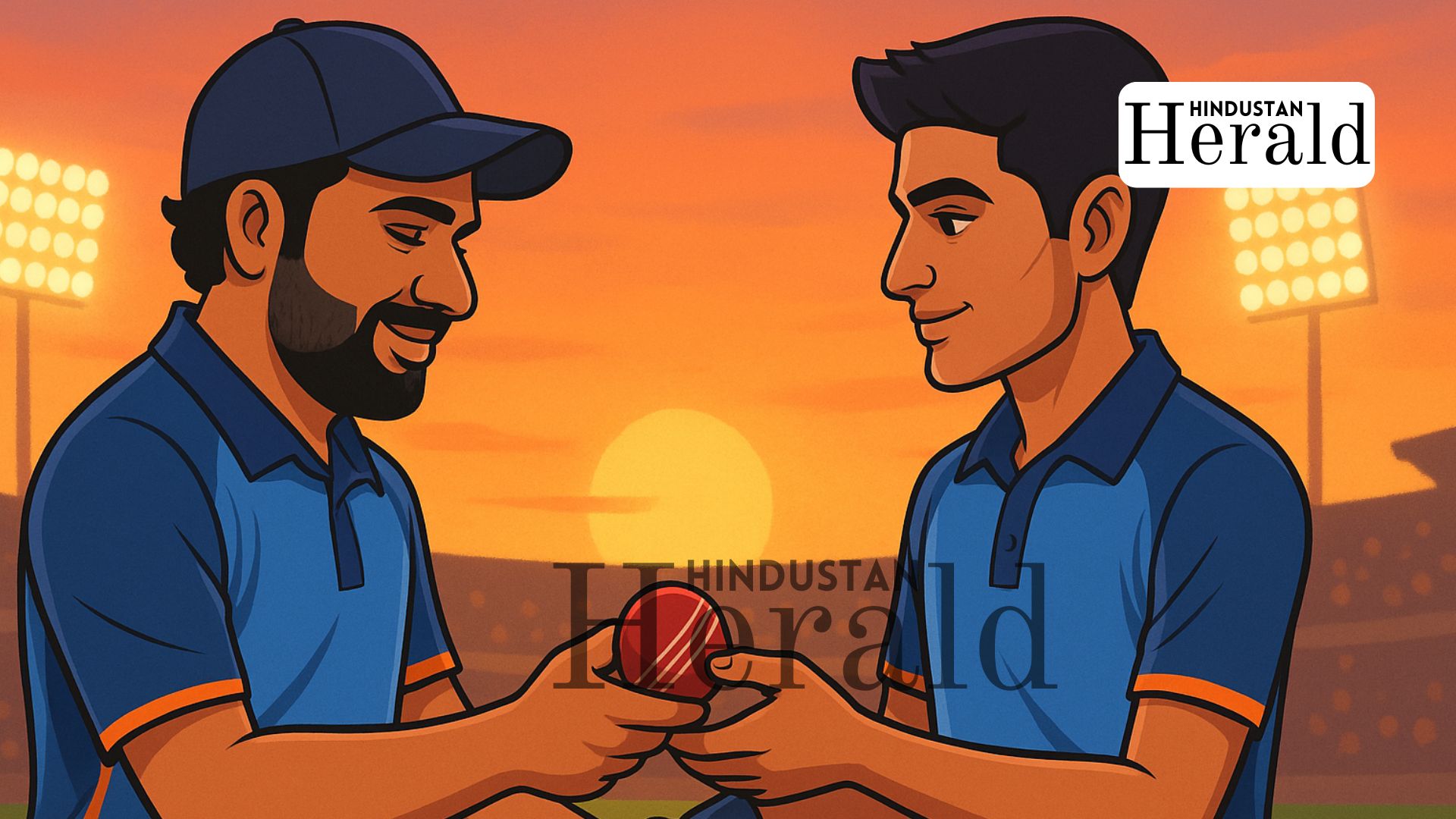
New Delhi, October 5: The curtain seems to be closing on Rohit Sharma’s long reign as India’s white-ball captain. In a decision that feels both inevitable and sudden, the BCCI has named Shubman Gill as India’s new ODI captain for the upcoming tour of Australia, effectively signaling a generational handover in Indian cricket.
For Rohit, 38, it’s the end of a chapter that defined Indian cricket for nearly a decade, one marked by calm authority, success across formats, and an unmistakable air of composure. For Gill, 26, it’s the start of something far bigger: an early coronation, but also a massive responsibility.
A Changing of the Guard
According to Reuters, Gill’s appointment came as part of the squad announcement for the three-match series in Australia later this month. It’s not just a leadership switch; it’s the BCCI putting down a marker. The new head coach, Gautam Gambhir, alongside selection chief Ajit Agarkar, has been quietly reshaping India’s white-ball blueprint since July.
And this, by all accounts, was Gambhir’s call. Reports from Hindustan Times suggest the coach pushed for Gill, arguing that the team needed to “reset its culture” around youth and accountability. Agarkar agreed. Keeping Rohit as captain, he later hinted, could have “disturbed” that process.
Inside the corridors of the BCCI, the move was less about emotion and more about optics. The selectors wanted a younger face leading India into the next cycle, someone who could own the project through to the 2027 ODI World Cup. Gill fits that timeline.
Mixed Emotions, Loud Voices
Outside those walls, though, the reaction has been raw. Former cricketer Mohammad Kaif called the decision “unfair,” reminding fans that Rohit “gave India 16 years” and deserved one more as captain. “We couldn’t give him one?,” Kaif asked pointedly on NDTV Sports, a sentiment that found traction among fans on social media.
Harbhajan Singh was equally blunt, telling Moneycontrol he was “shocked” by the timing. “It’s a bit of a surprise to see Rohit not going to Australia as captain,” he said. “He’s earned that one last trip.”
But for the BCCI, the mood is practical, almost unsentimental. As The Economic Times reported, the committee believes both Rohit and Virat Kohli are “nearing the end” of their ODI journeys. The message from Gambhir’s camp has been clear: start thinking about tomorrow, even if it means letting go of yesterday’s heroes.
The Kohli Question
The decision inevitably drags Virat Kohli into the conversation. The two icons, who defined Indian batting for the better part of 15 years, are now in similar territory, still elite, still capable, but no longer at the center of India’s long-term plans.
According to NDTV, Kohli’s selection for the Australia tour was a “courtesy inclusion,” a sign of respect for seniority rather than an assurance of permanence. Both he and Rohit are expected to feature in next year’s T20 World Cup, but after that, the writing seems faintly visible on the wall.
That said, no one in Indian cricket ever fades quietly. Both men remain among the fittest and most respected players in the squad. Whether they bow out on their own terms or are nudged toward the exit will likely define how gracefully India handles its biggest transition since the Dhoni era.
Gambhir’s Fingerprints All Over
Anyone who’s watched Gautam Gambhir coach knows subtlety isn’t his style. He’s hands-on, intense, and unafraid to challenge seniority. Those who know him say this decision has his stamp all over it.
As CricToday reported, Gambhir has been “taking charge” of team decisions ever since the New Zealand series earlier this year. His push for Gill reflects a broader belief that leadership should belong to the players who will shape the next decade, not those nearing its end.
Gill, for his part, is unflappable. He’s captained Gujarat Titans in the IPL and India A overseas. He carries himself with quiet maturity, more Rahul Dravid than Kohli. The BCCI sees in him a long-term investment, a modern captain who can lead with data-driven precision and still carry the swagger of youth.
It’s a gamble, yes. But in Gambhir’s world, the only thing worse than a risky call is standing still.
The Rohit Legacy
To understand the weight of this decision, you have to look back. Under Rohit Sharma, India found a steady, composed captain who rarely lost his cool and often led from the front. He took over at a turbulent time, rebuilt a confident dressing room, and took India to the 2023 ODI World Cup final, where they fell heartbreakingly short.
He also delivered the 2024 T20 World Cup, India’s first ICC trophy in over a decade. His numbers as captain speak for themselves: one of the best win percentages in ODI history, and a leadership style that made even star players feel valued.
But inside the BCCI, whispers had grown louder since the Asia Cup that Rohit’s approach was “too cautious,” that his trust in experience was slowing India’s evolution. Gambhir’s philosophy, on the other hand, demands constant churn. Young faces. Hungry players. Uncompromising fitness.
That quiet tension, say insiders, reached a point where coexistence wasn’t sustainable. The change, then, was only a matter of time.
History Repeats Itself
This isn’t the first time Rohit has lost a captaincy suddenly. As The Indian Express reminded readers, he was once sacked as Mumbai Ranji captain early in his career, a decision that teammate Abhishek Nayar still calls “mad and moody.” Rohit rebuilt himself from that setback, returning as one of India’s most consistent performers across formats.
There’s every chance he does it again. People who know him say he’s pragmatic about transitions. He’s not done playing. He’ll likely continue through the 2025 season, and if his bat stays hot, the selectors will find space for him. But the symbolism of the decision is hard to miss: India is officially moving on.
The Road Ahead
For Shubman Gill, this moment is both an opportunity and a test of temperament. Leading a modern Indian team stacked with egos, expectations, and scrutiny is no small task. Every choice, from batting order to bowling changes, will be dissected. And behind it all, the shadow of Rohit Sharma will linger.
Still, there’s something poetic about this handover. Rohit once backed Gill when few others did, promoting him up the order and calling him “India’s next big thing.” Two years later, that prophecy has come full circle.
For Indian cricket, this is more than just a tactical tweak. It’s a shift in personality from Rohit’s calm authority to Gill’s youthful precision, from a team built on experience to one defined by ambition.
Fans, of course, will debate the decision endlessly. But time tends to move faster in Indian cricket than anywhere else. And as one chapter closes, another begins different in tone, but carrying the same weight of expectation.
Stay ahead with Hindustan Herald — bringing you trusted news, sharp analysis, and stories that matter across Politics, Business, Technology, Sports, Entertainment, Lifestyle, and more.
Connect with us on Facebook, Instagram, X (Twitter), LinkedIn, YouTube, and join our Telegram community @hindustanherald for real-time updates.
Sports reporter covering cricket, football, and Olympic disciplines, with on-ground event experience.
- Prakash Nair

- Prakash Nair
- Prakash Nair
- Prakash Nair