
 By Ananya Sharma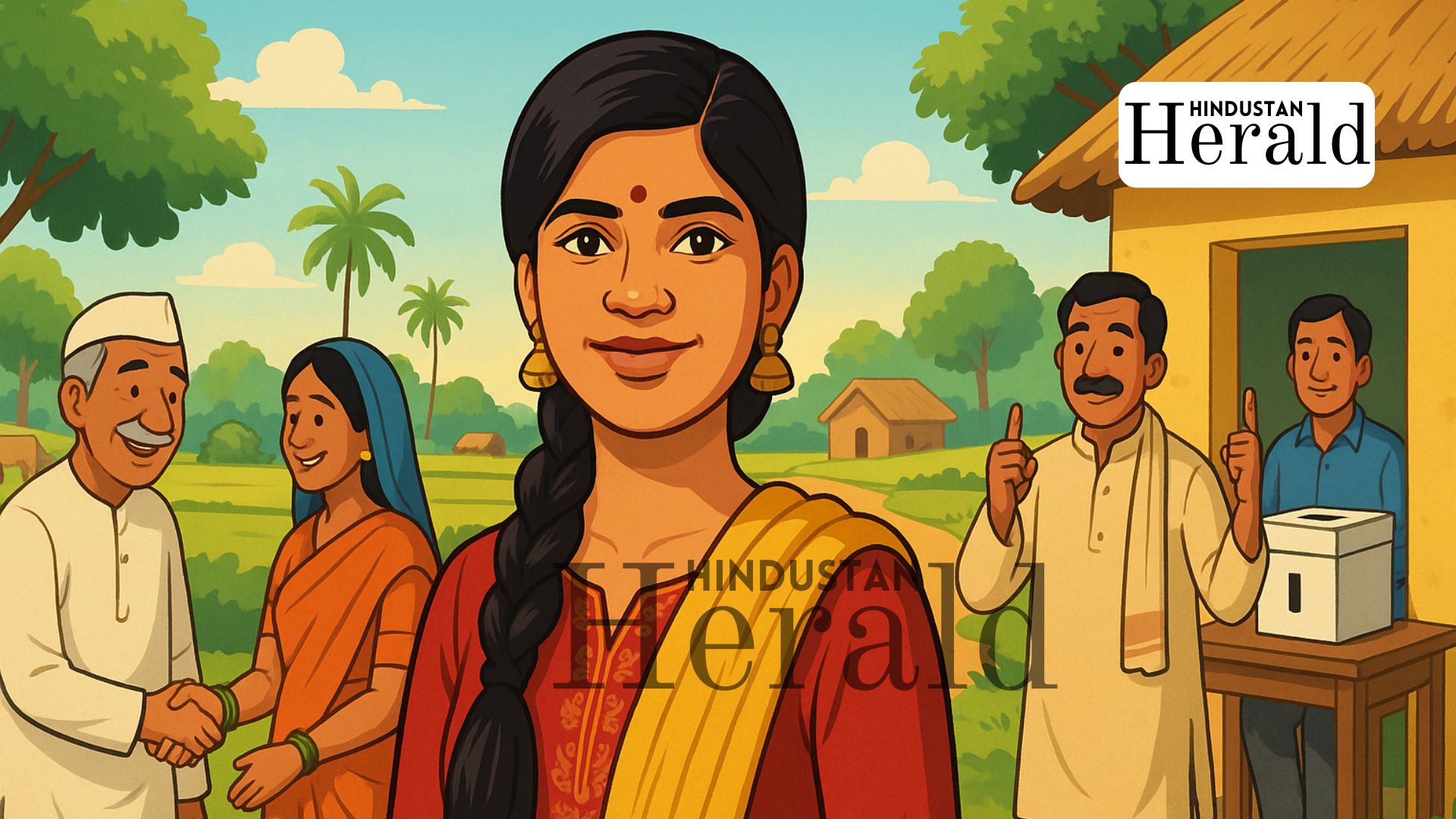
New Delhi, November 14: The mood in Alinagar shifted long before the numbers did. By late morning, people around the counting centre were already speaking of Maithili Thakur not as a newcomer but as the likely next face of their constituency. The vote count only confirmed what the conversations hinted at. A young folk singer from Darbhanga, stepping into politics for the first time, now looks set to unseat a long-running order in a seat the RJD once treated as dependable turf.
A First-Time Candidate In A Seat Known For Predictability
Alinagar has rarely rewarded experiments. It has been firmly tied to the RJD since the constituency came into existence in 2008. Rural loyalties, caste arithmetic, and long-standing networks kept the contests steady and familiar. That said, the BJP decided to take a different route this year by putting forward Maithili Thakur, someone whose influence came not from conventional politics but from cultural presence.
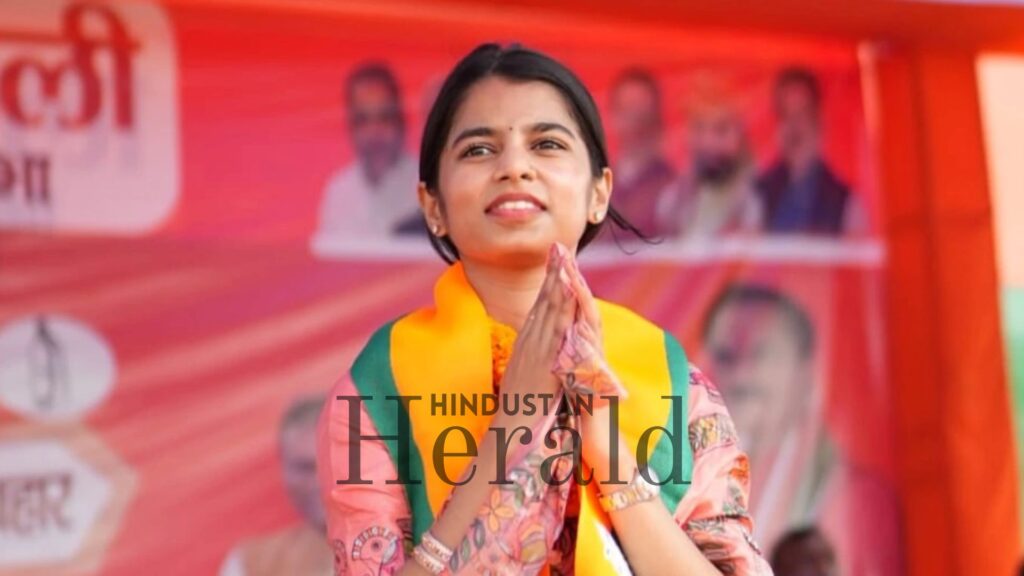
According to The Times of India, she completed her studies at Delhi University before building a devoted audience through folk and devotional music. Her voice had already travelled through villages, radio sets, festival gatherings, and countless homes. People knew her before she ever asked for a vote, and that baseline trust softened much of the skepticism that usually greets first-timers.
What makes her current lead so striking is the margin. Reports from NDTV and Mint showed her crossing the fifty thousand vote mark early in the count, creating a gap that kept stretching instead of tightening. In a seat shaped by predictable cycles, her rise has thrown open new questions about what kind of candidate voters are responding to this year.
A Campaign That Leaned More On Cultural Memory Than Loud Politics
Maithili’s campaign did not follow the usual blueprint. There were no oversized roadshows or marathon speeches. Her appeal rested on something more organic. People in the Mithila region saw her as someone who had carried their cultural identity into national spaces through her music. That emotional familiarity mattered.
A central part of her messaging was her promise to rename Alinagar as Sitanagar, a point highlighted by The Economic Times. For some, it was symbolic. For others, it tugged at a deeper cultural thread that rarely finds political expression without turning into noise. Here, it came from someone who had long represented that identity through her craft, not through slogans.
Still, she avoided the theatrics often associated with celebrity candidates. When NDTV contacted her during the early leads, she asked supporters to send her litti chokha. It was an offhand remark, almost too casual for a tense political moment, yet it struck the right note. It felt unfiltered and rooted in her own everyday life.
Later, as reported by News24, she said her growing lead felt like a dream and that she wanted to serve the constituency if elected. It was quiet, direct, and free of the posturing that usually fills the early hours of counting day.
A Shift That Speaks To A Bigger Change In Bihar’s Voter Behaviour
If the final tally confirms her victory, it will not just be about one seat changing colour. It will reflect something larger happening across parts of Bihar. According to broader insights reported by Mint, the NDA’s unexpectedly strong performance this election has been boosted in many places by candidates who hold cultural or social credibility outside politics.
For years, parties banked heavily on entrenched networks, caste-based outreach, and longstanding local figures. This election suggests that voters are now open to choosing someone whose influence comes from personal connection rather than political lineage. Someone who has been part of their lives through songs, performances, and cultural representation.

In Alinagar, that pattern has become easier to spot. Maithili did not have to introduce herself to the constituency. Her public identity was not manufactured for the campaign. It existed long before her nomination. She arrived with a ready-made bond that most first-timers can only hope to build over years.
The Youngest Faces Often Shoulder The Heaviest Expectations
If Maithili Thakur enters the Bihar Assembly as one of its youngest members, as The Times of India noted, she will carry expectations that extend far beyond her age. Young legislators are often treated as symbols of hope and change. They are expected to move quickly, respond openly, and navigate challenges that older politicians treat as routine.
That comes with pressure. Bihar’s political arena is shaped by veterans who have weathered decades of churn. Entering that space at twenty-four means learning fast and learning publicly. The scrutiny will be sharp. Any misstep will echo louder in the early months.
Still, youthful energy brings its own strengths. It can shift the tempo of constituency work. It can bring new forms of outreach. And it can create a different conversation around development, culture, and migration, especially in a district like Darbhanga, where young people often wrestle with the decision of whether to stay or leave.
What People In Darbhanga Seem To Be Signalling
Spend a day in and around Alinagar, and the shift becomes clearer. Voters, especially younger ones, are asking for representation that feels familiar in values but forward-looking in approach. They are tired of old political rhythms. They want leaders who carry local identity without letting it become a substitute for accountability.
Older voters, too, seem to be responding to the idea of a candidate who respects the cultural anchors of Mithila. Thakur’s connection to traditional music has given her legitimacy in places where speeches alone rarely make a difference.
Her entry also fits into a larger trend. Many families in the region have watched their children leave for cities because local opportunities are limited. A young MLA, especially one who did not rise through political families, represents a different kind of aspiration. Someone they see as reachable.
The Road Ahead For A First-Time MLA
If her lead holds, Maithili Thakur will soon face a steep transition from cultural figure to elected representative. The grace and calm she shows in public will need to carry through the administrative demands of a constituency that has long felt neglected in terms of infrastructure, employment opportunities, and basic public services.
The symbolic win is only one part. The work that follows will decide whether her political career finds a long-term footing or remains a moment defined by novelty. Voters have placed her at a crossroads. The goodwill is real, but so are the expectations.
For now, though, Alinagar appears ready to hand her this mandate. And in return, she will have to prove that someone who built trust through culture can turn that trust into tangible change.
Stay ahead with Hindustan Herald — bringing you trusted news, sharp analysis, and stories that matter across Politics, Business, Technology, Sports, Entertainment, Lifestyle, and more.
Connect with us on Facebook, Instagram, X (Twitter), LinkedIn, YouTube, and join our Telegram community @hindustanherald for real-time updates.

Covers Indian politics, governance, and policy developments with over a decade of experience in political reporting.
- Ananya Sharma

- Ananya Sharma
- Ananya Sharma
- Ananya Sharma


 Arun Upadhayay
  Sandeep Verma