
 By Ananya Sharma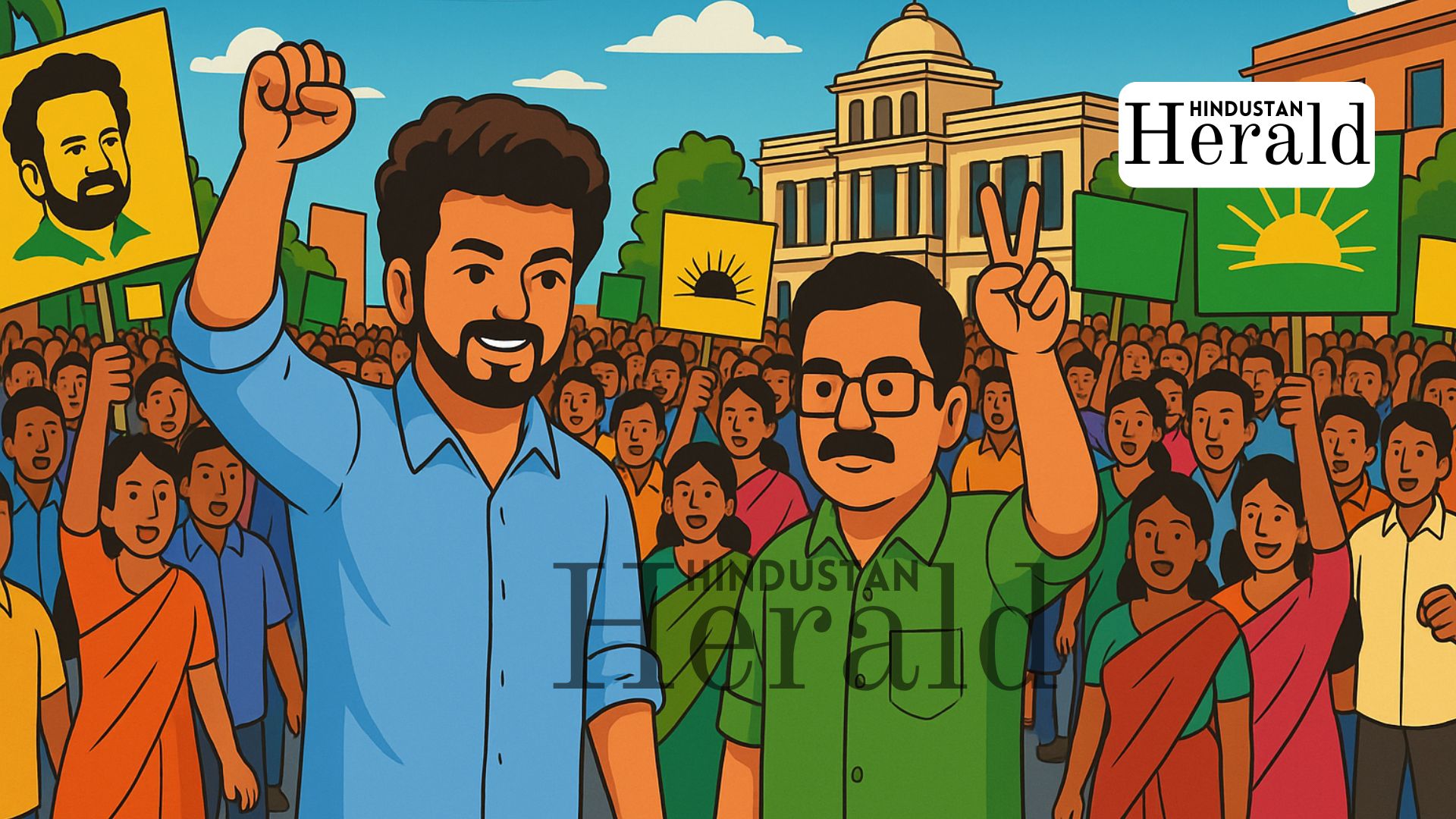
New Delhi, November 17: The political temperature in Tamil Nadu climbed several notches today as Tamilaga Vetri Kazhagam (TVK) rolled out statewide protests, taking direct aim at the ongoing Special Intensive Revision (SIR) of electoral rolls. The charge is simple but explosive: the DMK government is allegedly tilting the voter verification exercise through its influence over thousands of Booth Level Officers (BLOs).
According to The Times of India, TVK leaders have framed the controversy as a battle for voter rights, especially for first-time electors. That said, the party’s move is also a clear demonstration of its ability to mobilise ground cadres across districts like Chennai, Madurai, Trichy, Karur, Pudukkottai, and Thanjavur, where protest gatherings drew crowds that looked determined rather than symbolic.
What this really means is that the SIR process, usually a quiet bureaucratic exercise, has suddenly become a political battleground ahead of the 2026 Tamil Nadu Assembly elections.
Accusations Of Bias And Selective Distribution
TVK’s central claim is blunt. BLOs, many of whom are government employees, teachers, and anganwadi workers, are allegedly aligned with the ruling party. The party says nearly 68,000 BLOs fall under what it calls DMK influence. As reported by The Times of India, TVK leaders say these officers are distributing SIR forms preferentially to DMK supporters while leaving out large sections of young and independent voters.
Still, protests alone don’t explain the intensity of the moment. What set today apart was the scale: coordinated demonstrations in multiple districts, with local leaders like N Anand and Aadhav Arjuna taking charge in Chennai. Vijay, notably, stayed away from street demonstrations but amplified the message through a different channel.
Vijay’s Nine-Minute Video And The Push For Young Voters
Here’s the thing. When Vijay speaks directly to the youth, his political weight doesn’t come from legislative experience, but from cultural reach. His nine-minute video posted on his official X handle sharpened TVK’s core argument. According to The Times of India, he accused the SIR process of systematically squeezing out Gen Z voters.
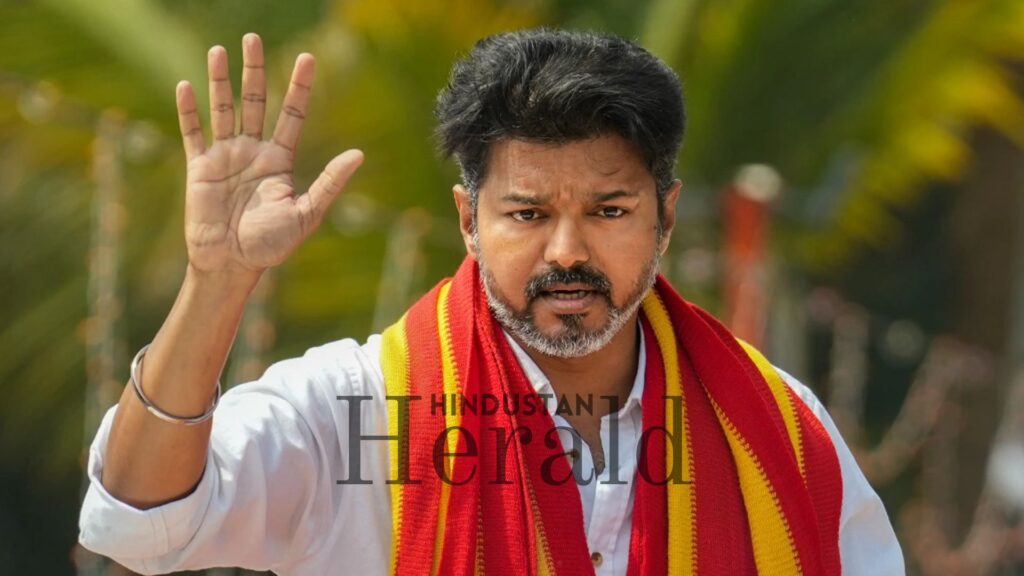
The timing matters. With less than a year to go for the assembly elections, the battle for the youth vote is becoming central to Tamil Nadu’s political realignment. TVK’s strategy is built on the belief that a fresh generation of voters is tired of legacy party politics and wants a cleaner, more transparent system. By pitching the SIR issue as an attempt to disenfranchise them, TVK is giving young voters both a grievance and a rallying point.
As it turns out, Vijay’s absence from street mobilisation may even be strategic. He lets local leaders handle protests while he positions himself in a more statesmanlike role, shaping the narrative from above.
DMK’s Counter: Udhayanidhi’s Swipe At TVK
Predictably, the DMK did not let the day pass without answering back. Udhayanidhi Stalin, the state’s deputy chief minister, took a thinly veiled swipe at TVK while speaking about a government-backed Knowledge Festival. According to NDTV coverage, his comment about people being “allergic to knowledge” was widely interpreted as a jab at Vijay’s party.
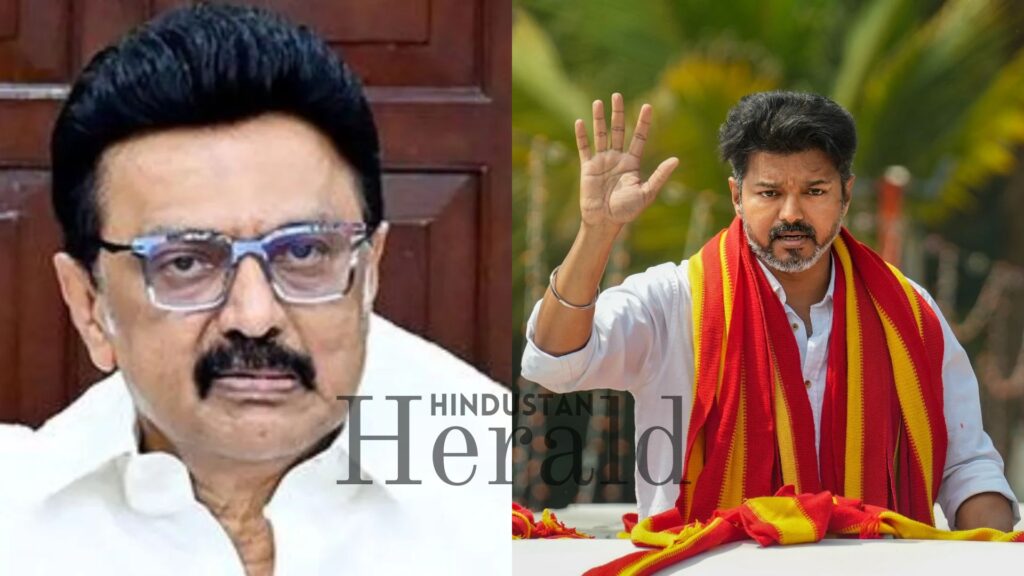
For now, DMK leaders appear confident that the administrative nature of SIR will shield them from larger political blowback. Yet this public reaction signals something else: the DMK sees TVK as a rising challenger rather than a passing disturbance.
Alliance Politics: TVK Rules Out AIADMK
The other major signal today came from TVK’s decision to shut the door on any tie-up with AIADMK. According to The Week, TVK’s leadership has made it clear that it prefers going solo in 2026, a move that sharply reshapes Tamil Nadu’s pre-poll landscape.
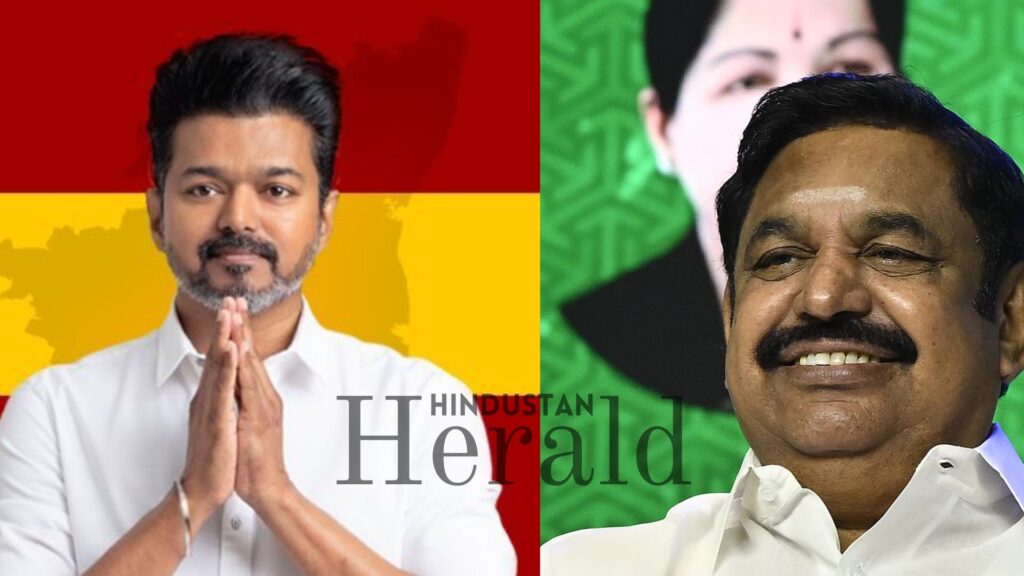
AIADMK, already navigating internal fissures and weakened post-2021, had hoped for an arrangement with TVK to consolidate anti-DMK votes. With that possibility officially ruled out, the state is fast-moving towards what political observers describe as a two-corner contest: DMK vs TVK.
Still, this does not automatically guarantee TVK a sweep of anti-incumbency votes. Tamil Nadu’s electorate is known for its depth of loyalty and memory. TVK will have to build an organisational presence strong enough to mobilise voters beyond symbolism and celebrity influence.
SIR As A Flashpoint For Tamil Nadu’s Next Political Shift
What this really means for the state is straightforward. The SIR issue isn’t just about paperwork or voter lists. It is becoming a proxy for a larger confrontation: a new regional force asserting itself against an entrenched ruling party.
TVK’s framing of the voter roll revision as an issue of fairness gives it moral high ground among undecided and young voters. DMK’s counterattacks reveal concern that the narrative could spiral if left unanswered.
Meanwhile, the Election Commission, caught in the crossfire, continues with the process, even as parties like TVK raise concerns about procedural bias. The Commission has not issued any public comment that changes the course of the exercise so far.
Public Response And What Comes Next
Crowd turnouts reported across districts suggest TVK is no longer a party experimenting on the margins. It has a functional field network capable of coordinated statewide action. According to district-level reports in The Times of India, youth participation, in particular, stood out.
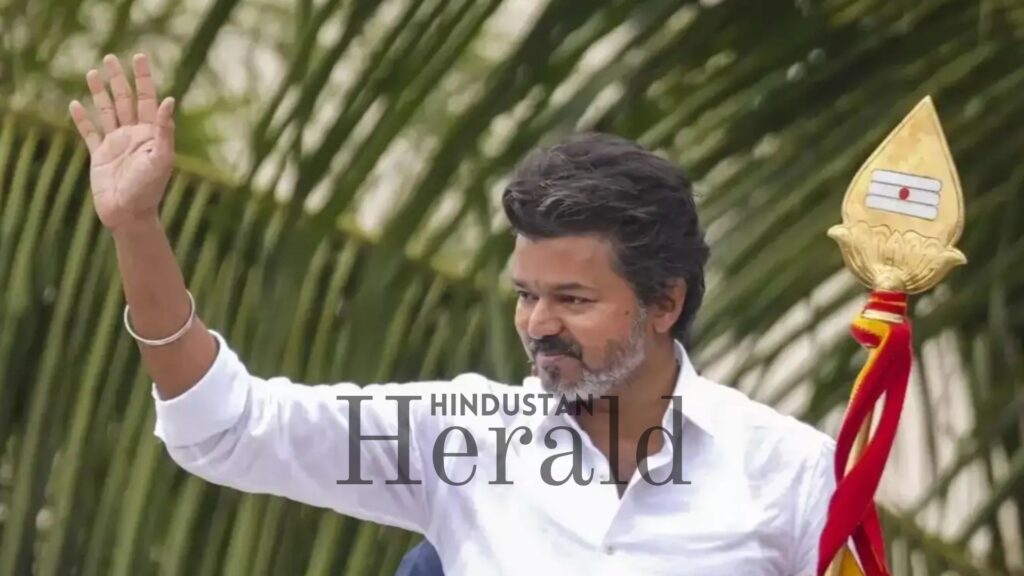
On social media, Vijay’s video has generated substantial traction, drawing comments and counter-arguments that reflect how polarising the SIR debate has become. Platforms like IndiaGlitz noted the buzz the video has generated within hours of its release.
The broader arc is becoming clear. Tamil Nadu is moving towards one of its most tightly contested elections in a decade. TVK wants to cast itself as a disruptor focused on transparency and youth empowerment. DMK wants voters to see TVK as inexperienced and overly dramatic. AIADMK is watching from the sidelines, forced to rethink strategy after TVK’s rejection.
For now, the SIR protests have given TVK a stage to project strength and grievance simultaneously. Whether that translates into electoral capital will depend on how sustained and organised the party remains in the months ahead.
Stay ahead with Hindustan Herald — bringing you trusted news, sharp analysis, and stories that matter across Politics, Business, Technology, Sports, Entertainment, Lifestyle, and more.
Connect with us on Facebook, Instagram, X (Twitter), LinkedIn, YouTube, and join our Telegram community @hindustanherald for real-time updates.

Covers Indian politics, governance, and policy developments with over a decade of experience in political reporting.
- Ananya Sharma

- Ananya Sharma
- Ananya Sharma
- Ananya Sharma


 Sandeep Verma