
 By Sandeep Verma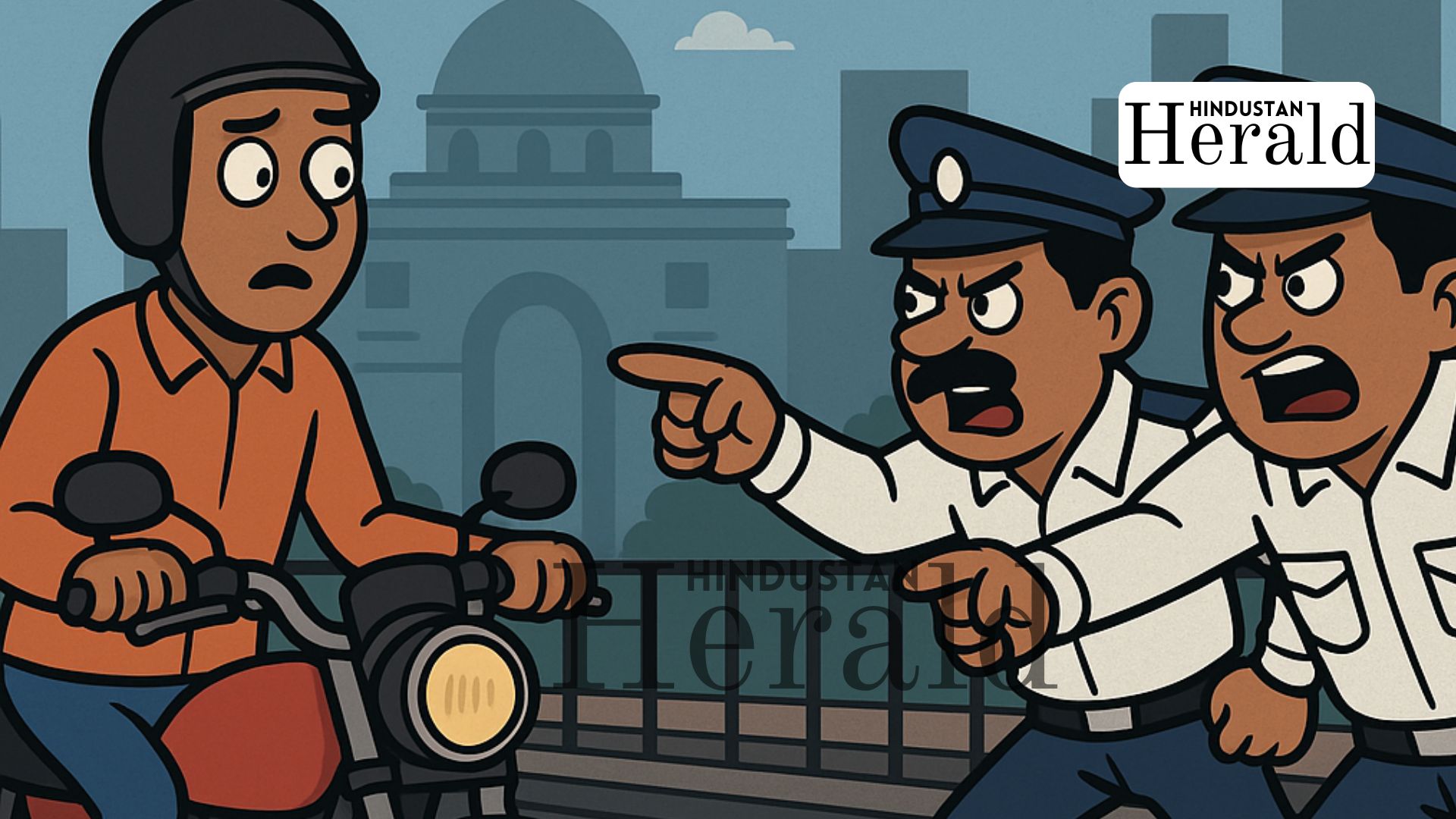
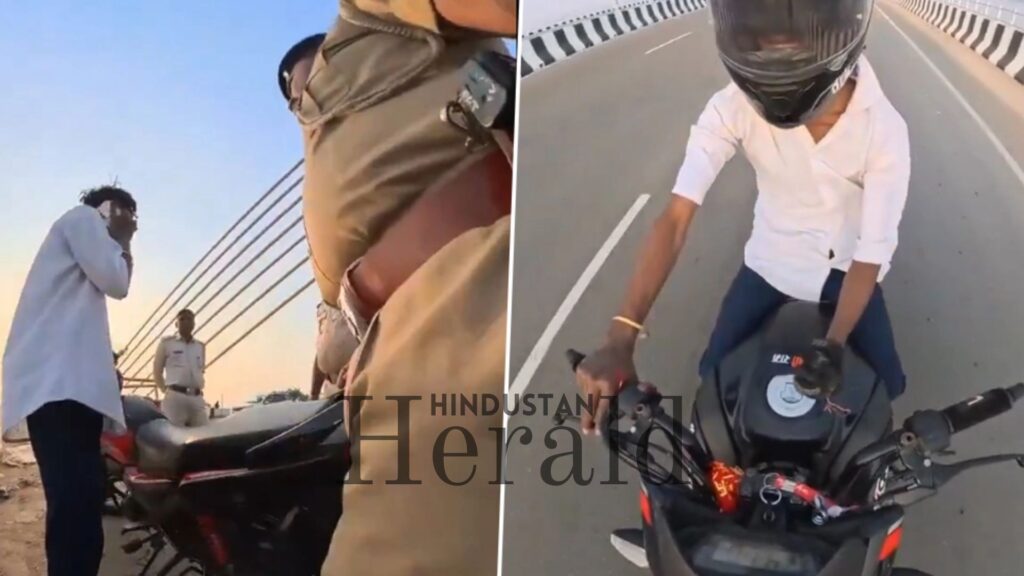
Patna, November 17: The video that erupted across social timelines this week didn’t look like anything unusual at first. A bike is slowing down on a broad Patna road. Two traffic policemen are stepping toward the rider. But a few seconds in, the tone shifts. One officer orders the rider, Ishu, to take off his helmet. Another leans in, grabs at the camera fixed to his bike, and the argument turns rough almost immediately. What followed has now put the Bihar Police in an uncomfortable spotlight.
A Sudden Halt And An Even Stranger Confrontation
According to reporting from The Indian Express, Ishu said he wasn’t breaking any rule when he was flagged down. The clip backs that up; nothing in the footage shows erratic riding or a violation. He steps off the bike, tries asking what the issue is, and gets no real answer. The officers instead begin berating him. A hand lands on his face. Another tries yanking the mounted camera away. The whole thing turns tense fast.
People who’ve seen the clip have pointed out the speed with which the officers lost patience. There isn’t much room for confusion here. The exchange isn’t blurry or half-audio. Everything is clear enough to make you recoil a bit, because this is the sort of behaviour that usually goes unrecorded and unchallenged.
But the real twist came after the video spread.
Threatening Calls Make A Bad Situation Worse
Once the clip hit social media on 15 and 16 November, Ishu and the friend who posted it reportedly began receiving phone calls. As per The Indian Express, the callers claimed to be from the police and demanded the video be removed. One call warned that if the clip stayed online, the two of them would face arrest.
That detail lit a new fire online. People who were initially reacting to the slap were suddenly asking why a citizen filming a traffic stop should face intimidation at all. Some users uploaded audio recordings of the calls they said they received, which only added more heat to the conversation.
By this point, the story had travelled far beyond Patna’s roads.
Police Scramble To Contain The Outrage
On 17 November, the Patna Traffic Police posted a short message on its official account saying the matter had been sent for investigation and necessary action. The wording was routine, but the speed wasn’t. A day earlier, no one in the force had publicly acknowledged anything. Within hours of national attention, the tone changed.
Later the same day, Navbharat Times reported that action had been taken against both the sub-inspector and the constable seen in the footage. What exactly that action entails remains unclear. There’s no detailed order available, no disclosure of suspension or transfer. This kind of ambiguity is common in disciplinary cases involving uniformed personnel, but that doesn’t make it sit any better with people watching the story unfold.
Why This One Struck A Nerve
Anyone who’s lived or driven in Bihar knows the uneasy relationship between traffic enforcers and daily commuters. There’s a long-standing discomfort that flares whenever authority turns arbitrary. So when a clean, uninterrupted video captures an officer hitting a civilian without explanation, it taps into that larger memory bank. That’s partly why this incident spread so quickly. It wasn’t just new; it was familiar.
The other factor here is public recording. More riders now have cameras clipped to their helmets or bikes. Almost every person carries a phone with a good enough lens. Encounters that would once have faded into memory now sit on reels for the world to scrutinise. And while the law allows citizens to record officers performing public duties, the ground reality often feels much older than the law itself.
Still, this incident shows how the dynamic is shifting. The video forced a response that may not have come on its own.
A Bigger Pattern Behind A Smaller Incident
If you zoom out, what happened in Patna mirrors a national trend. Ordinary people record moments where power is misused, the footage circulates within hours, and the institution involved responds only after the noise becomes impossible to ignore.
Here, though, the threatening calls added something else: fear. When a biker and his friend feel pressured to delete a clip that clearly shows wrongdoing, it raises the question of how deeply resistance to transparency runs within certain pockets of policing.
For the Bihar Police, this isn’t just a matter of two officers losing their temper. It hits at credibility. It forces a reckoning with the fact that public trust rarely survives silence or half-answers.
What Comes Next For The Case And The Conversation
As of now, there’s no indication that Ishu has filed a formal complaint. Without that step, the matter may remain limited to internal measures. That said, the public debate has already escaped the confines of any official inquiry. People are asking about recording rights, about officers who retaliate when filmed, about how state police forces plan to manage this new era where everything can land online within minutes.
Whether this particular case triggers long-term changes is impossible to know today. But it has already become one more piece of evidence in a growing archive of citizen-shot videos challenging how policing is carried out on the ground.
For now, the only certainty is that cameras have changed the balance of power on Indian roads. And institutions that fail to recognise that shift will keep finding themselves answering questions only after the damage is already done.
Stay ahead with Hindustan Herald — bringing you trusted news, sharp analysis, and stories that matter across Politics, Business, Technology, Sports, Entertainment, Lifestyle, and more.
Connect with us on Facebook, Instagram, X (Twitter), LinkedIn, YouTube, and join our Telegram community @hindustanherald for real-time updates.

Regional journalist bringing grassroots perspectives and stories from towns and cities across India.
- Sandeep Verma

- Sandeep Verma
- Sandeep Verma
- Sandeep Verma




 Kavita Iyer and Sandeep Verma