
 By Sandeep Verma and Ananya Sharma
New Delhi, November 23: The past few hours in the capital have felt unusually charged. Not because of any single big raid or dramatic showdown, but because three separate investigations have begun to line up like pieces of a larger puzzle. Each story on its own is worrying enough. Put together, they hint at a weapons pipeline that is far more adaptive, scattered, and quietly embedded in Delhi-NCR than many officers had previously assessed.
Earlier today, the Delhi Police Crime Branch picked up four men from Rohini after what officers described, off the record, as one of the more precise operations they’ve run in recent weeks. The New Indian Express reported that the men are Mandeep Singh, Dalvinder Kumar, Rohan Tomar, and Ajay, all in their thirties. The arrests came a few days after a tip-off landed on November 19, and by the time teams moved in, the suspects were already carrying an assortment of foreign-made pistols and nearly a hundred rounds of ammunition.
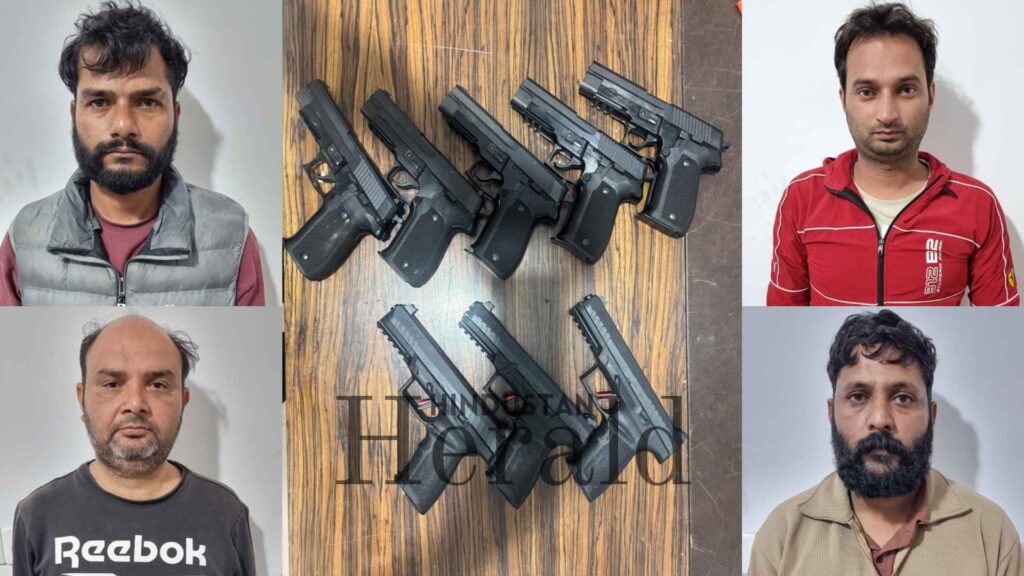
The weapons weren’t locally sourced. They rarely are anymore. These were PX-5.7 pistols from Turkiye and PX-3 pistols from China, exactly the sort of hardware investigators say has been quietly making its way into the northern belt for months.
Drones Have Quietly Redefined The Supply Chain
That these pistols arrived through drone drops across the Pakistan border is no longer shocking. Still, it is unsettling. The Times of India reported that commercial-grade drones, the sort hobbyists buy online, have become the preferred mode of delivery. The drones are flown low, late at night, and programmed to hit extremely specific GPS points where ground receivers scoop up the payload in minutes.
Police sources quoted in the report say the network appears tied to operatives working with Sonu Khatri, a US-based gangster, and elements connected to the Lawrence Bishnoi gang. It’s a reminder that organised crime in Delhi has been evolving in real time, integrating technology with the speed and agility of a start-up.
A senior officer described this shift in simple terms during an earlier briefing: “Big consignments are too risky. Small ones keep the business running.” Even if he wasn’t talking about this exact case, the description fits eerily well.
Then There Are The Doctors In Faridabad
As if those two developments weren’t enough, the most startling detail of the day came from Faridabad, where another team has been digging into a module with suspected links to Jaish-e-Mohammed. According to TOI, four individuals, Dr Muzammil, Dr Shaheen, Dr Adeel, and Amir, had purchased a Russian-made weapon and a specialised freezer used to store explosives.
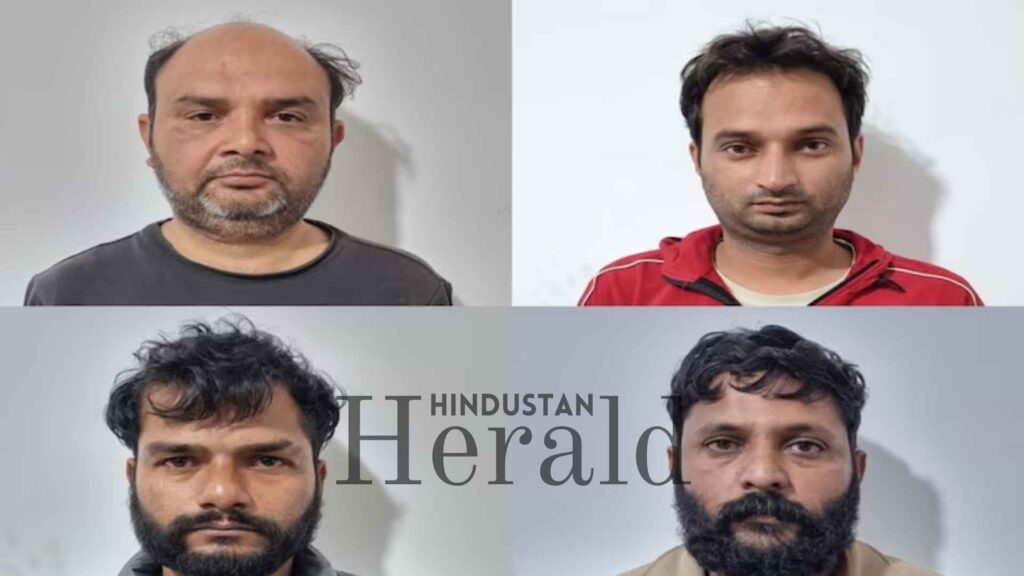
Investigators were taken aback by how comfortably the operation appears to have run under a professional front. Doctors buying equipment that can preserve explosives is not the kind of pattern anyone anticipates during routine background checks. One officer said the group seemed to have “studied what they needed,” hinting at a longer-term plan rather than impulsive activity.
For now, much of their questioning is still underway, but officers are openly treating the case as a critical node in regional terror-crime linkages.
A Web, Not A Chain
What makes these three incidents stand out is how they overlap without fully touching. One module relies on drones. Another leans on established gang networks. A third hides behind a professional veneer. None of them operate with the traditional heavy infrastructure of older terror cells or big smuggling outfits.
Instead, Delhi is looking at a loose, modular ecosystem where each small unit is replaceable, discreet, and highly efficient. A drone drop here, a middleman there, a professional who wouldn’t usually raise a red flag. It is, in many ways, the criminal equivalent of a distributed network.
Security officials have been hinting at this shift for more than a year now, but these recent developments seem to sharpen the picture. The weapons themselves, foreign, compact, easy to hide, fit perfectly into this structure. So does the money, which investigators believe moves through layered, localised channels designed to be forgettable.
A Capital On Alert, Again
Delhi has been on edge since the previous blast investigation earlier this year. The capital’s policing machinery has been stretched thin across gang wars, interstate smuggling, periodic terror alerts, and now a growing list of drone-based drops.
Officers say the latest findings won’t immediately change the city’s visible security posture, but in closed-door meetings, the worry is clear. The tools have changed. The players have diversified. And the city’s edges, its highways, border villages, and industrial pockets have become staging grounds for a new kind of logistics.
That said, officials insist the arrests this week have already yielded valuable intelligence. There are mobile numbers to trace, drone flight paths to analyse, financial trails to freeze, and a wider ground network to map. No casualties have been reported in any of these cases, which gives investigators a bit of breathing room. But they also know breathing room isn’t the same as time.
Delhi’s landscape has always carried a certain undercurrent of criminal innovation. Still, the emerging pattern feels different. It feels quieter, more deliberate, and far more connected to external players who understand exactly how to exploit the city’s blind spots.
For now, investigators are widening the net. The real test will be whether they can keep up with a network that seems built to survive even if one link falls away.
Stay ahead with Hindustan Herald — bringing you trusted news, sharp analysis, and stories that matter across Politics, Business, Technology, Sports, Entertainment, Lifestyle, and more.
Connect with us on Facebook, Instagram, X (Twitter), LinkedIn, YouTube, and join our Telegram community @hindustanherald for real-time updates.

Regional journalist bringing grassroots perspectives and stories from towns and cities across India.
- Sandeep Verma

- Sandeep Verma
- Sandeep Verma
- Sandeep Verma





Covers Indian politics, governance, and policy developments with over a decade of experience in political reporting.
- Ananya Sharma
- Ananya Sharma
- Ananya Sharma
- Ananya Sharma




 Arun Upadhayay
  Ananya Sharma