
 By Ananya Sharma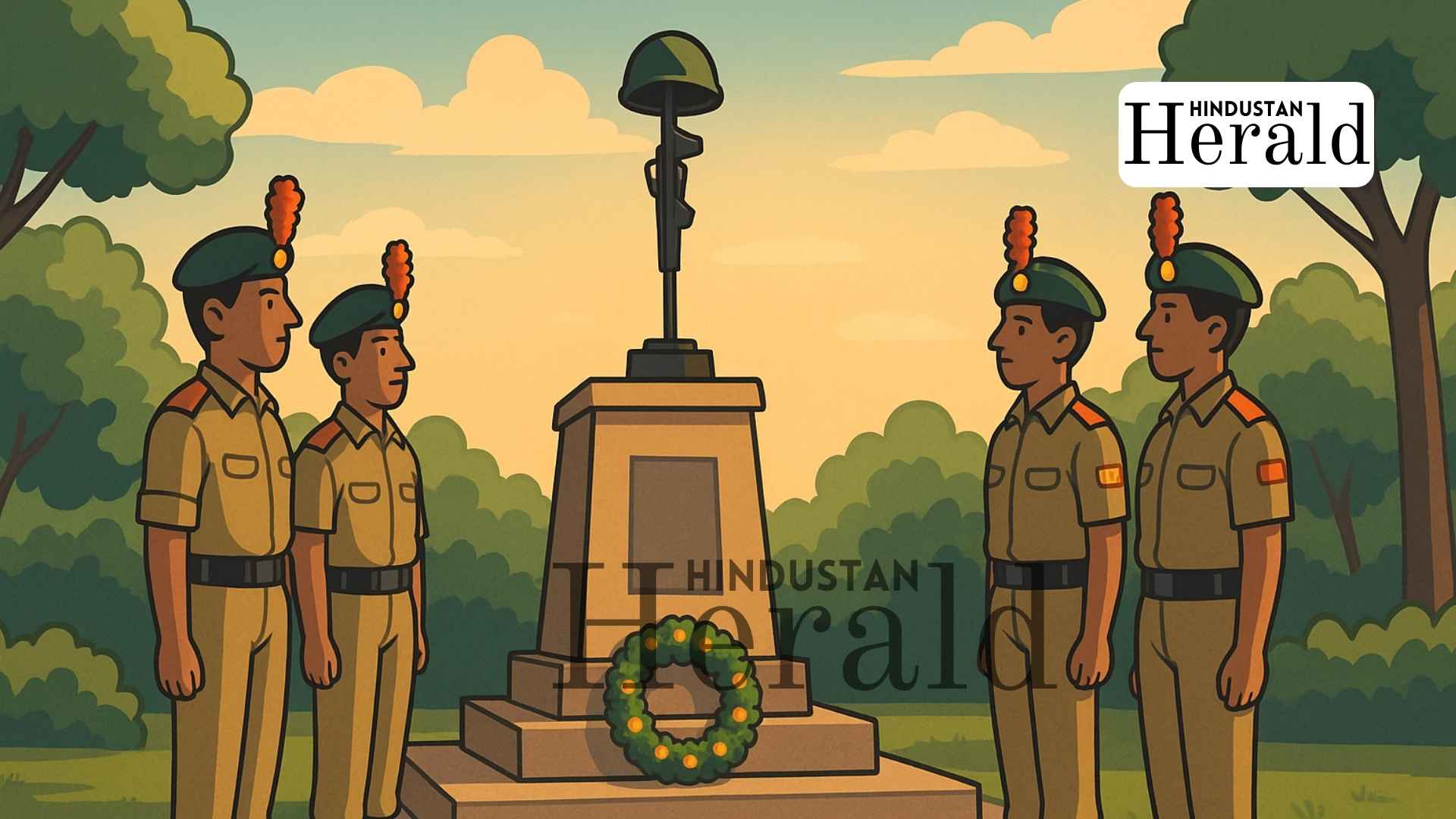
Trichy, November 23: The morning light had only just settled over the Cantonment when a small group of NCC cadets walked toward the Major Mariappan Saravanan Memorial, each holding a flower that looked like it had been picked up on the way. The road was mostly quiet except for a couple of autos slowing down to see what was happening. Nothing official seemed to be underway at first glance, yet the cadets kept straightening their collars, signalling that this moment carried weight for them. It was NCC Day, and this was where they chose to begin.
A Simple Tribute That Felt Honest
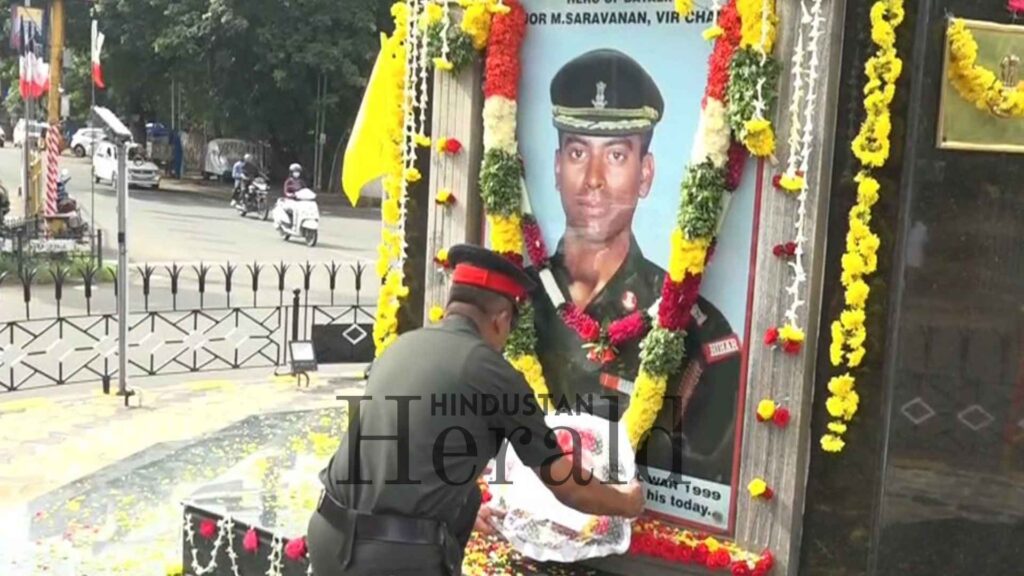
There was no podium, no stage, not even the usual plastic chairs that appear for commemorations in this area. Colonel Vijayakumar, who leads the Trichy NCC Group, arrived with a wreath tilted slightly in his grip, as though the morning breeze had tried rearranging it on the way. He paused briefly before stepping toward the memorial. The movement looked instinctive, the sort a person repeats year after year until it becomes muscle memory.
The cadets followed, not in a perfect line but in the tentative way young people move when trying to balance respect with uncertainty. One boy kept checking if he was standing too close. A girl hesitated before placing her flower, taking an extra breath as if to steady herself. Little things, but they made the ceremony feel real instead of rehearsed.
A short pledge was read aloud, voices uneven, some louder than others. And then silence. The kind of silence that doesn’t demand grandeur but still manages to settle in your chest for a moment.
A Tamil-language report mentioned the ceremony earlier today, almost quietly, which is fitting because the ceremony itself carried that same quiet tone.
The Soldier Who Still Anchors Trichy’s Sense Of Service
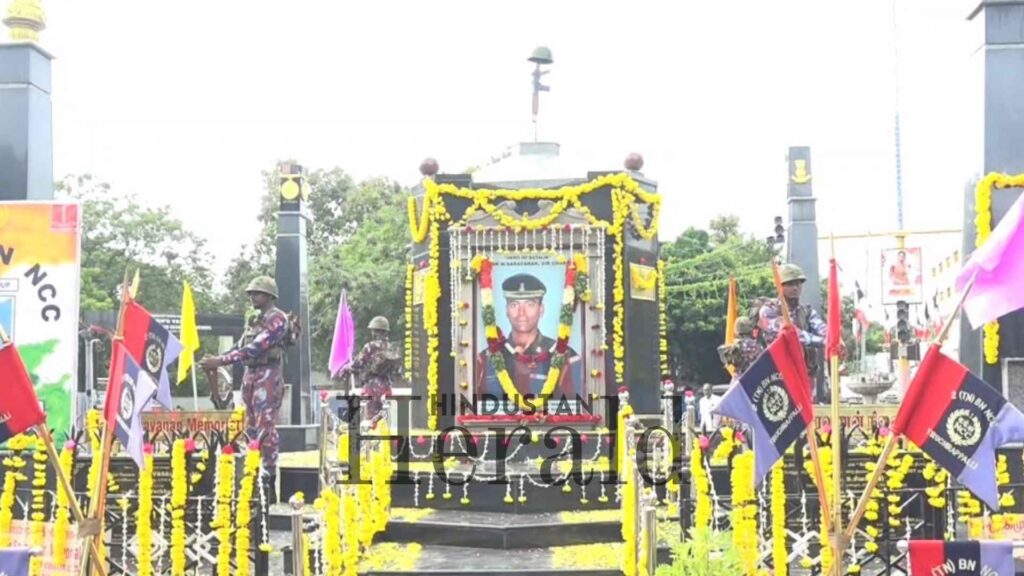
It is hard to walk around Trichy without hearing the name Major Mariappan Saravanan at least once a year. Schoolchildren learn his story early. Many adults can recall where they were when the Kargil War dominated television screens in 1999. The memorial here grew out of that time, a reminder of the young officer who left Trichy, joined the Bihar Regiment, and never returned.
He died in the Batalik sector, fighting in terrain known even among soldiers as unforgiving. The Vir Chakra he received after his death is often mentioned, but in this city, it is the memory of his courage that people carry, not the medal.
For the cadets standing there this morning, most of whom weren’t even born in 1999, the story is something passed down through teachers, NCC officers, or the occasional veteran who still speaks about the war with emotion that has not softened over the years.
When A Local Tribute Stays Local
If you were checking national news updates today, you would not have seen this ceremony mentioned anywhere. No English-language outlet carried it. No round-ups about NCC Day included it. Just one Tamil report confirming what happened.
This absence does not seem to bother those who gathered. Many small tributes across India happen exactly like this, without coverage, without a press note, without anyone trying to shape the narrative. But moments like these carry meaning precisely because they are not orchestrated for attention.
How A City Remembers Without Letting Go
After the cadets placed their flowers, they stepped back a little, some of them unsure about what came next. A few glanced toward the officers. Others simply stood still, looking at the engraving on the memorial. When the ceremony ended, they drifted off slowly, talking in low voices, their morning moving toward whatever drill or activity awaited them next.
A man passing by paused for a moment, hands behind his back, and watched the cadets leave. He didn’t stay long. Just nodded once toward the memorial and kept walking. That casual familiarity says more about Trichy’s relationship with this place than any ceremony ever could.
This city doesn’t mark its heroes loudly. It doesn’t need to. It remembers them in a continuous, almost quiet way that doesn’t rely on anniversaries to stay alive.
The Image That Stays Behind
The memorial stood still after the group left. A slightly crooked wreath. Flowers arranged without precision. A thin layer of dust settles back onto the stone. A couple of schoolchildren cycling past without stopping. A morning returning to its routine.
And yet the scene lingered. Maybe because the tribute felt like something the cadets chose to do rather than something planned for them. Maybe because remembrance, when stripped of ceremony, feels more grounded. Or maybe because this city has learned that some stories don’t need amplification to endure.
Today’s tribute was small. But small can still be sincere. And sincerity is often what keeps memory alive far longer than public displays ever do.
Stay ahead with Hindustan Herald — bringing you trusted news, sharp analysis, and stories that matter across Politics, Business, Technology, Sports, Entertainment, Lifestyle, and more.
Connect with us on Facebook, Instagram, X (Twitter), LinkedIn, YouTube, and join our Telegram community @hindustanherald for real-time updates.

Covers Indian politics, governance, and policy developments with over a decade of experience in political reporting.
- Ananya Sharma

- Ananya Sharma
- Ananya Sharma
- Ananya Sharma