
 By Ananya Sharma, Kavita Iyer and Neeraj Kapoor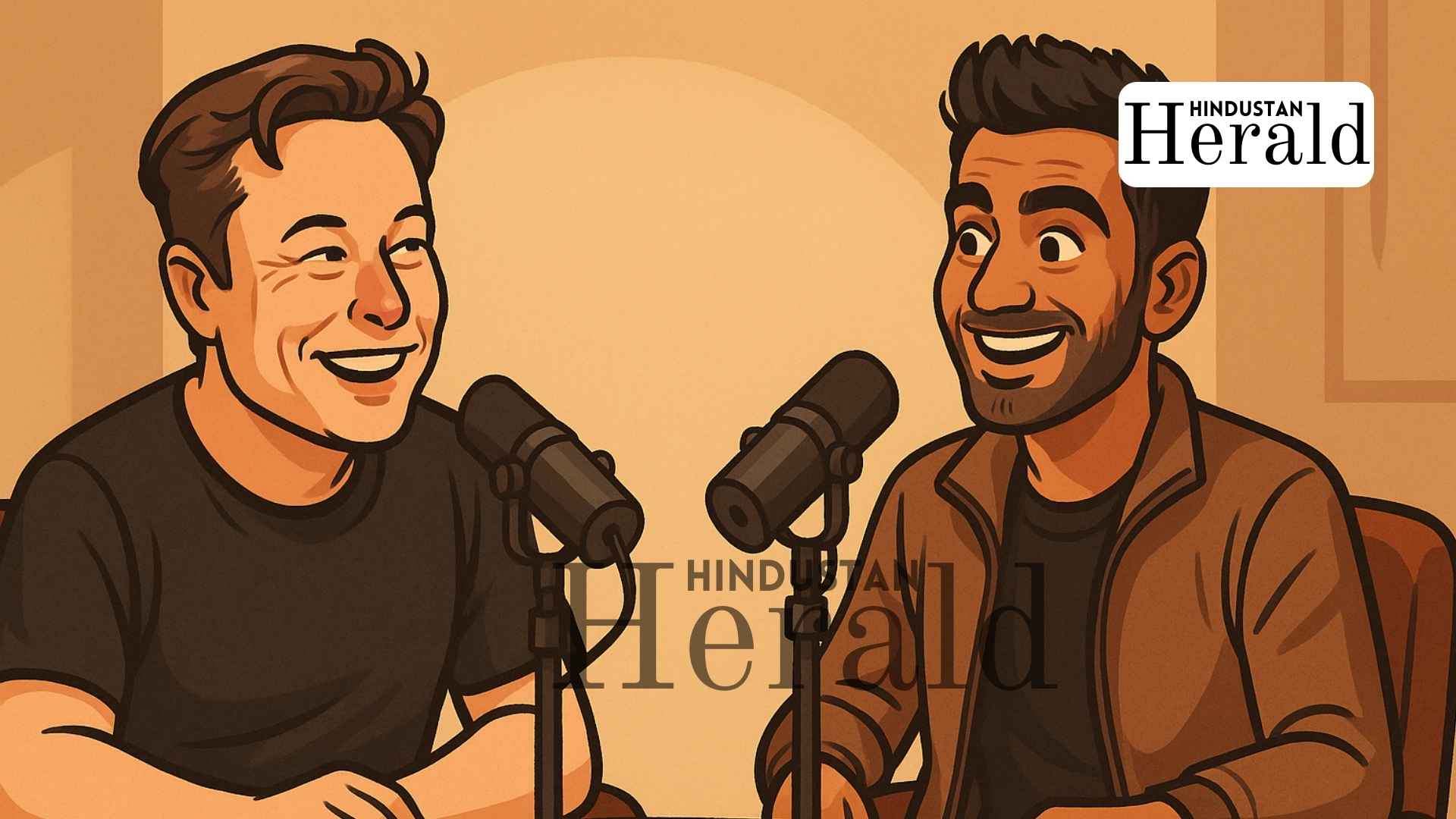
New Delhi, December 1: The latest episode of Nikhil Kamath’s podcast rolled out quietly at first, but within hours, it was everywhere. Much of the attention came from the presence of Elon Musk, yet the real draw was how unguarded he sounded. Kamath, who tends to keep his interviews loose and unscripted, let Musk wander through topics without rushing him, and the result was a conversation that felt unusually open for someone who usually attracts headlines for the smallest remark.
The interview moved between personal memories, predictions about artificial intelligence, and reflections on India that struck a chord with listeners who are used to hearing Musk in a far more corporate tone.
A Family Detail That Caught India Off Guard
One of the moments that travelled the fastest online was surprisingly gentle. Musk mentioned that his partner Shivon Zilis has Indian heritage. Then he added that one of their children carries the middle name Sekhar, a quiet salute to Subrahmanyan Chandrasekhar, the Nobel Prize-winning astrophysicist.
According to The Economic Times, this came up almost accidentally, without fanfare. Even so, the reaction was immediate. A global figure speaking warmly about an Indian scientist and his family’s connection to that legacy struck an emotional note. People shared the clip not because it was sensational, but because it felt disarmingly human.

Musk did not linger on the topic. Still, for many Indian viewers, it shifted the mood of the interview and softened the edges of what would otherwise have been a very technical discussion.
A Stark Prediction About Work In An AI-Driven World
The conversation inevitably moved toward artificial intelligence. Here, Musk slipped back into the role of someone who thinks far ahead of the present. As reported by The Indian Express, he predicted that within ten to twenty years, most forms of work may become optional. This was not presented as a triumph, but as a structural reality of a world where machines produce nearly everything people need.
He described an economy where robotics handles manufacturing, and AI takes over most analytical tasks. Humans, in his view, will work for personal interest rather than survival.
For a country like India, this idea feels both distant and uncomfortably close. Millions of young people enter the workforce each year, many of them chasing stable employment rather than creative fulfilment. Musk did not directly address the tension, but it hovered in the background. India is building policies around job creation, while global technology threatens to shrink the very space where traditional employment exists.
His warning had none of the drama often attached to AI narratives. Instead, it carried the steady tone of someone who views this transformation as almost unavoidable.
Musk’s Praise For Indian Talent And His Firm Stand On H-1B Visas
When Kamath asked him about global talent, Musk immediately pointed to India. According to Business Standard, he said the United States has “benefited immensely” from Indian engineers, researchers, and entrepreneurs. He spoke about them as essential to the growth of American innovation rather than simply contributors.
This led to a discussion on the H-1B visa programme. Musk acknowledged, as NDTV reported, that some firms have abused the system, but he rejected the idea that it should be abolished. His reasoning was blunt. The US cannot afford to close its doors to highly skilled workers.

For many Indian families who depend on H-1B pathways, this stance has real weight. It is not just a policy issue but a matter that shapes careers, remittances, and long-term migration decisions. Musk framed it not as a favour to India but as a strategic necessity for the US.
Starlink And Musk’s Argument For Better Connectivity In Rural India
Kamath eventually asked Musk about the status of Starlink in India. Musk spoke with clear enthusiasm about bringing low-cost satellite internet to rural regions. Free Press Journal reported him saying that Starlink could reach communities that fibre networks simply cannot cover.
The idea is appealing for obvious reasons. Rural India still struggles with patchy connectivity, which affects schooling, healthcare access, and market information for farmers. Satellite networks bypass these limitations.
Yet, the rollout has not been straightforward. Government clearances remain pending. Pricing guidelines need to be settled. Domestic telecom firms are lobbying hard. Musk did not dwell on these complexities, but Indian viewers are aware of them. For now, Starlink sits in a space between ambition and bureaucracy.
A Lighthearted Exchange About The Letter X And The Future Of His Platform
Kamath then asked about the decision to rebrand Twitter as X. Musk laughed before answering, almost as if he knew how strange the story sounds. According to The Financial Express, he admitted that he has been fascinated with that letter since his early ventures and joked that he sometimes wonders what exactly fuels that obsession.

Behind the humour was a quiet insistence that the rebrand fits his long-term plans for the platform. He described X as something that will eventually move beyond social media into broader digital services. The answer did not feel rehearsed, but it also did not fully explain the transformation. Musk seemed comfortable leaving some questions hanging.
A Monochrome Teaser That Led To A Debate About Reality Itself
Oddly enough, a large part of the public reaction did not come from the interview but from the teaser video that promoted it. Shot in black and white, the clip shows Kamath and Musk drinking coffee and laughing lightly. Nothing unusual at first glance. Yet people online began insisting the video looked artificial.
According to The Economic Times, this doubt spread quickly. The lighting seemed too clean to some viewers. The expressions felt slightly off to others. And then the situation became stranger when The Times of India reported that Musk’s own chatbot, Grok, reviewed the clip and marked it as “likely AI-generated.”
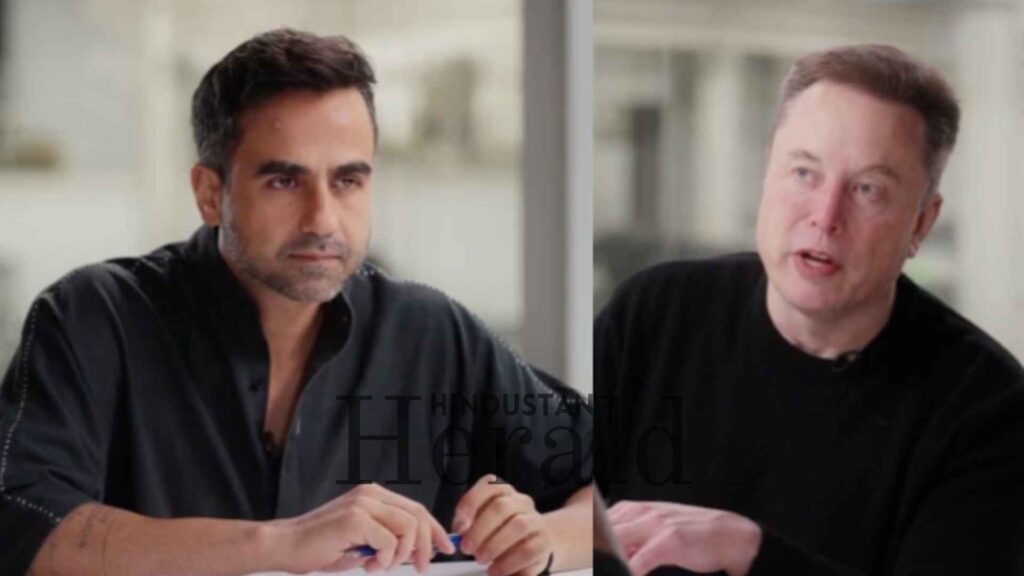
That single comment sent social media into a day-long argument. Some claimed it proved the clip was synthetic. Others argued it showed how unreliable AI detection tools can be. Kamath said nothing. Musk said nothing. And the silence helped the speculation grow.
A Brief Pause In The Video Becomes Its Own Mystery
There was another detail that viewers could not let go of. Indiatimes noted that a short pause in the teaser, barely a blink long, became the centre of endless theories. People wondered whether Musk was responding to something off-camera or whether the pause was an editing glitch.
The fact that such a small moment drew so much attention says something about the times in which we live. Audiences now study every second of footage looking for signs of digital manipulation. Authenticity is no longer assumed. It is scrutinised, debated, and sometimes doubted without evidence.
India’s Place In Musk’s Vision Emerges More Clearly Than Before
Once the online noise is filtered out, the conversation leaves behind a clear impression of how Musk views India. Not as an afterthought or a convenient market. Not as a support system for Western companies. But as a key player in the global technology landscape.
He talked about Indian talent with genuine respect. He argued for immigration policies that keep the door open for skilled workers. He spoke of rural connectivity as a priority, not a side project. And he shared a personal connection that, while small, added warmth to a conversation filled with heavy themes.
For Kamath, who often brings global leaders into Indian discourse, this episode carried a different kind of weight. It was not just an interview with a high-profile guest. It was a conversation that reflected how India is perceived from the upper echelons of global technology. The country is not on the sidelines. It is part of the main plot.
Stay ahead with Hindustan Herald — bringing you trusted news, sharp analysis, and stories that matter across Politics, Business, Technology, Sports, Entertainment, Lifestyle, and more.
Connect with us on Facebook, Instagram, X (Twitter), LinkedIn, YouTube, and join our Telegram community @hindustanherald for real-time updates.

Covers Indian politics, governance, and policy developments with over a decade of experience in political reporting.
- Ananya Sharma

- Ananya Sharma
- Ananya Sharma
- Ananya Sharma




Former financial consultant turned journalist, reporting on markets, industry trends, and economic policy.
- Kavita Iyer
- Kavita Iyer
- Kavita Iyer
- Kavita Iyer


Tech writer passionate about AI, startups, and the digital economy, blending industry insights with storytelling.
- Neeraj Kapoor
- Neeraj Kapoor
- Neeraj Kapoor
- Neeraj Kapoor




 Rajiv Menon and Ananya Sharma