
 By Ananya Sharma and Neeraj Kapoor
New Delhi, December 3: For a government tool that most people barely knew existed until a week ago, Sanchar Saathi has suddenly become the centre of a very loud fight. The Department of Telecommunications’ decision on 28 November to make the app appear by default on every new phone has pushed India into another uneasy conversation about how much the state should be allowed to sit inside citizens’ devices.
It is not the first time India has struggled with this question. But the speed with which this particular directive triggered political attacks, industry resistance, and a public backlash shows that people are a lot more alert to digital overreach than they were even a few years ago.
Still, the government insists the storm is based on a misunderstanding. Officials say the app is harmless and even helpful. Privacy advocates say that is exactly the problem. Too many things in India’s digital regulation begin as helpful ideas and end up expanding far beyond their original intent.
A Tool Built For Fraud Prevention Suddenly Lands In A Political Minefield
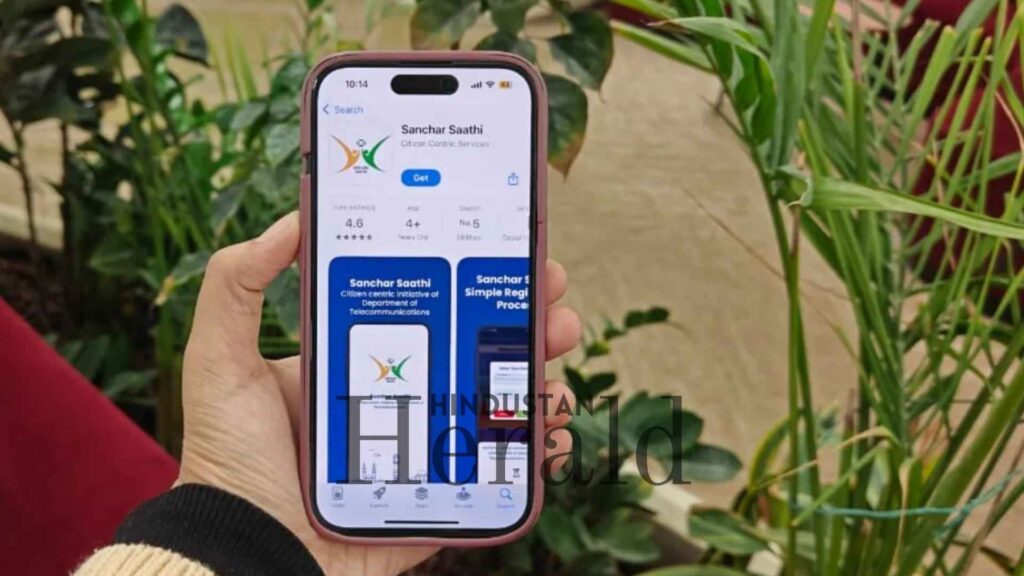
At its core, Sanchar Saathi is not new. The DoT has been talking about it for a while. As Amar Ujala explained, the platform lets users block stolen phones, check IMEI legitimacy, spot duplicate connections and report fraud calls or spam messages. It is a straightforward public utility.
The controversy began when the government decided every phone in the country should carry it. The directive asked manufacturers to pre-install the app and to ensure it remained fully functional. For people already sensitive about digital tracking, that one line was enough to raise eyebrows.
The unease grew worse when officials suggested that even existing phones could get the app through an over-the-air update. For many users, that crossed a psychological boundary. A government app slipping into millions of devices without explicit consent is the kind of scenario that privacy advocates warn about each year, often to polite nods and little follow-up. This time, the fear caught on.
Tech Firms Are Not Exactly Eager To Play Along
The tension was not limited to political circles. On 2 December, Reuters reported that Apple was preparing to resist the mandate. This is not surprising. Apple’s brand depends heavily on the perception that no one, not even governments, can force its devices to run third-party tools without scrutiny.
Quietly, other device makers were also asking questions. If they accept this mandate, what comes next? A health app. A financial compliance app. Something more intrusive. Manufacturers rarely oppose governments publicly, especially in large markets like India, but industry insiders have hinted that the worry is real.

That said, the government has not shown any sign of withdrawing the order. If anything, the reaction seemed to take officials by surprise.
Opposition Leaders Smelled Trouble And Pounced
By the morning of 2 December, the Sanchar Saathi dispute had moved squarely into the political arena. The opposition framed the directive as an example of state intrusion into private digital lives. As Mint reported, several leaders accused the government of pushing India toward a surveillance-heavy future.
One comment from a senior politician in Chandigarh, quoted by The Times of India, called the app a new avatar of Pegasus. That comparison was harsh, but it resonated on social media, where suspicion of state technology remains high.
Ordinary users joined the chorus within hours. Many said they did not want the government anywhere near their call logs or device identifiers. Others argued that even if the app had good intentions, the permissions it asked for were too broad to ignore.
In short, the public was not waiting for technical explanations. The trust deficit spoke louder than the feature list.
Why The App’s Permissions Became The Flashpoint
The more people examined the app, the louder the questions became. According to Analytics India Magazine, Sanchar Saathi requests access to calls, SMS, call logs, IMEI, and other identifiers, storage, and even the camera for IMEI scanning. While these may be justifiable for fraud detection, they also create room for misuse.
Metadata is powerful. You do not have to read messages to learn something intimate about a person. Just knowing who they call and when can reveal patterns about friendships, movements, political leanings, or personal struggles. When such information is linked to an IMEI number and a verified SIM connection, the picture becomes even more detailed.
Opponents say India still lacks strong, independent oversight of digital surveillance. Until that gap is fixed, anything that expands the state’s access to personal devices is going to be viewed with suspicion.
As it turns out, the DoT has not published a detailed breakdown of how data collected through the app is handled, how long it is stored or who has access to it. That silence only deepened the mistrust.
The Government Tries To Calm Everyone Down
As criticism mounted, Telecom Minister Jyotiraditya Scindia stepped in. According to The Times of India and DD News, he clarified that the app was optional and could be uninstalled. This was a significant shift from the tone of the original directive.
He also said the app cannot read messages or listen to calls, a statement echoed by The Indian Express. Officials insisted the backlash was built on misinformation and that Sanchar Saathi was simply a tool meant to protect citizens from fraud and duplicate SIM misuse.
Still, critics asked why the government would mandate the installation of an app that users were free to delete. If it is truly optional, why force it onto every new phone? The explanation has not arrived yet.
For now, the directive remains in place, and the public remains uneasy.
A Bigger Battle Over Digital Power Is Being Fought Beneath The Surface
The Sanchar Saathi episode is not just a policy issue. It reflects a deeper struggle over the shape of India’s digital future. As India becomes increasingly connected and data-driven, the question of who controls the smartphone becomes more significant.
Governments worldwide are rewriting digital rules, and India is no exception. But experts quoted by India Today warn that a decision like this sets a precedent. Once the state shows it can embed an app into every phone, it becomes harder to draw a line later.
Some citizens believe the trade-off is worth it. Telecom fraud harms thousands of people every year. A tool that helps identify fake devices or suspicious numbers could reduce crime. But others worry that rights, once diluted, rarely return to full strength.
This struggle between convenience and privacy is becoming a defining theme of India’s digital politics. Sanchar Saathi has simply brought it into sharp focus.
India Is Now Asking A Larger Question
The argument over the app has grown bigger than the app itself. It has revived old anxieties about data protection and raised new concerns about state authority over personal devices.
Will the government revise the rule? Will manufacturers push back harder? And will users settle for assurances or demand stronger safeguards?
Those answers will decide whether Sanchar Saathi fades into the background or becomes a turning point in how India navigates digital rights.
Stay ahead with Hindustan Herald — bringing you trusted news, sharp analysis, and stories that matter across Politics, Business, Technology, Sports, Entertainment, Lifestyle, and more.
Connect with us on Facebook, Instagram, X (Twitter), LinkedIn, YouTube, and join our Telegram community @hindustanherald for real-time updates.

Covers Indian politics, governance, and policy developments with over a decade of experience in political reporting.
- Ananya Sharma

- Ananya Sharma
- Ananya Sharma
- Ananya Sharma





Tech writer passionate about AI, startups, and the digital economy, blending industry insights with storytelling.
- Neeraj Kapoor
- Neeraj Kapoor
- Neeraj Kapoor
- Neeraj Kapoor




 Ayesha Khan and Ananya Sharma
  Kavita Iyer and Ananya Sharma