
 By Sandeep Verma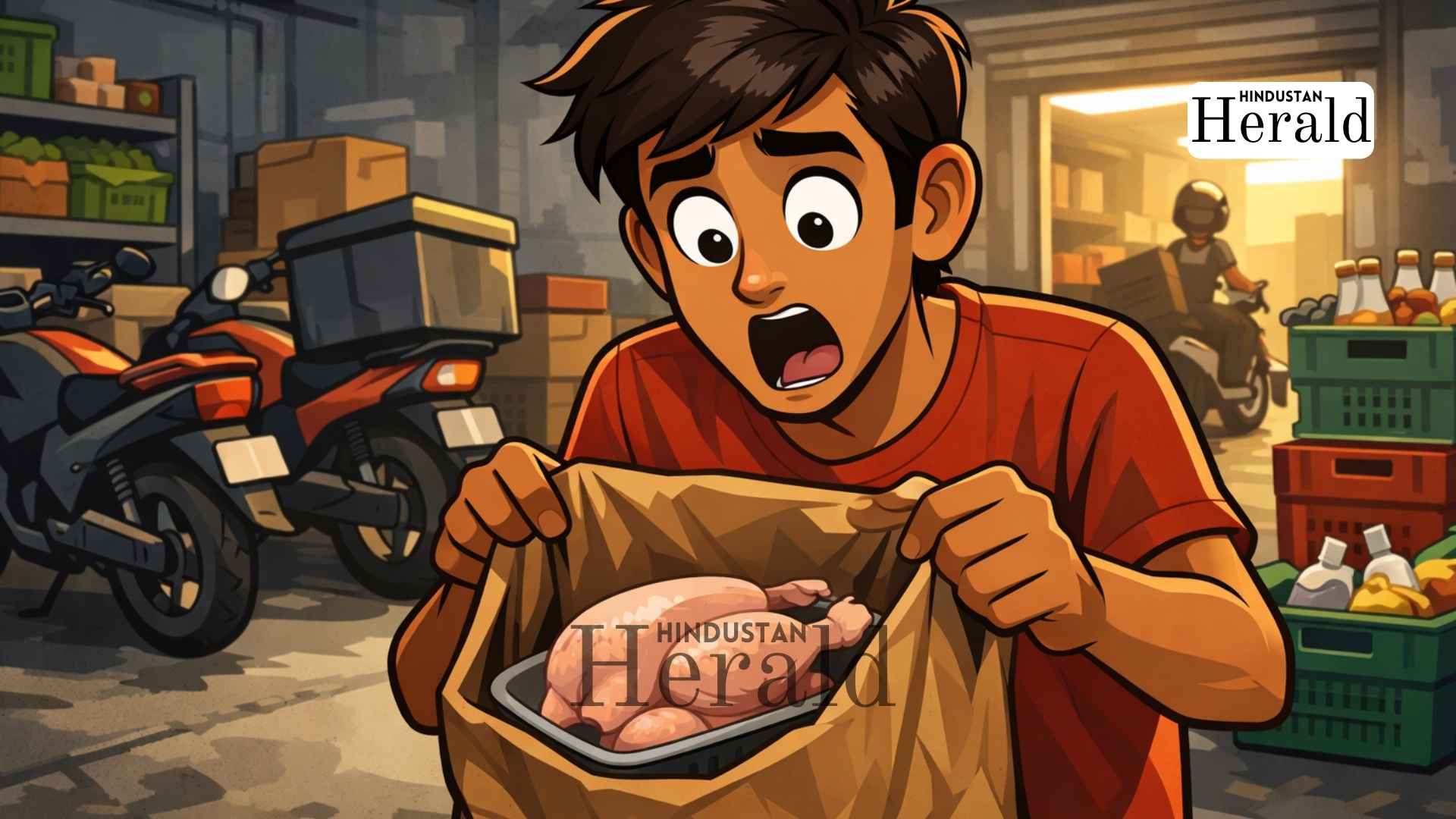
New Delhi, December 27: By itself, Nikhil Choudhary’s Instagram reel would normally pass as just another angry customer post in India’s crowded social media landscape. A complaint about chicken ordered from Zepto, shared on a phone camera, posted in frustration, and amplified by comments that sound all too familiar. What makes it different is not the individual claim. It is the timing.
As of tonight, there is no confirmed newsroom reporting on Choudhary’s specific order. No police complaint. No regulatory notice. No formal response from the company. Yet the video has landed in an ecosystem already primed by a year of food safety controversies tied to Zepto, where consumer trust has been repeatedly shaken and only partially rebuilt.
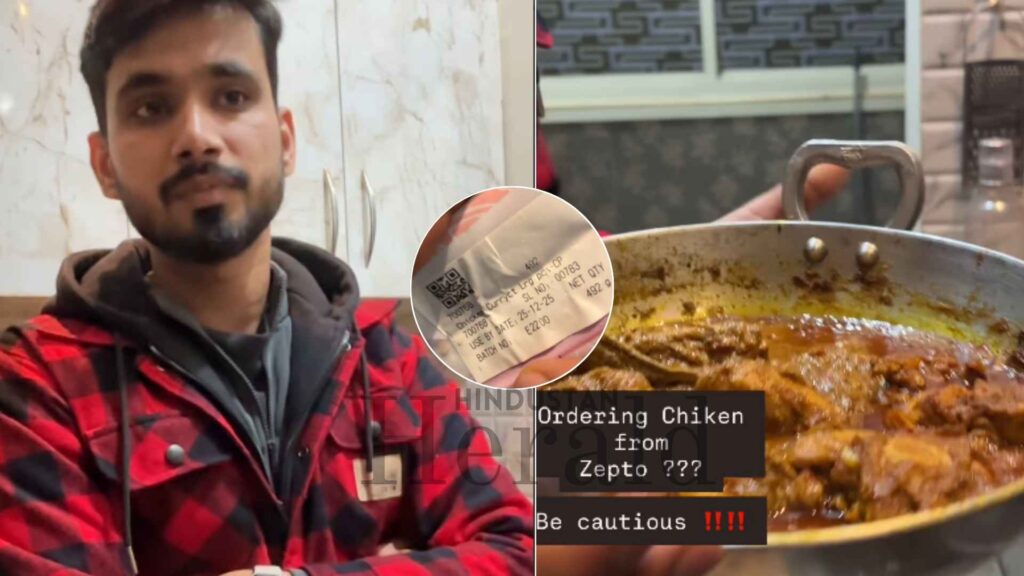
This is not a story about one order. It is about a pattern that refuses to fade.
A Long Year For Zepto And Its Customers
For much of 2025, Zepto has been chasing two narratives at once. On one hand, the promise of ten-minute grocery deliveries, venture capital confidence, and rapid urban expansion. On the other hand, a steady stream of customer complaints that have turned viral before the company could get ahead of them.
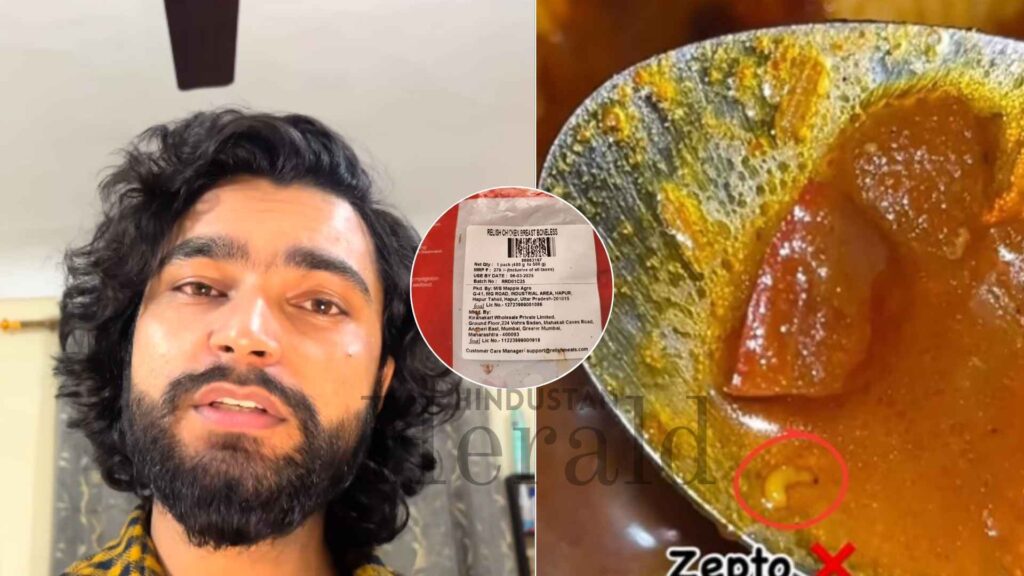
In March, video creator Ahtsham Malik posted footage showing what he said were insects inside packaged chicken sold under the ‘Meat 99’ label, ordered through Zepto. The video travelled fast, crossing platforms and languages. According to Curly Tales, the backlash was immediate enough for Zepto to delist the supplier, even as it insisted that prior checks had shown no irregularities.
That episode should have been the end of it. It was not.
In the months that followed, more customers came forward. One video showed worms emerging from chicken while it was being cooked. Others documented rotting fruits, slimy vegetables, and foul-smelling produce delivered in sealed bags. Not every claim could be independently verified, but the repetition was impossible to ignore.
Each incident chipped away at a core assumption of quick commerce. That speed and freshness naturally go together.
Inside The Company’s Response Playbook
Zepto’s public responses through the year followed a familiar arc. Statements spoke of batch-level quality audits, supplier inspections, and strengthened cold-chain monitoring. In multiple cases, brands linked to complaints were removed from the platform, framed as precautionary moves rather than admissions of fault.
In a vacuum, these steps sound responsible. In practice, they have struggled to reassure customers who feel they are acting as unpaid quality inspectors.
According to India TV News, Zepto maintained that several implicated suppliers had no prior complaint history, a point that only deepened concern. If problems could surface without warning, customers asked, how robust were the checks to begin with?
There is also a structural issue that sees little public discussion. Zepto’s dark stores handle everything from ice cream to raw meat under intense delivery timelines. When speed becomes the primary metric, hygiene can quietly slip down the priority list unless actively enforced.
Regulators Step In, Quietly But Firmly
Eventually, the complaints reached beyond social media.
Food safety authorities moved to suspend licenses of certain warehouses associated with Zepto after inspections reportedly found hygiene lapses. The action did not make front-page headlines, but it mattered. It signalled that regulators were no longer treating these as isolated customer disputes.
Several consumers filed formal complaints with the Food Safety and Standards Authority of India, demanding inspections and accountability. Meat and poultry, officials have long acknowledged, are among the highest-risk food categories, requiring strict temperature control and handling discipline.
For regulators, the challenge is scale. India’s quick commerce boom has outpaced inspection capacity, creating gaps that only become visible when something goes wrong.
Trust Frays As Comparisons Grow Sharper
As complaints mounted, customers began drawing comparisons. Platforms like BigBasket and Blinkit were not free of criticism, but they faced fewer viral accusations tied to contaminated meat this year.

On consumer forums, a pattern emerged. Many users said they still used Zepto, but only for packaged goods, avoiding anything perishable. Others described uninstalling the app altogether after one too many unpleasant surprises.
Yet the story is not one of mass abandonment. Zepto’s discounts, speed, and convenience continue to pull customers back, even those who voice doubts. That tension sits at the heart of this crisis.
Where Nikhil Choudhary’s Claim Fits
Against this backdrop, Nikhil Choudhary’s reel feels less like a standalone allegation and more like another echo in a long corridor. Its lack of mainstream coverage today reflects verification standards, not irrelevance.
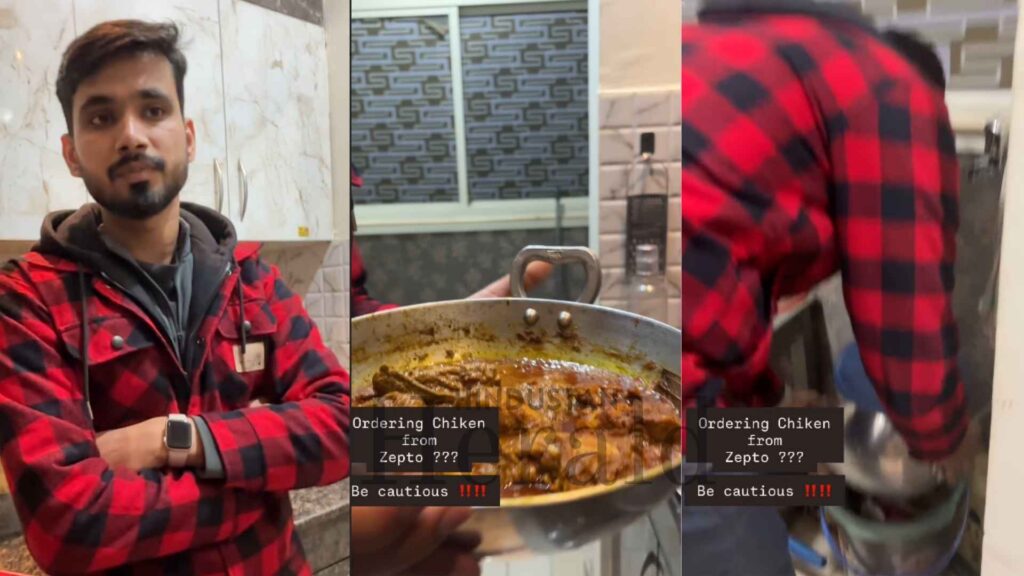
If his claim is substantiated, it strengthens the argument that Zepto’s food safety fixes have not gone far enough. If it is not, it still reveals how fragile the company’s public standing has become, where a single video can reignite months of unresolved anxiety.
For now, the larger issue remains unchanged. India’s quick commerce sector has proven it can move groceries fast. What it has yet to prove, consistently, is that it can move them safely.
Stay ahead with Hindustan Herald — bringing you trusted news, sharp analysis, and stories that matter across Politics, Business, Technology, Sports, Entertainment, Lifestyle, and more.
Connect with us on Facebook, Instagram, X (Twitter), LinkedIn, YouTube, and join our Telegram community @hindustanherald for real-time updates.

Regional journalist bringing grassroots perspectives and stories from towns and cities across India.
- Sandeep Verma

- Sandeep Verma
- Sandeep Verma
- Sandeep Verma