
 By Ananya Sharma and Rajiv Menon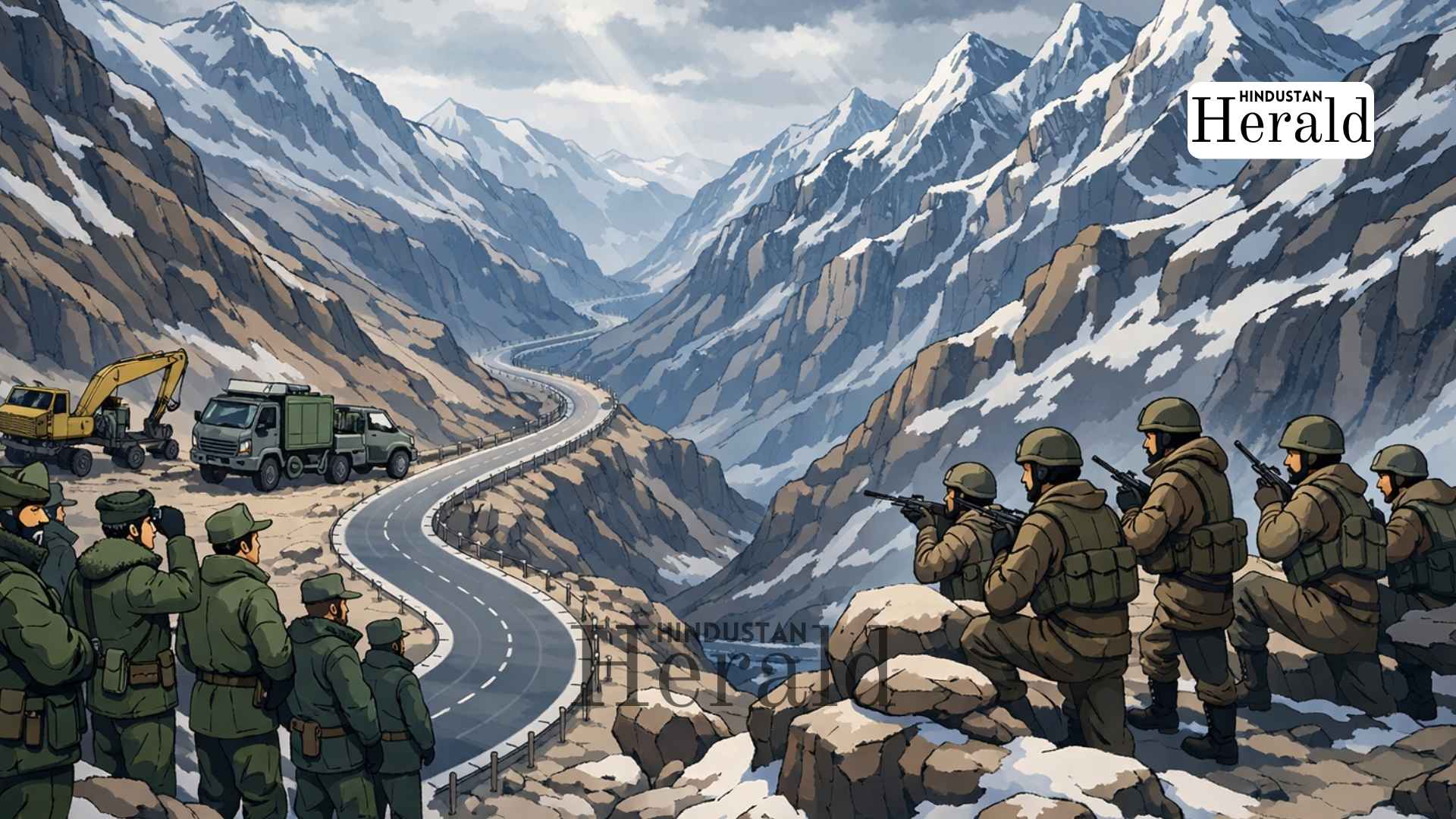
New Delhi, January 15: For years, the Shaksgam Valley barely figured in daily headlines. Remote, inhospitable, and locked in a legal limbo, it sat frozen in time. That calm has cracked again. Over January 12 and 13, a fresh exchange between India and China pushed the valley back into strategic focus, even if January 15 itself brought no new official statements.
What changed was tone. And proximity.
China publicly reiterated its territorial claim over Shaksgam and defended its ongoing construction there as legitimate. India responded sharply, rejecting both the claim and the construction. Beneath the words lies a more unsettling reality: roads, steel, and concrete are creeping closer to one of India’s most sensitive military zones near the Siachen Glacier.
The Geography That Never Stops Mattering
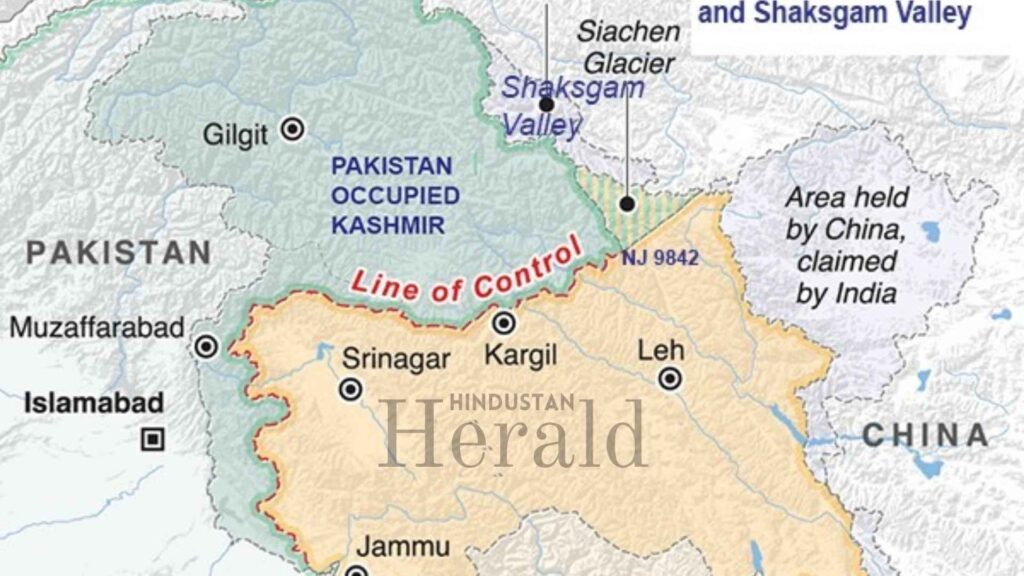
Shaksgam Valley stretches across nearly 5,000 square kilometres of high-altitude terrain north of the Karakoram. India considers it part of the former princely state of Jammu and Kashmir. China administers it as territory linked to Xinjiang.
The roots of the dispute go back to 1963, when Pakistan signed an agreement with China transferring the area. New Delhi rejected the deal then and has never shifted its position. The logic has remained consistent: Pakistan had no legal authority to cede territory India claims as its own.
For decades, this disagreement stayed mostly on paper. Maps differed, statements were issued, but the mountains kept their silence.
That silence has been broken by bulldozers.
A Road That Changed The Conversation
According to reporting by NDTV, India Today, and The Print, China has completed or is close to completing a 75-kilometre all-weather road, roughly 10 metres wide, cutting through Shaksgam Valley. On paper, it is just infrastructure. On the ground, it changes calculations.
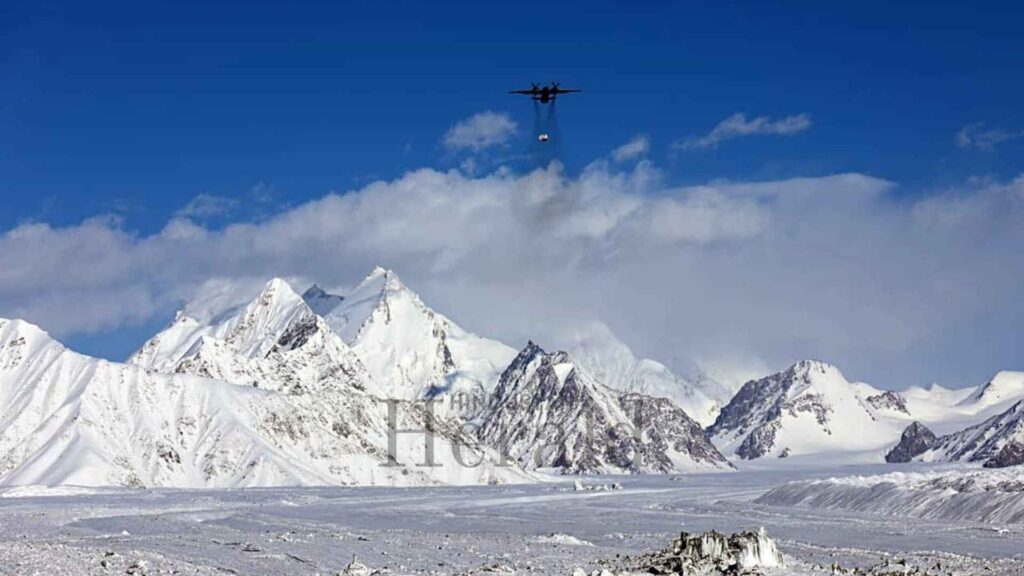
The road brings Chinese logistical capability to within 50 kilometres of the Siachen Glacier, a distance that matters immensely in terrain where weather, altitude, and access decide military outcomes.
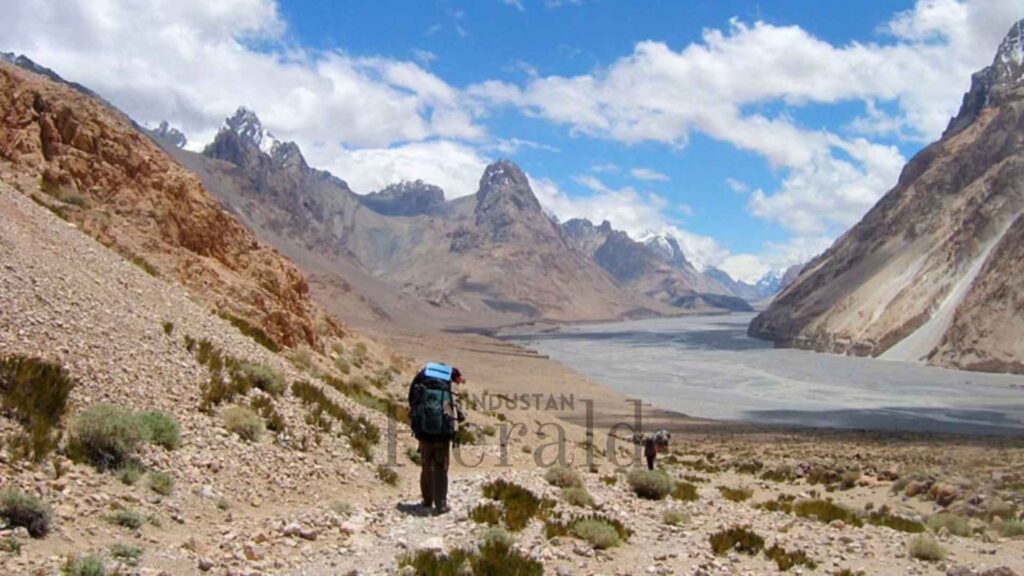
Strategic analyst Brahma Chellaney has warned that the road now reaches the Aghil Pass, sitting at about 4,805 metres. From there, Chinese teams are not far from Indira Col, the northernmost edge of Indian-controlled territory.
For Indian planners, this is not abstract theory. It narrows response time, improves Chinese mobility, and reduces the natural barriers that once made Shaksgam strategically quiet.
Why Siachen Still Looms Large
The Siachen Glacier is not just ice and rock. It is symbolism, sacrifice, and strategy rolled into one. Indian troops have held positions there since 1984 at enormous human and financial cost.
Any move that potentially allows a China-Pakistan convergence near Siachen rings alarm bells in South Block and Army Headquarters alike. Officials and analysts describe the fear in plain terms: a pincer scenario where pressure builds from both east and west during a crisis.
China’s road does not create that scenario by itself. But it makes it easier to imagine.
The Army Breaks Its Silence
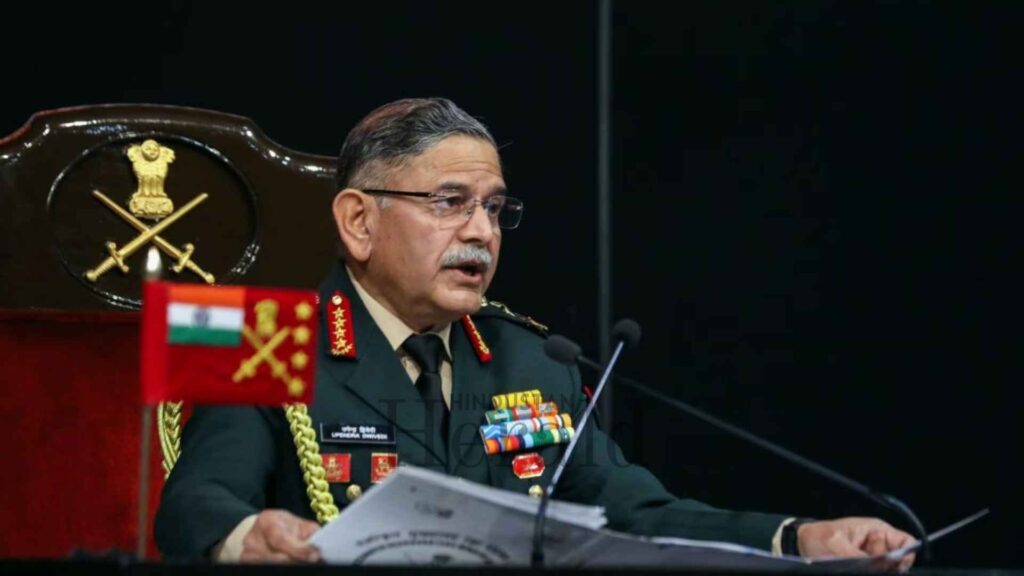
On January 12, the Indian Army Chief, speaking at his annual press conference, addressed the issue head-on. According to The Print, he described China’s infrastructure push in Shaksgam as an illegal action and reiterated that India does not recognise the 1963 Sino-Pakistan agreement.
There was no chest-thumping. The language was firm, measured, and unmistakably deliberate. The message was simple: the Army is watching, and it is factoring these developments into its planning.
That matters because military leadership in India has generally avoided public commentary on disputed infrastructure unless it sees long-term implications.
Diplomacy Matches The Military Line
The Ministry of External Affairs followed with a statement that left little room for interpretation. The spokesperson said that the entire union territories of Jammu and Kashmir and Ladakh are an integral and inalienable part of India, and that India reserves the right to take necessary measures to protect its interests.
This phrasing has been used before, but its timing now is key. It signals continuity rather than escalation. India is not announcing new deployments or threatening action. It is laying down markers.
Beijing responded by brushing aside India’s objections. As reported by The Times of India, China said its construction was fully justified and firmly within its territory. There was no acknowledgment of the provisional nature of the 1963 agreement.
That omission was not accidental.
CPEC’s Long Shadow
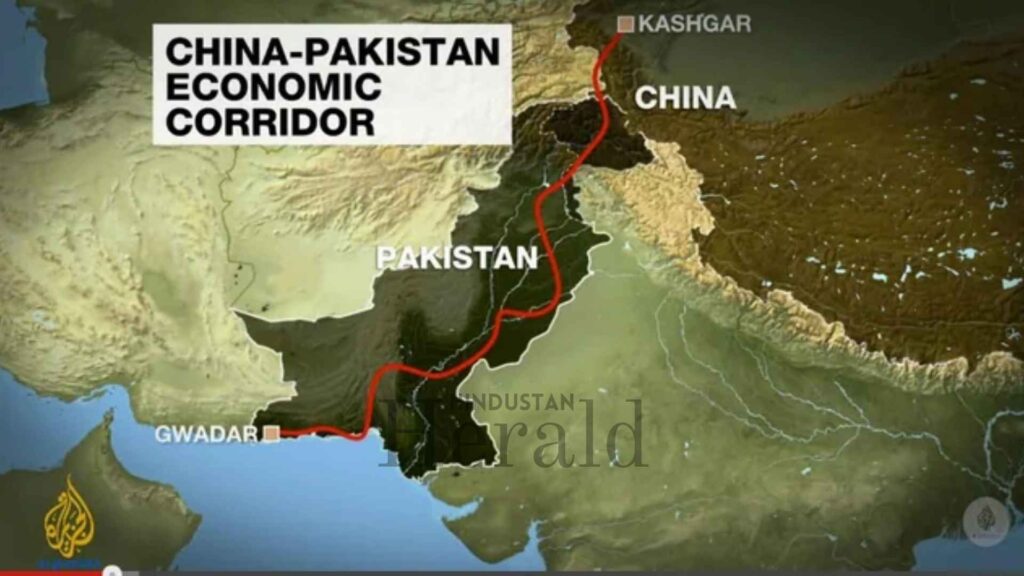
The road through Shaksgam is widely linked to the broader framework of the China-Pakistan Economic Corridor. While not on CPEC’s main artery, it feeds into a network that enhances connectivity between western China and Pakistan-administered regions.
Indian officials have long argued that CPEC carries military utility alongside economic ambition. Roads built for trade today can move troops tomorrow. In high-altitude terrain, that dual-use nature becomes impossible to ignore.
Reports in the Sunday Guardian note that Indian security planners see Shaksgam not as an isolated project but as part of a pattern seen across the Line of Actual Control since 2020.
No Headlines Today, No Comfort Either
January 15 brought no fresh statements, satellite images, or diplomatic moves. That absence should not be mistaken for calm.
Along the Himalayas, silence often means work continues out of sight. Roads are laid, logistics refined, and positions strengthened without ceremony.
As it turns out, the Shaksgam Valley illustrates a larger shift in Himalayan geopolitics. Infrastructure has become an assertion. Engineering has become messaging. Each kilometre of road quietly alters the balance in places where armies once relied on isolation for security.
What Lies Ahead
India is unlikely to accept China’s claims. China is equally unlikely to pause its construction. Pakistan remains tied to Beijing through strategic alignment and economic dependence.
That leaves Shaksgam where it has always been, contested, frozen, and suddenly relevant again.
For Indian policymakers, the challenge is familiar but harder now: deter without provoking, object without isolating, and prepare without panic. The valley may be quiet today, but its strategic echo is growing louder by the month.
Stay ahead with Hindustan Herald — bringing you trusted news, sharp analysis, and stories that matter across Politics, Business, Technology, Sports, Entertainment, Lifestyle, and more.
Connect with us on Facebook, Instagram, X (Twitter), LinkedIn, YouTube, and join our Telegram community @hindustanherald for real-time updates.

Covers Indian politics, governance, and policy developments with over a decade of experience in political reporting.
- Ananya Sharma

- Ananya Sharma
- Ananya Sharma
- Ananya Sharma





Specializes in South Asian geopolitics and global diplomacy, bringing in-depth analysis on international relations.
- Rajiv Menon
- Rajiv Menon
- Rajiv Menon
- Rajiv Menon