
 By Ananya Sharma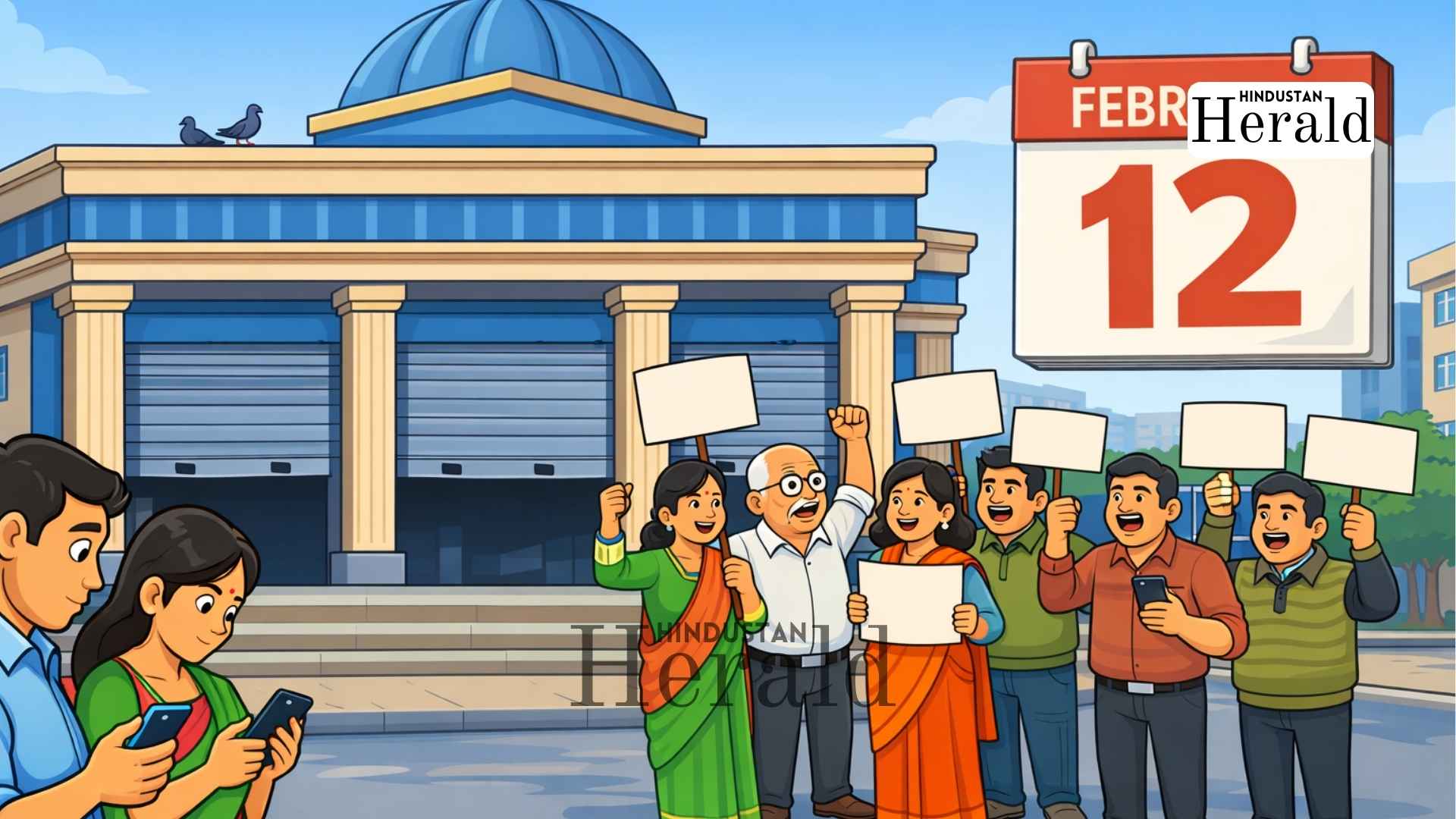
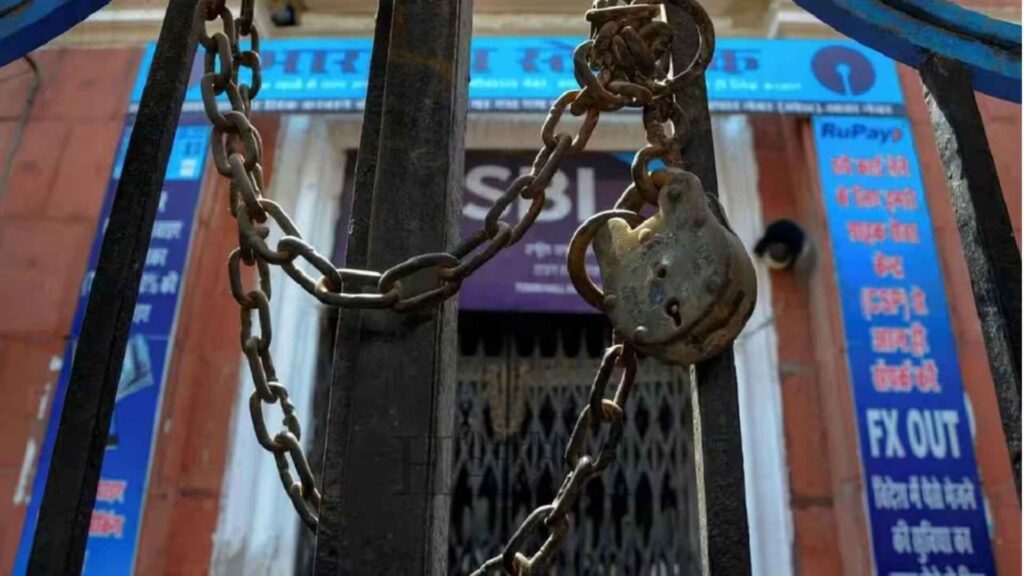
New Delhi, February 11: There is a certain nervous energy around bank branches today, the kind that shows up before a long weekend or a policy announcement. But as of this afternoon, February 11 remains a normal working day for banks across India. The shutters are up. Counters are staffed. Queues are moving.
The real question hangs over tomorrow.
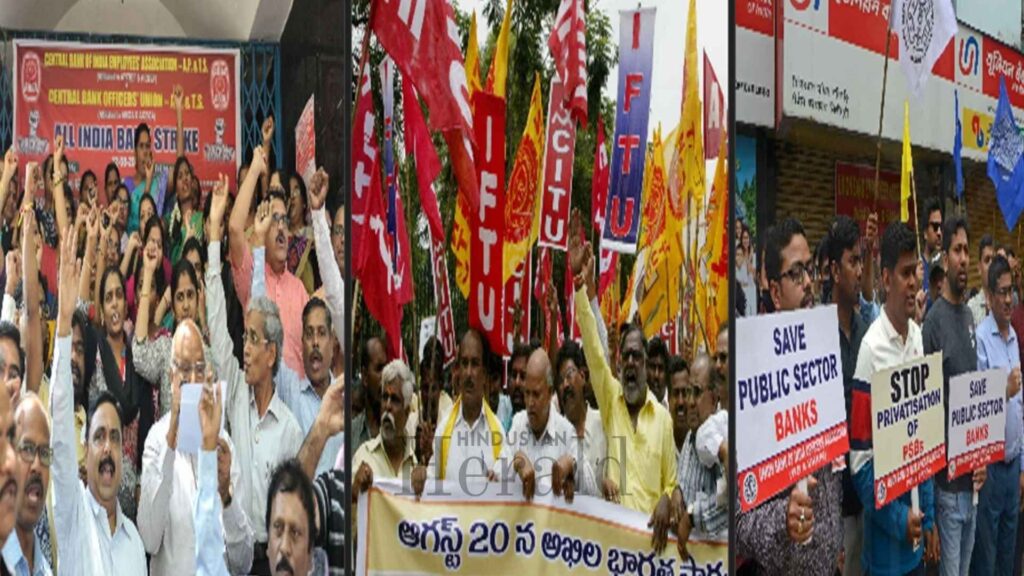
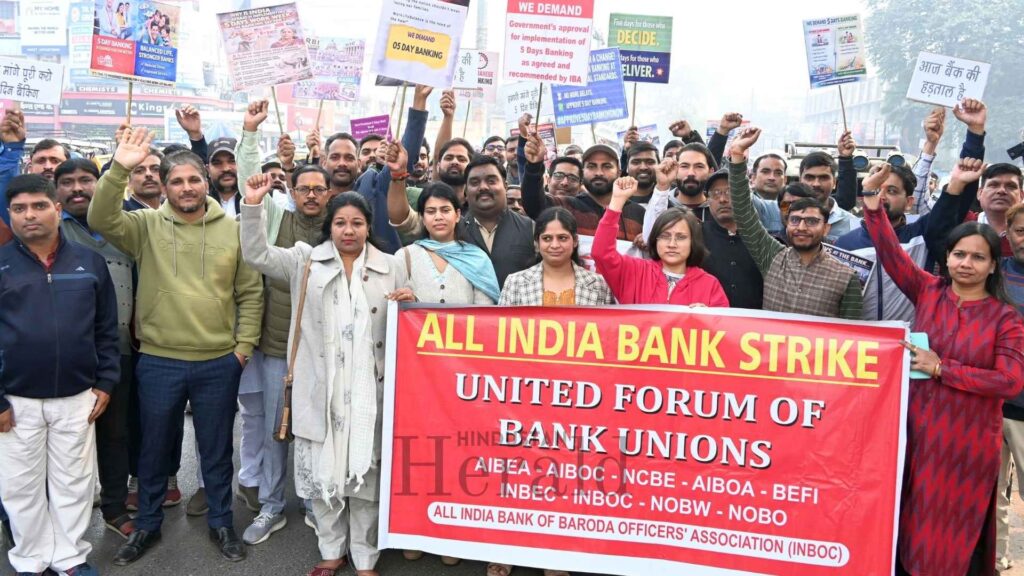
A nationwide bank strike has been called for February 12, led by major banking unions including All India Bank Employees’ Association, All India Bank Officers’ Association, and Bank Employees Federation of India. The strike aligns with a broader Bharat Bandh called by central trade unions protesting the government’s new Labour Codes and a range of sector-specific demands.
For customers, it is less about politics and more about whether their cheque will clear on time.
Why Unions Are Taking To The Streets
The banking unions say this is not a symbolic protest. According to reports in The Economic Times, the action is part of a coordinated nationwide mobilisation against the implementation of the four consolidated Labour Codes passed by Parliament.
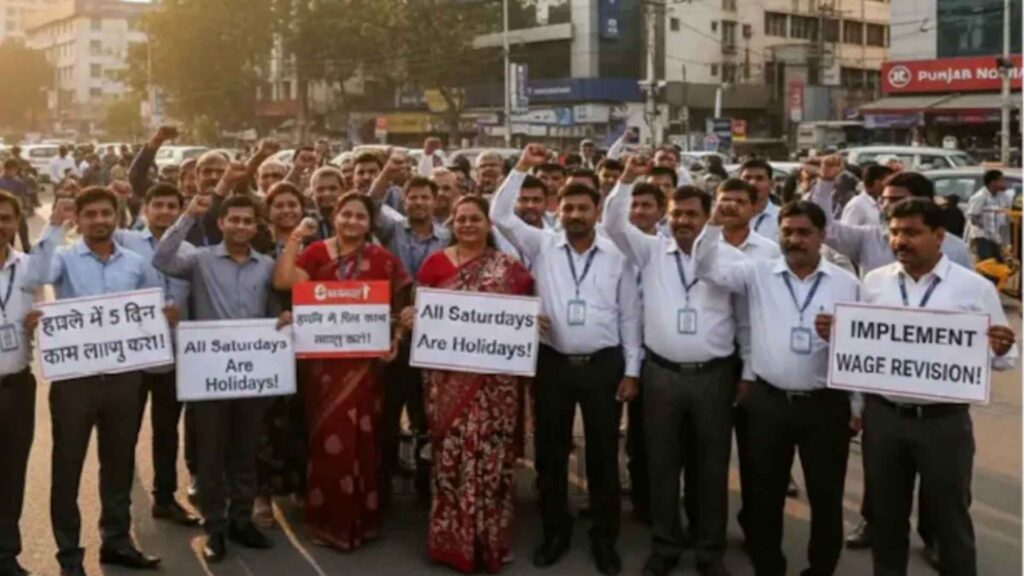
Union leaders argue that the new framework weakens worker protections, alters dispute resolution mechanisms, and makes retrenchment easier for employers. In the banking sector, these broader anxieties intersect with long-standing grievances. Recruitment gaps in public sector banks, increasing workload pressure, outsourcing practices, and what unions describe as gradual dilution of public banking autonomy have been recurring flashpoints.
This is not the first time such concerns have spilt into street protests. But the timing now carries weight. Public sector banks have returned to profitability after years of grappling with non-performing assets. The government has repeatedly highlighted improved balance sheets and stronger capital positions. Unions say that the human side of that recovery story remains unresolved.
Still, tomorrow’s strike is officially a one-day action. Whether it grows into something larger will depend on turnout and negotiations that follow.
What Banks Have Told Investors
The practical side of this story has played out quietly in regulatory filings.
Major public sector lenders, including State Bank of India, Bank of Baroda, and Central Bank of India, have informed the Bombay Stock Exchange that services may be affected on February 12 due to the strike call.
The language in these filings is cautious. Banks have said they are taking necessary steps to ensure normal functioning “as far as possible,” while acknowledging that participation by employees could disrupt branch-level operations.
Notably, there has been no declaration of a bank holiday. The Reserve Bank of India has issued no notification declaring closure. That means branches are expected to open, though the extent of disruption will depend entirely on staff attendance.
Private sector banks, at least so far, have not issued major advisories. Historically, union participation is stronger in public sector institutions. That could shape the geography of disruption tomorrow.
What Customers Might Experience
For most people, the difference between a normal day and a strike day is felt in small but irritating ways.
Longer lines. Fewer counters open. Delayed cheque processing. Slower responses to documentation requests. Loan disbursements were pushed by a day. These are the kinds of ripple effects that tend to follow even a one-day industrial action.
That said, India’s banking ecosystem in 2026 looks very different from a decade ago. Digital banking penetration has deepened dramatically. Mobile apps, UPI transfers, net banking portals, and ATM networks operate independently of physical branch staffing in most cases.
Experts quoted in The Sunday Guardian noted that digital channels are expected to remain largely unaffected. For urban customers comfortable with online transactions, tomorrow may pass with barely a pause.
The pressure will be felt most in areas where branch banking remains essential, such as smaller towns, elderly customers, businesses that rely on in-person documentation, and individuals handling time-sensitive paperwork.
If participation is high in metropolitan hubs, backlogs could spill over into Friday morning.
The Politics Behind The Protest
At the heart of this strike lies a deeper political contest over labour reform.
The government has consistently argued that the four Labour Codes simplify a patchwork of outdated laws, reduce compliance burdens, and improve the ease of doing business. Officials have framed the reforms as necessary for attracting investment and modernising India’s employment framework.
Trade unions see it differently. They contend that consolidation has come at the cost of safeguards, particularly around job security and collective bargaining rights. The banking unions have linked their concerns to broader apprehensions about privatisation, workforce rationalisation, and branch consolidation in public sector banks.
There is also symbolism at play. Public sector banks are not merely financial institutions. They are embedded in India’s post-Independence development story. From priority sector lending to rural expansion, they have been instruments of state policy. Any perceived dilution of that mandate tends to provoke emotional as well as institutional responses.
That tension is likely to surface tomorrow in speeches, placards, and press conferences across cities.
Markets, Momentum, And Measured Reactions
Financial markets are unlikely to panic over a one-day strike that has been announced in advance. Investors typically price in such events, especially when banks signal preparedness.
Interbank settlements and payment systems are expected to function. Clearing operations at the systemic level are not forecast to halt. The bigger question is not systemic risk but service inconvenience.
If participation turns out to be limited, the day may register as little more than a footnote. If turnout is substantial across major urban centres, the visual impact could be stronger, even if the economic cost remains modest.
What will matter beyond tomorrow is whether the strike opens fresh negotiation channels or hardens positions.
Where Things Stand Right Now
As of Wednesday afternoon, there have been no reports of the strike being called off. Branches are functioning normally today. Customers are conducting business as usual.
Bank staff, meanwhile, are preparing for what could be a long Thursday.
Many customers, aware of the strike call, have already moved to complete urgent transactions. Cash withdrawals have seen a mild uptick in some areas, though nothing resembling panic.
The advisory from banks is straightforward: if a transaction is urgent and requires in-branch service, it may be wise to complete it before tomorrow. Digital alternatives remain the safer bet for time-sensitive transfers.
For now, India’s banking system is open. Whether tomorrow feels routine or restless will depend less on announcements and more on attendance sheets.
By Friday morning, the picture will be clearer. Either the strike will pass as a contained expression of protest, or it will signal a longer phase of labour friction in one of the country’s most visible public institutions.
Stay ahead with Hindustan Herald — bringing you trusted news, sharp analysis, and stories that matter across Politics, Business, Technology, Sports, Entertainment, Lifestyle, and more.
Connect with us on Facebook, Instagram, X (Twitter), LinkedIn, YouTube, and join our Telegram community @hindustanherald for real-time updates.

Covers Indian politics, governance, and policy developments with over a decade of experience in political reporting.
- Ananya Sharma

- Ananya Sharma
- Ananya Sharma
- Ananya Sharma




 Sandeep Verma