
 By Ananya Sharma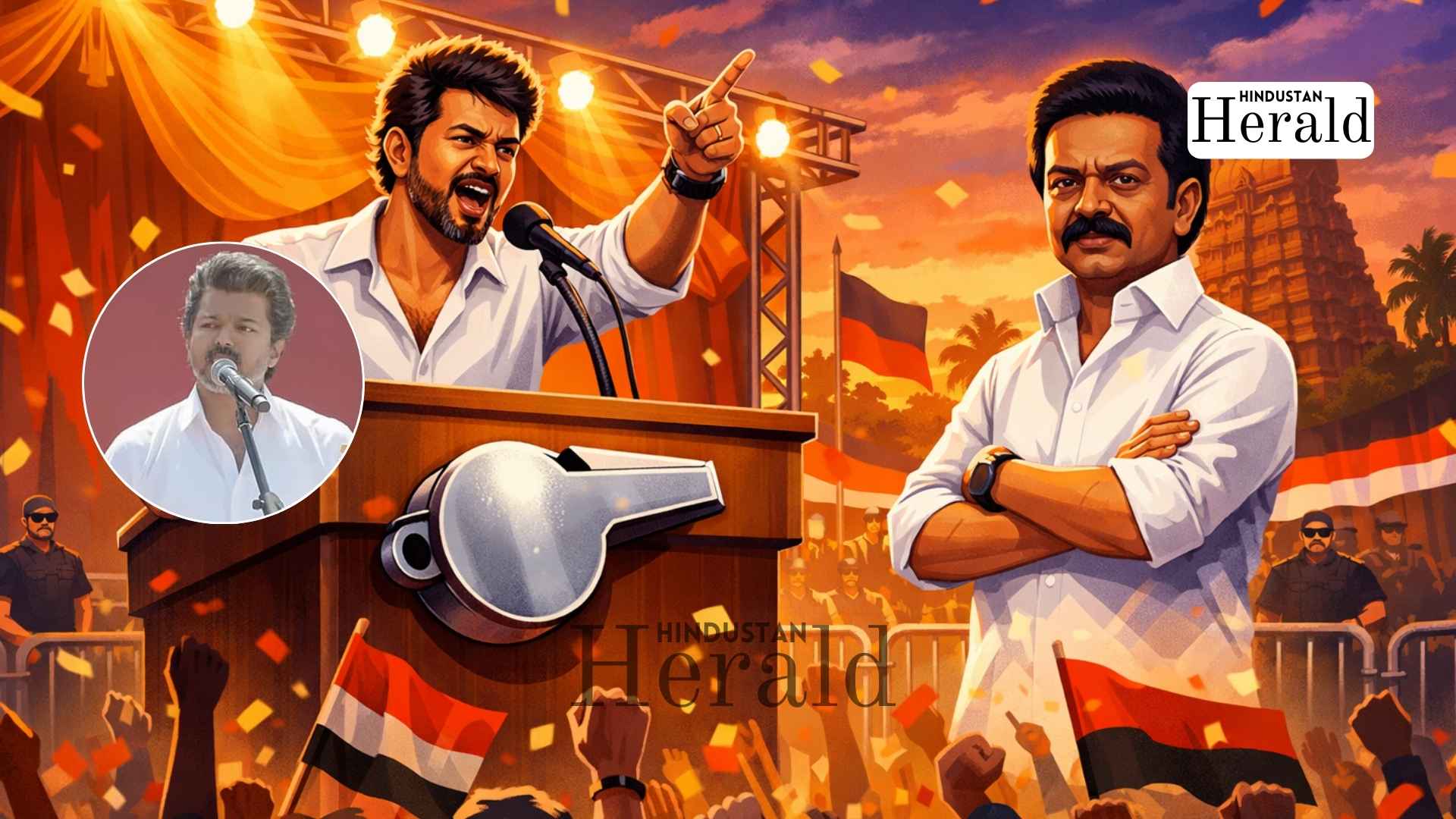
Chennai, February 13: There are political speeches, and then there are political performances. What unfolded in Salem on Thursday was unmistakably the latter.
On a warm afternoon in Seelanaickenpatti, with entry gates guarded by QR code scanners and police carefully counting heads, Vijay, founder of Tamilaga Vettri Kazhagam, stood before a crowd capped at 4,998 people and took direct aim at Chief Minister M.K. Stalin. The line that will echo long after the rally ended was simple, sharp, and perfectly timed.
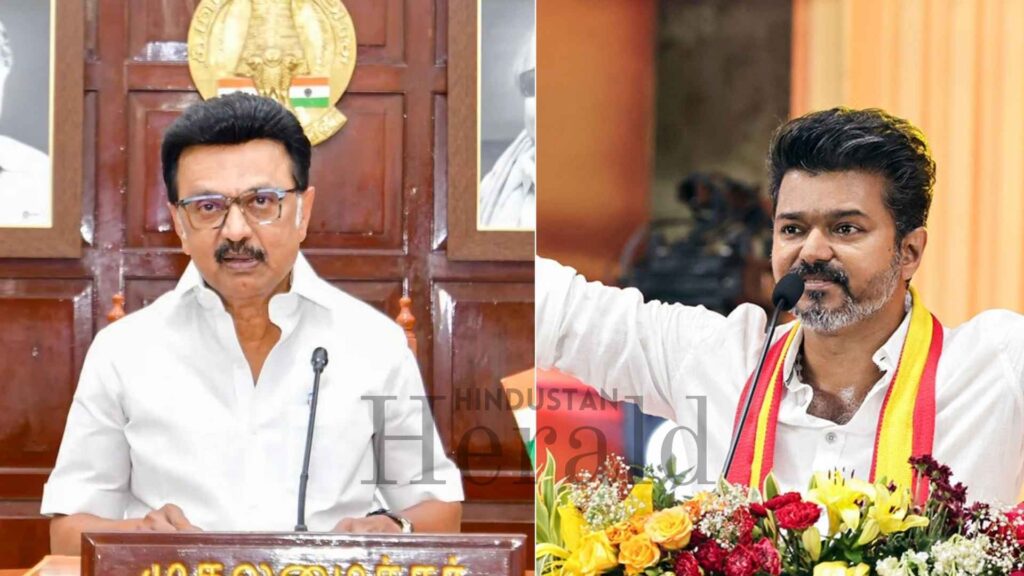
“SOP,” he said, pausing just long enough for the audience to lean in, “doesn’t mean Standard Operating Procedure here. It means Stalin Operating Procedure.”
The crowd roared. It was classic Vijay. A punchline wrapped inside a political charge.
The Restrictions And The Resentment
The backdrop to that remark is not trivial. After the tragic stampede in Karur in September 2025 that claimed 41 lives, district administrations across Tamil Nadu tightened crowd control norms. Police now routinely impose caps, mandate structured entry systems, and require organisers to comply with safety layers that were previously lax.
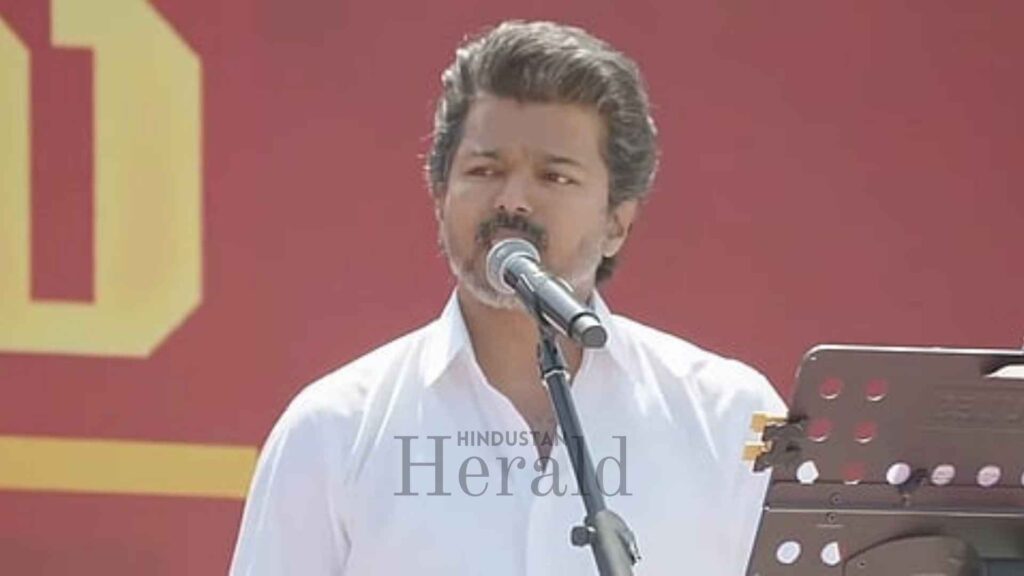
Thursday’s rally reflected that shift. The 4,998 cap was precise, almost symbolic. Every attendee needed a QR coded pass. Barricades were dense. Security was visible.
But Vijay was not willing to accept the explanation at face value.
He told supporters that while his party faces restrictions, other political outfits receive quick approvals for conferences and hall meetings. He alleged discrimination. He implied selective enforcement. He suggested that what is presented as public safety is, in reality, political containment.
There was anger in his tone. Not theatrical anger alone, but something closer to grievance. He is still a new entrant in formal politics, and every hurdle feeds a narrative of resistance.
Police officials, for their part, have maintained that post-Karur protocols apply across the board. They argue that star-led events often attract overflow crowds, creating a higher risk. That logic has some weight. Anyone who has seen Vijay’s fan mobilization knows that numbers can spiral quickly.
Still, perception is often more powerful than policy. And Vijay is shaping perception carefully.
A Welfare Announcement And A Political Response
If Vijay owned the evening stage in Salem, the Chief Minister owned the morning headlines.
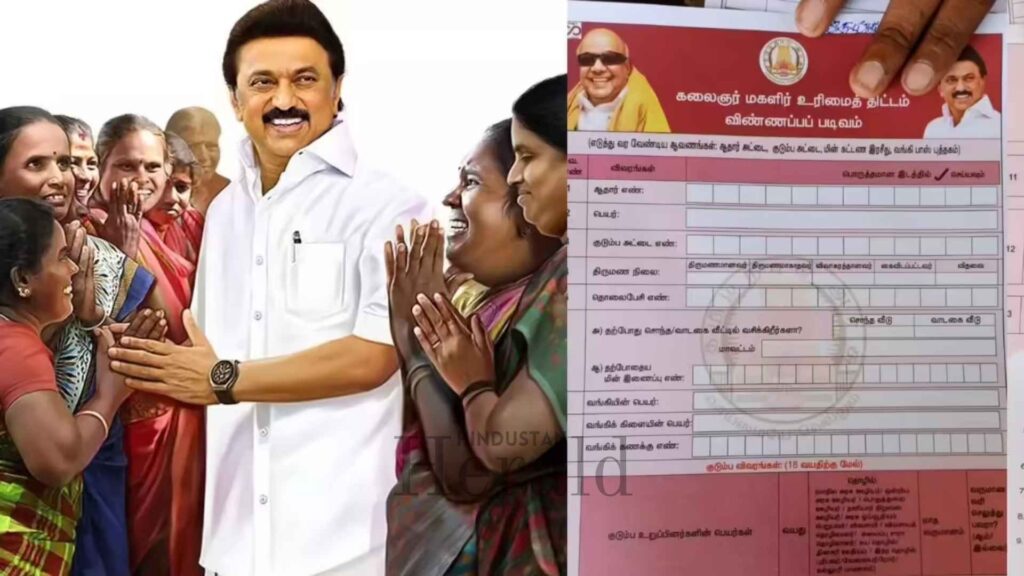
Earlier in the day, M.K. Stalin announced an advance disbursement under the Kalaignar Women’s Rights Scheme. Beneficiaries will receive ₹3,000 covering three months, along with a ₹2,000 summer special package. In total, ₹5,000 will reach 1.31 crore women.
On paper, it is a welfare measure. In political timing, it is also a statement.
Vijay wasted no time connecting the dots. He told the Salem crowd that the announcement was born of fear. That the ruling party, he claimed, is unsettled by growing support for TVK among women voters.
Then came another line that drew laughter and applause in equal measure.
“People will come and give you thousands of rupees. Take it. It’s your money. But after receiving it, blow the whistle in their ears and send them off.”
The whistle, of course, is his party symbol. It was clever, but it was also strategic. He is trying to break a long-standing political psychology in Tamil Nadu, where welfare benefits and electoral loyalty are often tightly linked.
The DMK’s welfare architecture is not new. It builds on decades of Dravidian politics that frame state support as social justice, not charity. The Kalaignar scheme in particular has been projected as recognition of women’s unpaid domestic labour, a powerful framing in a state with strong welfare consciousness.
But elections compress narratives. Welfare becomes currency. Announcements are scrutinised for timing. Every rupee acquires political meaning.
Experience Versus “Experience”
There was another moment in the speech that revealed how Vijay intends to position himself in this election cycle.
Critics frequently point out that he lacks political experience. It is a fair observation. He is stepping into an arena where parties have spent decades building booth committees, caste networks, and institutional depth.
Vijay did not dodge that criticism. He leaned into it.
“Yes, I don’t have political experience,” he said. “But I also don’t have experience in looting.”
The line was delivered without flourish. It did not need one.
Corruption is a recurring undercurrent in Tamil Nadu politics, even when not attached to a specific case. By framing himself as inexperienced but untainted, Vijay is crafting an outsider persona. Clean hands versus entrenched power.
Whether that contrast holds up under the scrutiny of a full-scale campaign remains to be seen. For now, it is rhetorically effective.
Why Salem Matters
The choice of Salem was not accidental. Western Tamil Nadu has often shaped electoral outcomes with its mix of industrial hubs, agrarian belts, and tightly woven caste equations.
A visible show of strength here sends a message that TVK is not confined to urban fan clusters. It signals ambition. It hints at structure.
At the same time, Thursday’s controlled entry system showed something else. A learning curve. Earlier political events driven by celebrity magnetism have sometimes tipped into chaos. TVK appears to be attempting discipline, perhaps to avoid administrative confrontation and public backlash.
Even so, the tension between regulation and mobilisation will likely continue. Large gatherings are political oxygen. Restrictions can feel like suffocation, especially for a new party trying to prove its scale.
The Direct Challenge
Until recently, many observers wondered whether Vijay’s entry would primarily split opposition votes or erode margins rather than directly confront the ruling party.
Thursday’s speech suggested otherwise.
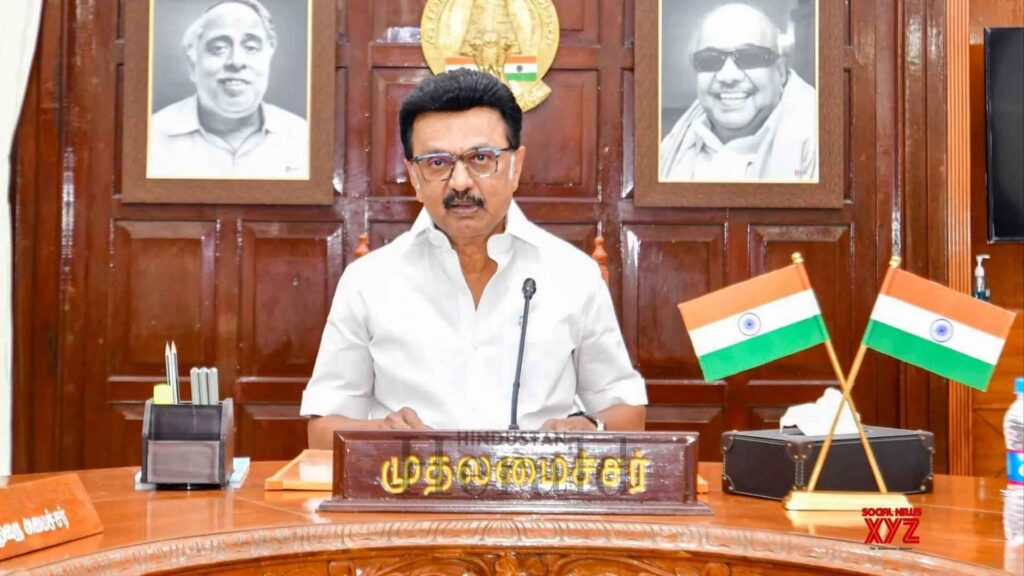
By naming M.K. Stalin repeatedly and personalising the acronym, Vijay made this a leader-to-leader contest. That is a bold move. It raises the stakes. It sharpens lines.
For the DMK, the counter-narrative will likely emphasise stability and continuity of governance. Stalin’s camp can point to administrative experience, welfare expansion, and institutional depth. They can argue that managing a state requires more than raw charisma.
But politics is rarely a clean comparison chart. It is mood, timing, and momentum.
Right now, Vijay is trying to manufacture momentum. He speaks the language of indignation. He uses humour to soften the accusation. He invites voters to accept welfare but reject what he frames as political control.
It is not subtle politics. It is emotional politics.
The Road To 2026
The 2026 Assembly election is still months away, but the contours are beginning to sharpen.
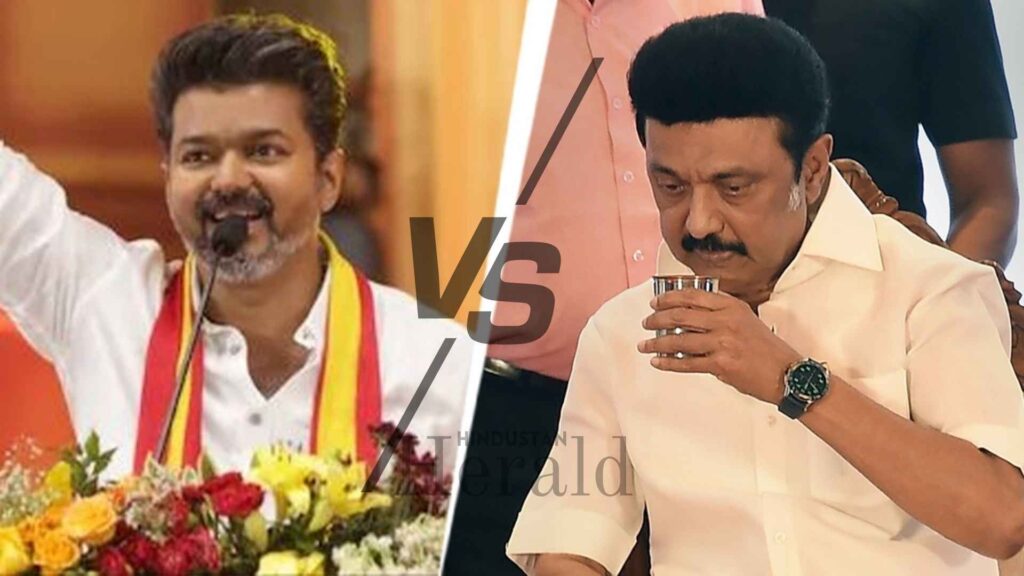
Can TVK build the ground network required to translate crowd energy into votes? Can it field credible candidates across constituencies where local arithmetic often outweighs star power? Those questions linger.
For the DMK, the task is different. It must defend its record while preventing fatigue from settling in. Welfare announcements may help, but timing can cut both ways. What energises loyalists can also feed opposition claims of anxiety.
Tamil Nadu’s political history has room for cinematic transitions into governance. It also has room for established parties reasserting dominance.
What happened in Salem on Thursday was not decisive. It did not redraw the map overnight. But it did confirm one thing clearly.
This election will not drift quietly toward polling day. It is heading for confrontation.
The whistle has been blown. Now the state waits to see who answers it.
Stay ahead with Hindustan Herald — bringing you trusted news, sharp analysis, and stories that matter across Politics, Business, Technology, Sports, Entertainment, Lifestyle, and more.
Connect with us on Facebook, Instagram, X (Twitter), LinkedIn, YouTube, and join our Telegram community @hindustanherald for real-time updates.

Covers Indian politics, governance, and policy developments with over a decade of experience in political reporting.
- Ananya Sharma

- Ananya Sharma
- Ananya Sharma
- Ananya Sharma


 Sandeep Verma