
 By Ananya Sharma and Neeraj Kapoor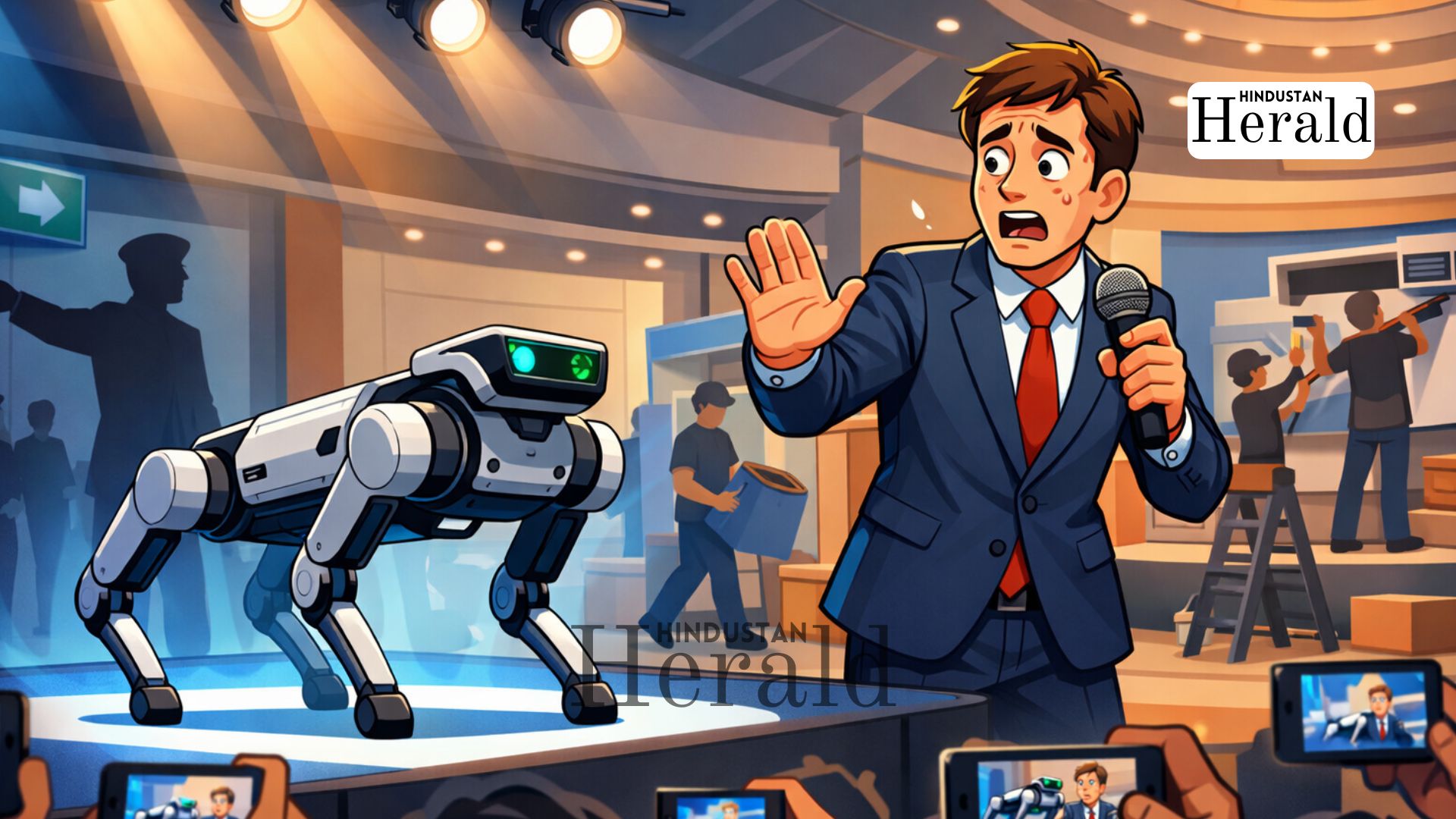
New Delhi, February 18: If you walked into Bharat Mandapam on Tuesday expecting only talk of algorithms and futuristic dreams, you would have stumbled into something far more human. Confusion. Embarrassment. Anger. And a quiet dismantling job in Hall 6.
At the centre of it all was a robotic dog called Orion.
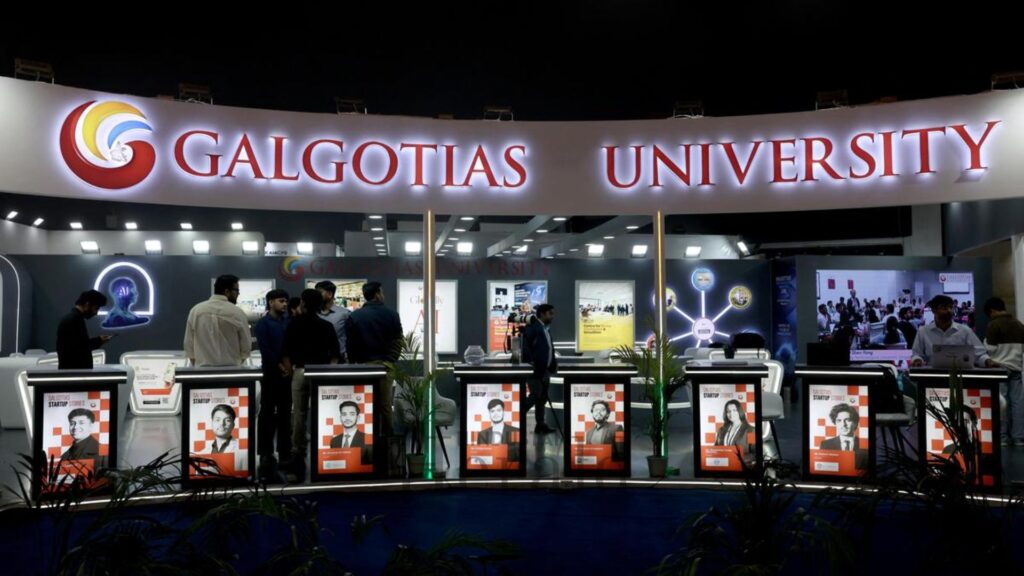
For a few hours, it was one of the attractions at the India AI Impact Summit 2026. By evening, it had become the reason a university stall was taken down.
How A Robot Dog Became National News

The dog was displayed by Galgotias University. It moved smoothly on four mechanical legs, responded to commands and looked like something straight out of a sci-fi movie. It was introduced as Orion, and in the videos that later went viral, university representatives appeared to speak about it in a way that suggested internal development.
That was enough.
Because within hours, people online began saying: this is not new.
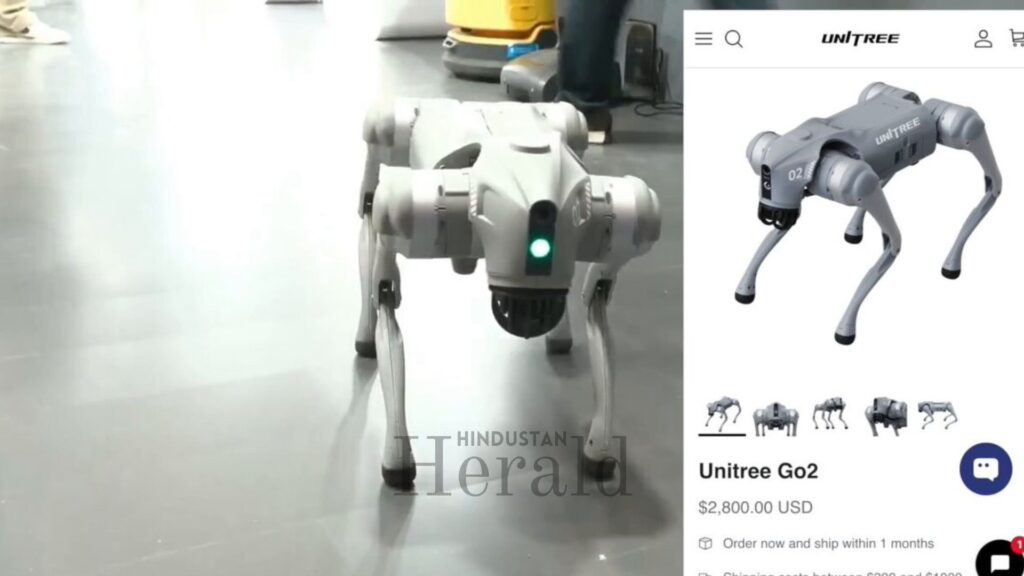
Tech users identified the machine as the Unitree Go2, a robotic dog manufactured by Unitree Robotics. The Unitree Go2 is not a hidden prototype. It is available for purchase online. Depending on features, it costs around ₹2 to ₹3 lakh.
Screenshots comparing Orion with the commercial product flooded social media. Same structure. Same sensors. Same movement pattern.
The internet did not take long to reach a verdict.
Why People Felt Cheated
Let’s be clear. There is nothing wrong with buying foreign technology. Colleges across India and the world use imported machines for training and research. That is normal.
But this was not an ordinary college exhibition.

The India AI Impact Summit 2026 is meant to showcase India’s technological strength. It is attended by policymakers, investors, global tech leaders and startups hoping to demonstrate real, homegrown progress.
When people believed an imported product was being shown as an Indian innovation, it struck a nerve.
The reaction online was harsh. Words like “fake innovation” and “national embarrassment” started trending. Some users said it damaged India’s credibility at an international event.
Whether the impression was created intentionally or through careless wording is now secondary. What matters is that the impression stuck.
The Government Moves Quickly
As the controversy grew louder, action followed.
Sources from the Ministry of Electronics and Information Technology confirmed that Galgotias University was directed to vacate its stall in Hall 6.
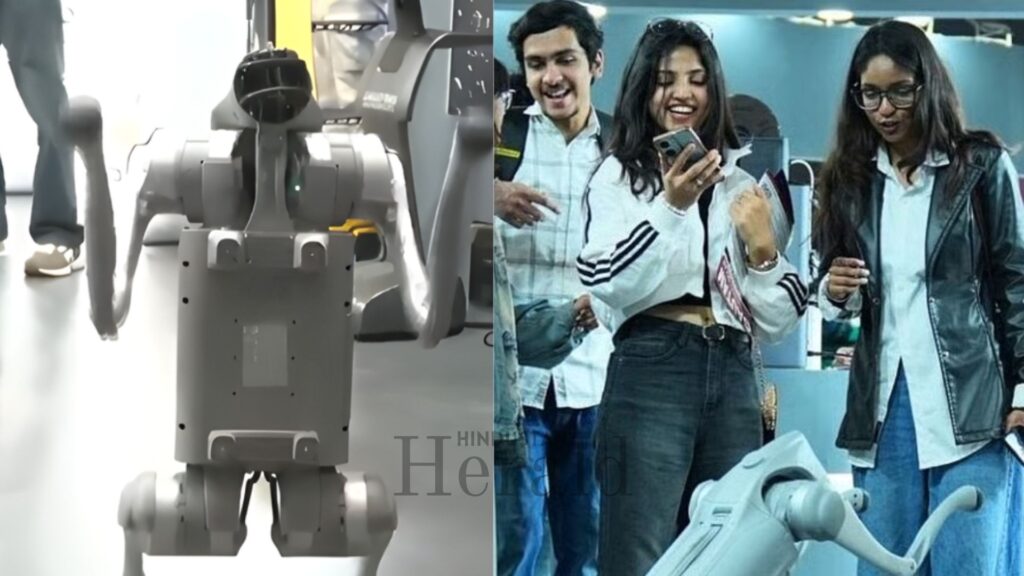
There was no dramatic announcement. No public confrontation. But the message was firm.
By afternoon, workers were dismantling the display.
Adding to the discomfort, official social media posts that had earlier highlighted the robotic dog were reportedly deleted as the issue escalated. Screenshots of those deletions spread rapidly, fuelling more debate.
At a summit watched closely by international participants, the authorities clearly did not want questions about authenticity hanging in the air.
The University’s Explanation
In its clarification, Galgotias University said it never officially claimed to have built the robot. According to the institution, the robotic dog was purchased as a teaching aid to give students exposure to advanced robotics technology.
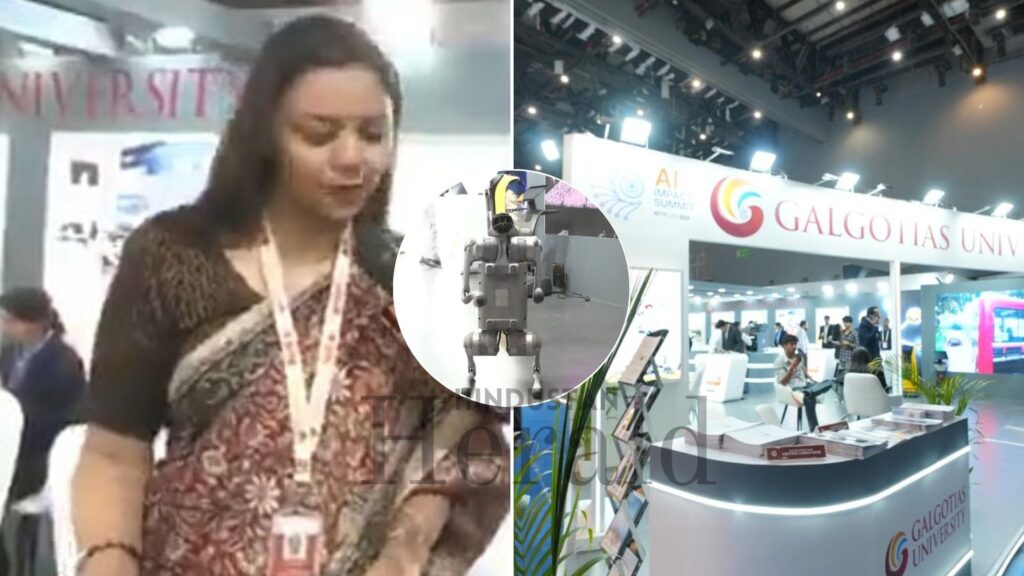
The university described the backlash as a “propaganda campaign” and said importing global technology for learning is standard practice.
That explanation has split opinion.
Some people believe the university is being unfairly targeted. Others argue that at a national AI summit, there is no room for ambiguity. If something is imported, say it clearly. If it is built locally, show proof.
In public life, perception can be as powerful as facts.
Meanwhile, The Summit Carries On
Beyond Hall 6, the energy at Bharat Mandapam remains high.

The summit has drawn more than 500 AI leaders, entrepreneurs and policymakers. It is part of India’s larger push under the IndiaAI Mission to strengthen domestic artificial intelligence capabilities.
Major announcements have continued.
Mastercard demonstrated what it described as India’s first fully authenticated agentic commerce transaction. In simple language, this means AI systems that can complete secure purchases on your behalf, with safeguards built in.
Reliance Jio showcased AI-powered smart glasses that can translate conversations in real time and capture video.
Startups presented tools for farmers, hospitals and small businesses. There were demonstrations on deepfake detection, defence technology and Indian-language AI systems.
There is real innovation happening here. Real effort. Real ambition.
That is precisely why the Orion episode feels uncomfortable.
A Wake-Up Call For Everyone
India wants to be seen as a serious global player in artificial intelligence. The country has the talent. It has scale. It has policy backing.
But credibility is fragile.
In today’s world, any claim made at a public event can be verified in minutes. Social media users act as instant fact-checkers. If something looks familiar, someone will notice.
The Orion controversy may fade soon. News cycles move quickly. But it leaves behind a simple lesson.
Innovation is not just about impressive machines.
It is about honesty in how those machines are presented.
And in a summit built around trust in technology, that lesson might be the most important one of all.
Stay ahead with Hindustan Herald — bringing you trusted news, sharp analysis, and stories that matter across Politics, Business, Technology, Sports, Entertainment, Lifestyle, and more.
Connect with us on Facebook, Instagram, X (Twitter), LinkedIn, YouTube, and join our Telegram community @hindustanherald for real-time updates.

Covers Indian politics, governance, and policy developments with over a decade of experience in political reporting.
- Ananya Sharma

- Ananya Sharma
- Ananya Sharma
- Ananya Sharma





Tech writer passionate about AI, startups, and the digital economy, blending industry insights with storytelling.
- Neeraj Kapoor
- Neeraj Kapoor
- Neeraj Kapoor
- Neeraj Kapoor




 Prakash Nair