
 By Ananya Sharma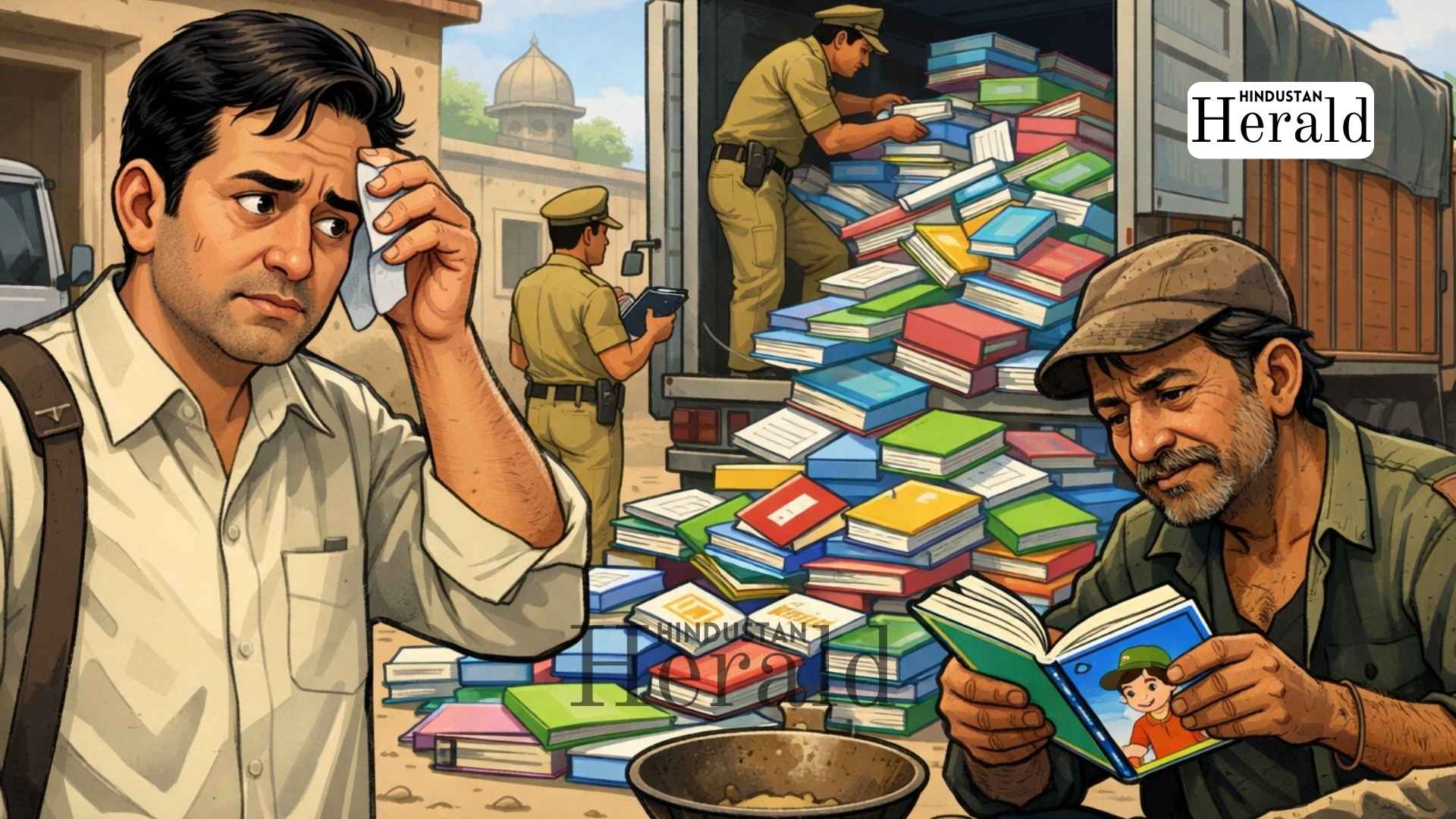
Bahraich, February 23: In a district where government schoolchildren wait each year for their free textbooks to arrive on time, thousands of brand-new books meant for classrooms were instead headed for the scrap market.
That discovery has shaken the education department in Bahraich, triggered arrests, and opened up uncomfortable questions about how public materials are handled inside the system.
The case, now widely referred to as the Bahraich Book Scam, broke open after a truck bearing registration number UP 21 FT 8485 was intercepted while reportedly travelling toward Kashipur, Uttarakhand. What officers found inside was not damaged paper or rejected stock. It was fresh, unused textbooks printed for the 2026–27 academic session.
The scale of what followed is still unfolding.
The Interception That Changed Everything
According to officials involved in the initial inquiry, the truck was stopped on suspicion. On inspection, it was loaded with government textbooks that were supposed to be sitting in a district warehouse, waiting to be distributed to schools.
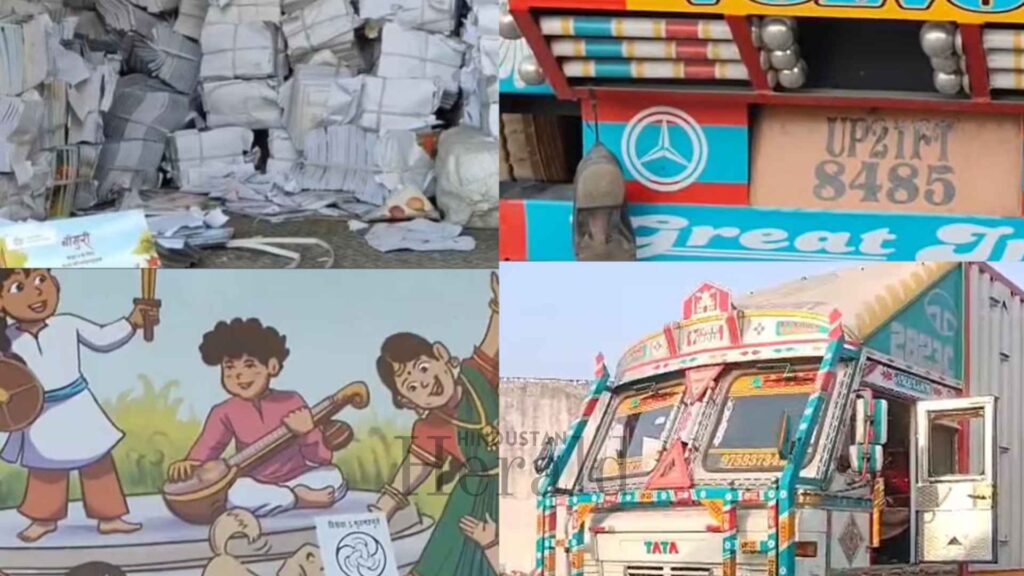
A subsequent physical audit of the storage facility revealed that 15,593 books were missing. From the intercepted consignment alone, authorities recovered approximately 13,082 textbooks.
It was not just the disappearance that raised an alarm. It was the price.
Investigators say the books were being sold at scrap rates, reportedly as low as ₹4 per kilogram. These were new textbooks funded by public money, meant for children in government schools. Sold by weight.
In districts like Bahraich, where many families rely entirely on state-provided materials, textbook delays can derail the first weeks of the academic year. Teachers improvise. Lessons stall. Children wait.
That is why this incident has struck a nerve.
Arrests And An Unlikely Alleged Mastermind
Police have arrested four individuals in connection with the case.
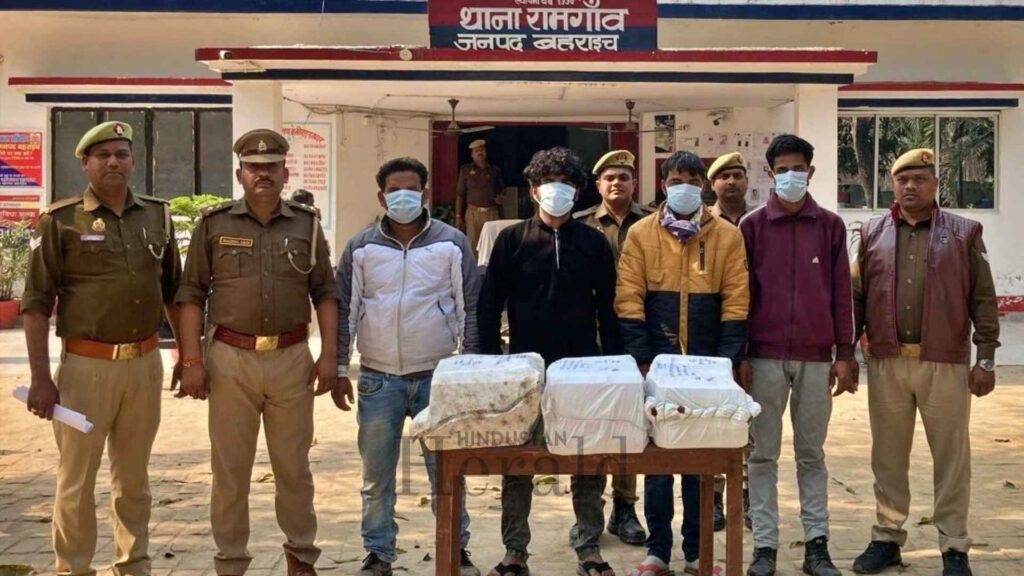
At the centre of the investigation is Alok Mishra, an attendant posted at the Basic Education Department office. Officials describe him as the alleged mastermind of the operation. Alongside him, scrap dealer Dilshad Ali, as well as Shubhankar and Arjun, have been taken into custody.
One accused, Samir Ahmed, is still absconding.
It is not lost on observers that the alleged ringleader was not a senior officer but a lower-level staff member. That detail has prompted two competing reactions. Some see it as evidence of opportunistic corruption within routine access points. Others question whether someone in such a position could have moved thousands of books without the oversight gaps above.
Investigators are examining warehouse logs, gate passes, and stock movement registers. They are trying to determine whether the books were removed in a single consignment or siphoned off gradually.
No formal conclusion has yet been announced about wider involvement. But the scale alone suggests that procedural safeguards failed somewhere.
The Administrative Shake-Up
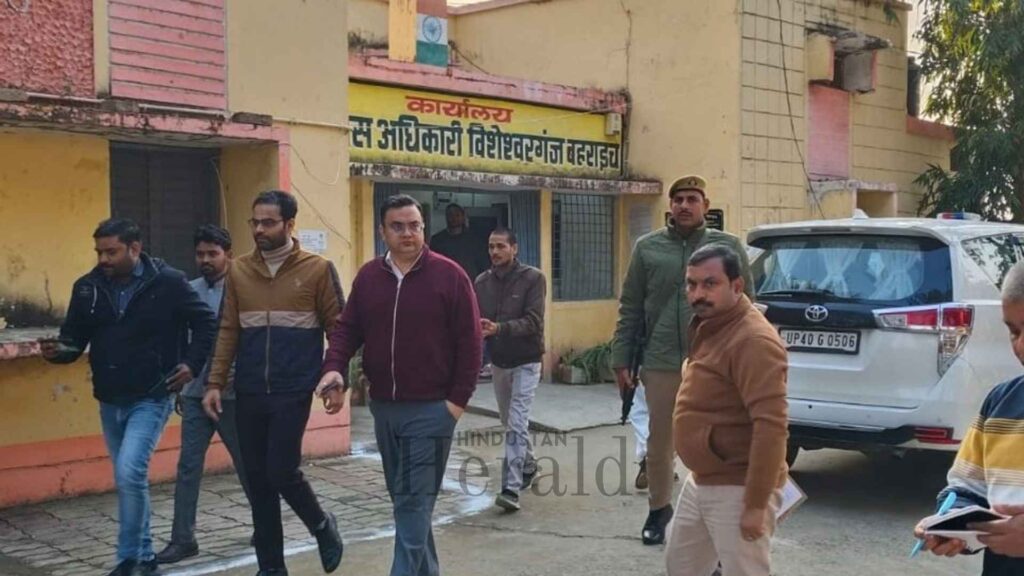
District Magistrate Akshay Tripathi responded quickly after the recovery. A five-member probe committee was constituted. Suspensions and terminations followed within days.
Two attendants, including Alok Mishra and Shafiq Ahmad, have been suspended.
Three contractual employees, Atul Kumar Singh, Ashutosh Singh, and Deepak Kumar, have had their services terminated.
Show-cause notices have also been issued to senior officials, including Block Education Officers Dolly Mishra and Ranjit Kumar, along with finance staff member Viresh Verma, seeking explanations for supervisory lapses.
On paper, the response appears decisive.
Yet seasoned observers know that administrative action in such cases often serves two purposes. It signals accountability to the public. And it buys time for a deeper investigation.
Suspension does not equal conviction. Termination does not close the file. Departmental proceedings can stretch on for months.
Meanwhile, the question many in Bahraich are asking is simple. How did thousands of textbooks leave a government warehouse unnoticed?
The Back-Dated Documents Allegation
Just when the case seemed to be narrowing toward the arrested individuals, a fresh twist emerged.
Some of the accused officials have reportedly claimed that the Basic Education Officer formed warehouse security committees on back-dated documents after the scam surfaced. According to them, their names were inserted retroactively to create the impression of shared oversight responsibility.
If true, that would mean the scandal is not just about missing books but about record manipulation after the fact.
These allegations remain unverified. The administration has not publicly detailed its response. Investigators are expected to scrutinize file movement records, formation orders, and signature timelines.
But even the existence of such claims has deepened suspicion inside the department.
For many observers, this is where the story shifts from petty theft to systemic fragility.
Why This Matters Beyond One District
Free textbook distribution is one of the most visible promises of the state’s basic education system. Every year, millions of books are printed and transported across Uttar Pradesh. In poorer districts, they are often the only academic resource students receive.
Delays are common. But outright diversion is rare enough to cause outrage.
When textbooks disappear, it is not an abstract loss. It is a Class 5 student without a mathematics book. A Class 8 child copying lessons from a classmate. A teacher scrambling to cover the syllabus without printed material.
The fact that these books were allegedly headed to the scrap market makes the episode harder to digest.
The informal scrap economy is vast. Once the paper is shredded or pulped, tracing the origin becomes impossible. Had the truck not been intercepted, most of the stock would likely have vanished permanently.
That interception may have prevented a much larger loss.
The Political Undercurrent
Education-related scandals rarely stay administrative for long. Even without overt political statements so far, the case carries implications for governance credibility.
Opposition leaders often seize on such incidents to question oversight mechanisms. The ruling establishment, on the other hand, typically emphasises swift disciplinary action as proof of transparency.
For District Magistrate Tripathi, the balance is delicate. Demonstrate control without appearing reactionary. Ensure accountability without triggering a bureaucratic blame war.
The back-dated committee allegation complicates that balance. If internal blame shifting intensifies, the inquiry could expand well beyond the four arrests already made.
The Immediate Concern
For parents and teachers, however, the politics matter less than the outcome.
Authorities must now ensure that replacement textbooks reach schools before the academic calendar advances too far. Officials have not yet confirmed whether new print orders will be required or whether recovered stock will be redistributed after verification.
The academic session does not pause for investigations.
For now, police continue to search for the absconding accused. Forensic audits of warehouse records are ongoing. There is talk within administrative circles about strengthening digital inventory systems to reduce manual loopholes.
Still, reforms often arrive after damage is done.
In Bahraich, the sight of thousands of government textbooks stacked in a truck bound for scrap has left a lingering unease. It is a reminder of how easily welfare infrastructure can falter when oversight weakens.
This is not merely a story about paper and ink. It is about systems. About responsibility. About whether public goods actually reach the public.
The investigation continues. And in the classrooms of Bahraich, children are waiting for their books.
Stay ahead with Hindustan Herald — bringing you trusted news, sharp analysis, and stories that matter across Politics, Business, Technology, Sports, Entertainment, Lifestyle, and more.
Connect with us on Facebook, Instagram, X (Twitter), LinkedIn, YouTube, and join our Telegram community @hindustanherald for real-time updates.

Covers Indian politics, governance, and policy developments with over a decade of experience in political reporting.
- Ananya Sharma

- Ananya Sharma
- Ananya Sharma
- Ananya Sharma