 By Ananya Sharma
Singapore, February 24: By the time Yogi Adityanath wrapped up his final round of meetings in Singapore on Tuesday afternoon, there was a visible shift in tone inside the Uttar Pradesh delegation. The early optimism of Day One had settled into something more deliberate. The agreements were signed. The photographs were taken. But what mattered, aides insisted quietly, was whether this trip would translate into lasting institutional muscle back home.
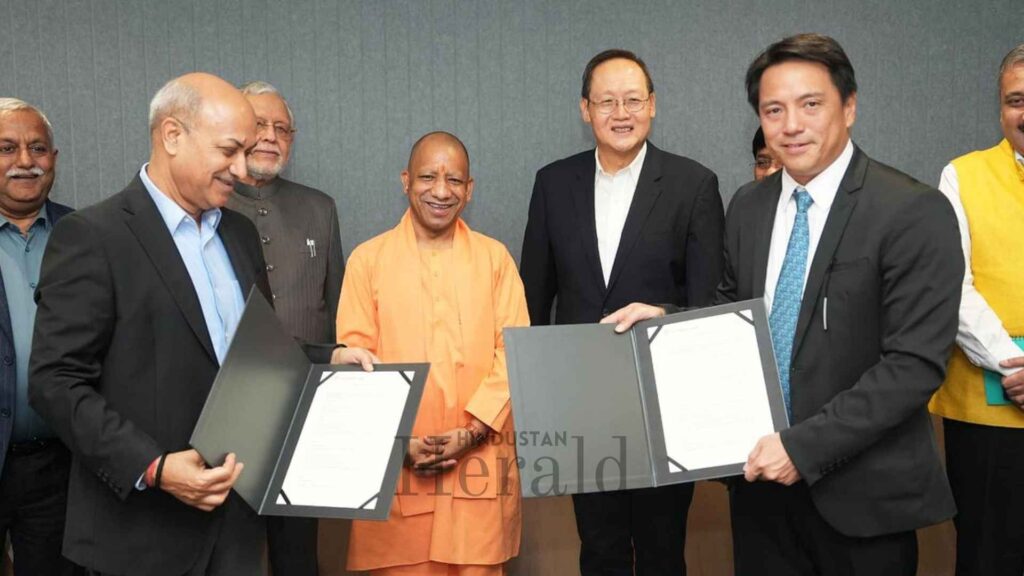
For three days, the Uttar Pradesh Chief Minister moved through a tightly choreographed schedule in Singapore, meeting ministers, corporate executives, and policy advisers. The headline takeaway is straightforward: agreements worth more than ₹19,000 crore have been signed during the visit, according to officials. The deeper story is more nuanced. This was less about headline-grabbing announcements and more about wiring Uttar Pradesh into systems that function with precision.
On the final day, that approach became clearer.
Governance Lessons From Singapore
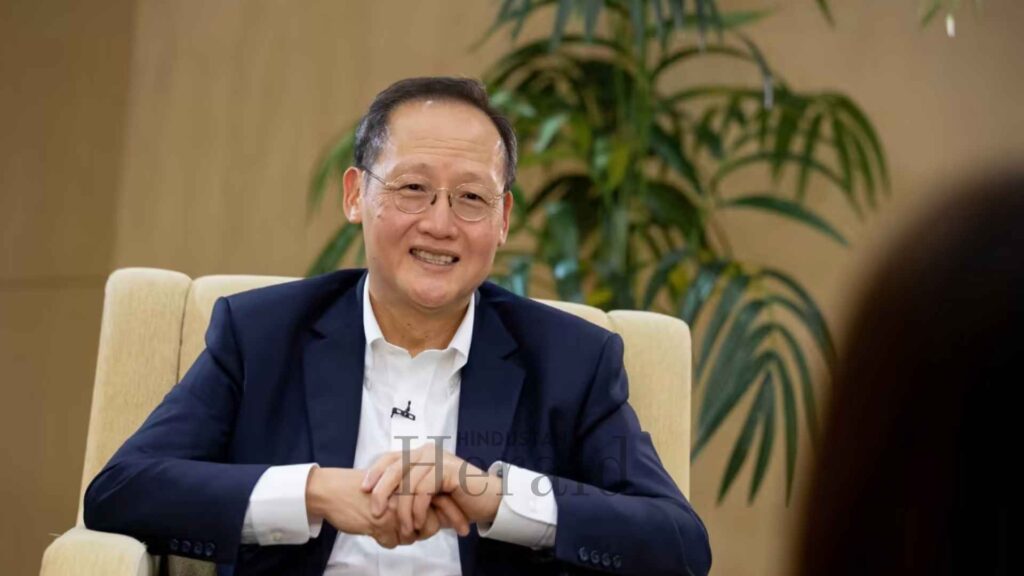
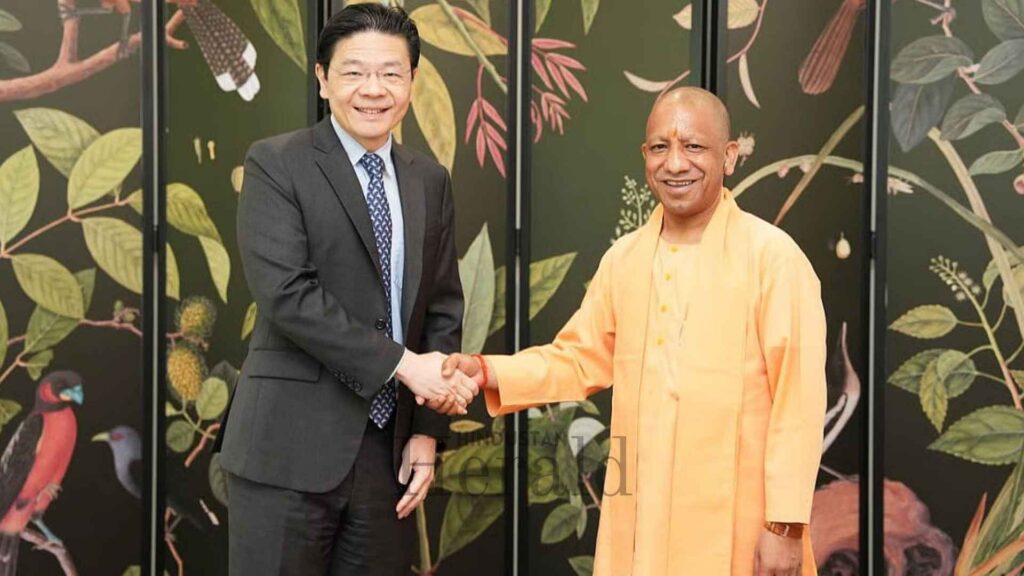
One of the most closely watched meetings was with Dr. Tan See Leng, Singapore’s Minister for Manpower and Minister in charge of Energy and Science and Technology. The conversation, officials said, focused less on immediate investments and more on how Singapore builds and sustains its administrative frameworks.
Singapore’s governance model has long fascinated Indian policymakers. It is compact, disciplined, and digitally integrated. Uttar Pradesh, by contrast, governs more than 240 million people across vast and uneven terrain. The scale is incomparable. Still, the appeal of Singapore’s policy architecture lies in its ability to execute projects without drift.
According to officials present, the discussion touched on manpower planning, skilling systems, regulatory clarity, and energy management. These are not glamorous talking points. But they sit at the heart of whether large industrial promises actually take shape.
The meeting also fits into the larger India-Singapore Comprehensive Strategic Partnership, which has moved beyond trade into areas such as digital public infrastructure and sustainability. For Lucknow, aligning its state-level ambitions with that national framework provides both legitimacy and access.
One official described the exchange as “practical rather than ceremonial.” That distinction matters.
The Quiet Importance Of Institutional Reform
If the aviation agreements grabbed attention, the memorandum signed between Invest UP and the Singapore Cooperation Enterprise may prove more consequential over time.
On paper, it is an agreement for institutional capacity building and policy advisory support. In plain terms, it is about learning how to govern complex projects better.
Singapore Cooperation Enterprise works with foreign governments to share administrative expertise. Uttar Pradesh’s leadership believes that as the state’s infrastructure ambitions grow, so must its internal systems. Expressways, logistics parks, data centres, airports, industrial townships. These projects do not fail for lack of ambition. They falter when coordination collapses.
The MoU creates a structured channel for knowledge exchange in urban planning, digital governance, regulatory processes, and project monitoring. It does not come with dramatic investment figures. There is no ribbon-cutting attached to it. But those familiar with Singapore’s advisory engagements say they often lead to subtle but meaningful shifts in how governments function.
That said, advisory partnerships are only as effective as the willingness to implement change. Uttar Pradesh’s bureaucratic machinery is vast. Reform, even incremental reform, is rarely frictionless.
Jewar Moves Closer To Reality
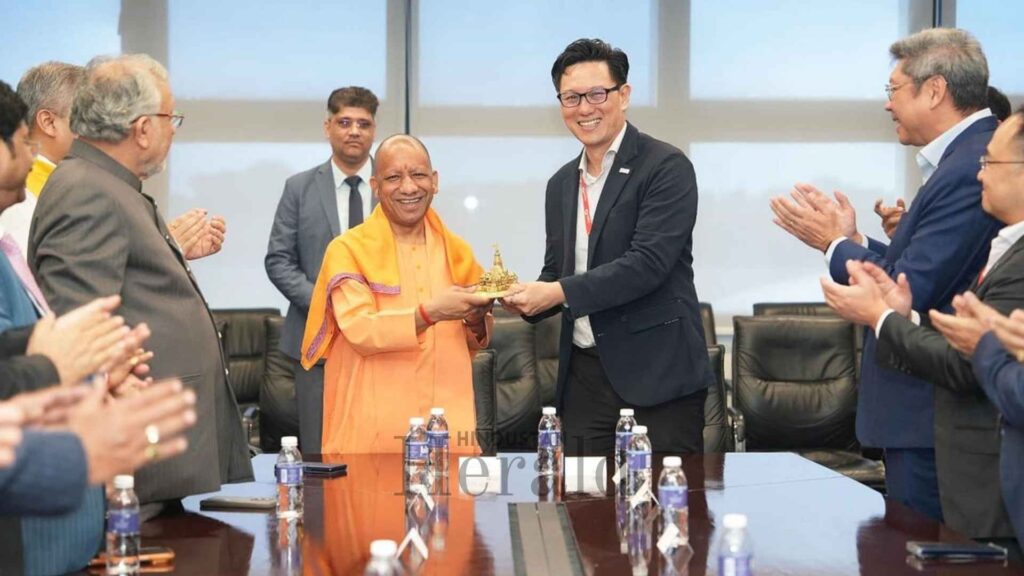
The most visible outcome of Tuesday’s meetings was in aviation. The Chief Minister met Kerry Mok, President and CEO of SATS Ltd, and signed an agreement that could shape the commercial future of the Noida International Airport at Jewar.
SATS will develop a cargo handling complex at the airport. In parallel, a memorandum was signed for establishing a Taj SATS air catering kitchen to serve Jewar and potentially other airports in North India.
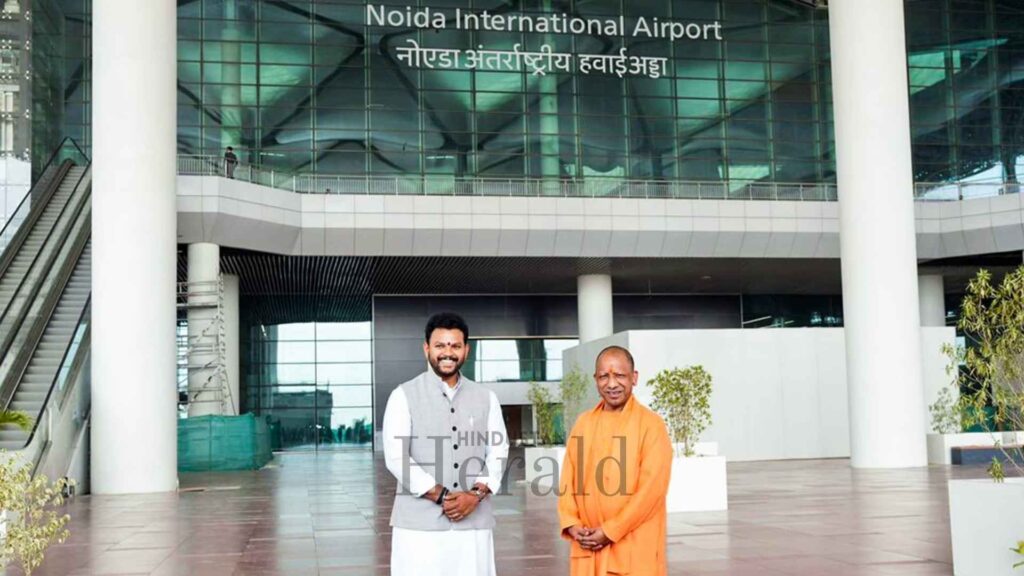
For the Uttar Pradesh government, this is about positioning Jewar not merely as an alternative passenger airport to Delhi, but as a logistics engine. Air cargo infrastructure determines whether high-value manufacturing can thrive. Electronics, pharmaceuticals, perishables, precision components. These sectors rely on efficient cargo movement.
Jewar’s location gives it strategic advantages. It sits near major expressways and freight corridors. But geography alone does not guarantee throughput. Infrastructure and operational expertise do.
Posting on X, the Chief Minister said the partnership would reinforce Uttar Pradesh’s position as a leading aviation and logistics hub. The statement was confident, almost declarative. Yet the real test will begin after the inauguration.
A Prime Ministerial Launch On The Horizon
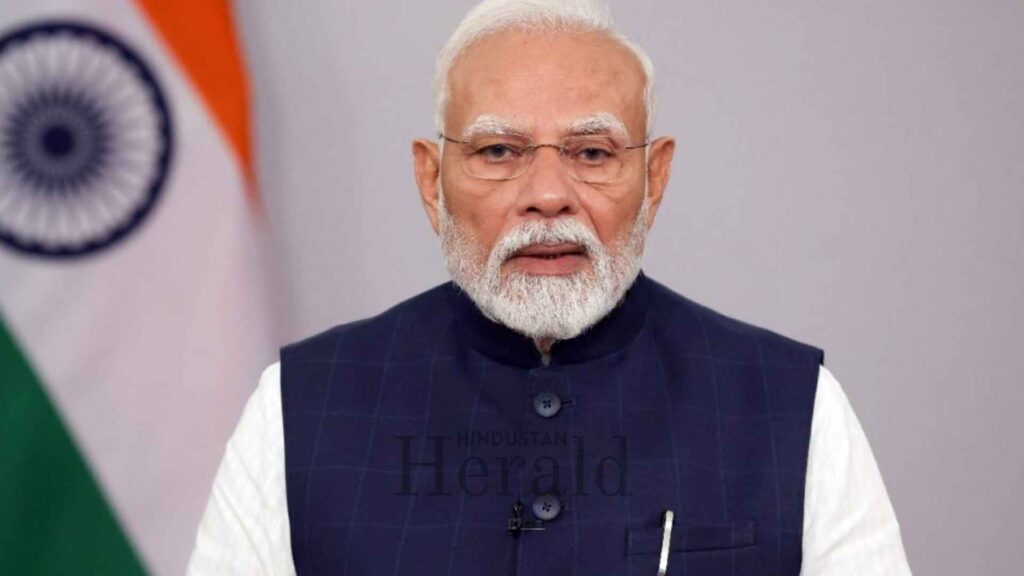
During his engagements, the Chief Minister confirmed that Prime Minister Narendra Modi is expected to inaugurate the Noida International Airport next month, in March 2026.
The airport has been billed as a transformative project for western Uttar Pradesh. Its first phase is designed to reduce congestion at Delhi’s Indira Gandhi International Airport and provide an alternate gateway for northern India. Around it, land values have shifted, warehousing projects have accelerated, and developers have begun sketching new urban clusters.
But airports are ecosystems. They require airlines willing to commit to routes, logistics operators willing to anchor cargo volumes, and surrounding infrastructure that actually works on opening day.
The SATS agreement suggests the state wants cargo operations ready from the start. That is a calculated move. Passenger numbers fluctuate. Cargo volumes, once secured, create steady economic flows.
Still, aviation markets are competitive. Airlines calculate margins with caution. Jewar’s rise will depend on how convincingly it integrates with regional and international supply chains.
Beyond The Numbers
Officials travelling with the delegation say cumulative MoUs during the Singapore visit exceed ₹19,000 crore. These reportedly span data centre parks, logistics hubs, and integrated townships.
Investment announcements are a familiar part of modern political economy. What differentiates them is the conversion rate. Uttar Pradesh has been pushing hard since its Global Investors Summit to convert commitments into groundbreaking ceremonies and eventually into operating facilities.
There is no shortage of ambition. The state wants to be seen not only as India’s largest consumer base but as a manufacturing and export platform. The aviation push is central to that narrative.
At the same time, scepticism lingers in business circles. Investors watch regulatory stability, land acquisition processes, and policy consistency. International partnerships signal intent. They do not automatically erase execution risk.
The Diplomatic Layer
This visit also underscores a broader shift in Indian federalism. States are increasingly conducting what might be called subnational diplomacy. By aligning with Singapore under the umbrella of the national strategic partnership, Uttar Pradesh signals both autonomy and coordination.
Singapore remains one of India’s largest foreign investors. Its companies have stakes in ports, logistics, urban infrastructure, and financial services. For Uttar Pradesh, attracting even a fraction of that ecosystem can reshape regional growth patterns.
But Singapore’s model is built on density and scale that differ dramatically from India’s largest state. Translating best practices requires adaptation, not imitation.
Next Stop, Japan
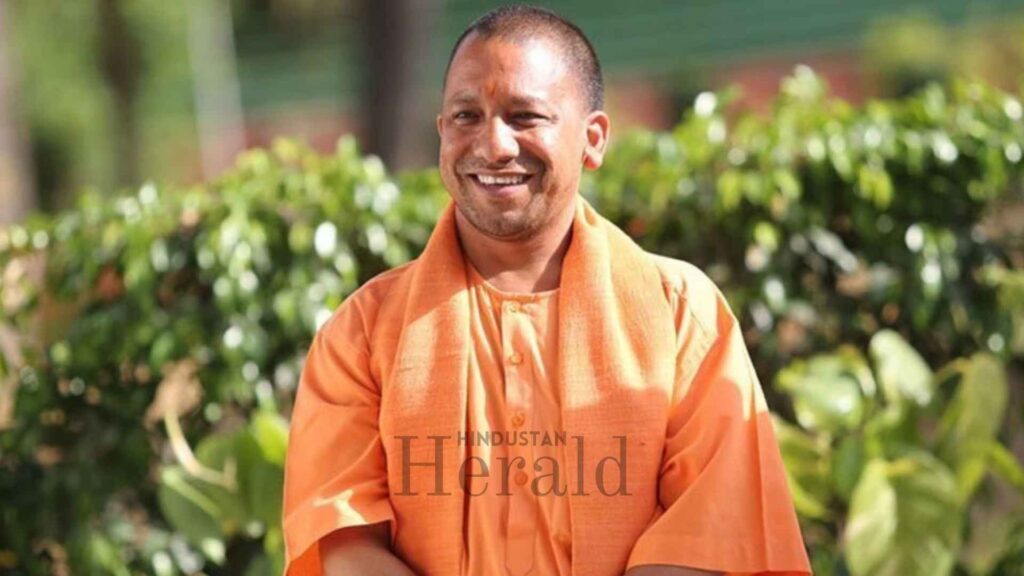
With the Singapore leg concluded, the Chief Minister is scheduled to travel to Japan on February 25 and 26.
Japan has long been a partner in India’s infrastructure story, from metro systems to industrial corridors. Uttar Pradesh officials are reportedly seeking deeper Japanese investment in electronics manufacturing, clean technology, and industrial clusters.
If Singapore offered lessons in governance and logistics, Japan may represent industrial depth and technology partnerships.
For now, the mood within the delegation is measured optimism. The agreements are in place. The symbolic pieces are aligned. Jewar’s inauguration is weeks away.
What will determine whether this visit is remembered as transformational or routine is what happens after the delegation boards its flight home.
MoUs can open doors. Institutions and execution decide whether those doors stay open.
Stay ahead with Hindustan Herald — bringing you trusted news, sharp analysis, and stories that matter across Politics, Business, Technology, Sports, Entertainment, Lifestyle, and more.
Connect with us on Facebook, Instagram, X (Twitter), LinkedIn, YouTube, and join our Telegram community @hindustanherald for real-time updates.

Covers Indian politics, governance, and policy developments with over a decade of experience in political reporting.
- Ananya Sharma

- Ananya Sharma
- Ananya Sharma
- Ananya Sharma