
 By Ananya Sharma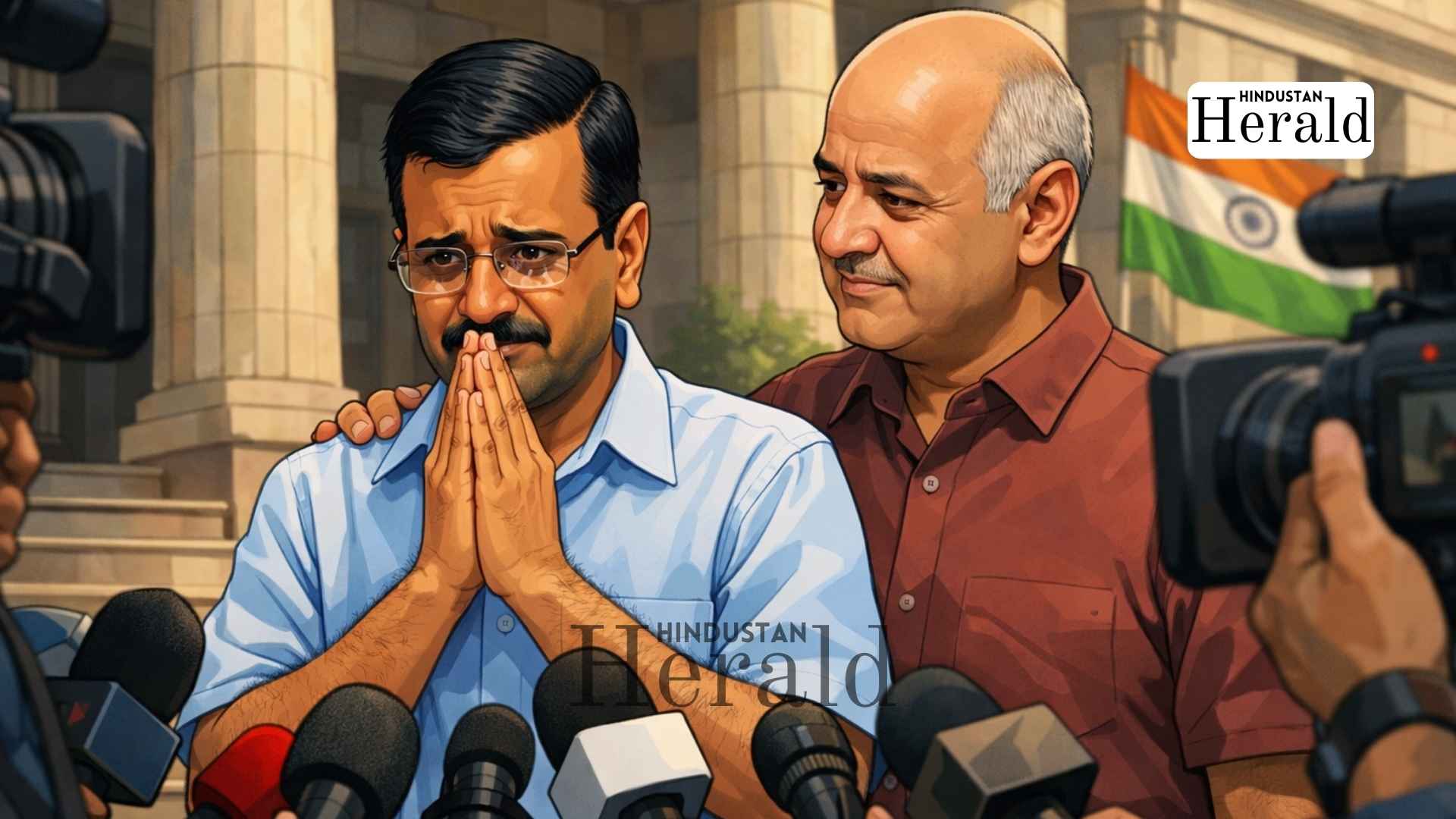
New Delhi, February 27: By late afternoon, the pavement outside Rouse Avenue Court looked like any other high-profile hearing day in Delhi. Television vans lined the road. Cameramen argued over angles. Party workers pushed forward, phones raised high.
But what unfolded was not routine.
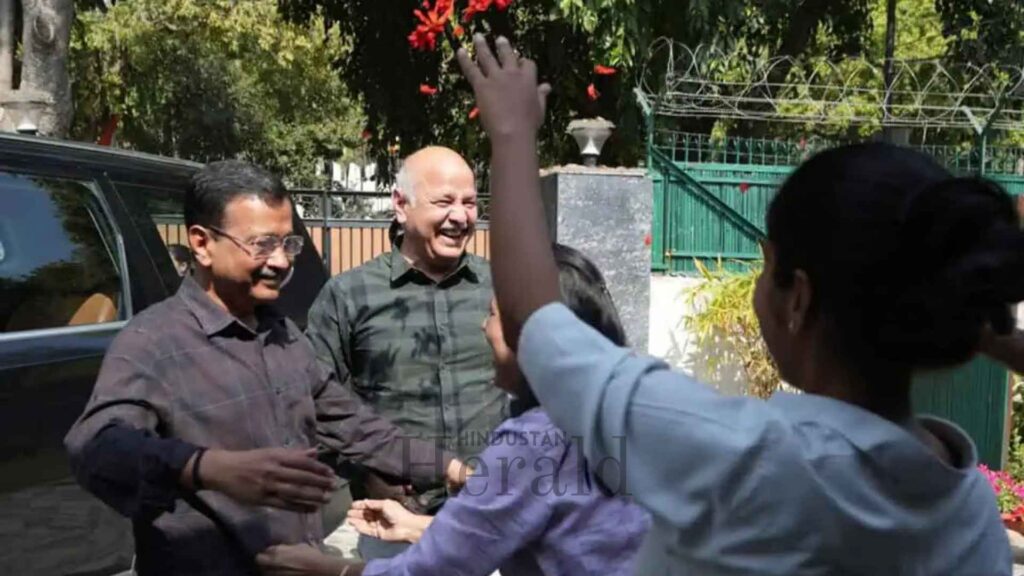
When Arvind Kejriwal walked out, he did not wave. He did not smile. He did not begin with a political attack. He stood still for a moment, as if collecting himself. Then he tried to speak.
The first few words did not come easily.
“I am not corrupt,” he said, voice shaking.
For three years, that sentence has followed him everywhere. On news debates. In court corridors. At campaign rallies. On social media timelines. On Friday, for the first time, he said it after a court had ruled there was not enough evidence to proceed against him in the excise policy case.
What The Judge Actually Said
The case began in 2022 over Delhi’s liquor policy. Allegations surfaced that the policy favoured certain private players. The policy was withdrawn. The Central Bureau of Investigation registered a case alleging irregularities and conspiracy.
Since then, it has been a political storm.
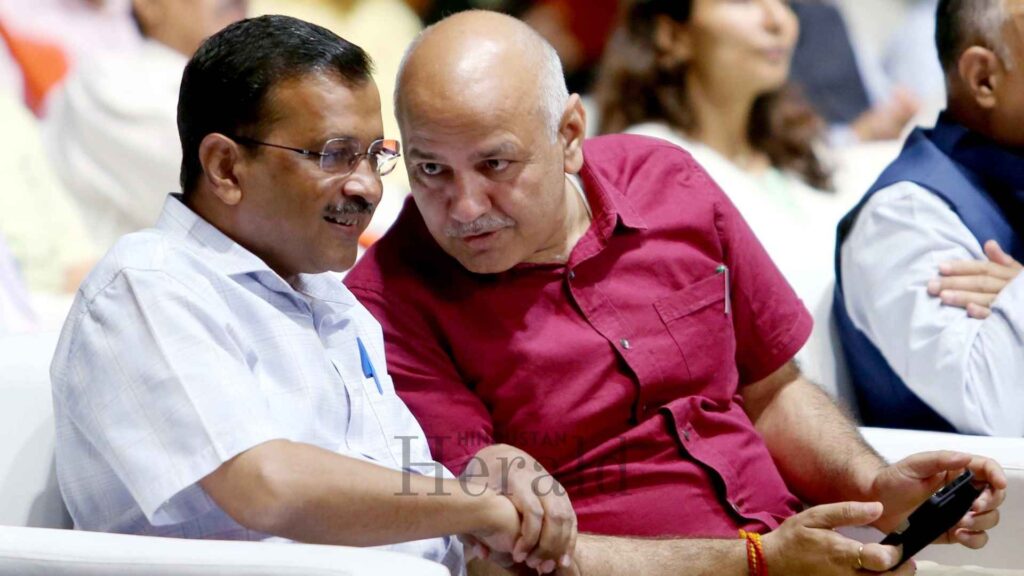
Manish Sisodia was arrested. Kejriwal himself was arrested in 2024 and later resigned as chief minister, saying he would not cling to office while facing corruption charges. For months, his opponents called it proof of wrongdoing. His party called it a vendetta.
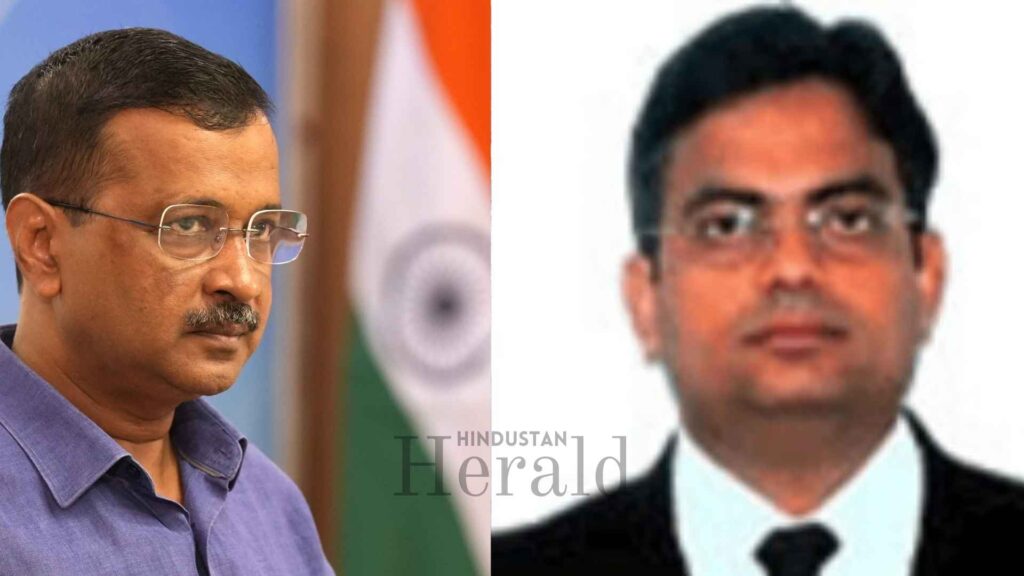
On Friday, Special Judge Jitendra Singh examined the chargesheet filed by the CBI and concluded that it lacked sufficient material to frame charges. In simple terms, the court said there was not enough evidence to even start a proper trial.
That is what “discharge” means here.
It is not the same as a full acquittal after trial. It is a finding that the case, as presented, does not meet the threshold to proceed.
Still, in politics, nuance often gets lost. The headline is what people remember. And the headline is this: the court did not find enough evidence.
The Scene Outside
Kejriwal did not give a long speech. There were no carefully crafted lines. He looked overwhelmed.
Standing next to him, Sisodia placed a hand on his back as he struggled to finish his remarks. Party workers shouted that truth had won. Some wiped their own eyes. Others simply recorded the moment on their phones.
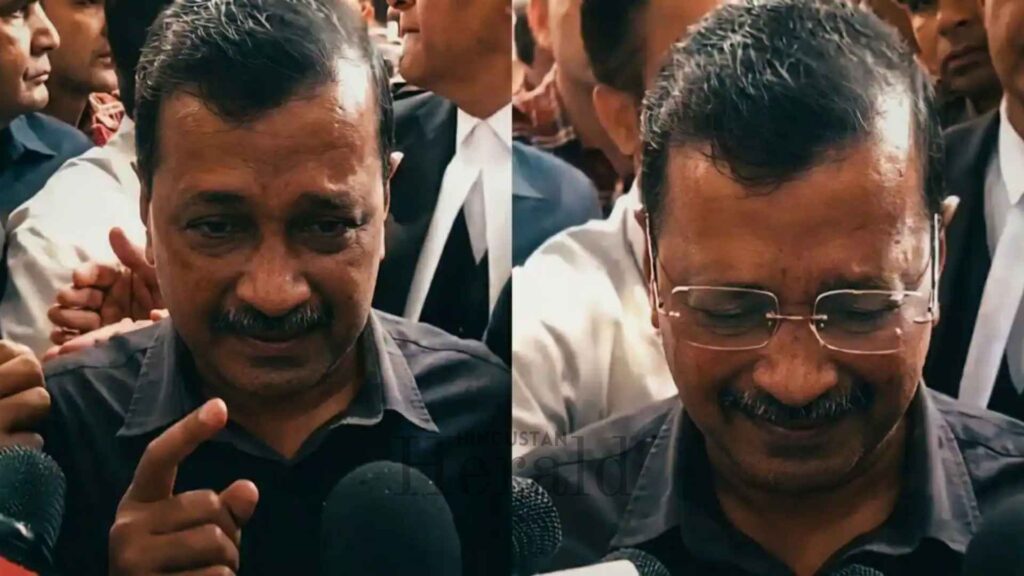
“I have earned only honesty in my life,” Kejriwal said.
For a leader who built his career on the anti-corruption movement, these allegations cut deep. His political identity was shaped at Ramlila Maidan during protests against graft. The idea of clean politics is not a side issue for him. It is the core of his story.
That is why Friday’s order feels bigger than a technical legal decision.
His wife, Sunita Kejriwal, later expressed gratitude publicly and said truth prevails. Senior leaders of the Aam Aadmi Party described the order as a victory for justice.
But The Story Is Not Over
Within hours, the CBI indicated that it would challenge the discharge before the Delhi High Court. So legally, this chapter is not closed.
If the High Court overturns the order, the case could move forward again. If it upholds it, the prosecution’s case in its current form effectively ends.
For now, both sides are preparing for the next round.
Politically, though, this moment shifts the mood. For months, AAP leaders campaigned under the shadow of corruption charges. Now they will campaign saying a court found no grounds to proceed.
Opponents will argue that investigations were serious and that the matter is still sub judice in higher courts.
This back and forth will continue. That is how politics works.
What Ordinary People Are Thinking
Step away from party statements and courtroom language, and the reaction among common citizens is more practical.
Many simply want clarity. Was there corruption or not? If not, why did the case run for so long? If yes, why did the court find the evidence weak?
These are fair questions.
Legal processes are slow. Political narratives are loud. The gap between the two can be confusing.
For some voters, Kejriwal’s tears will be seen as proof of injustice. For others, emotions do not settle doubts. Public opinion rarely changes overnight.
Still, the image of a sitting or former chief minister crying outside court is not something Delhi sees every day.
A Different Kind Of Political Moment
Indian politics often rewards aggression. Leaders raise their voices. They attack rivals. They project strength.
Friday was quieter.
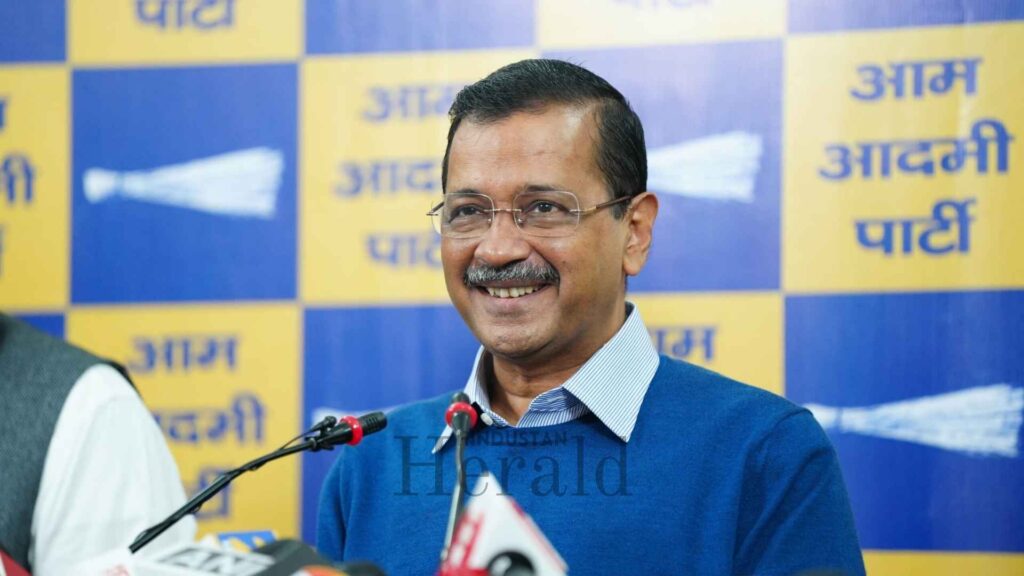
Kejriwal looked less like a campaigner and more like a man who had spent years defending himself. Whether one believes his version or not, the strain was visible.
As the sun dipped and security personnel cleared the area, the noise began to fade. The legal teams left. Supporters dispersed. Television anchors moved on to the next debate.
But the image remains.
A politician who once rode a wave of anti-corruption anger is now standing outside court, saying he has nothing to hide.
The legal fight continues in the Delhi High Court. The political fight continues in speeches and rallies.
For now, though, February 27 will be remembered for that simple scene. A court said there was not enough evidence to proceed. And the man at the centre of it could not hold back his tears.
In a city used to hard edges, it was a rare, human moment.
Stay ahead with Hindustan Herald — bringing you trusted news, sharp analysis, and stories that matter across Politics, Business, Technology, Sports, Entertainment, Lifestyle, and more.
Connect with us on Facebook, Instagram, X (Twitter), LinkedIn, YouTube, and join our Telegram community @hindustanherald for real-time updates.

Covers Indian politics, governance, and policy developments with over a decade of experience in political reporting.
- Ananya Sharma

- Ananya Sharma
- Ananya Sharma
- Ananya Sharma




 Sandeep Verma