
 By Rajiv Menon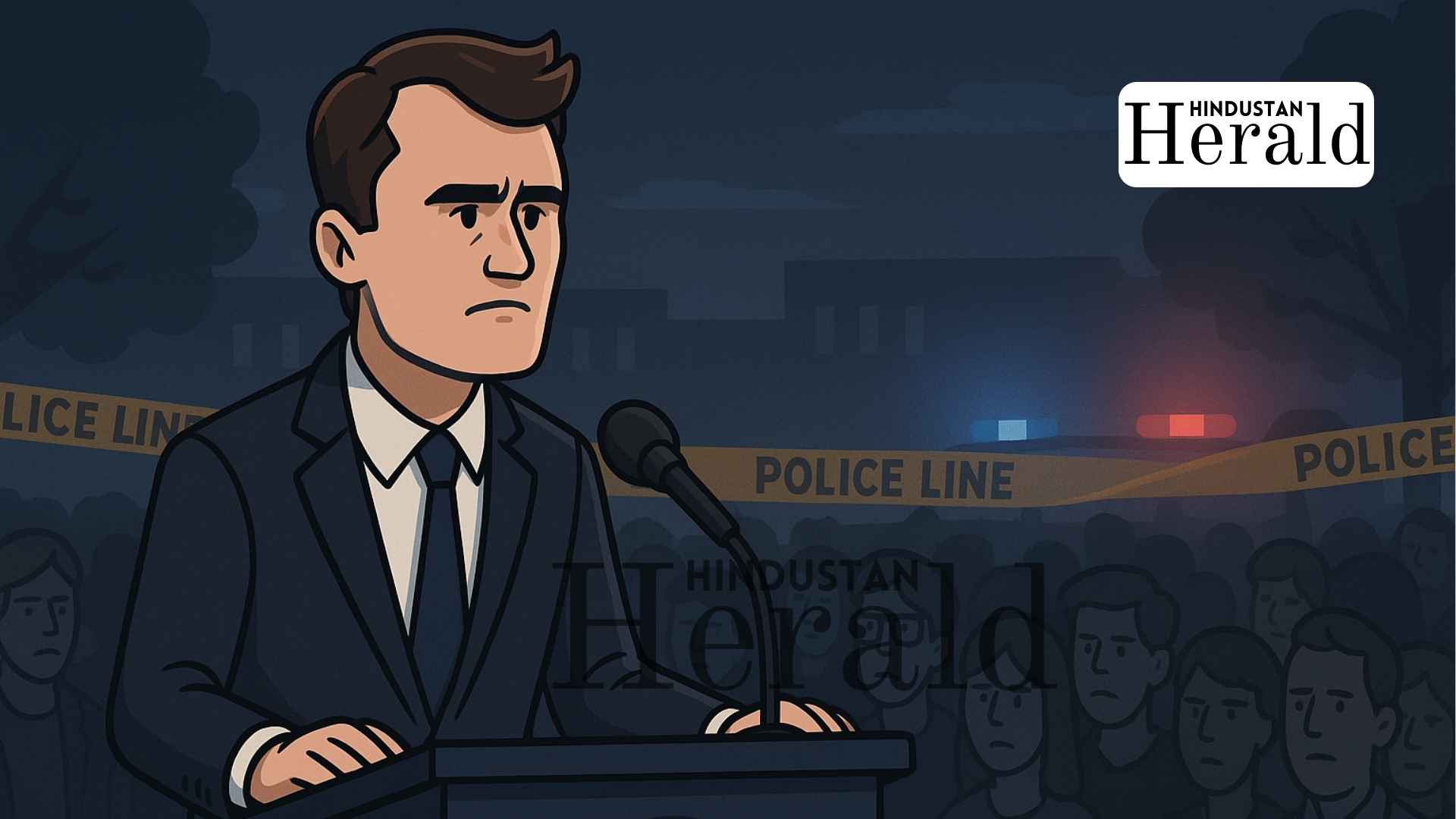
New Delhi, September 11: Charlie Kirk, the brash conservative activist who built Turning Point USA into a national force, was shot and killed at a Utah university on Wednesday night. He was 31.
The attack happened while Kirk was speaking at Utah Valley University. Students and supporters had filled the auditorium. Then came the crack of gunfire. Witnesses describe confusion, shouting, people ducking under seats. Within minutes Kirk was on the ground, mortally wounded.
Police said he died from a single gunshot. The shooter is still out there.
Panic On Campus
The scene turned frantic almost instantly. Some in the crowd thought the noise was a microphone popping. Others knew right away it was a gun. Chairs toppled as people rushed for the exits.
Authorities briefly detained a man nearby, but he was released. Not the suspect. As of this morning, the gunman has not been caught. Helicopters circled overhead through the night. Patrol cars blocked off roads around Orem.
“Make no mistake, this was a political assassination,” Utah Governor Spencer Cox told reporters.
Kirk’s Rise And Reach
Kirk wasn’t a lawmaker, but he wielded influence like one. He started Turning Point USA at 18, pitching it as a counterweight to liberal dominance on college campuses. By his twenties, he was headlining conferences, appearing on cable TV, and helping Republicans court younger voters.
He was close to Donald Trump, who called him “a patriot who gave his life for his beliefs” in a statement after the shooting. That relationship gave Kirk unusual access for someone his age a place inside the Trump movement’s inner circle.
Supporters admired his relentlessness. Critics said he thrived on division. Either way, his presence on the political stage was hard to ignore.
Just last week, according to Reuters, he was in Asia, working to expand Turning Point’s footprint to South Korea and Japan. His death ends that effort abruptly.
Mourning, And Warnings
In Washington, grief mixed with unease. More than 150 people attended a vigil at St. Joseph’s Catholic Church near Capitol Hill. Candles flickered. Some prayed quietly. Others voiced frustration at what they see as a political culture spinning out of control.
“If Charlie can be killed for speaking his mind, what does that mean for the rest of us?” one mourner told The Washington Post.
The White House ordered flags flown at half-staff until September 14. Lawmakers, governors, and even some of Kirk’s political opponents issued statements of sympathy.
But there’s an edge to the tributes. On conservative talk radio, hosts called the shooting a wake-up call. Progressive commentators warned against turning the tragedy into a partisan weapon. Everyone seems to know it could go either way unity or deeper division.
A Country On Edge
The U.S. has seen this before. The assassinations of Martin Luther King Jr. and Robert F. Kennedy in the 1960s. The shooting of Gabby Giffords in 2011. Each time, violence changed the political mood.
Kirk’s killing comes in a climate already tense. The Capitol Police report thousands of threats against officials each year. Judges have been targeted. Local election workers harassed. America’s political stage feels increasingly dangerous.
What happens next is uncertain. Will Kirk’s death harden the movement he built? Or will it push both sides to rethink the rhetoric and the risks? Right now, no one can say.
The View From India
For India, it lands differently but not without resonance. Political assassinations are part of our own history from Indira Gandhi to local leaders targeted in rural states. The vulnerability of public figures is a shared reality across democracies.
And Kirk’s recent push into Asia, including South Korea and Japan, hinted at a new phase of American conservative outreach abroad. That effort ends abruptly, leaving open questions about whether others will pick up the mantle.
The Unfinished Story
For now, the facts are stark. Charlie Kirk is dead. His killer has not been found. A campus is shaken, a movement is grieving, and a country already on edge feels even more unstable.
The investigation continues. But so does the deeper question hanging in the air how much more violence can America’s democracy absorb before something breaks?
Stay ahead with Hindustan Herald — bringing you trusted news, sharp analysis, and stories that matter across Politics, Business, Technology, Sports, Entertainment, Lifestyle, and more.
Connect with us on Facebook, Instagram, X (Twitter), LinkedIn, YouTube, and join our Telegram community @hindustanherald for real-time updates.

Specializes in South Asian geopolitics and global diplomacy, bringing in-depth analysis on international relations.
- Rajiv Menon

- Rajiv Menon
- Rajiv Menon
- Rajiv Menon


 Neeraj Kapoor