
 By Arun Upadhayay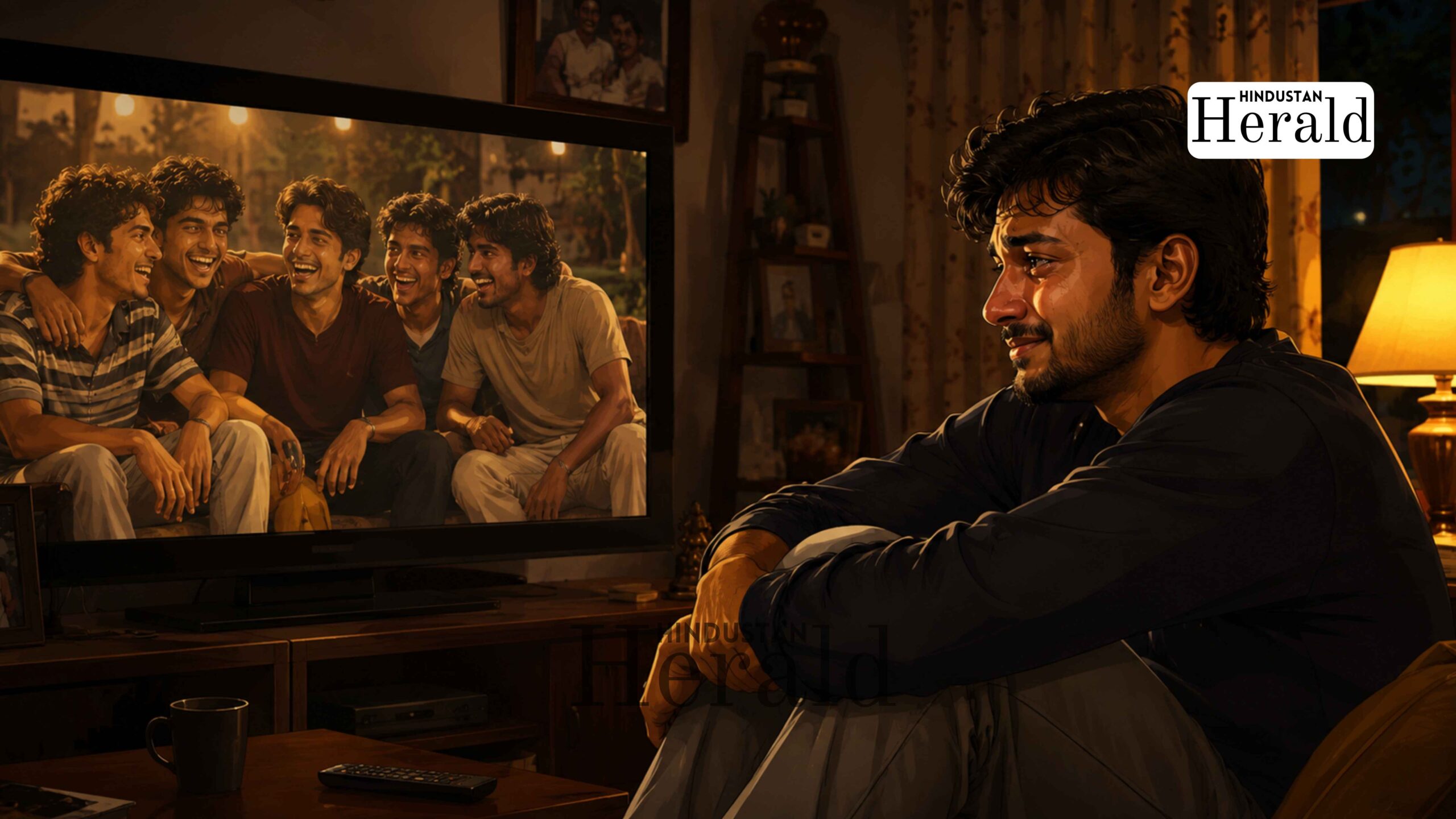
Mumbai, May 11: Kalidas Jayaram did not have to say anything. He could have watched Vaazha II: Biopic of a Billion Bros quietly on his phone, felt whatever he felt, and moved on with his week. Instead, he sat down and wrote something long, personal, and a little embarrassing in the best possible way, the kind of post where a grown man in the film industry admits he is kicking himself for missing something in theatres.
That does not happen very often.
The post went up on his Instagram handle sometime last week, and it spread the way things spread when people recognise something genuine. Not because it was promotional, not because a publicist had shaped it into something digestible, but because it read like a person actually trying to put into words what a film had done to him. Kalidas Jayaram, son of veteran actor Jayaram, has spent enough years in this industry to know when something is working and when it is not. When he chooses to speak about another film in that register, people pay attention.
The film he was writing about, of course, had already done quite a lot without his help.
What Kalidas Jayaram Actually Said
He called it “food for the soul.” That phrase could sound hollow coming from anyone. Here, given everything else around it, it did not.

What struck him first, he wrote, was a scene right at the beginning where young Hashir discovers that his mother had overfed his pet fish. A tiny moment. Nothing that would make it onto a trailer. But Jayaram said that single detail told him immediately that this was a film with genuine control over its craft, that the direction, writing, and performances were all in service of something real.
He said the first half had him hooked. The second half, he wrote, took his heart and stayed there.
The moment he described in most detail was Alan walking up to hug his father, only for the father to break it off with a simple, flat statement: it is time for the flight. Kalidas Jayaram wrote that it was so real it hurt. That particular kind of love, present but withheld, physical but never spoken, is something that lives in an enormous number of Indian homes and almost never appears on screen without being either sentimentalised or played for tragedy. Here, apparently, it was just left to breathe. That is harder to pull off than it sounds.
He also quoted a line that Hashir says to his brother during the film: “It’s easy to get a bad name, but very difficult to get rid of it.” Simple enough. The kind of thing a father or an uncle might say. But Kalidas Jayaram wrote that it would stay with him, and you believe him.

Then he got personal. He said the dynamic between Alan and his sister in the film reminded him directly of his own relationship with his sister, Malavika Jayaram. He quoted Alan’s line, “Who else but me?” and said that was the entire essence of what a sibling bond feels like. That specific detail, the name, the relationship, the admission that it hit close to home, is what separated this from the usual celebrity appreciation post.
He gave a shoutout to the cast, Hashir H, Alan Bin Siraj, Ajin Joy, Vinayak V, and to director Savin SA, by name. And he closed with the honest, slightly pained admission that he had seen all of this on OTT, not in a theatre, and that he was genuinely bothered by it.
The Numbers Behind the Feeling
Here is the thing about Vaazha II. By the time Kalidas Jayaram was writing that post, the film had already done things that most Malayalam films spend entire careers trying to do.
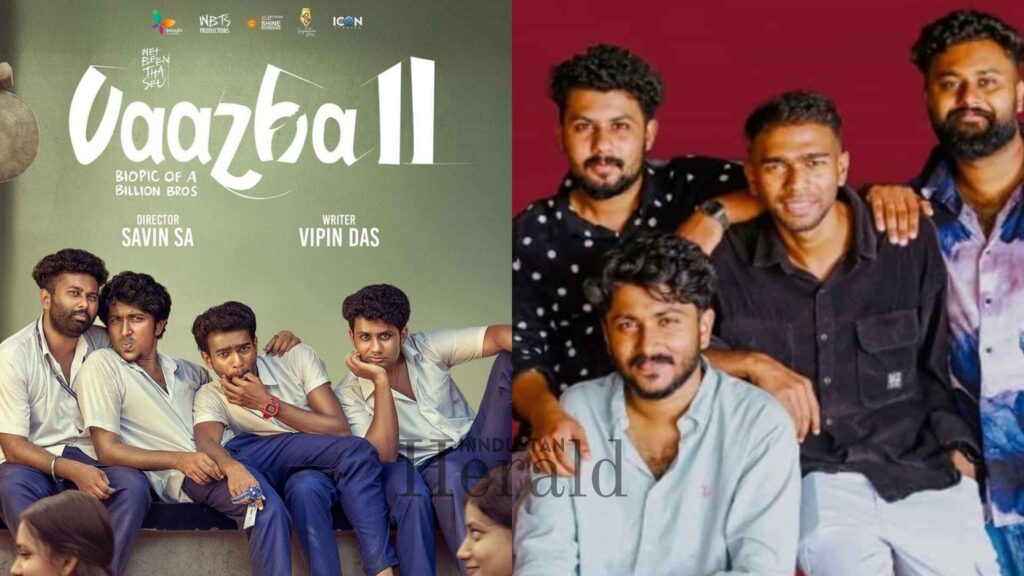
It released on April 2, 2026, directed by Savin SA in his feature debut, written by Vipin Das, and starring the same four leads from the 2024 original: Hashir H, Alan Bin Siraj, Ajin Joy, and Vinayak V. Supporting cast included Vijay Babu, Aju Varghese, Bijukuttan, Alphonse Puthren, and Sudheesh. Filming had stretched from April to November 2025, moving between Ernakulam, the United Arab Emirates, and Georgia.
On day one, it pulled in Rs 5.20 crore from Kerala alone. By the end of its first week, it had crossed Rs 100 crore worldwide. That kind of momentum is not manufactured through marketing. That is word of mouth doing its actual job.
Sixteen days in, it had crossed Rs 100 crore within Kerala itself, making it the third film in history to do that, and the fastest. By day 18, it had crossed Rs 200 crore globally, becoming only the fifth Malayalam film ever to reach that mark.
Twenty-four days after release, it had earned Rs 121 crore in Kerala, crossing Lokah Chapter 1: Chandra to become the highest-grossing film of all time in the state.
The final tally, per trade data from Sacnilk: Rs 148.71 crore gross in India, Rs 128.73 crore net, and Rs 85.75 crore from overseas markets. Total worldwide gross: Rs 234.46 crore.
It is now the fifth Malayalam film in history to cross Rs 200 crore worldwide, alongside Manjummel Boys, Empuraan, Thudarum, and Lokah Chapter 1: Chandra.
For a film built around four content creators playing characters with their own real names, that is an extraordinary outcome.
What the Critics Made of It
The reviews were positive, though not entirely without reservations.

Rediff gave it 4 out of 5 stars, writing that the sequel grows beyond its predecessor by refining its tone, strengthening its themes, and delivering more assured emotional beats and performances.
The New Indian Express gave it 3 out of 5 and described it as feeling like an Instagram reel expanded into a feature film, filled with humour, life lessons, and a fair bit of chaos, while still crediting the central performances and the film’s consistent ability to entertain.
The Indian Express also gave it 3 out of 5, noting that while all four leads are perfectly cast, it is difficult to fully assess their range from this film alone, since their characters are so closely modelled on their real-life public personas.
That last point is actually worth sitting with. The four leads, Hashir, Alan, Ajin, and Vinayak, are all established content creators before they are actors. The film does not pretend otherwise. Their characters share their names, their mannerisms, their general energy. In most cases, that approach produces something that feels thin on screen, like a brand extension rather than a performance.

What Vaazha II apparently gets right is that it pushes them into territory their online personas cannot cover. The more vulnerable, emotionally difficult scenes require something beyond charm and camera ease. And critics noted that the cast, particularly Vinayak, rose to that challenge in ways that were not expected.
The Week put it well in its review, observing that these performers act without self-consciousness, as if unaware the camera is following them, and that this quality comes directly from their experience as content creators, for whom performing on camera is simply daily life extended.
That naturalness is the whole engine of the film.
What Makes This Franchise Different
There is a particular kind of Malayalam cinema that has been quietly gaining ground over the past few years. It is not built on stars in the traditional sense. It does not rely on spectacle. It operates in recognisable spaces, uses the rhythms of ordinary speech, and trusts its audience to connect with situations rather than symbols.

Premalu, Super Sharanya, and now the Vaazha series sit inside that wave. What they share is a refusal to amplify life into something it is not.
The first Vaazha built its emotional power by following a group of young men making genuinely questionable choices, letting the audience laugh at them, and then, in its closing stretch, turning around and asking whether the adults who had written these boys off had ever actually helped them. That pivot is what made it land. Vipin Das, who wrote both films, applies the same structural instinct in the sequel.
This time, the setting expands to include sequences in the UK, and the film uses that environment to explore what happens to young Indians studying abroad, away from family, away from the structures that held them together at home. But it does not turn into a tragedy. The humour stays intact. And rather than lecturing the audience about what the characters should have done differently, the film asks quietly whether the people pointing fingers ever did anything productive in the first place.
That is a hard balance to maintain across two hours. That it apparently works is not an accident.
One More Thing
On April 13, 2026, writer Vipin Das hinted at a third film in the series on social media. The next day, Vaazha 3: Biopic of a Billion Girls was officially announced, to be directed by Viswan Sreejith, who served as assistant director on this film. The shift to a female-led story is interesting, and the industry is watching to see whether the formula translates.

Vaazha II itself is now streaming on JioHotstar from May 8, 2026, which is exactly how Kalidas Jayaram ended up watching it, alone, probably late, on whatever screen was in front of him.
He saw it that way and still came away wanting to have been in a theatre for it. That says something. Not about the OTT experience, and not really about regret either. It says something about what the film does to the person watching it, regardless of where they are sitting.
That kind of response cannot be planned. It just happens, or it does not.
This one did.
Stay ahead with Hindustan Herald — bringing you trusted news, sharp analysis, and stories that matter across Politics, Business, Technology, Sports, Entertainment, Lifestyle, and more.
Connect with us on Facebook, Instagram, X (Twitter), LinkedIn, YouTube, and join our Telegram community @hindustanherald for real-time updates.

- Arun Upadhayay

- Arun Upadhayay
- Arun Upadhayay
- Arun Upadhayay




 Ayesha Khan