
 By Sandeep Verma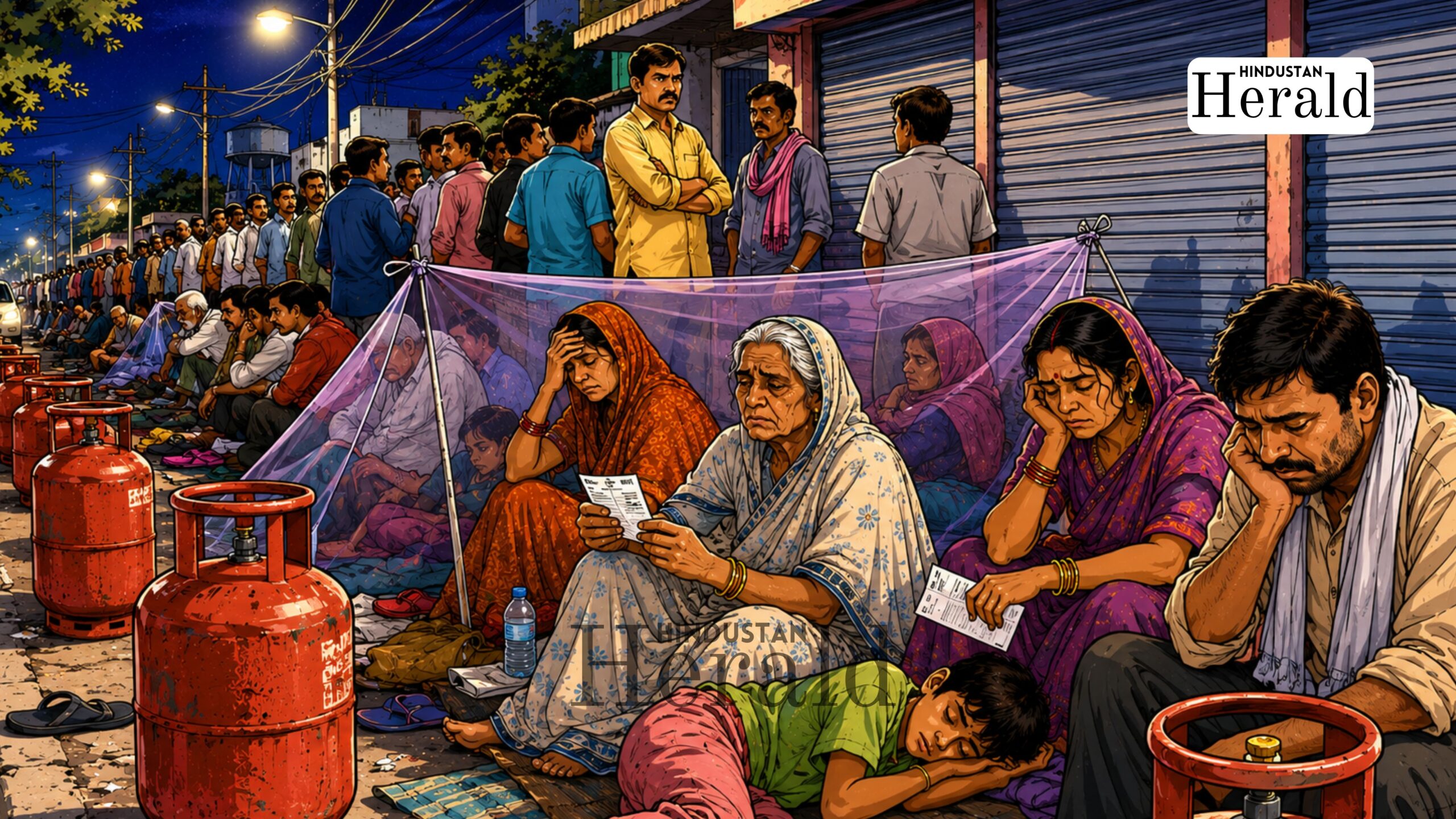
Gorakhpur, May 21: There is a particular kind of exhaustion on the face of someone who has been standing in a line since 3 in the morning with an empty gas cylinder and nothing to show for it by noon.
That is the exhaustion visible in Gorakhpur right now.
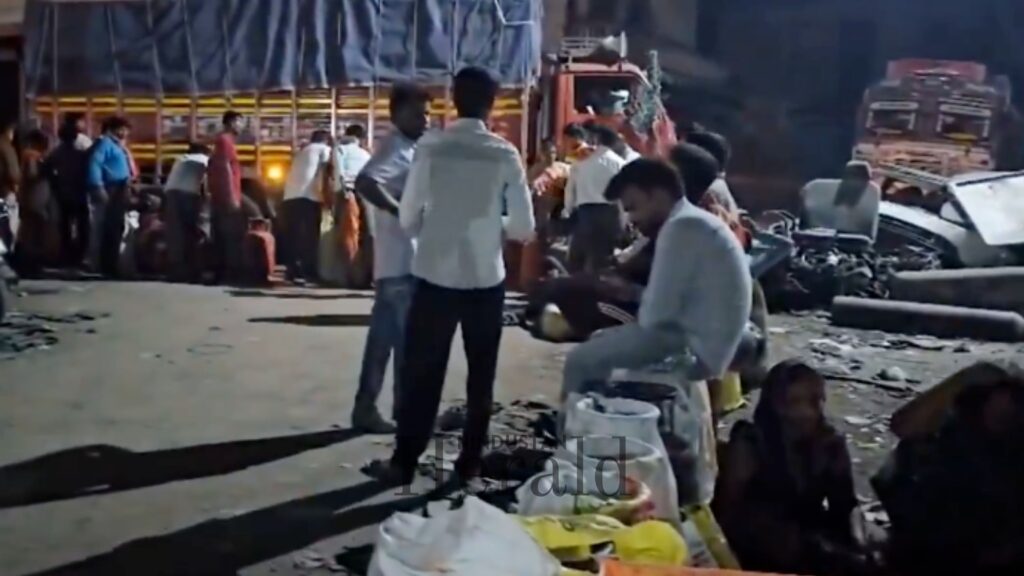
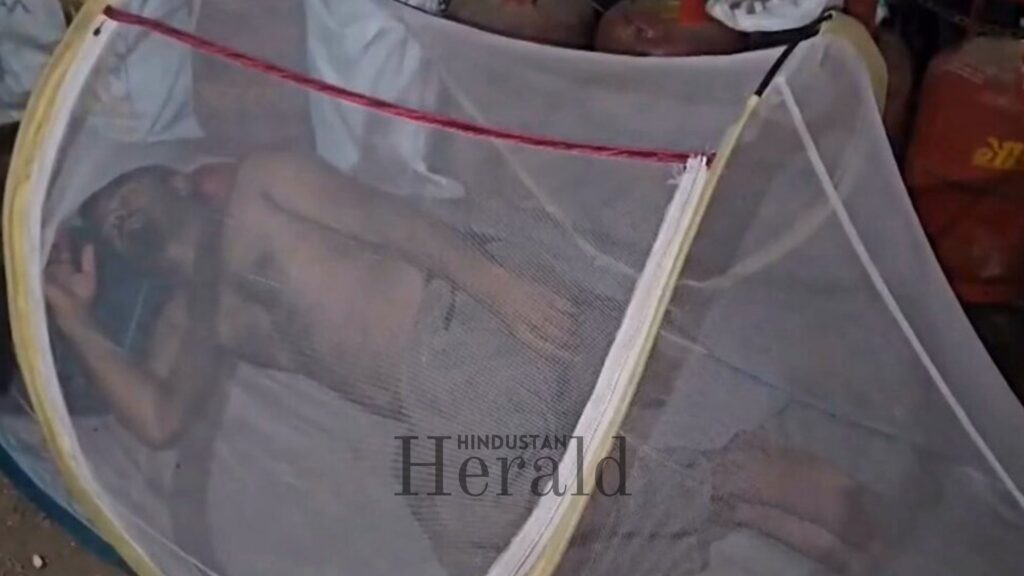
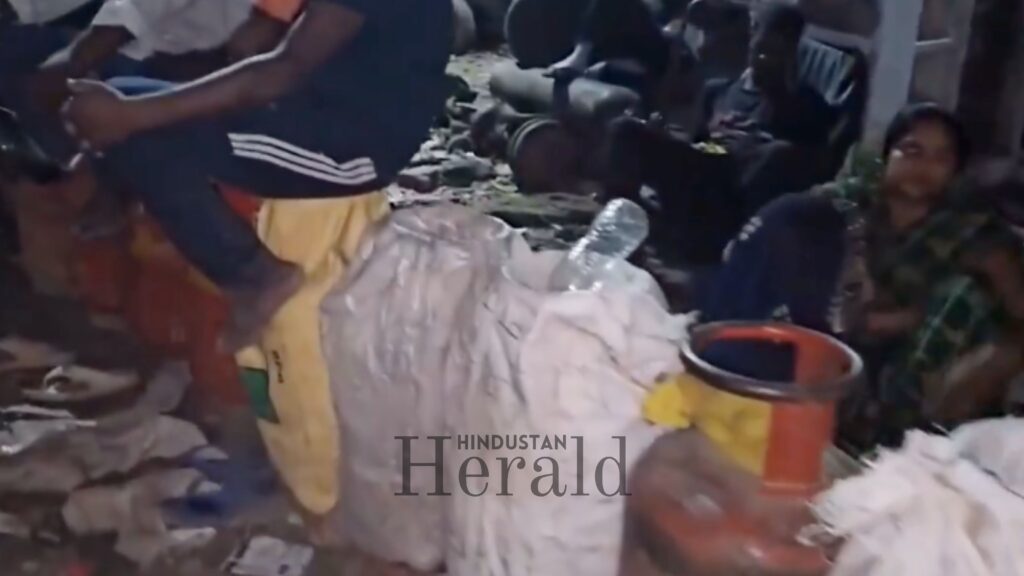
People are sleeping on roadsides outside LPG distribution agencies. They have brought mosquito nets. Some have been back on the same stretch of road for three, four, five consecutive days. Not because they panicked and rushed out to hoard. Because their cylinder ran out, their food could not be cooked, and the wait for a home delivery that was supposed to come has stretched so long that showing up in person felt like the only option left.
The government’s position, stated repeatedly through official channels, is that there is no shortage. Supply is normal. Cylinders are available. People should stop gathering at agencies and simply book online.
The people of Gorakhpur have clearly not received that memo.
The Queue That Would Not Go Away
Ajay Nishad has been at it for ten days. He told reporters that by the time he arrives at the gas agency, there are already 400 to 500 people ahead of him. The line forms in the dark, well before sunrise, because anyone who shows up later risks going home empty-handed. He has seen that happen. It has happened to him.
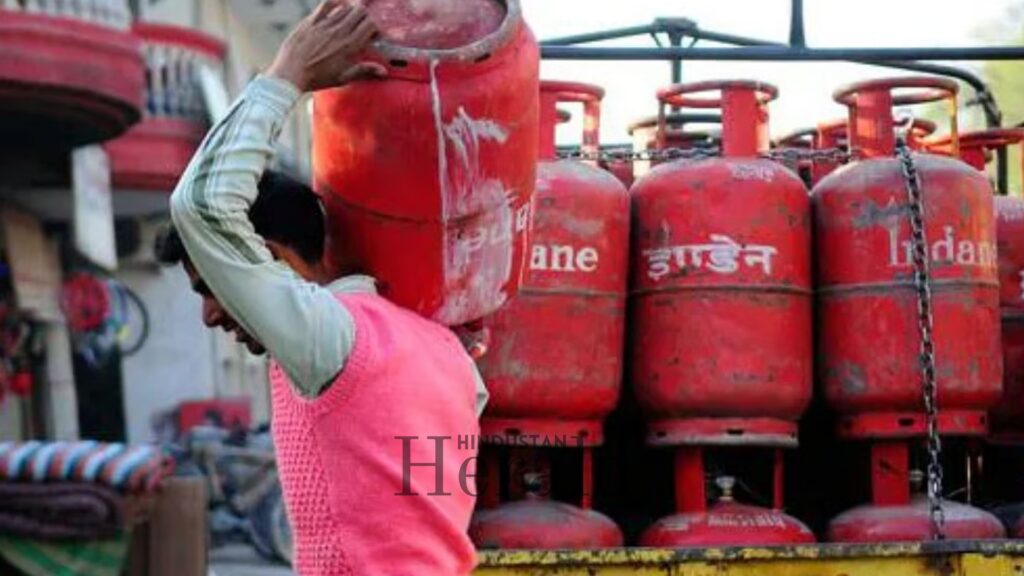
What made it worse was the price. He said the cylinder cost had jumped from around Rs 915 to Rs 975, a hike of roughly Rs 60 with no notice and no explanation that made sense on the ground. For a household running on a modest income, that is not a minor inconvenience. That is a decision between cooking gas and something else.
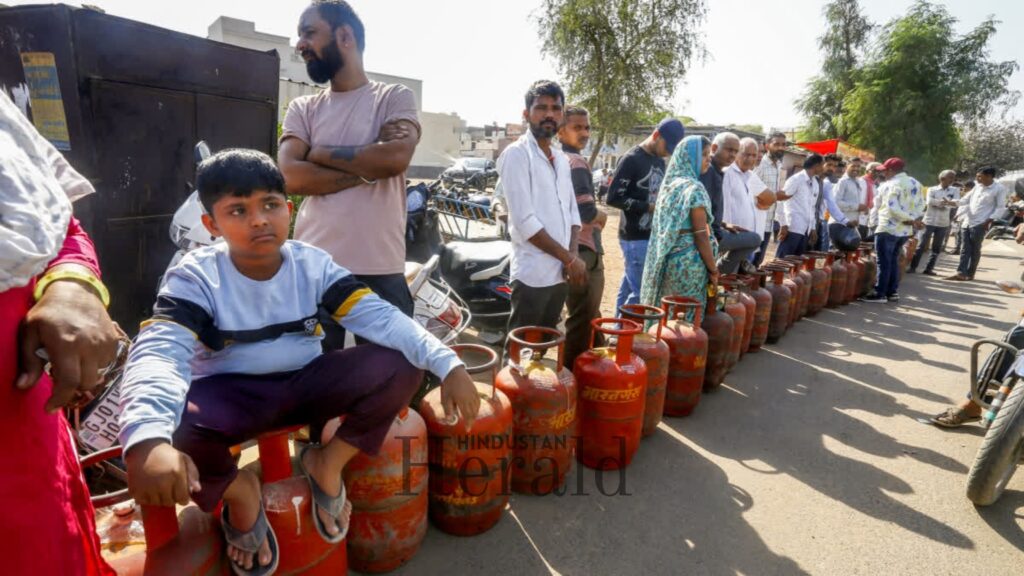
Stories like his have multiplied across the city. The faces change, the details shift slightly, but the structure of the complaint is identical everywhere: queue for days, sometimes leave with a cylinder, sometimes do not, pay more than before, get no answers from the agency counter.
Congress leader Vishwavijay Singh has used stronger language. He alleged outright that domestic cylinders are being diverted and sold at inflated rates through back channels, and he placed the blame squarely on what he called a complete breakdown of administrative oversight under the BJP government in Uttar Pradesh. Whether or not one accepts the political framing, the underlying accusation of black marketing is not coming from nowhere. The UP government’s own enforcement data shows 27 FIRs registered specifically against LPG distributors since mid-March. That number says something.
Bharat Gas Distribution Management’s representative Dhananjay Rai pushed back, telling reporters that supply was proceeding normally and cylinders were being issued as per bookings. He said there was no issue. He maintained this even as residents a few streets away described sleeping on pavements to hold their place in line.
This Did Not Begin In Gorakhpur
To understand what is happening in one city in eastern Uttar Pradesh, you have to go back to early 2026 and a conflict thousands of kilometres away.
The fighting that escalated in the Middle East hit India’s energy supply chain with unusual speed. India imports more than 60 percent of its annual LPG needs, and the bulk of that comes from Gulf suppliers whose shipments move through the Strait of Hormuz. When that passage became operationally risky for international carriers, the knock-on effect reached Indian kitchens faster than most people expected.
The central government moved to prioritise household supply, invoked regulatory authority over distribution, and eventually began diversifying procurement sources including from the United States. Refineries were pushed to operate at higher capacity. A support package worth Rs 30,000 crore was approved for oil marketing companies absorbing under-recovery losses. Subsidies for PMUY beneficiaries were protected at around Rs 613 per cylinder after government support.
On paper, the response was reasonably swift. In practice, the supply chain had already absorbed a shock it had not been built to handle, and the pressure filtered down unevenly. Some cities and states managed the distribution better. Others, clearly, did not.
Yogi’s Promise and What It Ran Into
Chief Minister Yogi Adityanath addressed this directly at a function in Gorakhpur itself, at the GIDA area, during late March. His message was simple: stop queuing, book your cylinder, it will be delivered to your door. “There is no need to stand in line outside agencies,” he said.
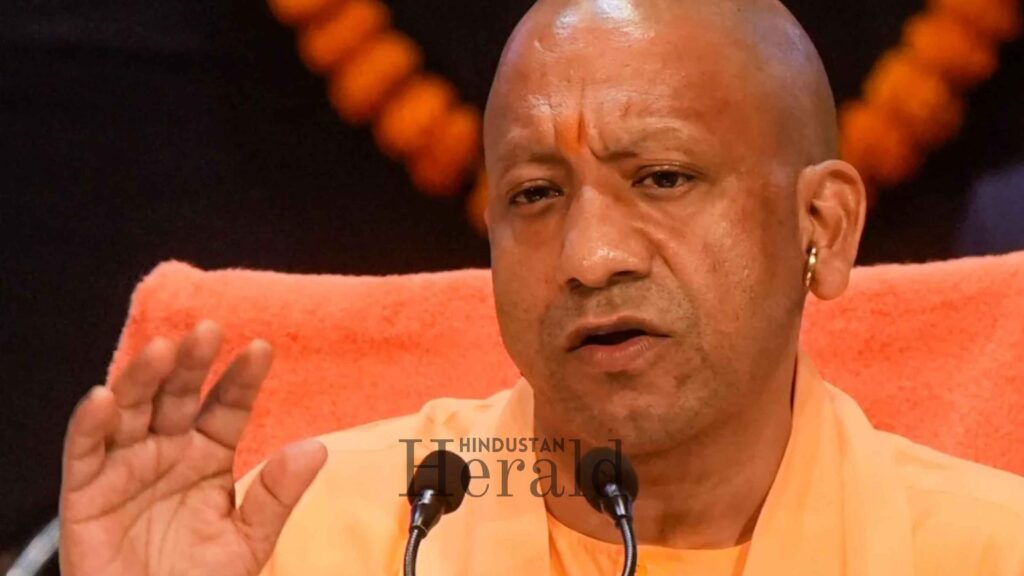
It was a reasonable thing to say if the delivery system was working. The problem is that in many pockets of the state it was not, and the gap between that assurance and the lived experience in Gorakhpur has only widened in the weeks since.
The state has cited numbers in its defence. Over 23,000 raids and inspections conducted since March 12. More than 4,100 gas agencies operational across UP. Nearly 16 lakh PNG connections issued. Ninety-five percent of bookings being processed digitally. The numbers are real, but numbers do not capture the family that has been waiting two weeks for a scheduled delivery that has not arrived, or the elderly woman who cannot stand in a queue for eight hours and has no one to do it for her.
The Quiet Cost Nobody Is Counting
There is an aspect of this crisis that rarely makes it into official briefings or government data presentations.
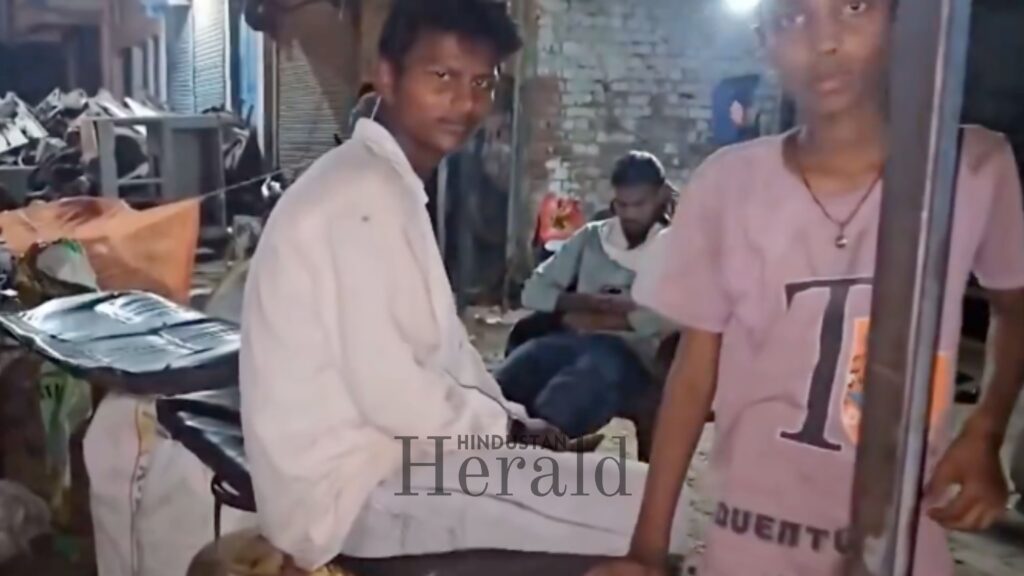
When cooking gas disappears or becomes unreliable, the burden does not fall evenly. It falls on women, most of all. Not in an abstract, statistical sense. In a concrete, daily sense, where the hours spent hunting for alternatives, managing a hearth that was supposed to have been replaced by a clean-burning cylinder, or standing in a queue from before dawn eat directly into time that could have gone toward work, school runs, rest.
The Pradhan Mantri Ujjwala Yojana was, by most honest accounts, one of the more meaningful welfare achievements of the past decade. It reached women who had spent entire lives cooking over open fires and handed them something that changed the texture of their days. This crisis does not undo that permanently, but every week it persists, it chips away at what the scheme was supposed to deliver.
Economists have described this dynamic as “time poverty.” The phrase sounds academic. The reality is a woman in Gorakhpur spending her morning doing something she thought she had left behind.
The Part That Needs Saying
The global disruption that triggered this was real. India’s dependency on imported LPG was always a structural risk, and a conflict in West Asia exposing it was not entirely within any government’s control. That is fair.
What is also fair to say is that the distribution failures visible in Gorakhpur look less like an unavoidable consequence of global supply shock and more like a local administrative failure. Black marketing does not happen because of conflicts in the Strait of Hormuz. It happens when enforcement is loose, monitoring is patchy, and the people who should be ensuring that cylinders reach households are looking the other way or actively participating in diversion.
The government’s own FIR numbers against distributors confirm that much. Twenty-seven cases against agencies is not a small figure. It tells you that somewhere between the supply arriving in Gorakhpur and it reaching the people who have been queuing since 3 a.m., something is going wrong in a way that is criminal, not logistical.
For now, the queues continue. The mosquito nets go up after dark. The cylinders wait, empty, beside people who are tired in a way that has moved past frustration into something quieter and more resigned.
The official line says there is no shortage.
The people on the road say something different.
Stay ahead with Hindustan Herald — bringing you trusted news, sharp analysis, and stories that matter across Politics, Business, Technology, Sports, Entertainment, Lifestyle, and more.
Connect with us on Facebook, Instagram, X (Twitter), LinkedIn, YouTube, and join our Telegram community @hindustanherald for real-time updates.

Regional journalist bringing grassroots perspectives and stories from towns and cities across India.
- Sandeep Verma

- Sandeep Verma
- Sandeep Verma
- Sandeep Verma



 Ananya Sharma