
 By Shelesh Joshi and Kavita Iyer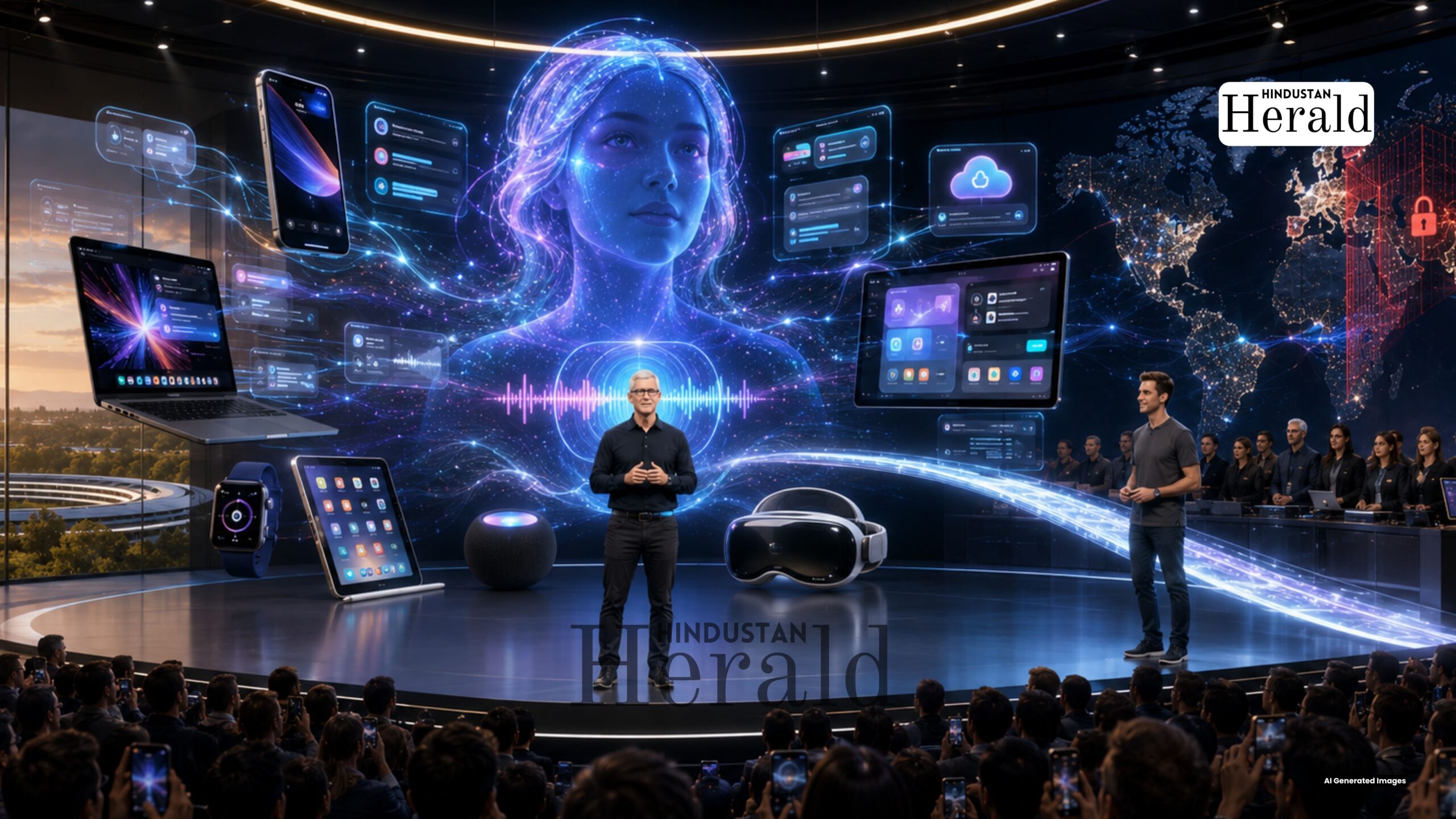
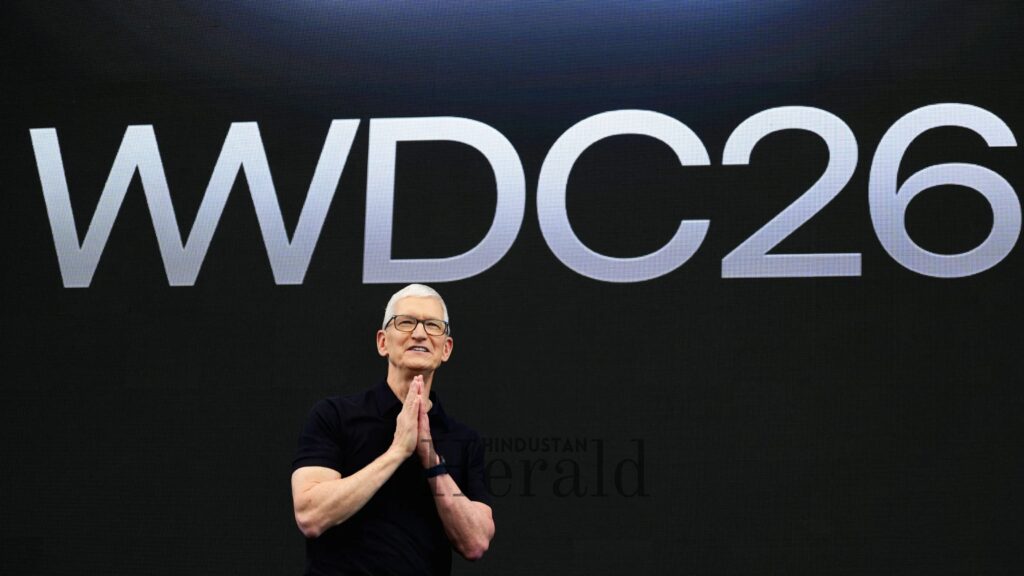
New Delhi, June 9: Near the end of the Apple WWDC 2026 keynote on Monday, Tim Cook visibly teared up. Apple had just shipped the rebuilt Siri it promised two years ago and quietly handed two of its biggest markets, the EU and China, a version without its headline feature.The room at Apple Park in Cupertino went quiet the way rooms do when something unscripted happens. For a brief stretch, the most polished product presentation machine in the technology industry just felt like a person standing at a podium.
That moment mattered. Not because Cook is disappearing he transitions to Executive Chairman on September 1, 2026, staying very much in the building but because it put a human face on just how much is actually changing at Apple right now. A new CEO. A rebuilt AI strategy. A new Siri that the company has been promising, and failing to deliver, for the better part of two years. WWDC26 was the day Apple finally had to show its hand. By most reasonable measures, what it showed was more than many expected, and not quite enough to silence the sceptics.
Quick Summary
- Siri AI was officially launched at WWDC26 as an entirely rebuilt assistant, running on Apple Foundation Models co developed with Google’s Gemini technology.
- Apple posted Q2 FY2026 revenue of $111.2 billion, up 17 percent year over year, per its official SEC filing dated April 30, 2026.
- AAPL stock closed June 8 at $301.54, down 1.89 percent, on trading volume of 76.6 million shares, roughly 68 percent above its three month average, as reported by The Motley Fool.
- CEO Tim Cook will step down on September 1, 2026, handing over to hardware chief John Ternus, as confirmed by TechCrunch.
- macOS 27 “Golden Gate” officially drops support for all Intel based Macs, the first macOS release to run exclusively on Apple Silicon, per Apple’s WWDC26 announcements.
- Siri AI will not be available in the European Union on iOS 27 or iPadOS 27 at launch, nor in China, due to regulatory requirements, per Apple’s own official statement.
What Apple WWDC 2026 Actually Confirmed Before the Spin Starts
It is worth being precise about what Apple officially said at WWDC 2026, because the coverage cycle moves fast and the line between announcement and interpretation blurs quickly. What follows is the company’s own record, not a reporter’s summary.
The Apple Newsroom press release of June 8, 2026 carried a direct headline: Apple unveils next generation of Apple Intelligence. The release described the event as the preview of “upcoming software releases that will deliver the next generation of Apple Intelligence and introduce Siri AI, an entirely new version of Siri that is profoundly more intelligent, knowledgeable, and capable.”
The same release confirmed new software across iOS 27, iPadOS 27, macOS 27, watchOS 27, visionOS 27, and tvOS 27. It also flagged a new child safety suite described as “powerful and intuitive new tools to help parents create safe digital experiences for kids.”
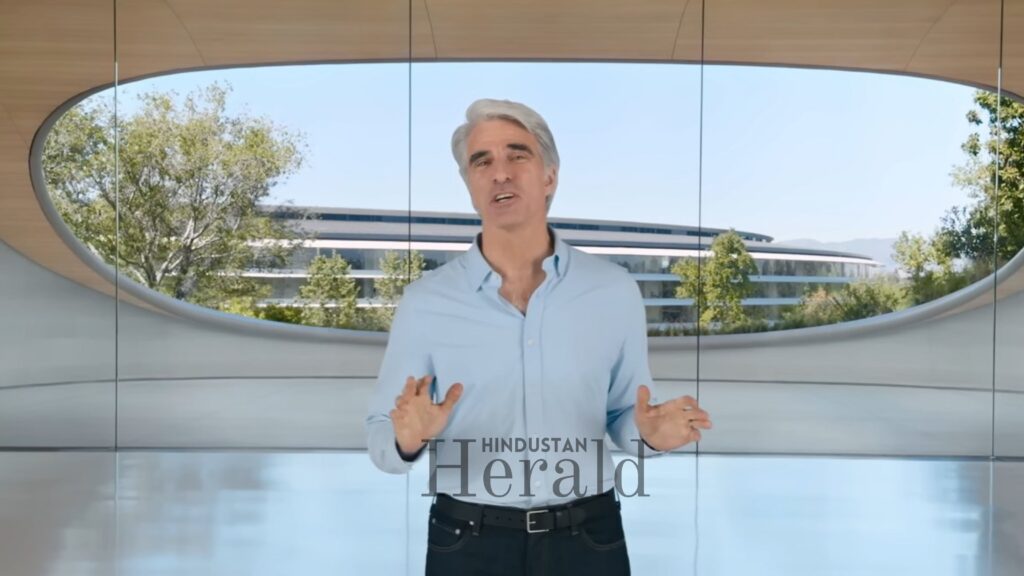
Craig Federighi, Apple’s Senior Vice President of Software Engineering, was quoted directly. He said the company was “delivering the next generation of Apple Intelligence across our platforms; introducing Siri AI, a profoundly more intelligent, knowledgeable, and capable Siri; expanding child safety features with intuitive new tools for families; and making our software platforms faster, more reliable, and more delightful than ever before.”
That is the verified floor of Apple WWDC 2026. Everything built on top of that in this report comes from credible on the ground coverage or verified financial filings. Nothing else.
Siri AI: Two Years Late, But Finally Here
There is no delicate way to frame this. Apple showed a new Siri at WWDC 2024. It did not ship. It showed a version again at WWDC 2025. Still did not ship. On Monday, it shipped or at least entered developer beta, which is the closest thing to shipping Apple does at a June conference.
The new assistant is called Siri AI, and the gap between this and the old Siri is not incremental. According to Apple’s own press release, it is “deeply integrated into iPhone, iPad, Mac, Apple Watch, and Apple Vision Pro.” It can search across a user’s messages, emails, and photos using personal context. It can look at what is on your screen and answer questions about it. It can pull current information from the web.
There is also a dedicated Siri app now and that is a significant admission in itself. For years Apple resisted giving Siri a standalone home, preferring to fold everything invisibly into the operating system. A dedicated app, with conversation history that syncs across devices through iCloud, means Apple is now directly competing for the same daily screen time as ChatGPT and Google Gemini. That is a real strategic shift, not a feature update dressed up as one.
As reported by tbreak.com, users can reach Siri AI on iPhone through a side button press, a swipe from the Dynamic Island, or the usual “Hey Siri” invocation. Mac users get it through Spotlight. On Vision Pro, a floating Siri interface activates without a voice trigger. Voice customisation is in too, with adjustable pace, expressiveness, and accent options.
The Part Apple Would Rather Not Lead With
The engine powering all of this is not purely Apple’s. As stated in Apple’s own official announcement and confirmed by Popular Science reporting from the keynote, the next generation of Apple Foundation Models were “custom built in collaboration with Google and its Gemini models.” The top tier cloud version, called AFM Cloud Pro, runs on Nvidia GPUs inside Google’s cloud infrastructure, per CNBC’s on the ground coverage.
Bloomberg reported ahead of WWDC that this arrangement was expected to cost Apple roughly $1 billion per year. Apple has not confirmed that figure officially. As reported by Popular Science, the collaboration runs deeper than most people realise. Even the invisible watermark Apple embeds in AI-generated images in iOS 27 uses Google’s SynthID technology. This is not a convenience arrangement at the margins. It is structural.
For a company that has spent fifteen years selling consumers on the idea that its ecosystem is safe precisely because Apple owns it end to end the chip, the software, the server, the experience this is a real concession. Worth noting clearly, not buried in a footnote.
That said, Cult of Mac, reporting from the Platforms State of the Union session, noted that developers using Private Cloud Compute can do so for free if their app has fewer than two million users, with expanded tiers available through iCloud+. As reported by Digit.in, some Apple Intelligence features, including image generation, carry daily usage limits that iCloud+ subscribers can extend. The monetisation layer is already built in.
Who Actually Gets Siri AI and Who Does Not
This tends to get buried in keynote day enthusiasm, so it deserves clear space. Siri AI will not be available in the European Union on iOS 27 or iPadOS 27 when the software ships. Apple issued a direct statement on this, reported by TechRadar: “Unfortunately, due to the Digital Markets Act (DMA), Apple will not be able to ship Siri AI in the European Union with the release of iOS 27 and iPadOS 27. Over the past several months, EU regulators did not accept any of Apple’s proposed solutions to bring Siri AI to the EU while safely supporting other virtual assistants.”
As reported by CNBC, it will also not launch in China due to regulatory requirements there. As ASO World clarified in its post keynote breakdown, EU users will still receive Siri AI on macOS 27, visionOS 27, and watchOS 27. The restriction is specific to iPhone and iPad in Europe. That is a meaningful carve out, but cold comfort for the hundreds of millions of European iPhone users who watched Monday’s keynote.
On hardware, Engadget compiled Apple’s official statement: full Apple Intelligence and Siri AI support requires iPhone 16 or later, iPhone 15 Pro or 15 Pro Max, iPad mini with A17 Pro, iPad with M1 or later, Mac with M1 or later, Apple Watch Series 10, Apple Watch Ultra 2, or Apple Watch SE 3. The most advanced Siri AI features expressive voices and advanced dictation require an iPhone 17 Pro, iPhone 17 Pro Max, or iPhone Air, per TechRadar.
iOS 27 itself installs on devices back to the iPhone 12. But getting the headline feature of WWDC26 requires hardware that not everyone has. That gap is intentional, and it has clear implications for the iPhone 18 upgrade cycle.
iOS 27: The Update That Actually Affects Everyone
Beyond Siri, iOS 27 does real work on the basics. As reported by Tom’s Guide from the keynote, Apple claimed 30 percent faster app launch times on iPhone and iPad. Photos load into the library 70 percent faster. These are Apple’s own figures, and they are meaningful for daily use, not just benchmark sheets. iOS 27 supports devices going back to the iPhone 12 series. The iPhone 11 line is cut.
MacRumors noted in its WWDC26 recap that iOS 27 adds perimenopause and menopause tracking to the Health app and brings new CarPlay features including video app support. Tom’s Guide reported that a custom equaliser for AirPods is finally here, letting users manually tune audio lows, mids, and highs from their iPhone. That feature has been requested for years.
TechCrunch reported from the keynote that iOS 27 also brings upgraded Safari tab management, one tap password updating, and stronger cross app context awareness under the Apple Intelligence umbrella. None of these will generate the headlines Siri AI does. But for most of the people who will install iOS 27 this September, these are the changes they will actually notice.
macOS Golden Gate: A Clean Break From the Past
Craig Federighi unveiled the name on stage: macOS 27 “Golden Gate.” It continues Apple’s tradition of naming Mac software after California landmarks. It also means something considerably more consequential than a name. As confirmed by Wikipedia, citing Apple’s WWDC26 announcements, macOS Golden Gate is the first version of macOS to run exclusively on Apple Silicon. Every remaining Intel based Mac is officially left behind. The transition Apple began in 2020 is now complete.
It is also, as TechRadar noted, the last version of macOS to include full Rosetta 2 support the translation layer that has allowed Intel applications to run on Apple Silicon machines. Once macOS Golden Gate’s successor ships, that bridge closes.
On the design side, TechRadar reported that macOS Golden Gate brings a global opacity slider for the Liquid Glass interface, letting users control how much transparency they want in the visual layer. This was a direct response to genuine frustration with macOS Tahoe’s readability. MacObserver noted a unified toolbar design and a sidebar that runs edge to edge inside apps, giving the platform a more consistent look across the board.
Spotlight gets a significant upgrade too. As reported by Cult of Mac and Business Standard, the search bar now functions as a “Search or Ask” interface powered by Siri AI, turning what was a file launcher into something closer to a conversational hub right on the desktop.
Child Safety, watchOS, visionOS: The Rest of the Picture
Apple gave real keynote time to child safety tools, and the official press release treated it as a primary announcement. Per Apple’s own release, parents get a digital setup assistant, app level time limits, and a parental approval requirement for children browsing Safari across iPhone, iPad, and Mac. As reported by TechCrunch, “Ask to Browse” and “Ask to Buy” are switched on by default for devices set up for children under 13.
On the watch side, watchOS 27 keeps things relatively lean. Tom’s Guide reported it brings women’s health tracking improvements and a new Workout Buddy feature powered by Apple Intelligence. MacObserver noted a Dynamic App Grid and native ID integration in the Smart Stack. As Wareable pointed out, the keynote was notably AI-heavy and traditional health breakdowns were thinner than in previous years.
visionOS 27 for the Apple Vision Pro gets expanded Apple Intelligence support, Visual Intelligence upgrades, and the ability to turn panoramic photos into immersive environments inside the headset, per MacObserver. The Control Center gets a redesign. Siri works from a floating interface without a voice trigger, according to tbreak.com.
The Developer Bet Nobody Is Talking About Enough
Buried in the Platforms State of the Union session that followed the main keynote was something genuinely significant. Xcode 27 now integrates coding agents from Anthropic, Google, and OpenAI directly into the development environment. As reported by Cult of Mac, developers can build applications on Claude and Gemini models alongside Apple’s own Foundation Models. MacObserver noted that the Foundation Models framework now accepts image inputs, not just text, opening up a broader range of on device AI applications for third party developers.
Apple building its developer tools around its competitors’ AI models is not a small thing. It is an acknowledgement that the platform needs outside capability to stay relevant to the developers who ultimately decide how good the App Store ecosystem feels to consumers.
The Numbers Behind the Story
None of this happens in isolation from Apple’s financial position, and the numbers are genuinely strong. Per the Apple Newsroom press release of April 30, 2026, and the corresponding SEC Form 8-K, Apple posted Q2 FY2026 revenue of $111.2 billion, up 17 percent year over year. Diluted earnings per share hit $2.01, up 22 percent. Tim Cook called it “our best March quarter ever.”
He added in that earnings release: “iPhone achieved a March quarter revenue record, fuelled by such extraordinary demand for the iPhone 17 lineup. During the quarter, Services achieved yet another all time record.”
The quarter before was even bigger. Apple’s Q1 FY2026 SEC filing shows revenue of $143.8 billion, up 16 percent year over year, with diluted EPS of $2.84, up 19 percent. CFO Kevan Parekh noted the company “generated nearly $54 billion in operating cash flow” that quarter, returning almost $32 billion to shareholders. The same filing confirmed Apple’s installed base at more than 2.5 billion active devices. That is the foundation on which WWDC26 was built. It is also why investor impatience is hard to explain on paper but easy to understand in context.
How the Market Responded
As reported by The Motley Fool on June 8, AAPL closed at $301.54, down 1.89 percent, after trading as high as $317 during the session. Volume was 76.6 million shares, roughly 68 percent above the three month daily average of 45.5 million shares. Bloomberg, cited in Robinhood’s market data page, described the investor response as “lukewarm.”
A near 2 percent drop on keynote day at elevated volume is the market saying it wanted more certainty not that it is walking away. The intraday swing from $317 to $301 is more telling. Investors briefly believed in the story, then pulled back when the full picture came into focus: the EU restriction, the hardware requirements, the beta timeline. That is what a $15 drop in four hours actually means.
What Monday Actually Settled and What It Didn’t
Apple built a compelling product. Siri AI is, by all credible accounts from journalists at the event, meaningfully better than anything Apple has previously shipped under that name. The dedicated app, the cross device syncing, the screen awareness, the web retrieval, the personal context engine these are functional capabilities that will change how a significant number of people use their phones. That part is real.
But the Google dependency sitting at the heart of this product is a problem Apple has not resolved. The company spent fifteen years selling consumers on the idea that the ecosystem is safe precisely because Apple owns it end to end. Now the AFM Cloud Pro model runs on Nvidia GPUs in Google’s data centres. The AI image watermarking uses Google’s SynthID. The arrangement reportedly costs a billion dollars a year. The question of when that dependency becomes a vulnerability rather than a partnership will only get louder as Siri AI becomes more central to daily iPhone use.
The EU and China exclusion is not just a regulatory headache. It is a revenue gap. Europe and China together represent a substantial share of Apple’s global handset business. Shipping the headline feature of your biggest annual software event to neither of those markets at launch hands competitors an opening they will be quick to use.
The upgrade requirements are clever but carry a real cost. Requiring iPhone 15 Pro or iPhone 16 for basic features, and iPhone 17 Pro for the advanced ones, concentrates the AI experience among users who have already spent the most on Apple hardware. It protects margins and pushes upgrades simultaneously. But a large portion of Apple’s 2.5 billion active device users may spend the next twelve months watching the AI features happen on someone else’s phone.
Then there is John Ternus. He takes the CEO role on September 1 with extraordinary financial strength behind him, a product lineup in genuine transition, an AI platform live in some markets and blocked in others, a stock at a premium multiple, and a developer environment that now openly integrates his rivals’ most capable models. The operational excellence Cook built over fifteen years is a real inheritance. Strategic clarity in the AI era is not something you inherit it has to be demonstrated, market by market, quarter by quarter.
Cook built a company the world could not put down. The question Ternus must answer is whether Apple can now build something the world genuinely thinks with. WWDC26 was a credible first move. September is where the real test starts.
Stay ahead with Hindustan Herald — bringing you trusted news, sharp analysis, and stories that matter across Politics, Business, Technology, Sports, Entertainment, Lifestyle, and more.
Connect with us on Facebook, Instagram, X (Twitter), LinkedIn, YouTube, and join our Telegram community @hindustanherald for real-time updates.

Tracking world politics, global markets, trade movements, policy decisions, and the changing balance of economic power.
- Shelesh Joshi

- Shelesh Joshi
- Shelesh Joshi
- Shelesh Joshi





Former financial consultant turned journalist, reporting on markets, industry trends, and economic policy.
- Kavita Iyer
- Kavita Iyer
- Kavita Iyer
- Kavita Iyer