
 By Sandeep Verma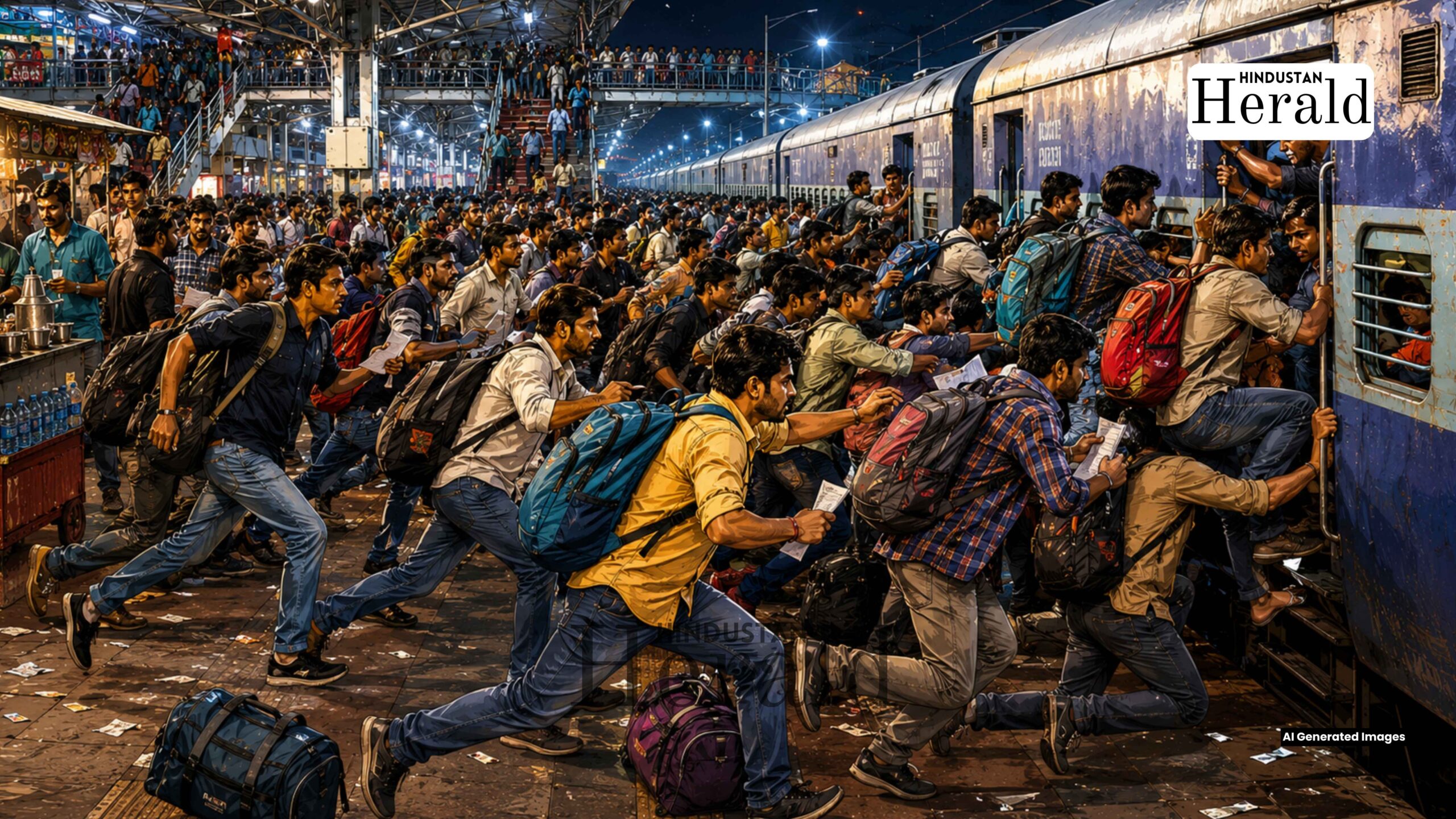
Lucknow, June 9: Walk into Charbagh Railway Station on any given night and you get the usual organised chaos of a busy northern Indian rail hub. Porters, hawkers, the smell of chai, the distant announcement crackling over a broken PA system. But the last two nights were different. The platforms were not just busy. They were flooded.
Young men and women most of them barely past their early twenties sitting on the bare floor with their bags tucked between their legs. Some sleeping against pillars with a folded sheet under their heads. Others standing in clusters near the tea stalls, too anxious to sleep, checking their admit cards again just to be sure the centre address had not somehow changed overnight.
They had come from Gorakhpur, Azamgarh, Ballia, Banda, Sitapur, Hardoi, and a dozen other districts most people in Delhi or Mumbai could not place on a map. They had come for one thing: the UP Police Constable Recruitment Examination 2026.
And Charbagh, for two nights running, became their waiting room.
The Numbers Behind The Chaos
You need to understand the scale to understand why the station looked the way it did. Around 28.86 lakh candidates have registered for this examination. That is not a typo. Nearly 29 million people competing for 32,679 constable posts covering Civil Police, PAC, Special Security Force, women battalion constables, Jail Warder, and Mounted Police vacancies. Work that out and you get roughly 88 applicants for every single seat.
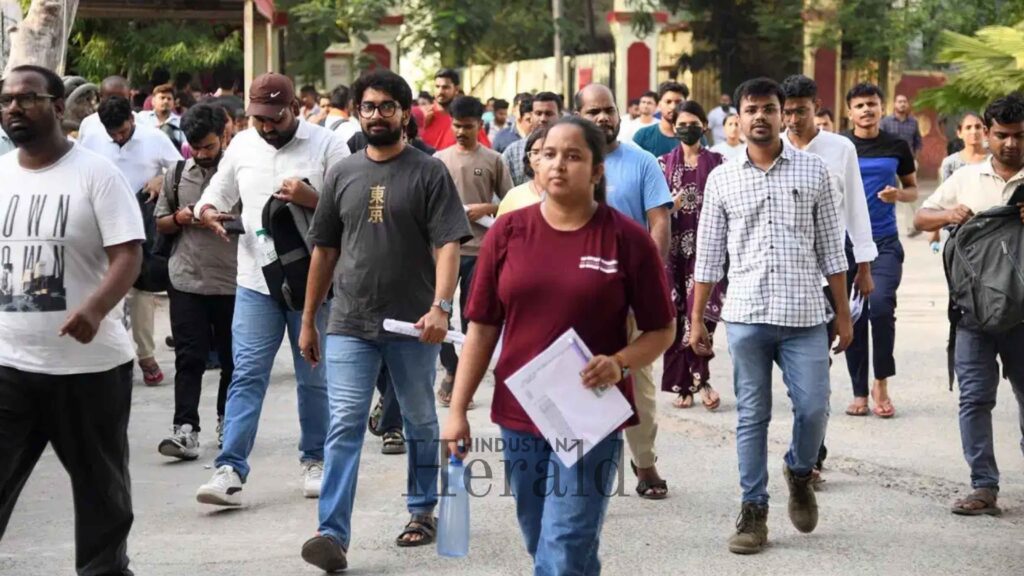
The exam is being held across three days June 8, 9, and 10 in two shifts daily, at 1,180 centres spread across all 75 districts of Uttar Pradesh. That means on each of those three days, somewhere between five and six lakh people are physically moving across the state to reach their allotted centres. Many were assigned to districts they had never visited. The city slips only went out on June 1.
Admit cards came out on June 4. By the time a candidate from a village near Balrampur figured out that his exam was in Agra and then figured out how to get there, find a place to stay, and show up on time he had maybe four days to sort it all out. Four days, and not much money to burn.
So they did what people in this part of the country do when the system does not quite account for them. They packed a bag, said their prayers, and got on whatever train had room.
What The Platforms Felt Like
Charbagh has seen crowds before. It is one of the busiest railway junctions in Uttar Pradesh, handling everything from local MEMU trains to Rajdhanis. The station is no stranger to chaos. But this was different in character, not just volume.
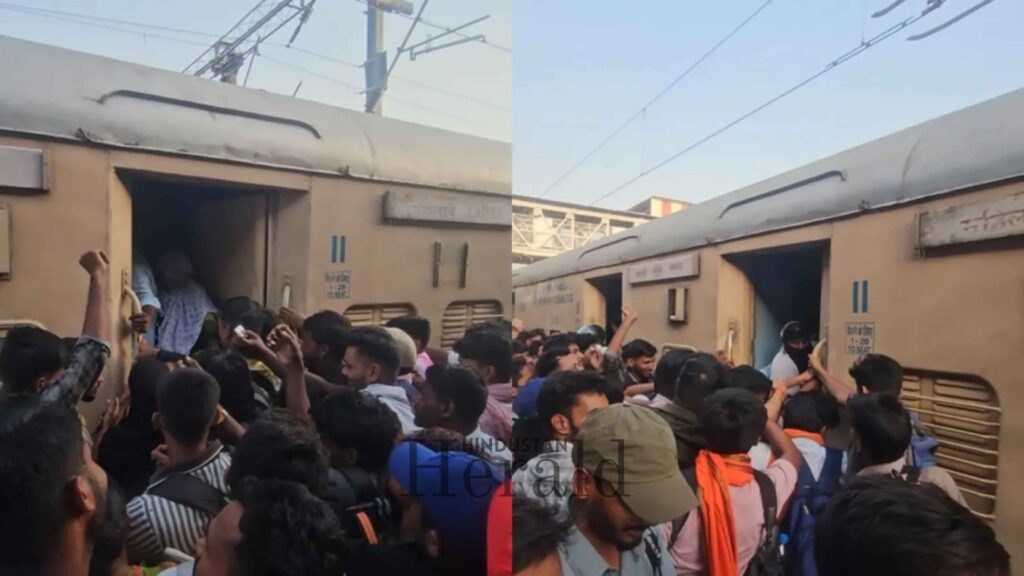
These were not festival crowds moving in waves. This was a steady, sustained flood of people arriving across hours, most of them carrying the same quiet tension. A candidate traveling to appear for a government exam does not have the relaxed energy of someone going home for Diwali. There is something harder and more anxious in the body language. The way they check the time on their phones every few minutes. The way they keep their documents in a ziplock bag inside their bag, then take it out to check again, then put it back.
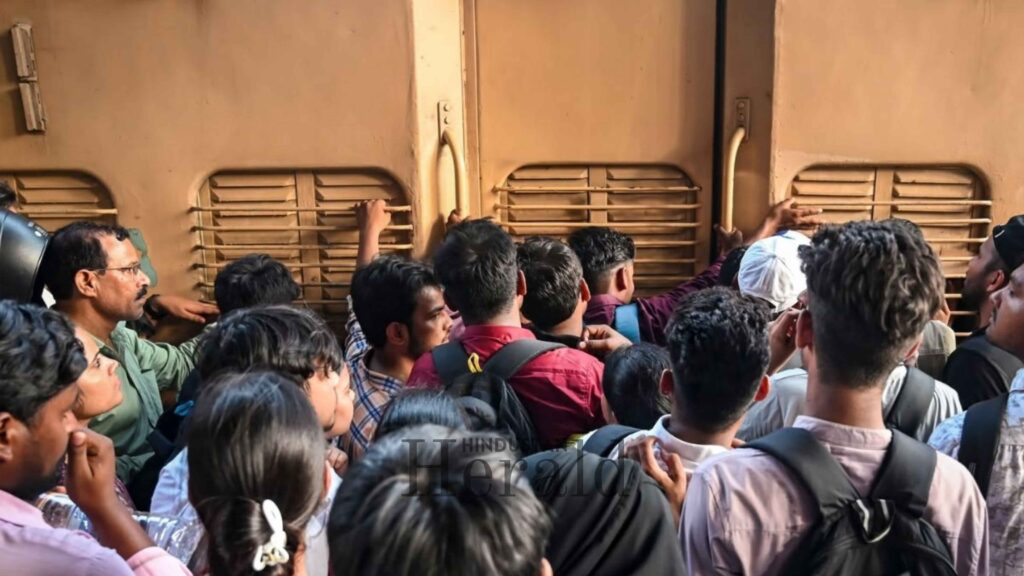
Reports from the station described scenes of candidates waiting through the night, trains arriving packed to the doors, general coaches so full that people were travelling standing for two, three, four hours. Regular passengers trying to catch their own trains found themselves navigating crowds that were simply not moving, not because anyone was being difficult but because there was nowhere to move to. Platforms were full. Corridors were full. The area outside the station entrance was full.
That is what nearly 29 lakh people in motion looks like from one railway station.
The Railway Did Try
To be fair, the administration did not ignore this. The Prayagraj division stationed additional train rakes at key hubs including Prayagraj Junction, Kanpur Central, Aligarh Junction, Etawah, and Mirzapur, so special trains could be run on short notice if a particular route got overwhelmed. Extra RPF and GRP personnel were deployed at major stations. Ticket counters were staffed up. A “war room” system was set up in divisional offices to monitor the crowd situation and respond quickly.
Northern Railway ran special unreserved trains specifically to ferry candidates between districts. Officials were put on alert. Public address systems were pressed into service with travel advisories.
That said, there is a limit to what advance planning can absorb when the underlying number is 29 lakh. Special trains help. They do not solve the fundamental problem that you are trying to move a population the size of a mid-sized country through a rail network over three days, and most of these people need to travel on the cheap with no advance booking. General compartments do not have a capacity ceiling that the crowd respects. They hold as many people as will fit through the door, and then a few more.
Ordinary passengers caught in this were not angry so much as resigned. A family trying to get to Kanpur for a medical appointment, a trader heading to Bareilly with goods to sell they absorbed the delay and the discomfort the way people in UP have always absorbed these things. Quietly, with mild complaint, and then they got on with it.
Why This Keeps Happening
This is not the first time a major UP government exam has turned the state’s railway network into something resembling a pilgrimage surge. It happened during the 2024 UP Police constable drive. It happened during UP PET 2022. It happens, with reliable regularity, every time the state announces a large-scale recruitment exercise.
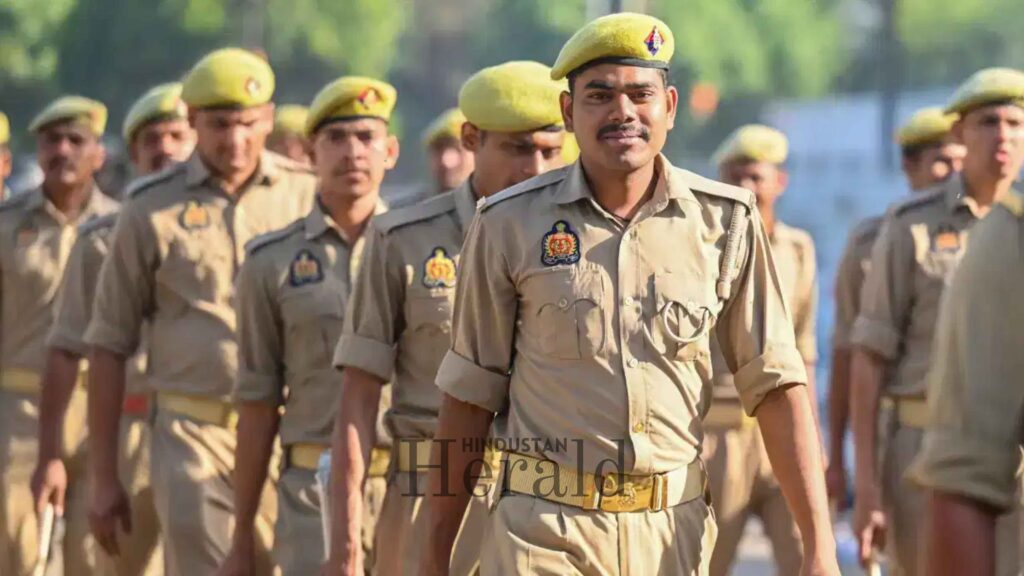
The reason is not hard to find. Uttar Pradesh has a vast, young population and a job market that has not kept up with the supply of educated, qualified young people looking for stable work. Government employment with its fixed salary, pension, job security, and social standing occupies a place in the ambitions of working-class families that has no private sector equivalent.
A constable’s post under the new pay scale carries a pay matrix of Rs 21,700 to Rs 69,100. That is not a fortune. But it is permanent. It does not disappear in an economic downturn. It comes with a uniform and, perhaps more importantly, with a kind of respect in the village that no BPO job or delivery gig can match.
So when the Uttar Pradesh Police Recruitment and Promotion Board announced 32,679 vacancies last December, and opened registration in the final days of 2025, nearly 29 lakh young people signed up. They came from families that had often been waiting years for this kind of opening. Some had appeared for the 2024 cycle, watched it collapse mid-way due to a paper leak controversy, and simply dusted themselves off and registered again when the 2026 notification came out.
The written exam itself is no cakewalk. 150 multiple-choice questions, 300 marks, 150 minutes, covering general Hindi, general knowledge, numerical ability, and logical reasoning with negative marking for wrong answers. Months of preparation, coaching classes for those who could afford them, self-study for those who could not. All of it converging on three days in June.
Security Was The Government’s Priority
Inside the exam centres, the machinery of anti-cheating was running at full force. E-KYC verification was made mandatory at every single centre. No phone, no electronic gadget, no smartwatch allowed inside. Mobile jammers were in place. Officials monitored continuously. This level of security comes directly from the scar of 2024, when the previous recruitment cycle had to be scrapped entirely after allegations of paper leaks surfaced, pushing lakhs of candidates some of whom aged out of eligibility in the delay back to square one.
The UPPRPB was not going to let that happen again. This time the administration went in with a security framework heavy enough to leave very little room for anything going wrong at the exam level.
Still, the irony is visible. The state poured enormous resources into ensuring the exam could not be compromised at the centre level, while the journey to reach those centres remained a test of endurance that no one officially accounts for. A candidate who spent the night on a platform floor and travelled four hours standing in a general coach walked into the exam hall already tired. That is a quiet inequity that the admit card and the OMR sheet do not capture.
Four Days Notice And A Distant District
It is worth being specific about this. Candidates received their city slips on June 1. Admit cards came out June 4. The exam started June 8. That is, at best, a week and for many people, four or five working days to figure out that they were assigned to a distant district, find transport, book accommodation if they could afford it, or arrange an overnight train if they could not.
For a candidate from a well-off urban family with an internet connection and a credit card, this is manageable. For a young man from a small farming household in Mirzapur or Lakhimpur Kheri, whose family has scraped together money for the application fee and a set of study materials, four days is not enough time. He ends up doing what candidates have always done getting on a general coach the evening before and hoping the train runs on time.
It often does not.
For Now, The Exam Is Running
As of Monday, the examination is underway. The three-day exercise continues through June 10. Across 1,180 centres in every corner of Uttar Pradesh, candidates are sitting down with their OMR sheets and working through 150 questions that could change the direction of their lives.
The platforms at Charbagh are still full, though the overnight crowd has thinned as most candidates have now reached their destinations. The station will return to its usual self by the end of the week the chai stalls, the porters, the crackling PA system, the daily rhythm of a city that barely notices the extraordinary things that pass through it.
What will not thin out is the underlying reality that produced those scenes. A state with extraordinary human capital, millions of young people who studied hard and want nothing more complicated than a fair shot at a stable life, and a system that processes their ambitions in a rush and then wonders why the trains are full.
Nearly 29 lakh people traveled across UP this week for 32,679 seats. They came prepared. Most of them will go home without the job. But they came, which says everything about what a government posting still means in the towns and villages of this state, and how much a young person from those places is willing to endure to have a chance at one.
Stay ahead with Hindustan Herald — bringing you trusted news, sharp analysis, and stories that matter across Politics, Business, Technology, Sports, Entertainment, Lifestyle, and more.
Connect with us on Facebook, Instagram, X (Twitter), LinkedIn, YouTube, and join our Telegram community @hindustanherald for real-time updates.
Regional journalist bringing grassroots perspectives and stories from towns and cities across India.
- Sandeep Verma

- Sandeep Verma
- Sandeep Verma
- Sandeep Verma




 Arun Upadhayay
  Prakash Nair