
 By Sandeep Verma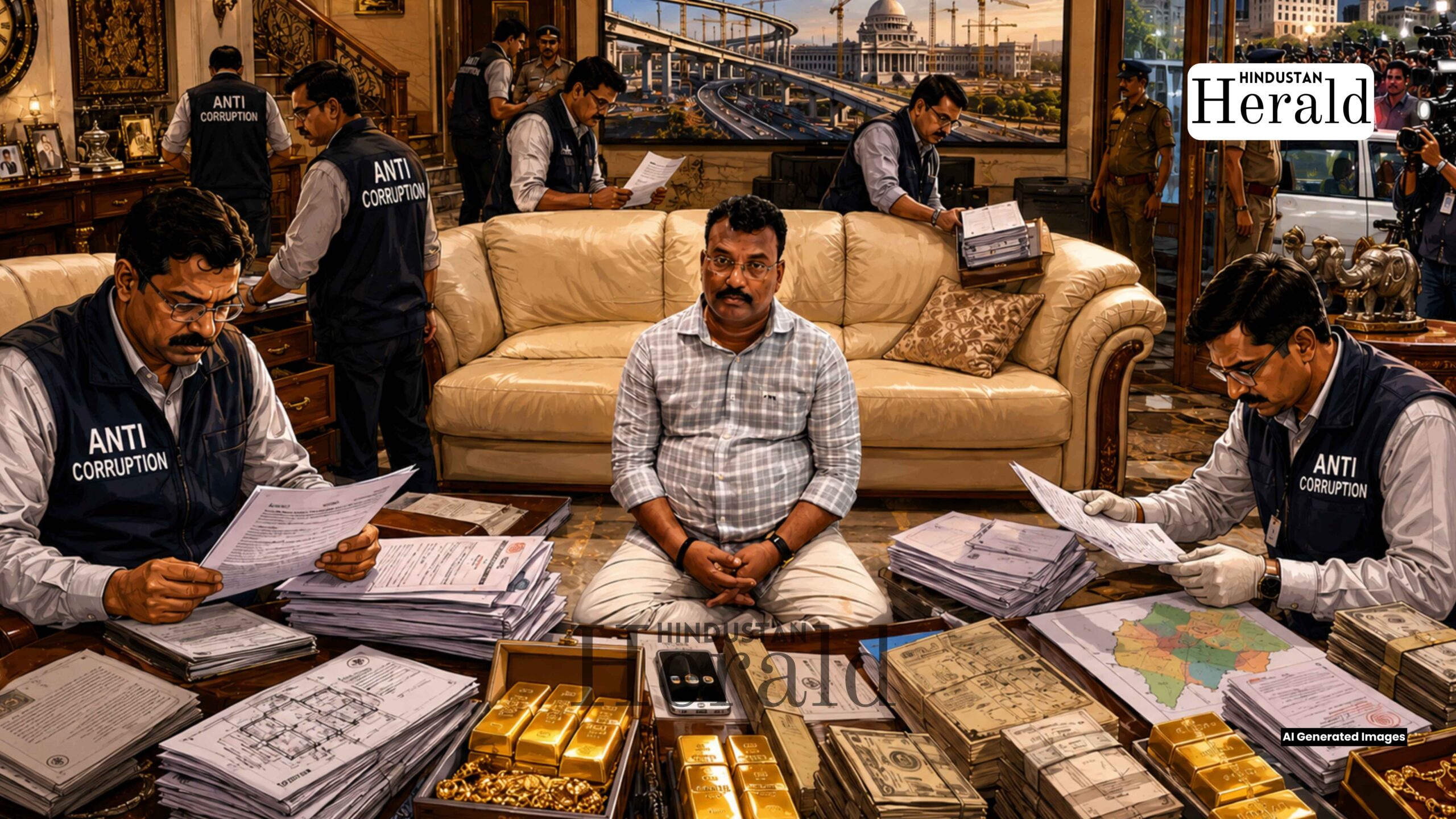
Hyderabad, June 9: Early Tuesday morning, teams from Telangana’s Anti-Corruption Bureau showed up at a residential address in Madhapur and they did not come alone. Across the city, at roughly the same hour, other teams were fanning out to over a dozen more locations. The target was J. Mohan Naik, the Engineer-in-Chief of Telangana’s Roads and Buildings Department. The man who, until yesterday morning, ran one of the state’s most powerful infrastructure offices.
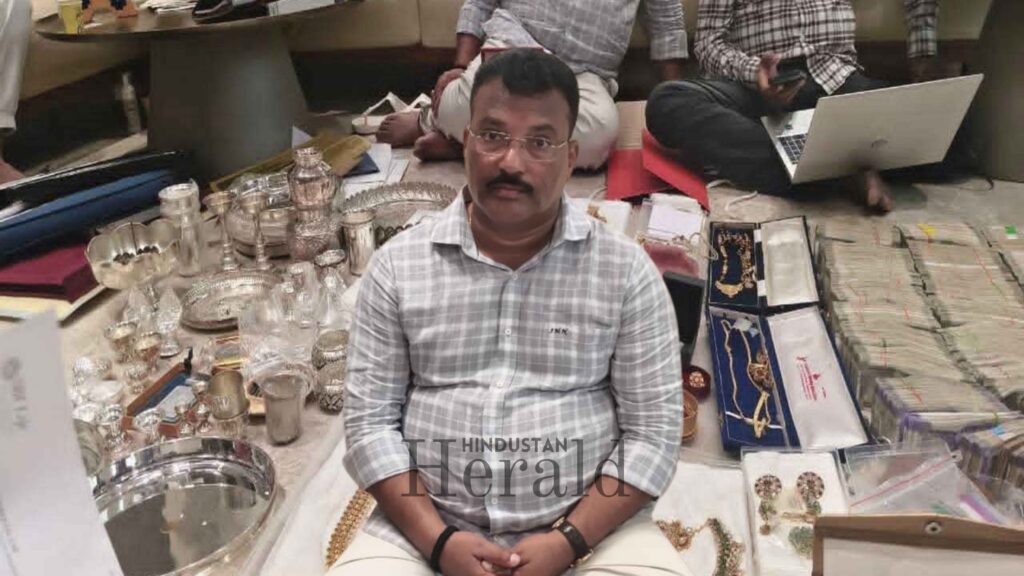
What they found or at least what has emerged so far includes 510 grams of gold, stacks of property documents, financial records, and papers tied to bank accounts. The suspected value of assets allegedly accumulated by Naik is being pegged at over Rs 100 crore. Officials were still counting by the time the afternoon rolled in.
No arrests yet. The inventory is still being drawn up. But the case has already made waves.
The Man at the Top of a Very Powerful Department
Let’s be clear about what the Engineer-in-Chief of the R&B Department actually does. This is not a middle-rung bureaucrat processing files. Naik’s office sits at the apex of Telangana’s roads and buildings machinery an office that controls how infrastructure contracts worth hundreds of crores are planned, allotted, and supervised across the state. Every major road project, every public building tender, every contract that goes out under the R&B Department’s name passes through a chain that ultimately answers to this office.
That is a lot of power. And with power of that kind, in a department like this, the temptation to skim has historically proved difficult for many to resist.
The Anti-Corruption Bureau registered a formal case of disproportionate assets against Naik the legal term for when a government official owns far more than their salary could ever explain. It is not a minor allegation. Under the Prevention of Corruption Act, it is a criminal offence. The ACB does not need to establish bribery directly; it only needs to show that the gap between what a person officially earns and what they actually own is impossibly wide to justify on paper.
In Naik’s case, that gap is reportedly enormous.
How These Things Work
Property in the names of relatives. Gold distributed across multiple locations. Bank accounts that do not obviously trace back to the official himself. These are the recurring features of disproportionate assets cases in India, and the Naik investigation appears to follow the same playbook or at least, that is what investigators seem to believe they have found.

The 510 grams of gold recovered is, in the scheme of things, the most tangible and photogenic piece of what was seized. But the real substance of the case will lie in the land documents, the financial paper trail, and whatever the ACB’s forensic teams make of the records now in their possession. Valuation of land is always the tricky part book value on paper can be a fraction of actual market value, and investigators typically have to work through both numbers before they can present a credible figure to a court.
That process takes weeks. Sometimes months.
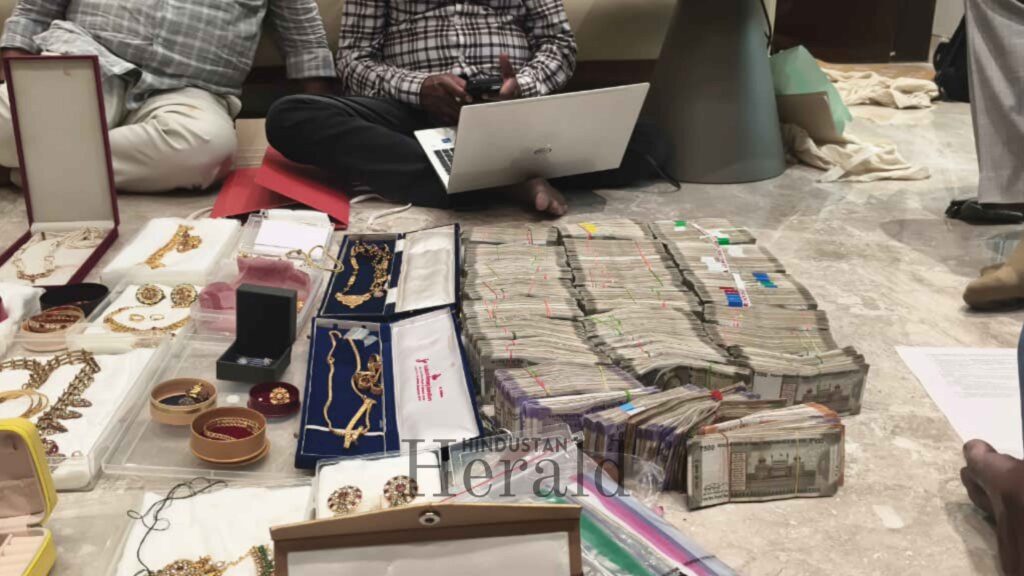
For now, the Rs 100 crore figure being cited is an estimate an early number that will either hold up or balloon once the full accounting is done. ACB officials confirmed that search operations were expected to continue through the evening, with teams still working through documents at several locations by afternoon.
Roads, Contracts, and an Old Problem
The Roads and Buildings Department has never exactly had a clean reputation. That is not a Telangana-specific observation across India, roads departments have historically been among the most corruption-prone arms of state government, simply because the money flowing through them is massive and the opportunities for diversion are plentiful.
In Telangana, contractors have raised complaints over the years about kickbacks demanded before work orders are issued or payments released. Poor road quality surfaces that crack or develop potholes within months of laying has been a persistent grievance in multiple districts. Allegations of irregular contract awards and commission demands have surfaced in fits and starts, never quite crystallising into anything formal until now.
An Engineer-in-Chief in this environment is not just an administrator. That person shapes which contractor gets which project, under what conditions, and at what cost to the public exchequer. If those decisions are influenced by anything other than merit and competitive bidding, the damage compounds quietly across hundreds of projects and crores of public money.
That is the backdrop against which Tuesday’s raids need to be understood.
Not an Isolated Incident
Telangana’s ACB has had a busy stretch. Last month, raids on a revenue official in Medchal-Malkajgiri turned up documents pointing to land encroachment on government property, with assets running into hundreds of crores. Before that, an Assistant Commissioner of Police serving in the economic offences wing was arrested after searches uncovered properties and gold far beyond what his income could justify.
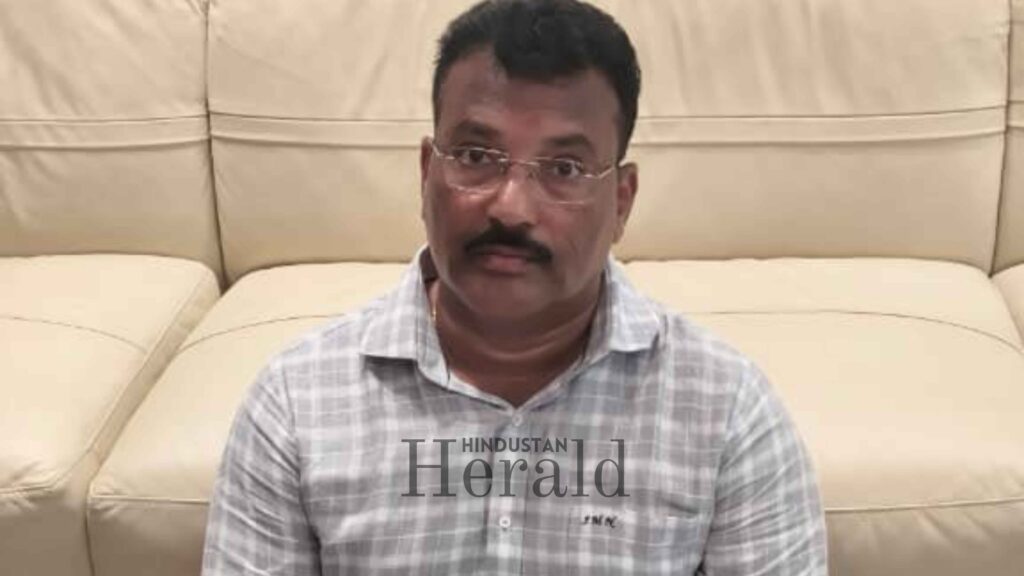
What is notable about the Naik case is the seniority involved. An Engineer-in-Chief is about as high as a technical officer in state government gets. These are people who have spent decades building institutional knowledge, accumulated significant personal networks within and outside government, and tend to be shielded by the very importance of the roles they occupy. Going after someone at that level suggests the ACB either has solid intelligence or is under political pressure to show results or possibly both.
That said, until charges are formally filed and a court takes cognisance, all of this remains at the investigation stage. Naik has not been arrested. No suspension order has been officially confirmed at the time of writing, though these typically follow once the initial raid phase concludes and the bureau prepares its case.
What Comes Next
The next few weeks will determine how significant this case actually turns out to be. The ACB will need to complete its asset valuation, trace the full ownership chain on the properties recovered, and establish the precise gap between Naik’s declared income and his actual holdings. That is the hardest part of any disproportionate assets case assembling a financial portrait tight enough to hold up in court against a well-resourced defence.

Political questions will follow. The R&B Department is under a microscope now, and opposition leaders are likely to press the government on what oversight existed over the contracts awarded under Naik’s tenure. Whether the current administration chose to act on complaints that may have existed for some time, or whether Tuesday’s raids emerged from fresh intelligence, is itself a question worth asking.
For the ordinary Telangana resident who has driven over a broken road repaired three months ago, or seen an overpass project stall indefinitely, the numbers being thrown around in this case are not abstract. Rs 100 crore worth of alleged ill-gotten wealth, if it holds up, is money that was meant to be somewhere else in roads, in bridges, in public infrastructure that people actually use.
The gold is now with the investigators. The documents are being read. And the man who ran the department is watching his career unravel one seized file at a time.
Stay ahead with Hindustan Herald — bringing you trusted news, sharp analysis, and stories that matter across Politics, Business, Technology, Sports, Entertainment, Lifestyle, and more.
Connect with us on Facebook, Instagram, X (Twitter), LinkedIn, YouTube, and join our Telegram community @hindustanherald for real-time updates.

Regional journalist bringing grassroots perspectives and stories from towns and cities across India.
- Sandeep Verma

- Sandeep Verma
- Sandeep Verma
- Sandeep Verma




 Arun Upadhayay
  Prakash Nair