
 By Ayesha Khan
Mumbai, April 12: Nobody really wanted to believe it when the messages started coming in on Sunday morning. People checked twice. Refreshed the page. Called someone to ask if it was true.

It was true. Asha Bhosle was gone.
92 years old. Gone by noon. And somehow, even though she had been hospitalised the night before, even though she was 92 and the news had said “critical condition,” India was not ready. You are never ready for something like this. Not when the voice has been there your entire life, your parents’ entire lives, your grandparents’ entire lives.

Her son Anand Bhosle came out and confirmed it himself. He didn’t dress it up. “My mother passed away today,” he said. People can come to Casa Grande in Lower Parel tomorrow morning at 11 to pay their respects. Last rites at Shivaji Park at 4 PM. That was it. Short sentences. The kind you speak when you are exhausted from grief and there is nothing else left to say.
The Night Before Nobody Slept
Saturday evening, Zanai Bhosle put up a post. She’s Asha’s granddaughter, also a singer, and she had been the one staying close to her dadi in these last years. The post was calm, but it said what it needed to say. Her grandmother had been brought to Breach Candy Hospital. Exhaustion. A chest infection. Please give the family privacy. They hoped to share good news soon.
That good news never came.

What came instead was the news that she had been moved to the ICU on Saturday night. That she had not been keeping well for months, according to people close to the family. That by Sunday afternoon, despite everything the doctors tried, her heart and her lungs had simply given out. Multi-organ failure, the hospital confirmed. She was gone around noon.
For a few hours on Saturday, this country had quietly prayed. By Sunday afternoon, it was quietly crying.
The Whole Country Stopped for a Bit
You could feel it on your phone. The notifications kept coming. PM Modi put out a statement calling her one of the most iconic voices India had ever produced. Maharashtra Governor Jishnu Dev Varma mourned her. Cultural Minister Ashish Shelar called it the end of an era. Bollywood came to a standstill of sorts. Karan Johar posted. Dozens of others posted. Your aunt probably forwarded something in the family group.
But the real tribute was not in the official statements. It was in what people started playing. Someone put on “Dum Maro Dum” in their car. Someone else dug up “Piya Tu Ab To Aaja.” Then “Chura Liya Hai Tumne.” Then something from a 1970s film you half-remember watching on a Sunday afternoon as a kid. That’s the thing about Asha Bhosle’s songs. They don’t just sit in your memory. They sit in your body. You hear three notes and you’re somewhere completely different.
That is not something every singer can do. Very few, actually, can do that.
A Village in Sangli, a Father Who Died Too Soon
Asha Mangeshkar was born on September 8, 1933, in a tiny place called Goar in Sangli district. Her father, Pandit Deenanath Mangeshkar, was a classical singer and a theatre man, well-known and well-respected. The home was the kind where music happened before breakfast, before dinner, all day really. Her older sister Lata was already being trained. Asha was part of all of it from the time she could speak.
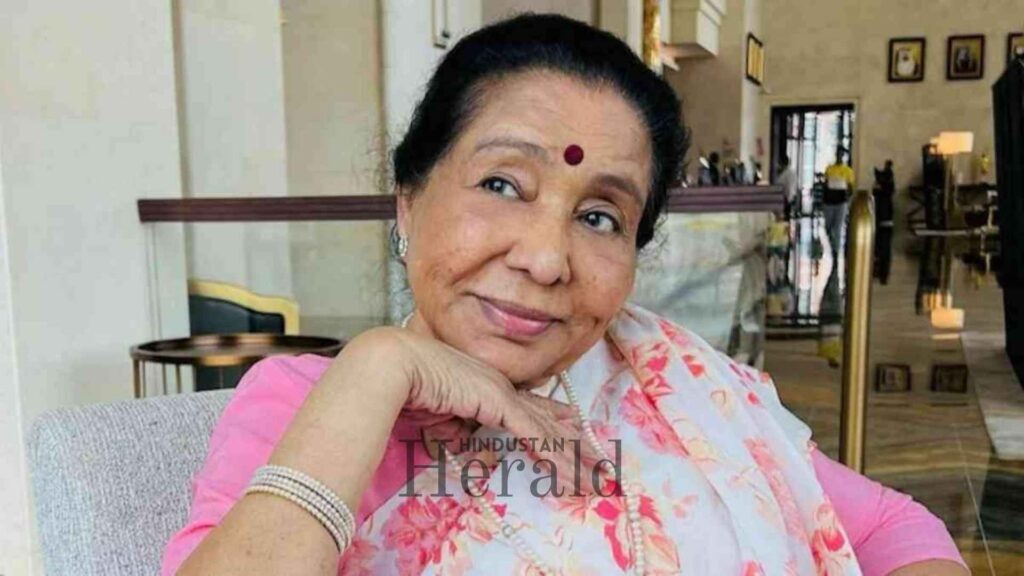
Then her father had a heart attack and died when Asha was nine years old. Just like that, the whole world changed. The family packed up and moved to Pune first, then to Bombay. There was no safety net. The children started singing professionally almost immediately because there was simply no other option.
Think about that for a second. Nine years old, father just died, new city, microphone in your face. That is where this story actually starts. Not in some glamorous recording studio. In survival.
She Eloped at sixteen, and the Family Was Not Happy
At sixteen, Asha did something that shocked everyone around her. She ran off with Ganpatrao Bhosle, a man who was thirty-one years old and had been working as the family’s personal secretary. Her family, including Lata, was firmly against it. Asha didn’t care. She married him anyway.
It did not go well. Her in-laws treated her badly, by most accounts. She had three children with Ganpatrao before the marriage finally fell apart around 1960. She came back to Bombay in her mid-twenties, a single mother, three kids, a career half-built, a reputation slightly complicated.

The film industry at that point already had Lata Mangeshkar sitting at the top like a mountain. Nobody was handing the good assignments to the younger sister who had just walked out of a troubled marriage. What Asha was getting were the songs the A-list singers didn’t want. Cabaret numbers. Mujra tracks. Fast dance songs considered slightly cheap by the classier composers of that era.
She sang every single one of them like they were the most important songs in the world. And slowly, people started noticing.
Then Came Pancham
Rahul Dev Burman changed things. He was the son of the great Sachin Dev Burman and he was completely different from the composers working in Bombay at that time. He liked jazz. He liked rock and roll. He put bongos in Hindi film songs. He was weird, in the best possible way, and the industry wasn’t always sure what to make of him.

He and Asha started working together in the mid-1960s. When he brought her “Aaja Aaja” for Teesri Manzil, she told him she didn’t think she could pull off something that westernised. He offered to simplify it. She said no, give me some time. She went home and worked on it for ten days straight. When she came back, she sang it the way you hear it now, the way it has been playing on every radio and every phone since yesterday afternoon.
Their working relationship went on for decades. It turned personal. They married in 1980 despite a fair amount of family opposition, mainly from the Burman side. He was six years younger than she. None of that seemed to matter to either of them, particularly.
Then he died in January 1994. He was fifty-four. After that, something in Asha’s public persona became a little harder to reach, a little more guarded, though she kept working, kept recording, kept showing up. That’s what she always did.
The Numbers Are Actually Insane
More than 12,500 songs. Over 20 languages. Hindi, Marathi, Bengali, Tamil, Telugu, Gujarati, Urdu, English, and on and on. Film songs, ghazals, bhajans, folk tunes, classical compositions, pop, disco, qawwali, the full range of what Indian music even is. The Guinness World Records listed her as the most recorded artist in music history. Not just in India. In the world.
She got the Dadasaheb Phalke Award, India’s highest film honour. She received the Padma Vibhushan. She won seven Filmfare Best Female Playback Awards and then, as her sister Lata had done before her, asked the organisers to stop putting her name in the nominations so younger singers could have a chance. That kind of confidence is rare. The kind where you just quietly step back because you know you’ve already won.

And just earlier this year, the British band Gorillaz released a new album and she was on it. Track called “The Shadowy Light.” Ninety-two years old, on a Gorillaz album. If that doesn’t tell you everything you need to know about how she moved through the world, nothing will.
Back in 1997, by the way, a British indie band called Cornershop had released a song literally named “Brimful of Asha,” dedicated entirely to her. It went to number one in the UK in 1998. A Bollywood playback singer who spent her early years singing the songs no one else wanted ended up as the subject of a British pop chart-topper. You genuinely could not make this up.
The Grief She Never Really Talked About
The version of Asha Bhosle that the public knew was warm, funny, and a little mischievous in interviews. She laughed easily. She gave good quotes. She seemed to enjoy being alive in a way that came across as entirely genuine.

But she had lost things that don’t leave you. Her daughter Varsha Bhosle, who had become a journalist and writer with a strong voice of her own, died by suicide in 2012. People who knew Asha closely said she was never quite the same after that. And then in February 2022, her sister Lata Mangeshkar died. They had spent sixty years defining Indian playback singing between them. They had competed, collaborated, and coexisted in the way only siblings with enormous talents and equally enormous personalities can. When Lata went, Asha became the last of that whole era.
Zanai was with her through all of it. She’s the one who posted Saturday night asking for privacy. She was almost certainly in that room in Breach Candy yesterday afternoon when everything stopped.
Why It Actually Hurts This Much
People who don’t follow film music closely might not fully understand why this particular death feels the way it does. It’s worth trying to explain.
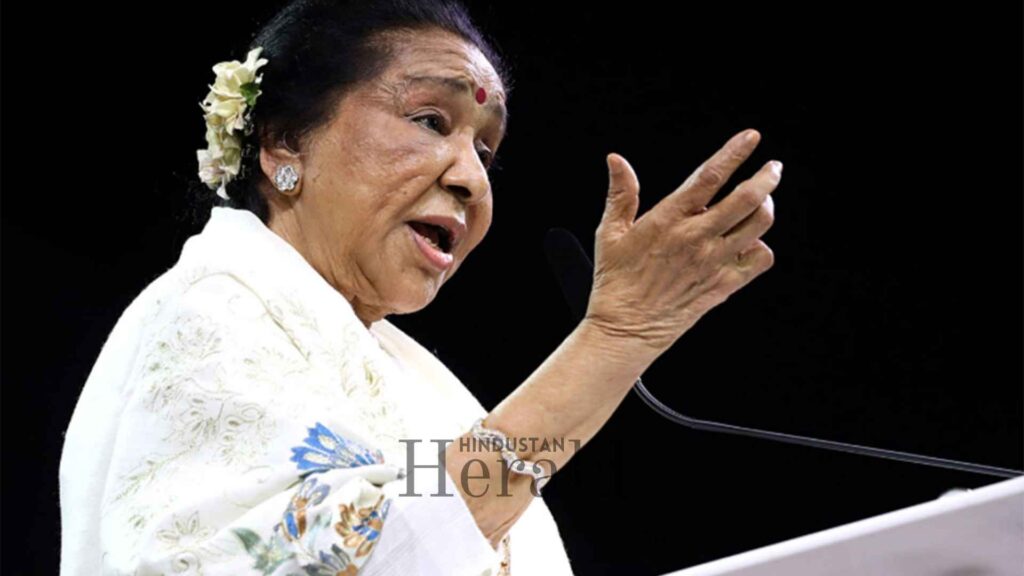
Asha Bhosle’s voice was not the most technically trained in Indian music. It was not the most classically pure. What it had was something harder to name. A kind of directness. When she sang something sad, you believed she was sad. When she sang something playful, you felt the playfulness land in your chest. There was no distance between the song and the singer. And that quality, that absolute believability, she had it at sixteen, and she still had it at ninety.
That is not something you can teach. That is not something that comes from winning awards or recording 12,500 songs. Some people are just built that way. She was.
Tomorrow the crowds will gather. Casa Grande first, from 11 AM, where fans and colleagues and strangers will come to stand near her one last time. Then Shivaji Park at 4 PM, full state honours, the kind of send-off a nation gives when it knows what it has lost.
After that, only the recordings. All 12,500 of them. Every language, every mood, every era of Indian life she sang her way through.
That’s not a small thing to leave behind. That’s everything.
Stay ahead with Hindustan Herald — bringing you trusted news, sharp analysis, and stories that matter across Politics, Business, Technology, Sports, Entertainment, Lifestyle, and more.
Connect with us on Facebook, Instagram, X (Twitter), LinkedIn, YouTube, and join our Telegram community @hindustanherald for real-time updates.

Covers films, television, streaming, and celebrity culture with a focus on storytelling trends.
- Ayesha Khan

- Ayesha Khan
- Ayesha Khan
- Ayesha Khan




 Arun Upadhayay