
 By Sandeep Verma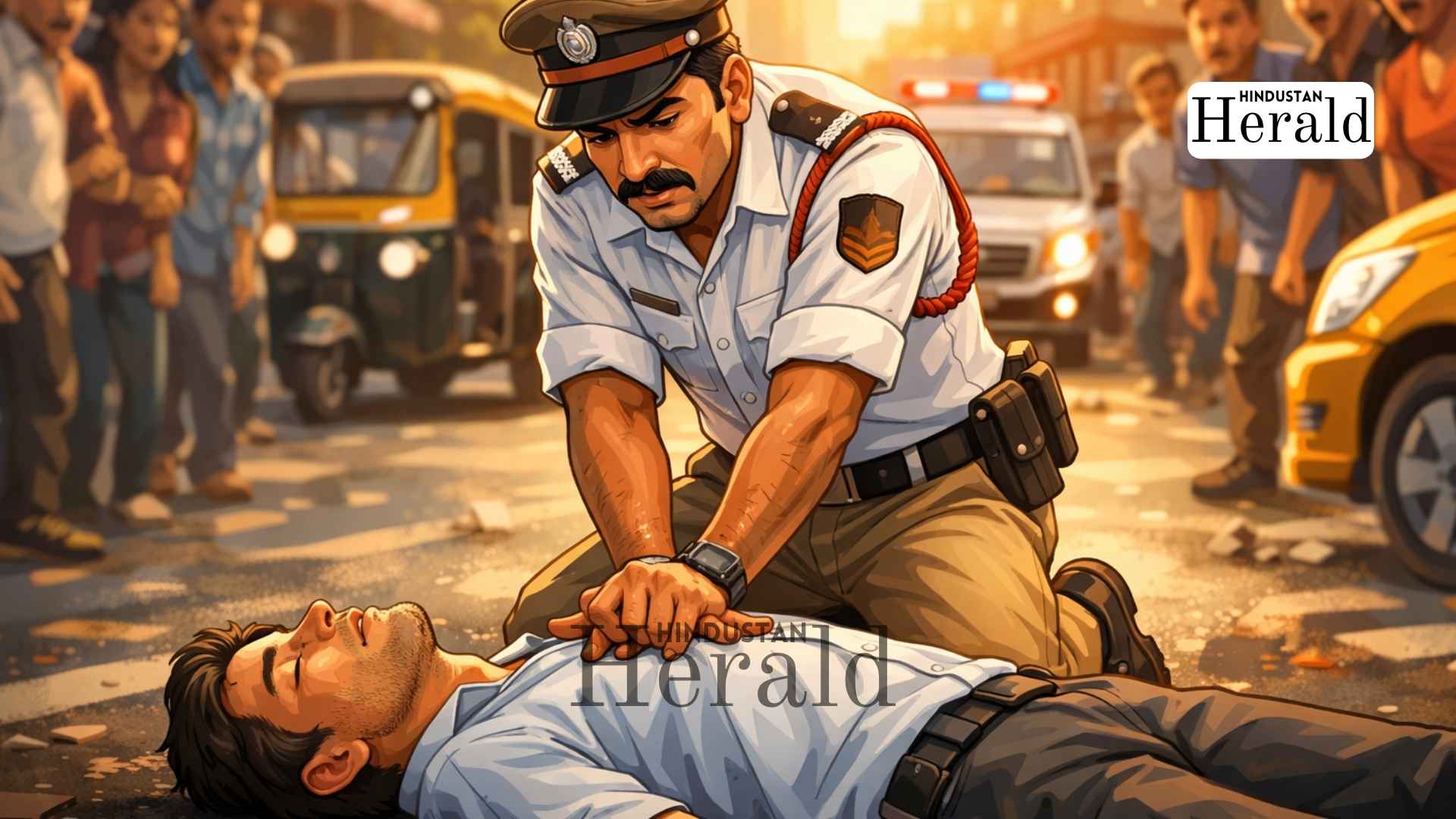
Patna, March 24: Nobody films a traffic constable doing his job on a Wednesday afternoon. Nobody expects anything remarkable to happen at the Mithapur Bypass on an ordinary workday. People drive past, horns blare, the sun beats down, and officers like Anjani Kumar Gaurav stand at their posts managing the flow of vehicles the way they do every single day. Nobody expects one of them to suddenly drop to his knees on the asphalt and perform CPR on a dying man.
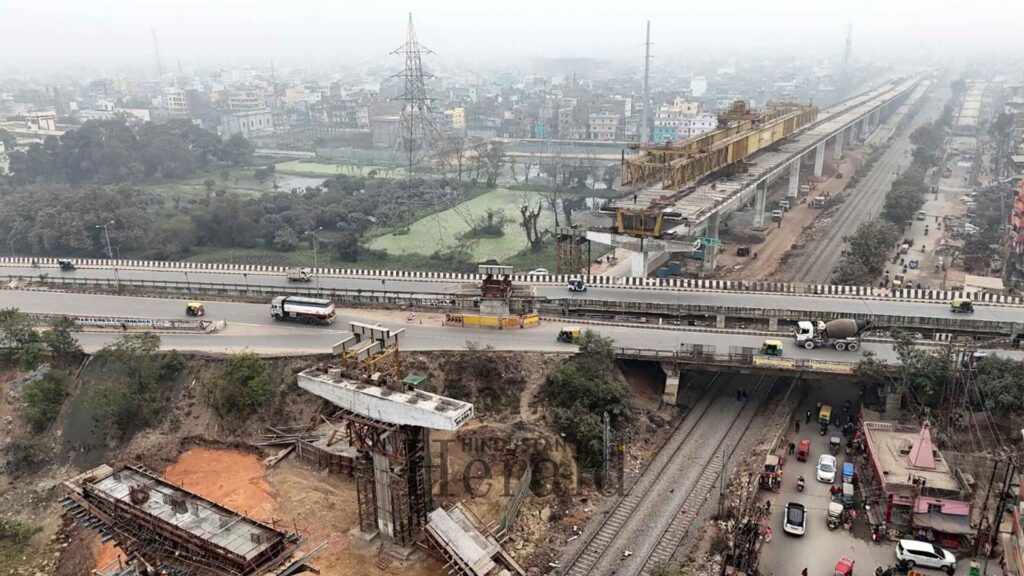
That afternoon was different. And the difference came down to about thirty seconds.
The Man Who Fell
Kundan Kumar is a CISF constable from Nawada, a district roughly 100 kilometres south of Patna. He had not been well for a while. His family knew it. They were taking him to a hospital that day, navigating the city’s traffic, probably anxious, probably hoping it was nothing serious. Somewhere near the Mithapur Bypass, Kundan got out of or was near his vehicle. Then, without much warning, he went down.
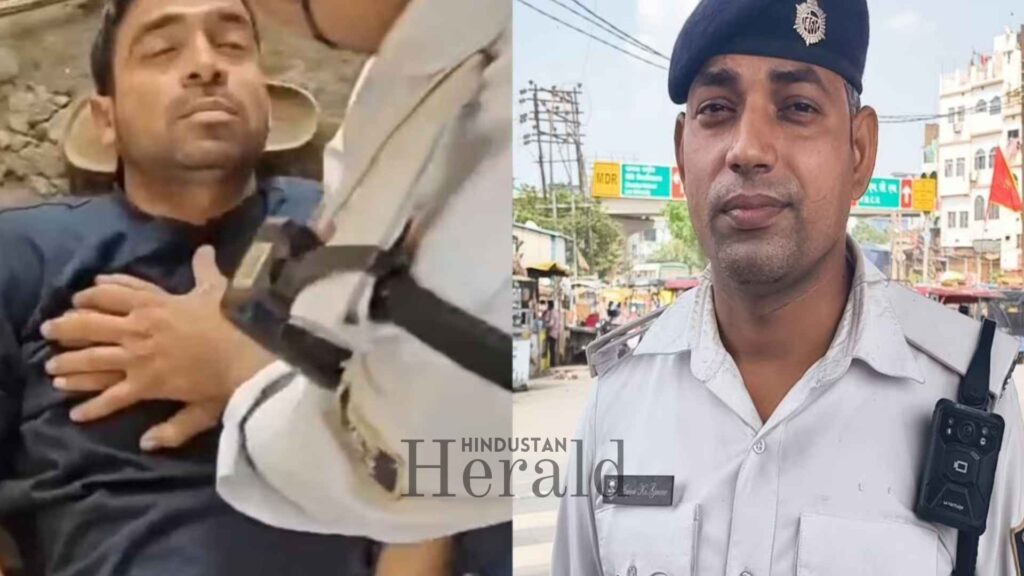
He had been unwell for some time before the incident, and was on his way to the hospital with his family when he suddenly lost consciousness and collapsed near the bypass.
People stopped. A crowd formed. This is what crowds do. They gather, they look, they pull out phones. It is not cruelty. It is shock, and it is also the paralysis that comes from not knowing what to do. Most people standing there that afternoon had never learned what to do when a human heart stops cooperating.
Constable Gaurav had.
Thirty Seconds That Mattered
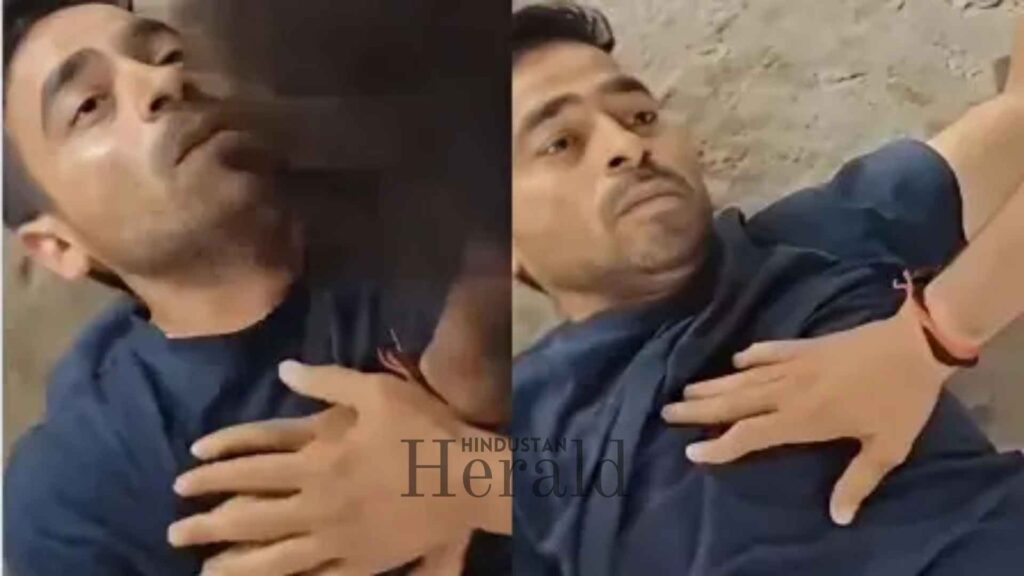
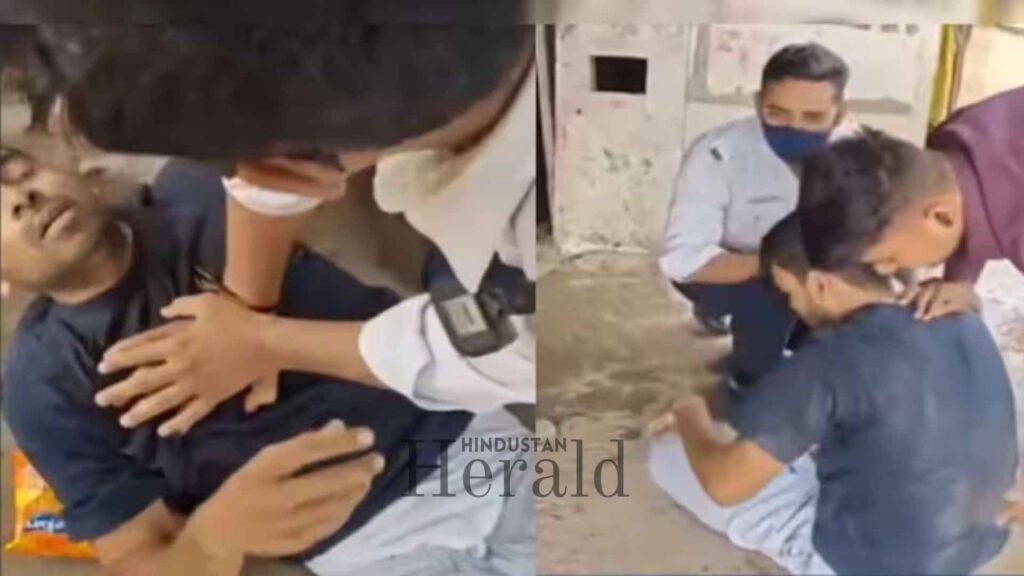
He was at the Mithapur Traffic Post, close enough to see it happen. He noticed that Kundan’s body was soaked in sweat, his limbs stiffening sharply. He identified it immediately as a cardiac emergency. Whatever he felt in that moment, whether fear, uncertainty, or adrenaline, he did not let it slow him down. He moved through the crowd, got down on his knees next to the fallen jawan, and started chest compressions.
He later told people he had learned CPR during training but had never actually used it on a real person before. That detail is worth sitting with. Because knowing something in a classroom and doing it on an unconscious man while a crowd watches you is not the same experience. The pressure alone would make most people hesitate. He said that in that moment, saving the jawan’s life was simply his only priority.
About thirty seconds of continuous compressions later, Kundan’s chest began to rise. He stirred. He opened his eyes. He was breathing.
That was it. No dramatic equipment, no ambulance that happened to be passing, no senior officer with a defibrillator. Just a constable, the heels of his hands, and something he had been taught years ago and never forgotten.
What His Family Saw
Within minutes, Kundan had stabilised fully. His wife and family, who had just watched him collapse in front of them, broke down. They described Constable Gaurav in terms that do not translate well into formal reporting. They called him a form of God. They wept while thanking him. After basic care at the scene, Kundan was taken home in stable condition.
The constable apparently did not make much of it. He went back to managing traffic.
Why The Video Landed The Way It Did
Bihar Police shared the footage on social media, and the clip spread quickly. People praised the force’s training and the officer’s deeply human response to the crisis. The caption the department used was straightforward: “Bihar Police always with you. Your safety, our topmost priority.” It was the right tone. Not boastful. Just clear.
But something about this particular video cut through the usual noise in a way that departmental social media posts rarely do. Part of it is the setting. This did not happen inside a hospital or at a controlled emergency drill. It happened on a regular road, in regular traffic, with regular bystanders doing what most of us would do, which is stand there and hope someone else knows what to do.
Gaurav was that someone. And the reason he knew what to do comes back to one thing: he had been trained.
The Gap That This Exposes
India loses somewhere between 700,000 and a million people to cardiac events every year. A substantial portion of those deaths happen outside hospitals, in places where the nearest qualified help is minutes away, sometimes longer. The medical window for meaningful intervention in cardiac arrest is brutally narrow. Brain damage begins within four to six minutes of the heart stopping. An ambulance, even in a city like Patna, cannot reliably reach someone in that time.
The solution that cardiologists and public health experts have been pushing for years is bystander CPR. The logic is not complicated. The most valuable person at a cardiac emergency is whoever is actually standing there. Not the paramedic who is still twelve minutes away. The person already on the scene.
Globally, countries have tried to close this gap by embedding CPR training into civic systems. Parts of the United States require it for high school graduation. Denmark ties it to driving licence eligibility. The results in these places have been documented. More people intervene. More people survive. The science on this is not ambiguous.
In India, this conversation has been had before. Medical associations have called for CPR to be part of school curricula. Some states have run pilots. Nothing has taken hold nationally. The gap remains. And incidents like the one at Mithapur Bypass are both inspiring and quietly troubling, because they reveal how much depends on the single person who happens to be trained, happening to be present, in a country where that combination is still largely a matter of luck.
What The Bihar Police’s Training System Looks Like
This part of the story deserves attention because it is easy to treat Gaurav as simply an exceptional individual. He may well be. But he is also, in part, a product of a training system.
Bihar State Traffic Police was established as a separate division only in 2022, having previously functioned under the Crime Investigation Department. Since its formation, it has been running induction training at the IDTR in Aurangabad, with over 1,670 officers and personnel trained so far. Whether CPR is a fixed and standardised component of that curriculum is not something the department has formally clarified in the context of this incident. But Gaurav’s own account confirms he received it somewhere in his training. That matters.
It raises a reasonable question: if over 1,600 traffic personnel in Bihar have been through some version of this training, how many of them could do what Gaurav did? And if the answer is most of them, then the Bihar Police has quietly built something genuinely valuable, a distributed first-response capacity that extends the reach of emergency care without adding a single ambulance to the fleet.
The Officer, The Jawan, The Road
As things stand, Kundan Kumar is home and recovering. Constable Anjani Kumar Gaurav has not, as of the time of writing, received any formal commendation from the state government or the police administration, though that may change as the story continues to circulate.
What happened on Mithapur Bypass on March 22 was not a miracle. It was training meeting opportunity. A man fell, and the person closest to him happened to know what to do, and chose to do it.
That is the hopeful reading.
The harder reading is that across this country, people collapse on roads every day, and most of the time, nobody in the crowd knows what to do next. Not because they do not care, but because nobody ever taught them. And until that changes at scale, how many people survive will keep depending on whether someone like Anjani Kumar Gaurav happens to be standing nearby.
Stay ahead with Hindustan Herald — bringing you trusted news, sharp analysis, and stories that matter across Politics, Business, Technology, Sports, Entertainment, Lifestyle, and more.
Connect with us on Facebook, Instagram, X (Twitter), LinkedIn, YouTube, and join our Telegram community @hindustanherald for real-time updates.

Regional journalist bringing grassroots perspectives and stories from towns and cities across India.
- Sandeep Verma

- Sandeep Verma
- Sandeep Verma
- Sandeep Verma



 Arun Upadhayay