 By Ananya Sharma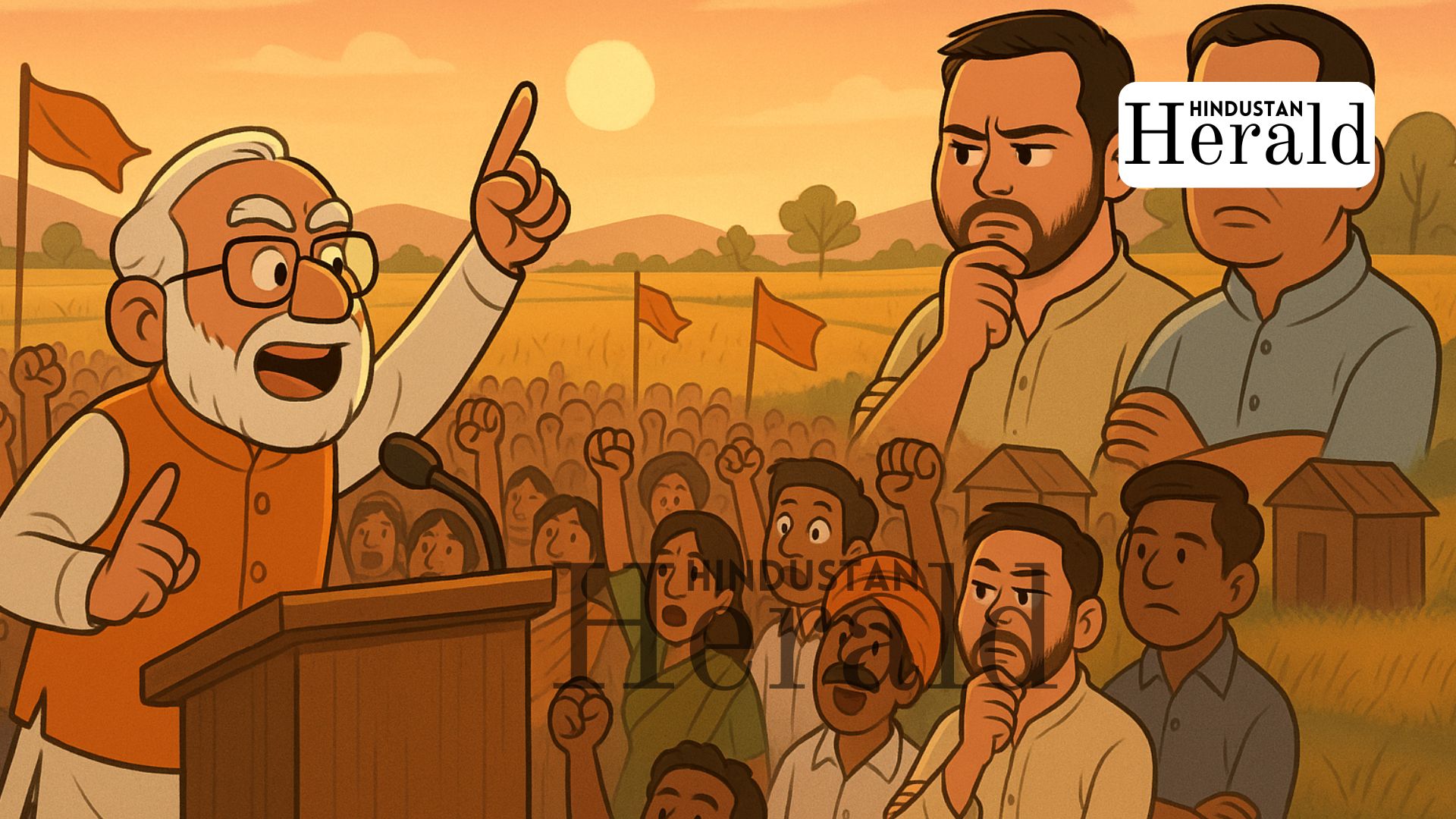
Patna, November 7: By the time the sun dipped over the Ganga, Bihar had already written its own record. The first phase of the 2025 Assembly election closed on Thursday evening with a turnout of 64.66%, the highest the state has ever seen. The Election Commission’s late-night bulletin called it a “peaceful and enthusiastic” round, a bureaucratic way of saying that, for once, the people turned up in remarkable numbers.
Bihar Votes in Record Numbers
From Purnia to Buxar, queues began forming early despite the sticky November heat. In Gaya, young first-time voters arrived wrapped in tricolour scarves. In Sasaram, older voters leaned on bamboo sticks, muttering about roads and ration cards but refusing to sit this one out. According to the Press Information Bureau, this was Bihar’s best turnout since independence, a sharp jump from 57% in 2020.
Still, the numbers varied sharply from district to district. Madhubani, a region with consistently high participation, reached 68%. Patna, weighed down by urban apathy, hovered closer to 59%. Polling officials said that “silent voters”-women, migrants, and first-timers are what might make this election less predictable than any in recent memory.
The next phase, covering 122 seats, is slated for November 11, and the counting day is November 14.
“Keep Jungle Raj Away,” Says Modi
Campaigning has moved into its most heated phase. Prime Minister Narendra Modi, addressing rallies in Araria and Bhagalpur, warned voters against the return of what he called “jungle raj,” the phrase the BJP has used for decades to evoke memories of Lalu Prasad Yadav’s rule. “Bihar cannot afford to go back,” Modi declared, his words cutting through chants of “Modi-Modi.”
The Prime Minister’s rhetoric was echoed by Defence Minister Rajnath Singh, who told gatherings in Patahi and Kesariya that the NDA would build a defence corridor in Bihar if it retained power. It’s a promise with both emotional and economic appeal a way to connect national security pride to the state’s hunger for jobs.
But not everyone bought it. Tejashwi Yadav of the Rashtriya Janata Dal hit back, accusing the BJP of “fearing Bihar’s youth.” The INDIA bloc, he said, represented “the state’s dignity and the anger of the unemployed.”
The Strategist’s Forecast
Adding intrigue to the mix was Prashant Kishor, who knows Bihar’s electoral pulse better than most. Speaking to reporters, Kishor called the votes of migrant workers the “X factor” this year. “History will be made on November 14,” he said, choosing his words carefully.
His comment tapped into a quieter undercurrent. Since the pandemic, migration from Bihar has become an open wound. Entire villages have emptied seasonally for work in Delhi, Gujarat, and Maharashtra. Now, with a higher proportion of those workers returning home to vote, many observers say Kishor may be right this time; absentee voters could decide the story.
A Polling Booth That Refused to Vote
In Dubha village of Buxar, there was silence where there should have been ink-stained fingers. Roughly 1,087 voters boycotted polling altogether, putting up hand-painted boards reading “No road, no vote.” Residents said they had been demanding a paved road for years but got only promises.
“Every election, they come with folded hands,” said Vijay Singh, a farmer who sat by the locked booth gate. “This time, we folded our hands back.”
Such pockets of protest may be small in number, but they say something uncomfortable about Bihar’s developmental divide. The highways glinting near Patna and Muzaffarpur hide entire districts where basic connectivity is still a dream.
Security and Seizures
The Times of India reported that over 4.08 lakh people were detained preventively during the first phase, including more than 53,000 flagged as potential intimidators. Authorities also seized 3.04 lakh litres of liquor, narcotics worth ₹19 crore, and precious metals valued at ₹4 crore.
In a state where polling-day violence was once routine, these numbers show how heavily the police leaned on preventive action. Officers in Begusarai said the effort was about “intimidating the intimidators.” The day stayed mostly peaceful, barring a few scuffles between BJP and RJD workers in Sitamarhi and Khagaria.
Two Narratives, One Turnout
By evening, as the counting of turnout percentages rolled in, both alliances were already spinning the story. The INDIA bloc insisted that the surge meant anger against the NDA. “People are voting for change,” said Congress leader Udit Raj.
NDA leaders, meanwhile, claimed the opposite that enthusiasm reflected confidence in Modi and Nitish Kumar. JD(U) spokesperson Rajeev Ranjan called it “a wave, not just a turnout.”
Truth is, Bihar’s electorate is too layered to be boxed neatly. Turnout alone rarely tells the whole story. The 2020 election, too, saw a late swing that the pollsters didn’t catch until counting day.
What Comes Next
The spotlight now moves north, towards Champaran and Seemanchal, where Phase 2 will decide several tight contests. Seemanchal’s Muslim-majority belt, Kishanganj, Araria, Purnia could play kingmaker if voting patterns hold. Champaran, the historical home of Gandhi’s indigo movement, remains politically restless, caught between nostalgia and need.
For now, Bihar is wide awake. Every party claims the wind is behind them; every voter seems to think they’re about to change something. It’s that rare moment in Indian politics when cynicism takes a backseat, even if only until the results come in.
Stay ahead with Hindustan Herald — bringing you trusted news, sharp analysis, and stories that matter across Politics, Business, Technology, Sports, Entertainment, Lifestyle, and more.
Connect with us on Facebook, Instagram, X (Twitter), LinkedIn, YouTube, and join our Telegram community @hindustanherald for real-time updates.

Covers Indian politics, governance, and policy developments with over a decade of experience in political reporting.
- Ananya Sharma

- Ananya Sharma
- Ananya Sharma
- Ananya Sharma