
 By Ananya Sharma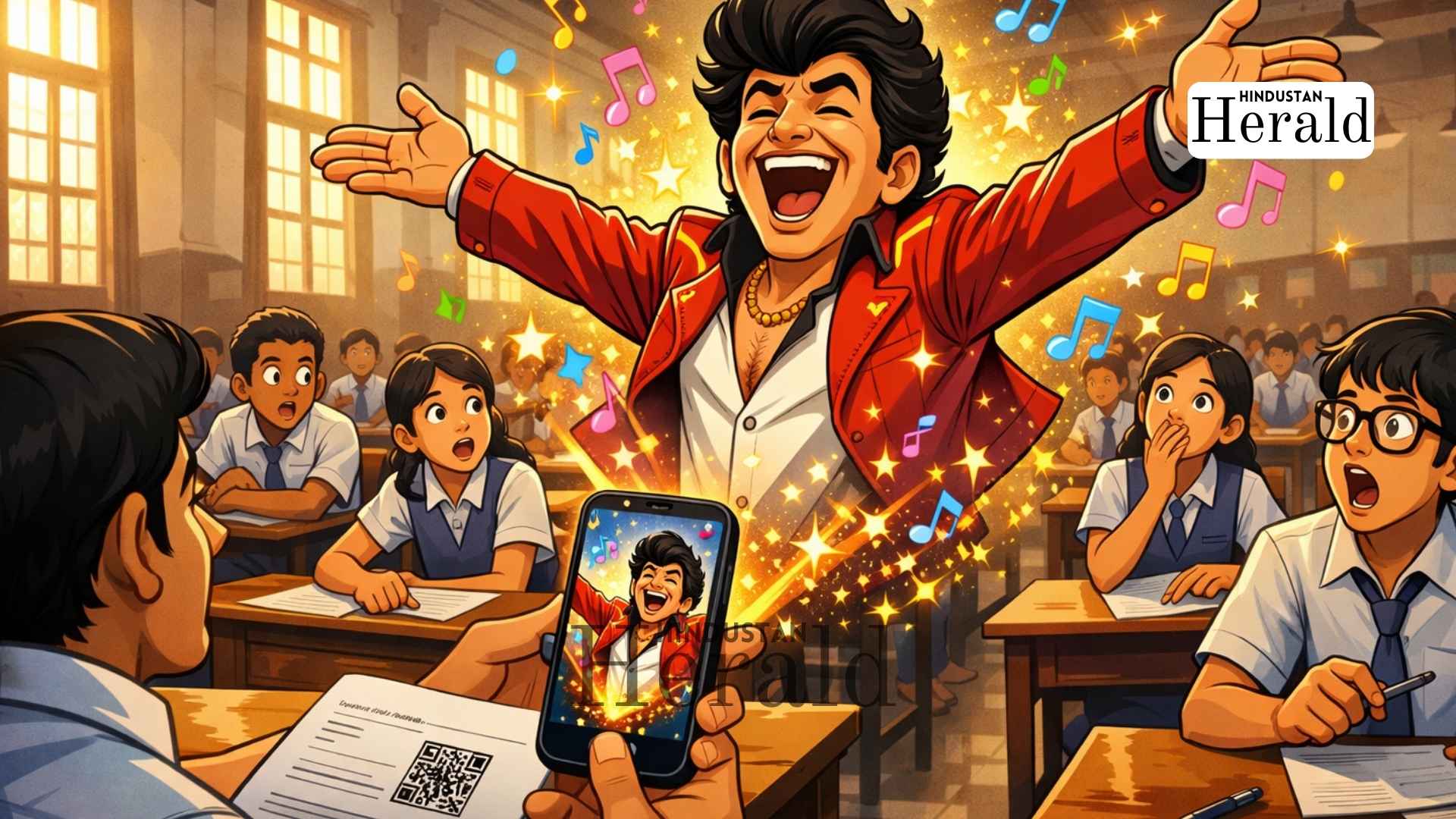
New Delhi, March 10: Nobody walks out of a Class 12 board exam talking about a 1987 British pop singer. Yesterday, somehow, millions of students did.
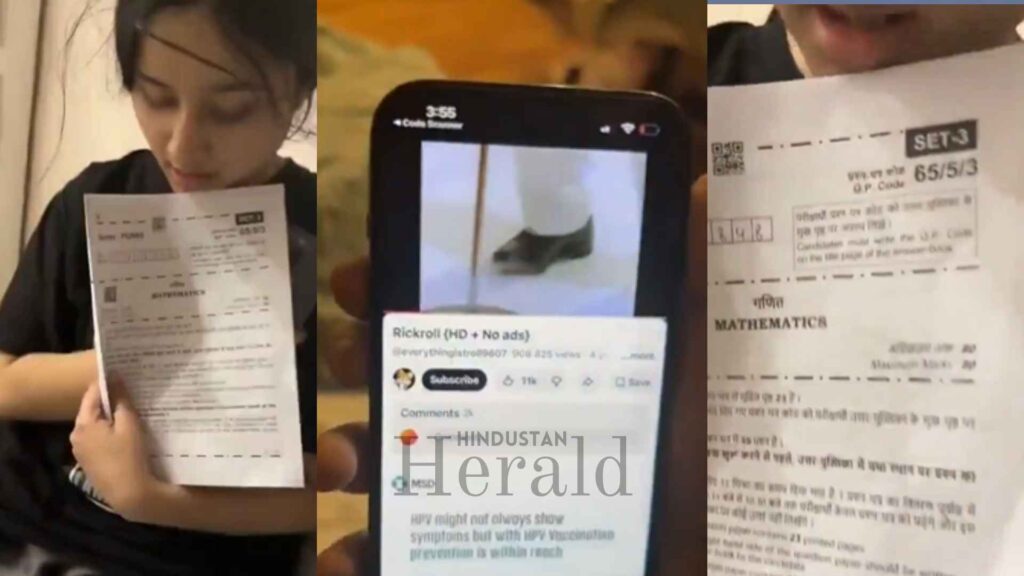
When students sat down for the Central Board of Secondary Education’s Class 12 Mathematics paper on March 9, the last thing anyone expected was to be ambushed by an internet meme. But that is precisely what happened. A QR code printed on several sets of the question paper, when scanned, did not open any board verification link. It did not lead to an official CBSE portal. It led to Rick Astley singing “Never Gonna Give You Up” on YouTube. All of it. The full video. On a national board examination paper.
By evening, the country had collectively lost the plot in the best possible way.
How the Whole Thing Unravelled
It started, as most things do now, with a few students posting screenshots. Someone scanned the code out of curiosity. Someone else filmed the redirect. Within an hour of papers being collected, the clips were everywhere. X was flooded. Reddit threads were climbing fast. Students who had already submitted their papers were pulling out old images just to scan the code themselves.
As reported by Business Today, the board acknowledged that in a few sets of the question paper, scanning one of the QR codes redirected users to a YouTube video. The affected sets reportedly included series 65/3/X, 65/4/X, and 65/5/X, though students from different cities and schools confirmed seeing the same redirect, which suggests the problem was not limited to a single printing unit or a single geography.
The prank is called “Rickrolling” for those unfamiliar, and it has been a fixture of internet culture since roughly 2007. The basic mechanics are simple: you disguise a link as something legitimate, and when the person clicks it, Rick Astley appears. It is harmless, it is funny, and it is absolutely not supposed to appear on official documents printed by a national education authority for 2.5 million students.
One post on X captured the mood early: “In today’s episode of how serious our examination conducting authorities are, presenting to you CBSE class 12th board maths paper which has a QR code that opens rickroll’s song on YouTube.” Another user, with considerably less editorialising, simply wrote: “Of all things I expected, I didn’t think I would get Rick Rolled by Big CBSE in 2026.”
Fair enough, honestly.
What CBSE Actually Said
By March 10, the board could not stay quiet. CBSE Headquarters put out a formal press release, posted on X under the handle @cbseindia29.
The statement confirmed, in clear language, that the question papers are genuine and the security of those papers was never compromised. According to the official release, as quoted by India TV News: “It is hereby confirmed by the Board that the question papers are genuine. The security of the question papers remains uncompromised.”
The board went on to say the matter has been viewed seriously and that necessary steps are being taken so the issue does not repeat in future examinations. Officials also asked students and parents not to rely on unverified social media claims for examination-related information and to check only official board communications.
Which is reasonable, as far as institutional responses go. But it leaves the most obvious question unanswered: how did this happen in the first place?
Nobody Is Saying How the Link Got There
CBSE introduced QR codes on its question papers back in 2019, specifically as a security measure. The code functions as a digital signature, a way for the board to verify a paper is genuine and, if a leak happens, to trace which printing batch it came from. It is, in theory, a solid idea. Modern, trackable, harder to fake than older methods.
In practice, the code is generated at some point in the pre-press and printing pipeline, linked to a destination URL. Somewhere in that pipeline, on at least one batch of the most widely-taken board examination in the country, the destination URL ended up being a decades-old pop song on YouTube.
The board has not explained at which stage this happened. No printing vendor has been named. There is no indication yet whether this was a straightforward data entry error, a system glitch during URL generation, or something more deliberate, which is a scenario most people seem reluctant to seriously entertain, though they are also not ruling it out. The phrase “necessary steps” in the official statement covers a wide range of actual responses, and the board has not been more specific than that.
For a system explicitly designed to protect examination integrity, the silence around how this particular failure occurred is its own kind of problem.
The Paper Itself, Setting the QR Code Aside
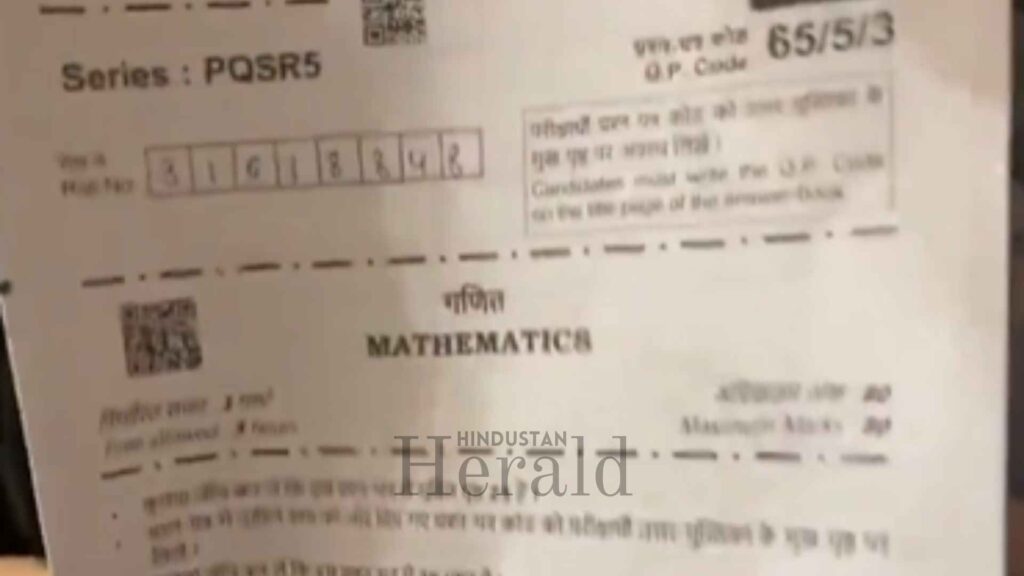
Away from the circus, students and educators who actually sat through the three-hour paper had a lot to say about the mathematics itself.
According to Akhilesh Kumar Tripathi, Head of the Mathematics Department at Global Indian International School, Noida, the paper was overall balanced and moderate in difficulty. All five sections, from the objective questions to the five-mark problems and the case study component, stuck closely to NCERT patterns. Well-prepared students would have found it accessible, he said.
Vijay Giri, Mathematics Faculty at Satya School, Gurugram, was slightly more blunt. The paper was moderate but long. Integration was doable, but ate up time. Three-dimensional geometry and vectors were on the easier side. JEE aspirants were comfortable, as they usually are. His main observation was practical: the calculation-heavy sections meant most students ran the full three hours without a moment to check their work. No margin for revision, no buffer.
Bindu Harish, Senior Mathematics Teacher at Manav Rachna International School, Gurugram, broadly agreed the paper was manageable, but flagged something that, in any other news cycle, would have been its own story. In Set 1 and Set 3, Question 33(A) had a missing bracket. Set 2’s Question 35(A) had the same problem. A typographical error in a high-stakes mathematics paper is not trivial. It introduces ambiguity exactly where students can least afford it. Yesterday, it barely registered as news.
That tells you something about the scale of what the QR code moment did to the news cycle.
The Larger Problem This Exposes
The board examination system in India operates at extraordinary scale. Class 12 examinations continue until April 10, 2026, with Class 10 wrapping up just a day after the Mathematics paper, on March 11. The logistics involved, printing, packaging, distributing, and securing question papers for dozens of subjects across thousands of centres nationwide, are genuinely staggering.
But scale is not an excuse for this. If anything, the opposite is true. The QR code system was introduced because the board’s older methods were vulnerable. Leaks used to happen, and when they did, they caused chaos: re-examinations, student anxiety, media storms, policy reviews. The digital authentication system was meant to close those gaps. Finding out that the system malfunctioned so completely that it pointed students toward a meme, rather than a verification link, is the kind of failure that should prompt a proper investigation, not a press release using the phrase “necessary steps” and moving on.
Parents of students waiting on results expected sometime in May are, understandably, more measured in their amusement than the students themselves. The papers are genuine. The results will count. But public trust in the examination authority is not a small thing to squander, and a thorough, transparent explanation of what went wrong, including naming who is responsible for the URL that ended up in that QR code, would go further than anything CBSE has said so far.
The Memes, Though
For the students who ground through three hours of calculus and probability and came out to find they’d been unwittingly Rickrolled by the Central Board of Secondary Education, the moment has already calcified into legend. The memes are sharp. The social media commentary has been, frankly, excellent. Someone on Reddit simply wrote: “CBSE board realising they have free will.” That one will last.
Rick Astley, for what it is worth, has never stopped going viral. He is an inevitability at this point. Still, being embedded in an official Indian government education document as a quality-control failure is a new chapter even for him.
For now, CBSE has promised corrective action, the students have their memories, and the parents have their questions. Only one of those groups is likely to get a satisfying answer anytime soon.
Stay ahead with Hindustan Herald — bringing you trusted news, sharp analysis, and stories that matter across Politics, Business, Technology, Sports, Entertainment, Lifestyle, and more.
Connect with us on Facebook, Instagram, X (Twitter), LinkedIn, YouTube, and join our Telegram community @hindustanherald for real-time updates.

Covers Indian politics, governance, and policy developments with over a decade of experience in political reporting.
- Ananya Sharma

- Ananya Sharma
- Ananya Sharma
- Ananya Sharma