 By Ananya Sharma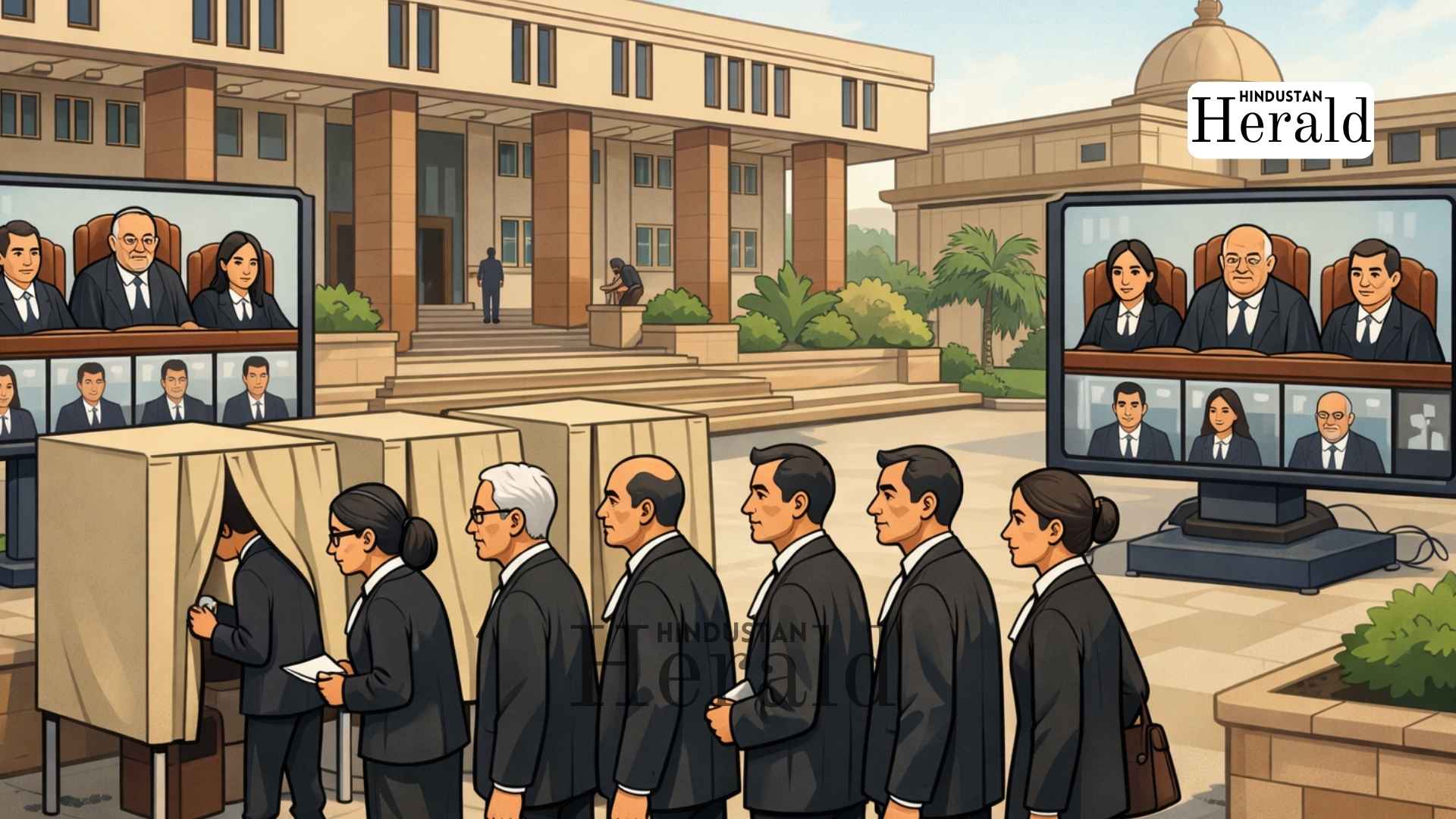
New Delhi, February 23: By mid-morning, the usually crowded corridors of the Delhi High Court felt different.
The lawyers were still there, of course. But most were squares on screens rather than black coats moving between courtrooms. The reason was unfolding just outside the judicial wing: the final day of polling for the Bar Council of Delhi elections, a three-day exercise that had effectively taken over parts of the court complex.
With thousands of advocates expected to cast their votes, the High Court had nudged almost everyone online. Lawyers and litigants were advised to appear virtually. Physical entry was restricted to Gate No. 5 and Gate No. 8. Regular gate passes were largely suspended. February 21, a Saturday, had already been declared a non-working day to ease the logistical load.
The message was simple: the election could not disrupt the court’s functioning, but the court would adapt.
For those who have practiced long enough to remember the pre-pandemic days of paper files and packed courtrooms, the shift was oddly familiar. What was once emergency improvisation has now become routine institutional muscle memory. Virtual hearings, once controversial, are now administrative tools.
Still, there was something symbolic about it. On one side of the complex, advocates queued to decide who would regulate their profession for the next term. On the other hand, judges logged in to continue hearing matters that range from municipal disputes to bail pleas.
Democracy within the Bar, adjudication within the Bench. Both are unfolding under the same roof.
A Sharp Reminder On What Review Really Means
Even with the hybrid format, the court did not lose its edge.

In Bijender Kumar Gaur vs North Delhi Municipal Corporation, a Division Bench of Justice Anil Kshetarpal and Justice Amit Mahajan delivered a pointed reminder: a review petition is not a second innings.
The Bench reiterated what the law has long held, but litigants often test. A review is meant for correcting an obvious error on the face of the record, a clerical slip, a patent mistake. It is not an opportunity to reargue the case, not a disguised appeal, not a backdoor attempt to reopen findings because the outcome was inconvenient.
The language was firm, and it needed to be.
The review jurisdiction is deliberately narrow. If every unsuccessful litigant were permitted to relitigate the same issues under the label of “review,” the system would stall under its own weight. Finality matters. Courts cannot function if every order is perpetually provisional.
There was no grandstanding in the Bench’s tone. Just clarity. And sometimes, clarity is the strongest message a court can send.
A ₹15,000 Lesson In Professional Courtesy
If the morning carried doctrinal clarity, the afternoon brought a more practical rebuke.
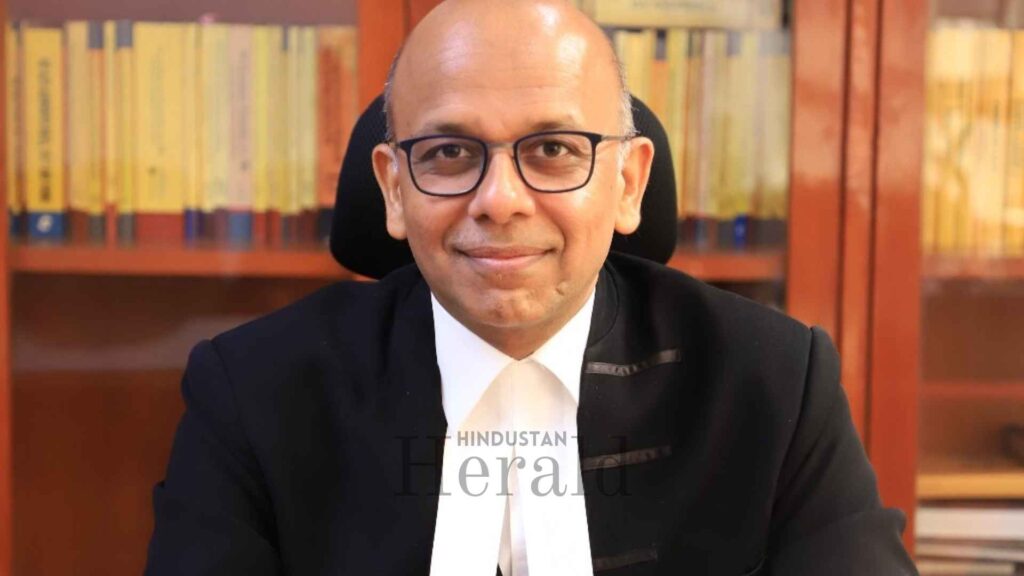
Justice Anish Dayal imposed a cost of ₹15,000 on a lawyer who sought an adjournment without giving prior notice to the opposing side. The court strongly deprecated the conduct, noting the inconvenience caused.
Anyone who has spent time in courtrooms knows how common adjournments can be. Files travel, counsel, get held up, and instructions are pending. But what often frustrates judges and litigants alike is the absence of communication. When one side arrives prepared, and the other casually seeks time without warning, it wastes more than a few minutes. It drains judicial hours.
Attaching a monetary cost changes the equation. It tells the Bar that preparedness and courtesy are not optional. They are part of a professional discipline.
The timing of this order, on the final day of Bar Council voting, is hard to ignore. The profession was literally voting for its leadership while being reminded, in real time, of its responsibilities.
Small Reforms, Real Impact
Away from the courtroom exchanges, the High Court has also rolled out procedural changes that may appear technical but carry long-term consequences.
E-filings are now capped at 300 MB. For lawyers accustomed to uploading bulky compilations, this will require some adjustment. Court officials have indicated that the cap is meant to streamline the Online e-Filing System and prevent server overload.
It is easy to dismiss such measures as administrative housekeeping. But digitisation is no small matter. The judiciary’s technological pivot, accelerated during the pandemic, is still evolving. File sizes, server capacity, and digital indexing, these are not glamorous topics. Yet they determine how smoothly justice is delivered in an era where courtrooms extend into the cloud.
The court has also standardised a one-time process fee of ₹1,000 for instituting petitions and appeals, irrespective of the number of respondents. Previously, process fees could escalate depending on how many parties were arrayed in a case.
For litigants in multi-party disputes, the simplification offers predictability. For registry staff, it reduces calculation disputes at the filing counter. These are the kinds of reforms that rarely make headlines but quietly reshape daily practice.
The Numbers On The Clock
There is also the matter of numbers.
The High Court’s Virtual Justice Clock, which displays real-time data, shows that more than 3,300 civil and criminal cases have been instituted this February. Disposals are hovering close to 3,500.
On paper, that suggests a disposal rate slightly ahead of fresh filings. In a system perennially burdened by pendency, that is not insignificant.
Of course, monthly data can be misleading. One month’s momentum does not erase structural backlog. But it does signal operational steadiness, even on days when the campus itself is partially preoccupied with elections.
For litigants watching their matters inch forward, those numbers are more than statistics. They represent hope that their case will not be swallowed by delay.
The Final Stretch Of The Bar Council Polls
Outside the courtrooms, voting for the 23-member Bar Council of Delhi continued through the day. The Council, once elected, will oversee enrolments, disciplinary proceedings, welfare schemes, and the broader regulatory framework for advocates in the capital.
Counting is scheduled for February 26.
Bar Council elections rarely command national attention, yet within the legal fraternity, they matter deeply. Campaigns revolve around welfare funds, insurance schemes, infrastructure demands, and relations with the judiciary. In Delhi, where the Bar is both large and politically vocal, the results can shape institutional dynamics.
February 21 was declared a non-working day to accommodate polling. The weekend saw visible crowds of advocates lining up to cast their ballots. Today, as the final votes are cast, the court has chosen adaptation over interruption.
Something is fitting about that.
The legal profession is electing its representatives even as the judiciary reiterates standards of discipline and efficiency. The administrative machinery is tightening its digital framework. Cases are being heard, disposed of, or adjourned with consequences.
Nothing dramatic. No blockbuster verdict. Yet the day feels consequential in quieter ways.
Institutions are rarely defined by headline-grabbing judgments alone. They are shaped just as much by how they handle routine pressures, internal elections, procedural discipline, and technological upgrades.
February 23 offered a glimpse of that institutional balancing act.
The corridors may have been less crowded. The hearings may have unfolded through screens. But the work went on.
Stay ahead with Hindustan Herald — bringing you trusted news, sharp analysis, and stories that matter across Politics, Business, Technology, Sports, Entertainment, Lifestyle, and more.
Connect with us on Facebook, Instagram, X (Twitter), LinkedIn, YouTube, and join our Telegram community @hindustanherald for real-time updates.

Covers Indian politics, governance, and policy developments with over a decade of experience in political reporting.
- Ananya Sharma

- Ananya Sharma
- Ananya Sharma
- Ananya Sharma