
 By Arun Upadhayay and Ananya Sharma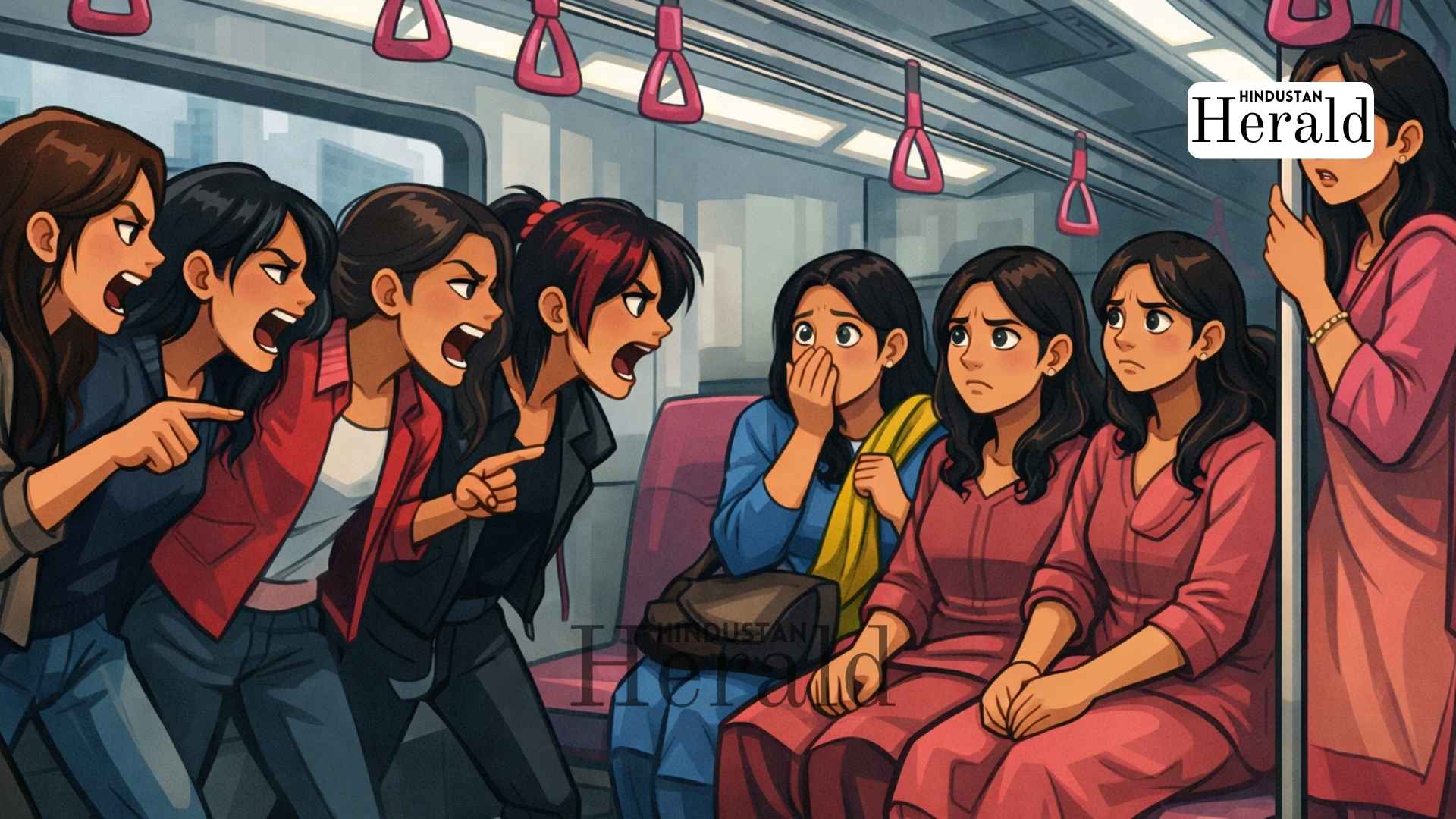
New Delhi, March 24: Monday morning started like any other for the women boarding the Delhi Metro’s Magenta Line. Bags on laps, phones in hand, the quiet exhaustion of a city already in motion before most people have finished their first cup of chai. The women’s coach, as always, was meant to be the one place on that commute where none of that exhaustion needed to carry extra weight.
It did not stay that way.
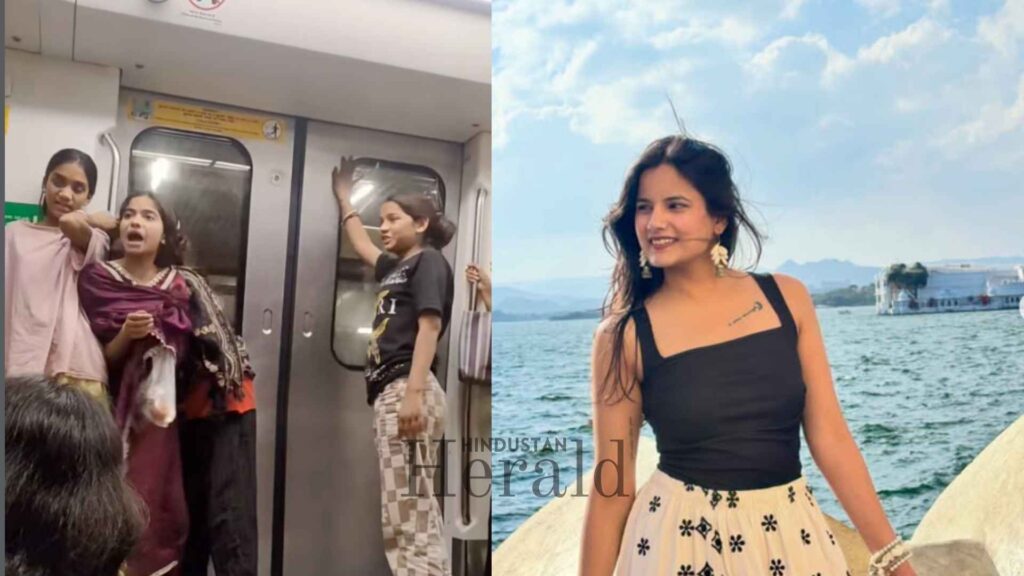
A video started going around on X sometime in the morning hours. Shot inside the women’s coach, it shows four young girls creating what passengers could only describe as complete chaos. Shouting at the top of their voices, throwing around language so foul that multiple women in the coach later said they sat frozen, not quite believing what they were hearing. When some of those women asked the group to keep it down, the girls did not quiet. They turned on them instead, with more of the same abuse, louder this time.
There was a differently abled woman seated in that coach. She tried, at some point during the commotion, to ask fellow passengers about the next station. Nobody could hear her. The noise was too much.
The woman who shared the video online put it simply. She wrote that for the first time in her life, she had felt unsafe inside the women’s coach. Not uncomfortable. Not annoyed. Unsafe.
Read that again, because it matters. She had been using that coach, presumably for a long time before Monday. And she had never written anything like that before.
Four Girls, One Coach, and a City Full of Women Watching
By afternoon the video had thousands of shares. By evening, everyone had an opinion.

Some were angry at the girls. Some were angry at the DMRC. Some were angry at the other passengers for not doing more. A few people, predictably, tried to make it about something else entirely.
But underneath all of that noise online was a very simple, very real feeling that any woman who has taken a late night metro, or an early morning one, or honestly any metro at any hour in this city, would recognise immediately.
The women’s coach is not just a coach. It is an understanding. An unspoken agreement between the city and its women that says: this one space, this one stretch of your day, you do not have to be on guard. You can just sit. You can just breathe.
When that understanding breaks, even once, it does not quietly repair itself. It sits in the back of the mind the next morning when you are deciding which coach to board. It makes you hesitate in a way you did not hesitate the day before.
That is what Monday’s video actually did. Not just to the women in that coach. To every woman watching it from home, already dreading tomorrow’s commute.
The Driverless Train Problem Nobody Talks About Enough
Here is something that gets glossed over every time one of these incidents surfaces.
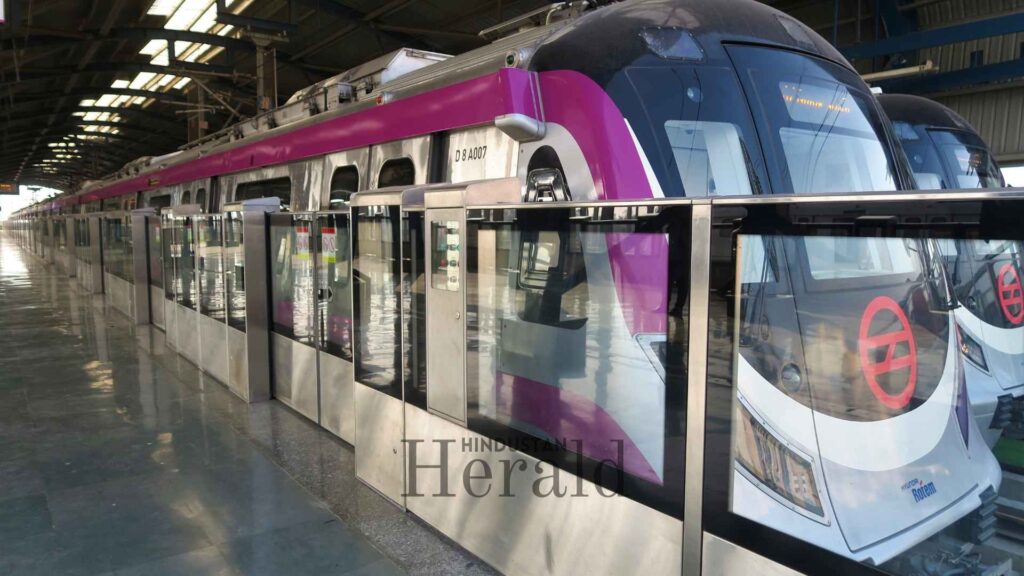
The Magenta Line has no driver. It is one of the most technologically advanced metro lines in the country, fully automated, running without a human operator on board. That is genuinely impressive engineering. It is also, in the context of passenger safety, a real and underexamined problem.
On a line with a driver or any on-board staff, there is at least one human being present who can physically move through coaches. Who can notice a situation before it turns into a crisis. Who can be in the wrong coach at the right time and simply by being there, change the outcome.
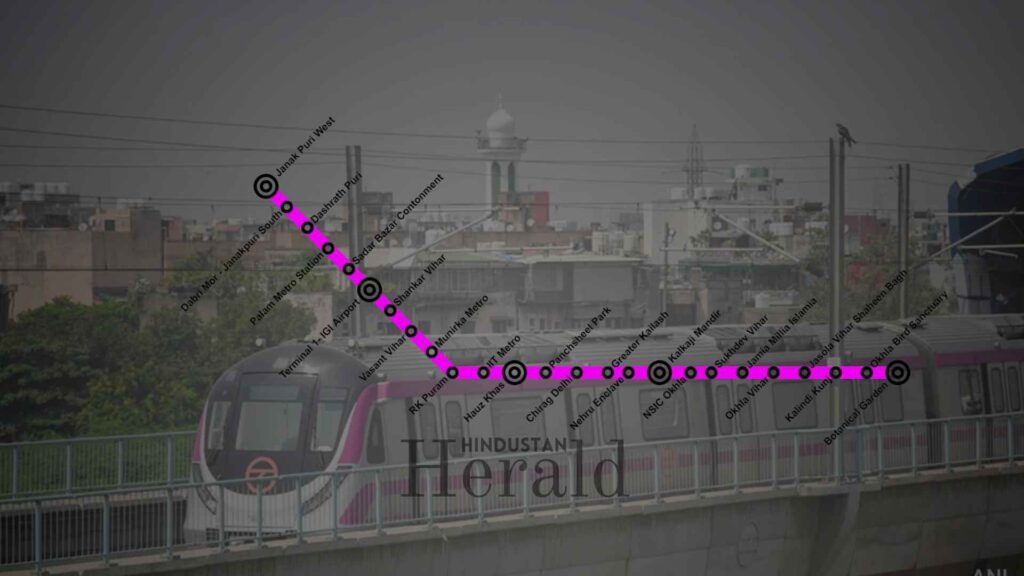
On the Magenta Line, there is nobody. The train moves. The coaches are sealed in motion. If something goes wrong, your options are a button on the wall and the hope that someone at the next platform responds before the damage is done.
Women commuters have been pointing this out for a while now. They want actual people inside the train, not just at the entry gates outside. They are asking for panic buttons that produce a real, physical response, meaning a person walks into the coach, not just a notification that logs somewhere on a screen. They want penalties for people who create this kind of situation to be serious enough that people actually think twice, rather than the current fines which are, frankly, the kind of amount you lose in your couch cushions.
One thing that kept coming up in the online conversation was this: DTC buses have marshals inside them. Regular, unremarkable buses that run on Delhi roads have a human being on board specifically to deal with problems. The metro, which costs more, carries more people, and runs underground where you genuinely cannot just get off when you want, somehow has less in-coach human presence than a bus.
That is not a small irony. That is a policy failure.
What the Rules Say
Just so it is clear, because it gets lost in these conversations: entering the women’s coach without authorisation is illegal under the Delhi Metro Railway Act. Creating a nuisance, abusing fellow passengers, using threatening language, all of it attracts fines and can lead to removal from the train and being handed to the police.
Earlier this month, a Delhi court upheld the conviction of a man who had behaved obscenely next to a woman inside a metro coach. The judge’s words in that order were pointed. He said crimes like this in public transport do not just cause physical harm, they cause psychological damage that follows the victim long after the train has reached its destination. He also said, and this part matters, that the existing safety measures are not enough.
A judge said that. In a court order. In writing. In March 2026.
The DMRC has been told, by its own city’s judiciary, that what it is doing is not enough. The question is whether that message is landing anywhere it can actually produce change.
The Scan and Statement Cycle
The Delhi Metro Rail Police has, as expected, taken up the matter. They are going through CCTV footage to identify the girls in the video. An official has reminded everyone about the 155370 helpline. The cycle is running as it always runs.
And it is not that this response is wrong, exactly. Reviewing footage matters. Identifying and penalising those responsible matters. That should happen.
But this same cycle has run before. It ran when men were filmed occupying the women’s coach late at night and refusing to move when women asked them to. It ran after harassment incidents that made it to the courts. It ran after every video that went viral and then faded.
The footage gets reviewed. The fines get issued. The social media storm dies down. And somewhere, a woman boards the metro the following week and does her usual mental calculation, just with a little less confidence in the answer.
What This Is Really About
The women who use the Delhi Metro every day are not asking for anything extraordinary. They are asking to sit in a train and get from one place to another without it being an ordeal. They are asking for the coach that was built specifically so they would not have to feel afraid to actually deliver on that promise.
Monday’s incident happened in broad daylight, inside a coach full of passengers, on a line equipped with cameras on every surface. The fact that it still happened is not an argument that safety measures are useless. It is an argument that safety measures, as they currently exist, are not complete.
Put people inside the coaches. Not just at the gates. Inside. Especially on automated lines where there is no staff on board at all. Make the consequences of creating this kind of situation severe enough to matter. And stop treating every viral video as a communications problem to be managed rather than a systems problem to be fixed.
The infrastructure that runs the Delhi Metro is genuinely world class in many respects. The infrastructure that protects women inside it is not keeping up.
That gap is what Monday’s video was actually about. Everything else is detail.
Stay ahead with Hindustan Herald — bringing you trusted news, sharp analysis, and stories that matter across Politics, Business, Technology, Sports, Entertainment, Lifestyle, and more.
Connect with us on Facebook, Instagram, X (Twitter), LinkedIn, YouTube, and join our Telegram community @hindustanherald for real-time updates.

- Arun Upadhayay

- Arun Upadhayay
- Arun Upadhayay
- Arun Upadhayay





Covers Indian politics, governance, and policy developments with over a decade of experience in political reporting.
- Ananya Sharma
- Ananya Sharma
- Ananya Sharma
- Ananya Sharma




 Neeraj Kapoor and Ananya Sharma
  Ananya Sharma
  Sandeep Verma