
 By Ananya Sharma
New Delhi, February 14: Something about Friday did not feel routine. Yes, protests are common at Delhi University. Yes, rival student groups argue almost every week. But what happened outside the Arts Faculty was different in tone. It was sharper. More personal. And by the end of the day, nobody was talking about regulations anymore. They were talking about assault, caste abuse, and whether the campus is becoming too quick to turn on itself.
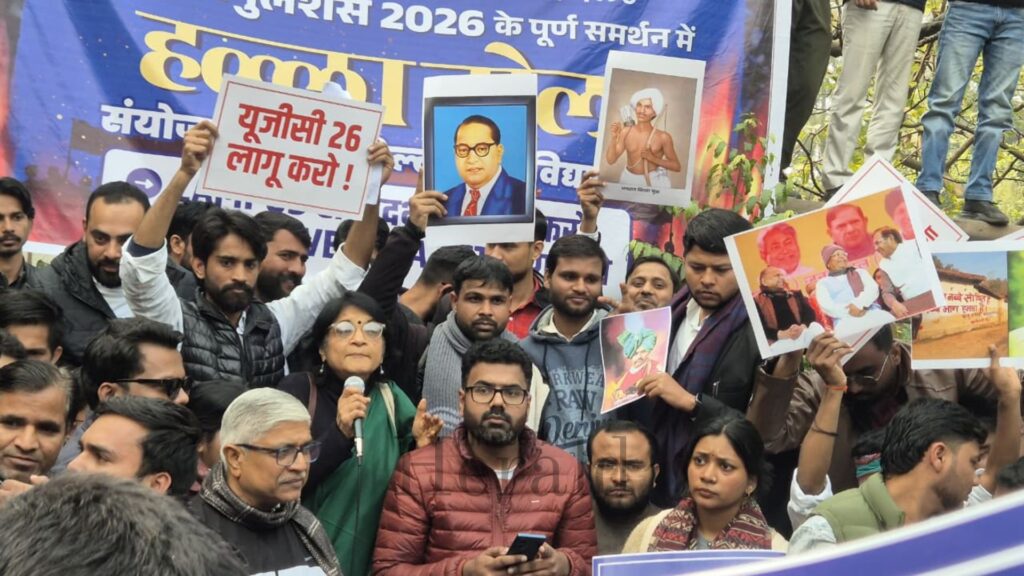
The protest had been called by the All India Forum for Equity and the All India Students’ Association to mark what they described as “All India Vanchit Adhikar Divas.” The focus was on the proposed UGC Regulations 2026, which student organisers say are intended to strengthen systems against caste discrimination in universities.
Some students held placards. Others listened from the steps. It looked, at first glance, like the many demonstrations that pass through North Campus every semester.
Then the temperature rose.
When The Mood Shifted
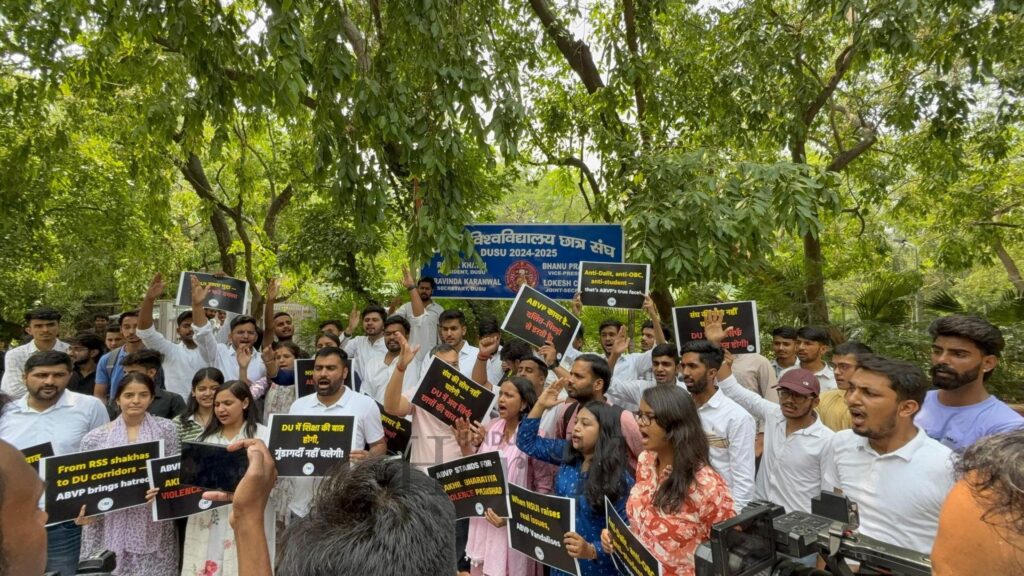
Members of the Akhil Bharatiya Vidyarthi Parishad reached the site as speeches were underway. What happened next is now the subject of competing statements, but nearly everyone agrees that the argument escalated fast.
There was shouting. Slogans. A few students tried to speak over each other. Someone accused the other side of provocation. People moved closer. That is often how it happens. A protest space shrinks, tempers flare, and within seconds, there is pushing.
The videos now circulating online begin in the middle of the chaos. They show faces tense with anger. Arms raised, not always clear whether to point or to push. Police are attempting to create space.
No single clip captures the beginning.
The Journalist Claim
One part of the confrontation has drawn particular attention.
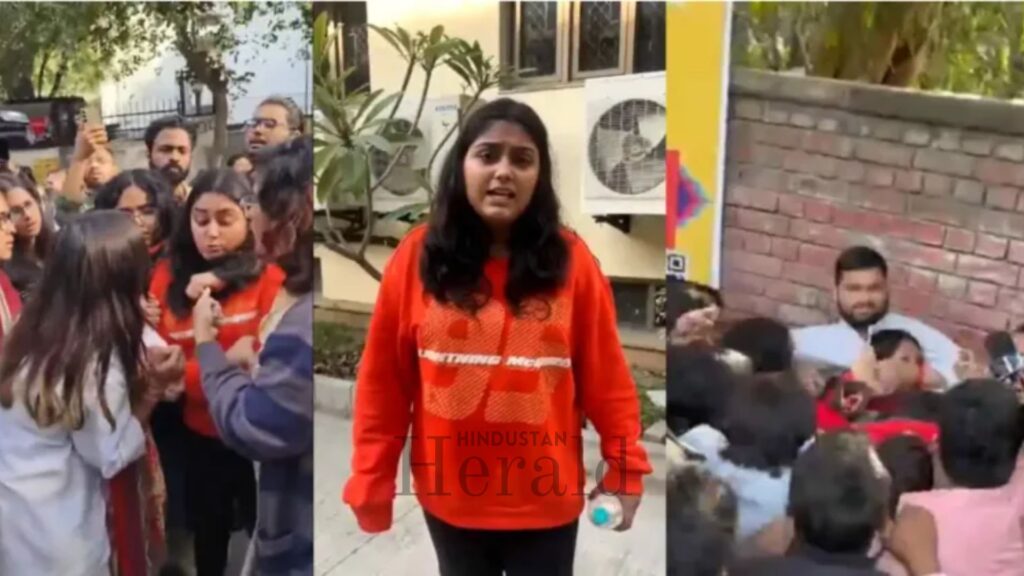
The Akhil Bharatiya Vidyarthi Parishad alleges that Ruchi Tiwari, a journalist associated with the YouTube platform Breaking Opinion, was manhandled by Left-affiliated activists while questioning protesters. ABVP leaders have described it as an attack on a woman journalist who was simply reporting.
In the footage widely shared, Tiwari can be seen in a heated exchange with students. The discussion appears to revolve around caste identity and political affiliations. Voices rise. The crowd tightens. At one point, there is visible jostling, though the camera angle makes it difficult to determine exactly who initiated physical contact.
The All India Students’ Association rejects the claim that she was targeted. AISA members say the situation was chaotic and that their own members were pushed and assaulted in the scuffle. They argue that the incident is being framed selectively.
As of now, neither version has been conclusively established.
Allegations That Cut Deeper
The counter-allegations from the All India Students’ Association are serious. The group claims that rival activists used casteist slurs during the confrontation and raised slogans such as “Brahmanwad Zindabad.”
According to AISA, some of its members were targeted based on caste identity. They also allege that hostility continued outside the Maurice Nagar police station, where students had gone to file complaints.
Caste-based abuse is not a minor campus dispute. If substantiated, it can carry significant legal consequences. So far, police have not publicly detailed which legal sections may apply.
Students present describe the moment as emotionally charged rather than organised. “It felt messy,” one student said. “Like everyone was reacting at once.”
Police Investigation Underway
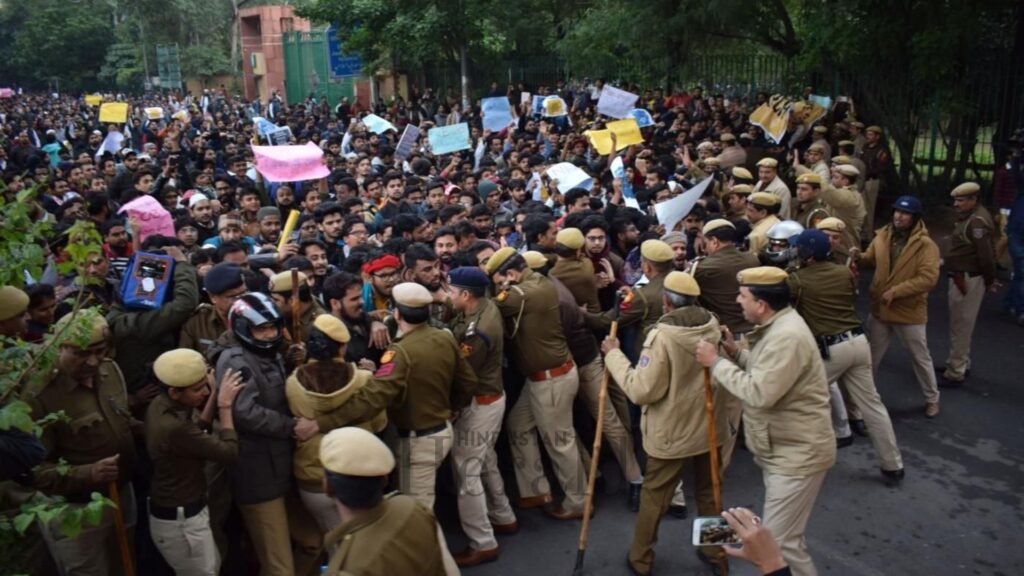
A senior officer from the Delhi Police confirmed that a Medico-Legal Case has been conducted for one injured student. A formal complaint has been received, and the matter is under investigation.
There have been no reported arrests so far.
Police say they will rely on video evidence and witness accounts to determine what action is warranted. AISA activists have accused officers at the scene of failing to disperse those raising provocative slogans. The police have not publicly responded to that specific allegation.
For now, the official line is cautious. The inquiry is ongoing.
The Larger Context
Student politics at Delhi University has always reflected wider national ideological divisions. The Akhil Bharatiya Vidyarthi Parishad and the All India Students’ Association represent sharply different political traditions. Their clashes are not new.
What makes this episode more sensitive is the subject at its core. Allegations of caste discrimination in higher education have surfaced repeatedly across India over the past decade. Student groups argue that grievance mechanisms are often weak or ineffective.
Protesters see the proposed UGC Regulations 2026 as a way to tighten accountability. Critics question whether the protest was driven more by politics than policy.
On campus, those two threads often overlap.
A Quieter Campus, For Now
By Saturday morning, North Campus had returned to its usual rhythm. Students queued for tea. Classes resumed. The Arts Faculty lawns looked almost unchanged.
But conversations carried a different tone. Some students expressed concern that disagreements are becoming more aggressive. Others said conflict is inevitable in spaces where politics is active.
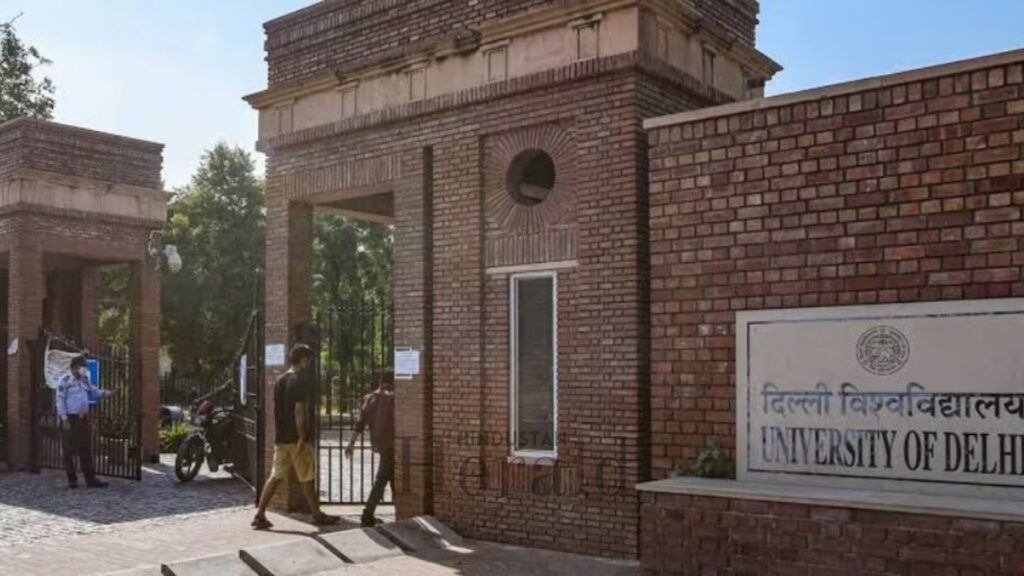
The University of Delhi administration has not yet issued a detailed public statement outlining possible disciplinary action. Student groups have demanded strict measures against what they describe as outsiders who allegedly entered the campus during the clash.
Whether internal inquiries will follow remains unclear.
Beyond The Videos
Right now, much of the public understanding of Friday’s events comes from short, viral clips. Each one shows a fragment. None provides the full arc.
One side sees a journalist under attack. The other sees students facing caste abuse and physical intimidation. The police see a case under investigation.
The truth may lie in the details that do not trend online.
What is certain is that an afternoon meant to discuss discrimination and institutional reform ended in deeper division. For many students, the memory will not be of policy demands but of confusion and raised voices.
Universities are meant to be places where arguments are loud but safe. Friday tested that balance.
The investigation will determine responsibility. The harder task may be restoring a sense that disagreement does not have to mean disorder.
Stay ahead with Hindustan Herald — bringing you trusted news, sharp analysis, and stories that matter across Politics, Business, Technology, Sports, Entertainment, Lifestyle, and more.
Connect with us on Facebook, Instagram, X (Twitter), LinkedIn, YouTube, and join our Telegram community @hindustanherald for real-time updates.

Covers Indian politics, governance, and policy developments with over a decade of experience in political reporting.
- Ananya Sharma

- Ananya Sharma
- Ananya Sharma
- Ananya Sharma




 Ayesha Khan and Ananya Sharma