 By Ananya Sharma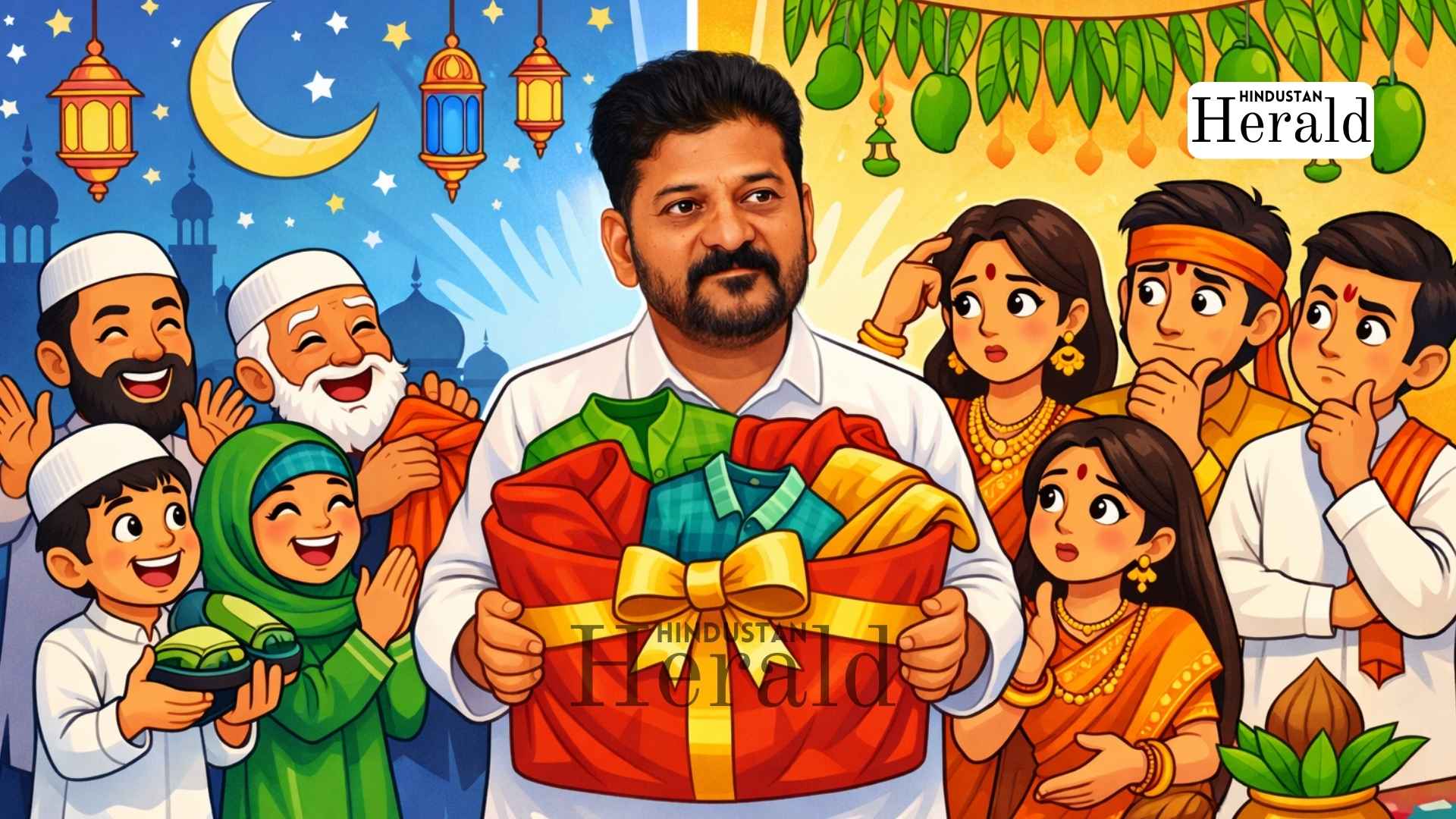
Telangana, March 19: It started with a packet of clothes. The Telangana Congress government decided to hand out Eid gift kits to poor Muslim families ahead of the festival. Sarees, kurtas, chudidar sets. Simple stuff. The kind of thing that makes a difference to a family that cannot afford new clothes for Eid.
But today, that packet of clothes has become one of the loudest political fights in the country.
And the timing could not be more awkward. Because today is also Ugadi and Gudi Padwa. The Telugu and Marathi New Year. A day that millions of Hindus in Telangana celebrate as one of the most important festivals of the year. And while families were drawing rangoli and cooking up festive meals, the BJP was asking one very pointed question: where is our gift packet?
So What Exactly Did the Telangana Government Do?
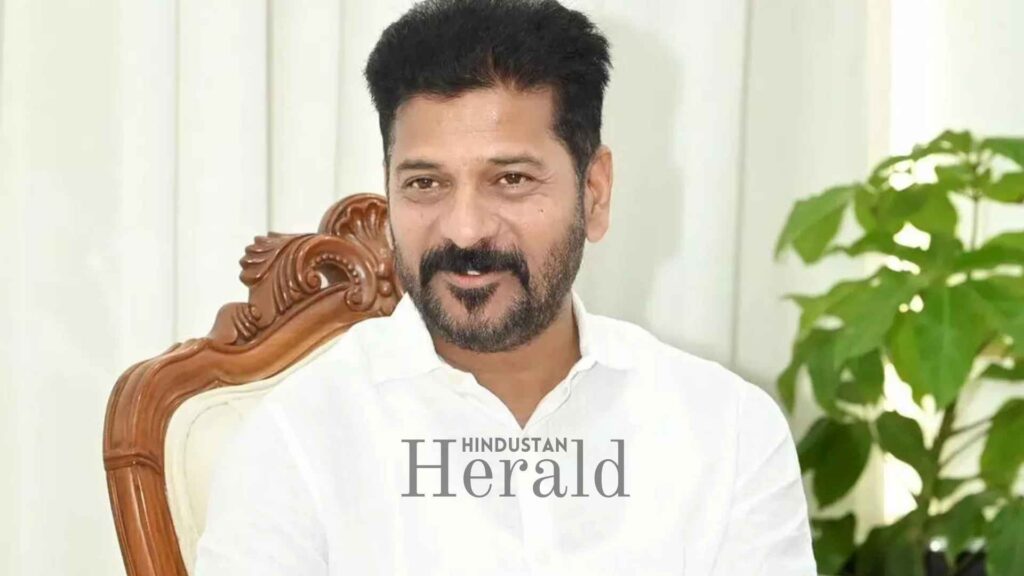
Chief Minister Revanth Reddy’s government rolled out what it calls the “Eid Ka Tohfa” scheme. Translates simply to: a gift for Eid.
The state is distributing somewhere between 2.66 lakh and 4.5 lakh gift kits across Telangana. Each kit has clothing. Women get a sari with a blouse piece and a chudidar set with a chunni. Men get a kurta-pyjama. Nothing extravagant. Practical festive wear for people who cannot afford it themselves.
That is not all. The government also handed over ₹1 lakh each to 813 mosques across the state to organise Iftar dinners and community gatherings. That alone adds up to over ₹8 crore in public funds going directly to mosques.
And earlier this month, Muslim government employees were allowed to leave work at 4:00 PM every day through Ramzan, from February 19 to March 20, so they could break their fast and pray without rushing.
Taken together, it is a fairly substantial package from a state government that has frequently complained about tight finances.
What the BJP Said, and How They Said It
Shehzad Poonawalla, one of the BJP’s most visible national spokespersons, did not hold back.
https://x.com/erbmjha/status/2033866112337907828?s=20He called Revanth Reddy by the name “Revanthuddin.” It was a deliberate provocation, designed to paint the Chief Minister as someone who governs for Muslims first and everyone else second.
His argument was blunt. The state is spending public money on Eid gifts, mosque grants, and early working hours for Muslim employees. But when Ugadi comes around, the same government has nothing to offer. No gift kits. No state-organised celebration. No equivalent gesture for the Telugu Hindu community whose festival falls on the very same day.
He called the scheme “Vote Bank ki Dukaan.” A shop that sells political favours to religious minorities in exchange for votes.
It is a strong charge. And it has landed.
The Photo on the Packet
Here is where it gets messier.
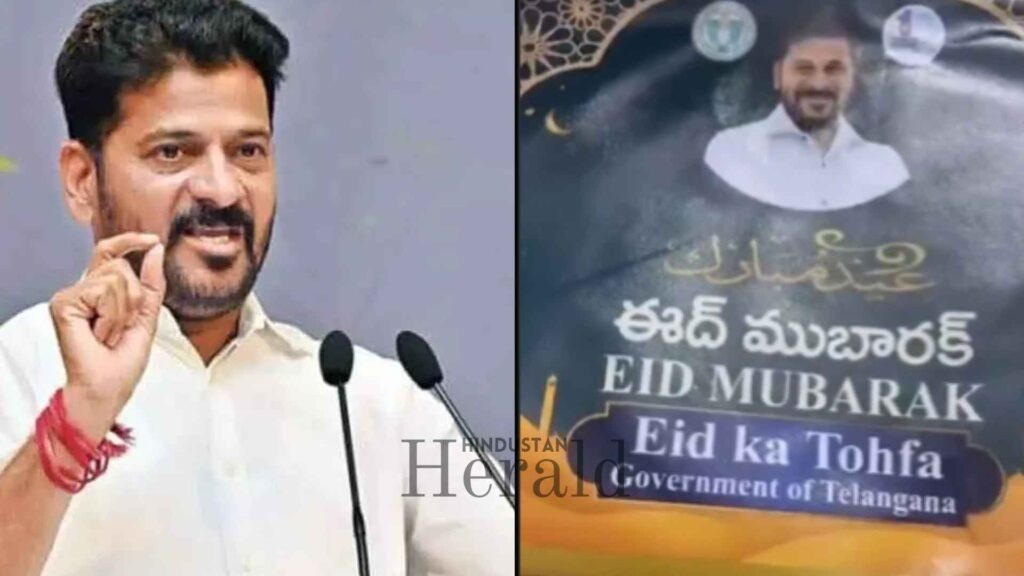
Videos started circulating on X and YouTube today. People unboxing the gift kits, showing off the sarees and kurtas. Normal enough. But look closely at the packet and you see the face of Chief Minister Revanth Reddy printed right on it.
The BJP jumped on this immediately. Their argument: this is not welfare. This is a campaign poster disguised as a gift. Public money is being used to put the Chief Minister’s face in front of Muslim households right before the election cycle heats up.
Using government schemes for political branding is nothing new in India. Every party does it, state and centre alike. But doing it on a scheme targeted specifically at one religious community, on a day when another community is celebrating its own major festival without any state acknowledgement, is the kind of thing that gives the opposition exactly the ammunition it needs.
The Congress has not addressed this directly. They have stayed quiet on the photo.
What Congress Says in Its Defence
The Congress position is not complicated. They say: we are doing welfare for poor people. These are not rich Muslim families. These are economically weaker households that cannot afford Eid clothes. The government is helping them.
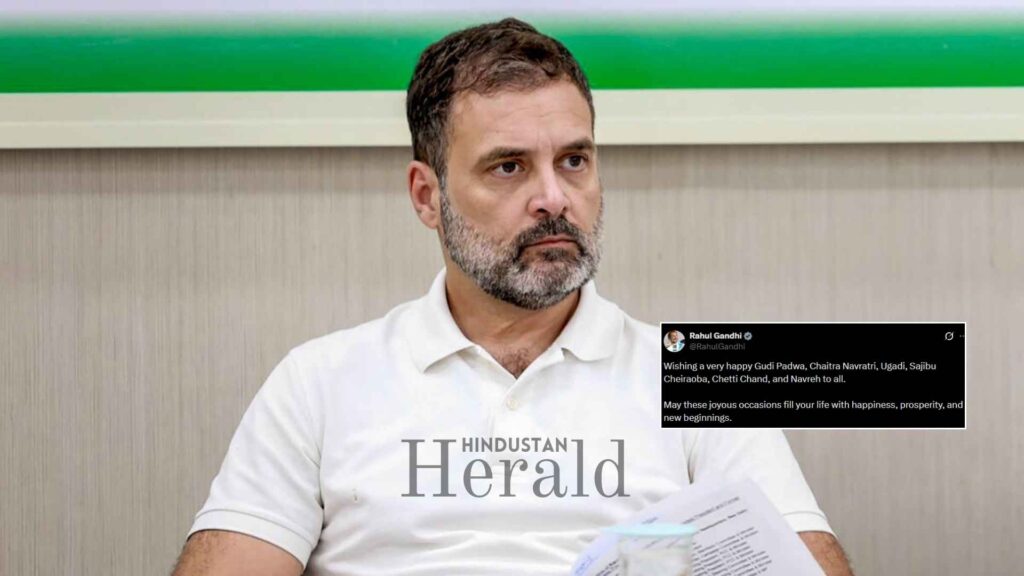
They also argue that the BJP cries communalism every time a Congress government does anything for a minority community, but has no problem with the central government’s own schemes that benefit specific groups.
It is a fair point up to a level. Welfare targeted at marginalised communities is not inherently communal. Many state governments across India run schemes for specific religious or caste communities. Tamil Nadu distributes sarees during Pongal. Various states offer Diwali bonuses. Context matters.
Still, the Congress has not directly explained why there is no comparable Ugadi scheme. That silence is being read as an answer in itself.
Why Today’s Date Matters So Much
You cannot understand this controversy without sitting with the calendar for a moment.
March 19, 2026. Eid eve. And also Ugadi and Gudi Padwa.
Ugadi is not a minor festival. It is the Telugu New Year. It marks the beginning of a new calendar, celebrated with new clothes, special food called Ugadi Pachadi, family gatherings, and temple visits. For Telugu communities across Telangana and Andhra Pradesh, it is one of the biggest days of the year.
For the state government to be running a highly visible, branded, state-funded Eid distribution drive on the same day that millions of Telugu Hindus are celebrating their New Year without any state gesture toward them, that is not just a political problem. For many people, it feels like a personal one.
Whether that feeling is fair or manufactured by opposition politics, it is real. And in a democracy, feelings vote.
A Bit of Background on Why Telangana’s Politics Works This Way
Telangana became a separate state in 2014, carved out of Andhra Pradesh after a long and often violent political movement. The Congress won the state back in December 2023, ending ten years of BRS rule under K. Chandrashekar Rao, who had his own complex record on minority outreach.
Muslims make up around 12.7 per cent of Telangana’s population. They are concentrated in Hyderabad and surrounding constituencies, where AIMIM leader Asaduddin Owaisi holds significant sway. Any party that wants to build a majority in Telangana has to think carefully about this community.
The BJP has been growing steadily in the state since 2020. It won the Dubbaka and Huzurabad by-elections, performed well in the 2024 Lok Sabha contest, and is now positioning itself as the primary opposition to Congress. Its strategy leans heavily on Hindutva messaging and schemes like Eid Ka Tohfa hand it exactly the kind of story it needs to consolidate that positioning.
So both sides are playing politics here. The Congress is cementing ties with Muslim voters. The BJP is using the backlash to consolidate Hindu voters. Nobody in this story is entirely above the fray.
The Bigger Question Nobody Wants to Answer
Here is the thing that gets lost in all the noise.
Should state governments fund religious welfare schemes at all?
There is a genuine debate to be had here. On one side: the state has a duty to support its most marginalised citizens, regardless of religion, and if Muslim families in Telangana are disproportionately poor, targeting them for welfare is corrective, not communal.
On the other side: when a government ties welfare to religious festivals, puts the CM’s face on the packets, and does not offer equivalent support to other religious communities on their major festival days, it stops looking like welfare and starts looking like an electoral strategy.
Revanth Reddy is betting that families who receive those sarees and kurtas will remember who gave them when it is time to vote. The BJP is betting that families who got nothing on Ugadi will also remember.
Both bets may turn out to be right.
For Now, a Packet of Clothes Has Done Something Remarkable
It has made a state-level welfare scheme into a national conversation about what secular governance actually means in India today.
Every party claims to believe in equal treatment for all religions. Few govern that way consistently, regardless of who is in power. And in a country as religiously diverse as India, every festival season becomes a political audit.
Eid Ka Tohfa has passed no audit today. But it has raised every question worth asking.
Stay ahead with Hindustan Herald — bringing you trusted news, sharp analysis, and stories that matter across Politics, Business, Technology, Sports, Entertainment, Lifestyle, and more.
Connect with us on Facebook, Instagram, X (Twitter), LinkedIn, YouTube, and join our Telegram community @hindustanherald for real-time updates.

Covers Indian politics, governance, and policy developments with over a decade of experience in political reporting.
- Ananya Sharma

- Ananya Sharma
- Ananya Sharma
- Ananya Sharma