 By Ananya Sharma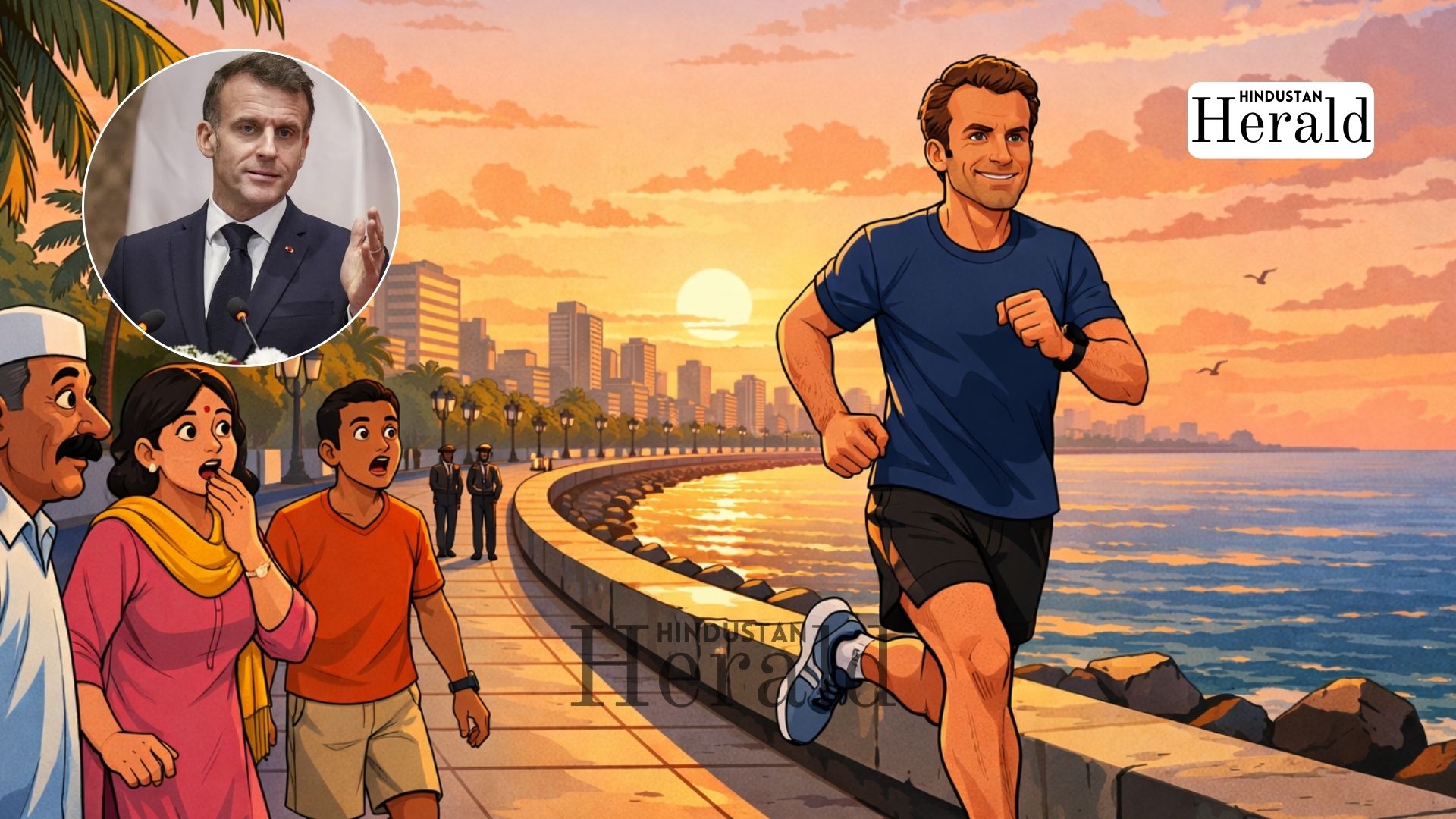
Mumbai, February 18: Some mornings in Mumbai feel completely routine. The same walkers. The same vendors are setting up. The same sun is rising slowly behind a pale haze. Tuesday was supposed to be one of those mornings. Instead, it turned into the kind of story people would later narrate at dinner tables.
Around dawn at Marine Drive, a few regular joggers noticed a tall man running at a steady pace along the curve of the promenade. He was dressed simply in a navy blue T-shirt, black shorts, and running shoes. No fuss. No dramatic entourage clearing the path.
It took a moment to register.

It was Emmanuel Macron.
Yes, the President of France. On a morning run. In Mumbai.
“Is That Really Him?”
The first reaction was disbelief.
One walker reportedly slowed down and stared. Another quietly pulled out a phone. A third laughed and said something along the lines of, “Only in Mumbai.”
There was security, of course. Presidents do not jog alone in foreign countries. But it was not the kind of heavy, intimidating presence that shuts down half the city. The officers kept close, alert but not aggressive. The promenade remained open. People continued their routines.
That detail is what stayed with many who were there.
In a city where VIP movement often means traffic jams and barricades, this felt surprisingly normal. Human, even.

Prime Minister Narendra Modi later commented that Macron “really likes the city and also enjoyed his run.” The tone was friendly. The message spread quickly.
Within hours, social media was filled with clips of the jog. Some praised the simplicity. Others saw smart public diplomacy at work. A few joked that Mumbai’s humidity would be the real test of international relations.
But behind the viral videos lies a visit that is far more serious than a morning workout.
Why Macron Is Really Here
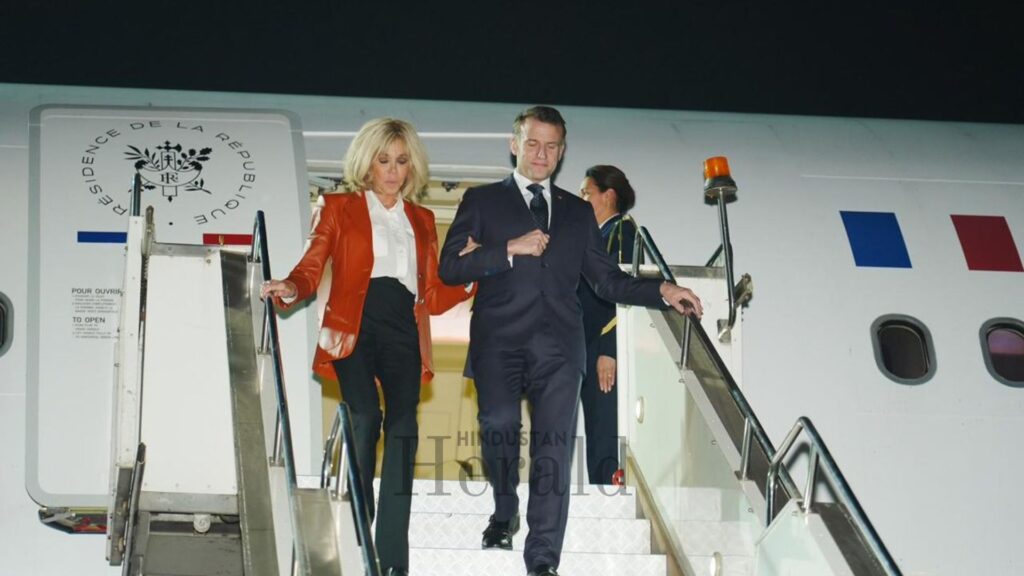
Macron landed in Mumbai on February 16 and was received by Maharashtra Chief Minister Devendra Fadnavis. His schedule was tight from the start.
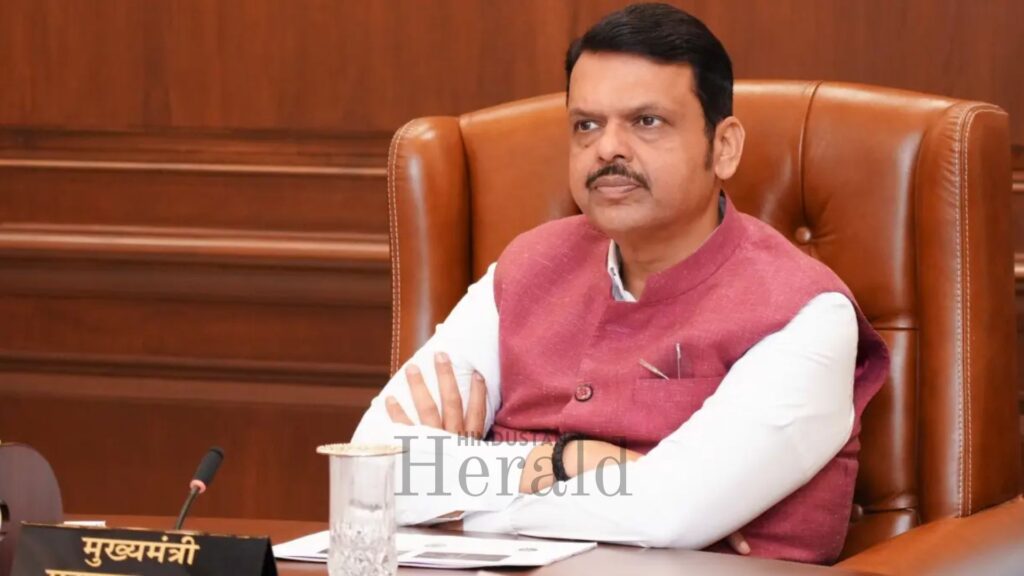
He paid tribute to the victims of the 26/11 terror attacks. That stop was not symbolic alone. France has repeatedly supported India on counter-terror efforts in global forums. Such gestures carry diplomatic meaning.
Then came the meetings.
According to reports by The Indian Express and PTI, defence cooperation was one of the main items on the table. India is considering the purchase of 114 additional Rafale fighter jets from France. The Indian Air Force already operates Rafale aircraft inducted under a deal signed in 2016.
For many citizens, defence deals feel distant. The numbers are large. The discussions technical. But these decisions affect national security for decades.
Aircraft like the Rafale are about preparedness. They are about ensuring that if tensions rise along India’s borders, the country has modern capabilities. In today’s geopolitical climate, that matters.
For France, deepening defence ties with India strengthens its role in the Indo-Pacific region. It is not just about selling jets. It is about building long-term strategic trust.
From The Promenade To Policy Rooms
By Wednesday, Macron had shifted to New Delhi for the India AI Impact Summit at Bharat Mandapam.

The subject there is artificial intelligence.
AI may sound like a complicated term reserved for engineers and tech experts. But in simple terms, it is the technology behind recommendation algorithms, fraud detection in banking, smart assistants, and even parts of modern defence systems.
Both India and France want to shape how AI develops, instead of becoming dependent on technology created elsewhere.
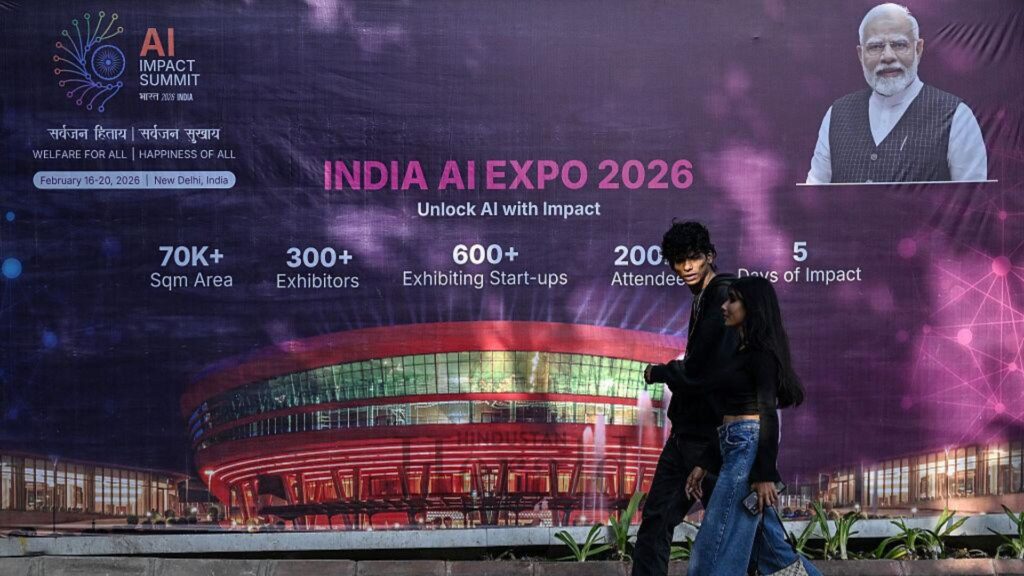
France has spoken often about “technological sovereignty,” meaning it wants more control over its digital ecosystem. India, with its fast-growing startup scene and digital public infrastructure, has similar ambitions.
Officials suggest that research collaborations, startup partnerships, and discussions on ethical AI frameworks are part of the agenda under the India-France Year of Innovation 2026.
These may not produce viral moments. But they could create opportunities for Indian tech entrepreneurs, researchers, and students in the coming years.
Why This Visit Matters Beyond Headlines
It is easy to focus on the visuals. A president running along Marine Drive makes for compelling footage.
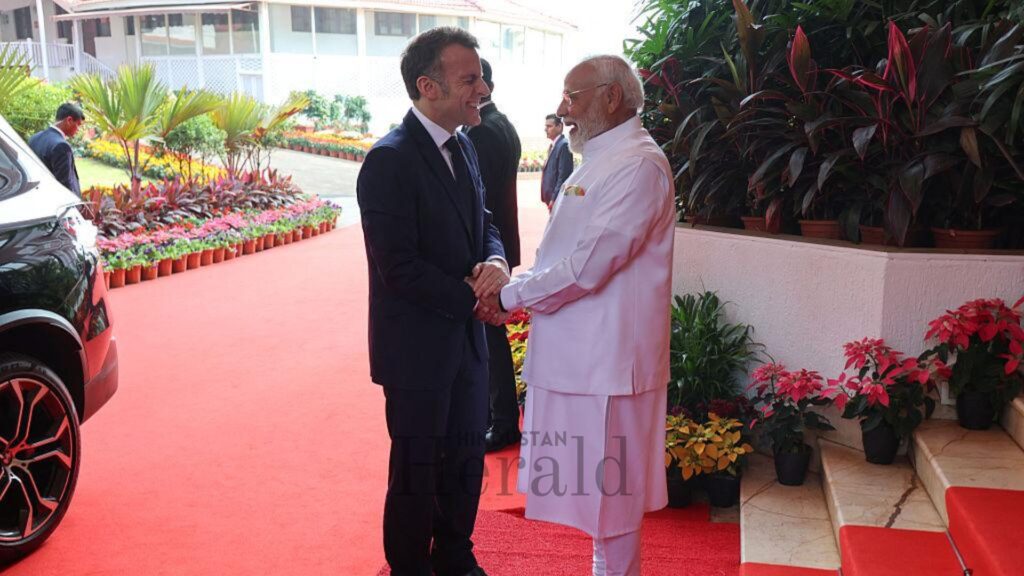
But zoom out.
India and France share a relationship that has remained steady over time. Unlike some partnerships that fluctuate with political shifts, this one has consistently expanded in defence, climate cooperation, and now digital innovation.
France has a strategic presence in the Indo-Pacific. India values partners who respect its independent foreign policy stance. That shared outlook has helped the partnership grow.
At a time when global politics feels uncertain, visits like this signal continuity. They reassure markets, defence establishments, and technology sectors that conversations are ongoing.
And in today’s world, public perception matters almost as much as policy.
A morning jog might seem small. But it sends a message of comfort and confidence. It suggests that the visiting leader feels secure enough to step into public space without heavy theatrics.
That image stays with people.
Back To Business
As Macron continues his meetings in New Delhi, the real outcomes of this visit will unfold slowly. Defence negotiations take time. Technology collaborations require follow-through. Clean energy commitments need funding and execution.
The headlines may move on. Social media will shift to the next trend.
But somewhere in Mumbai, a few early risers will remember the morning they found themselves running beside a world leader.
No red carpet. No grand speech.
Just the sound of shoes hitting pavement, the sea in the background, and a city that barely paused before carrying on.
Stay ahead with Hindustan Herald — bringing you trusted news, sharp analysis, and stories that matter across Politics, Business, Technology, Sports, Entertainment, Lifestyle, and more.
Connect with us on Facebook, Instagram, X (Twitter), LinkedIn, YouTube, and join our Telegram community @hindustanherald for real-time updates.

Covers Indian politics, governance, and policy developments with over a decade of experience in political reporting.
- Ananya Sharma

- Ananya Sharma
- Ananya Sharma
- Ananya Sharma