
 By Ananya Sharma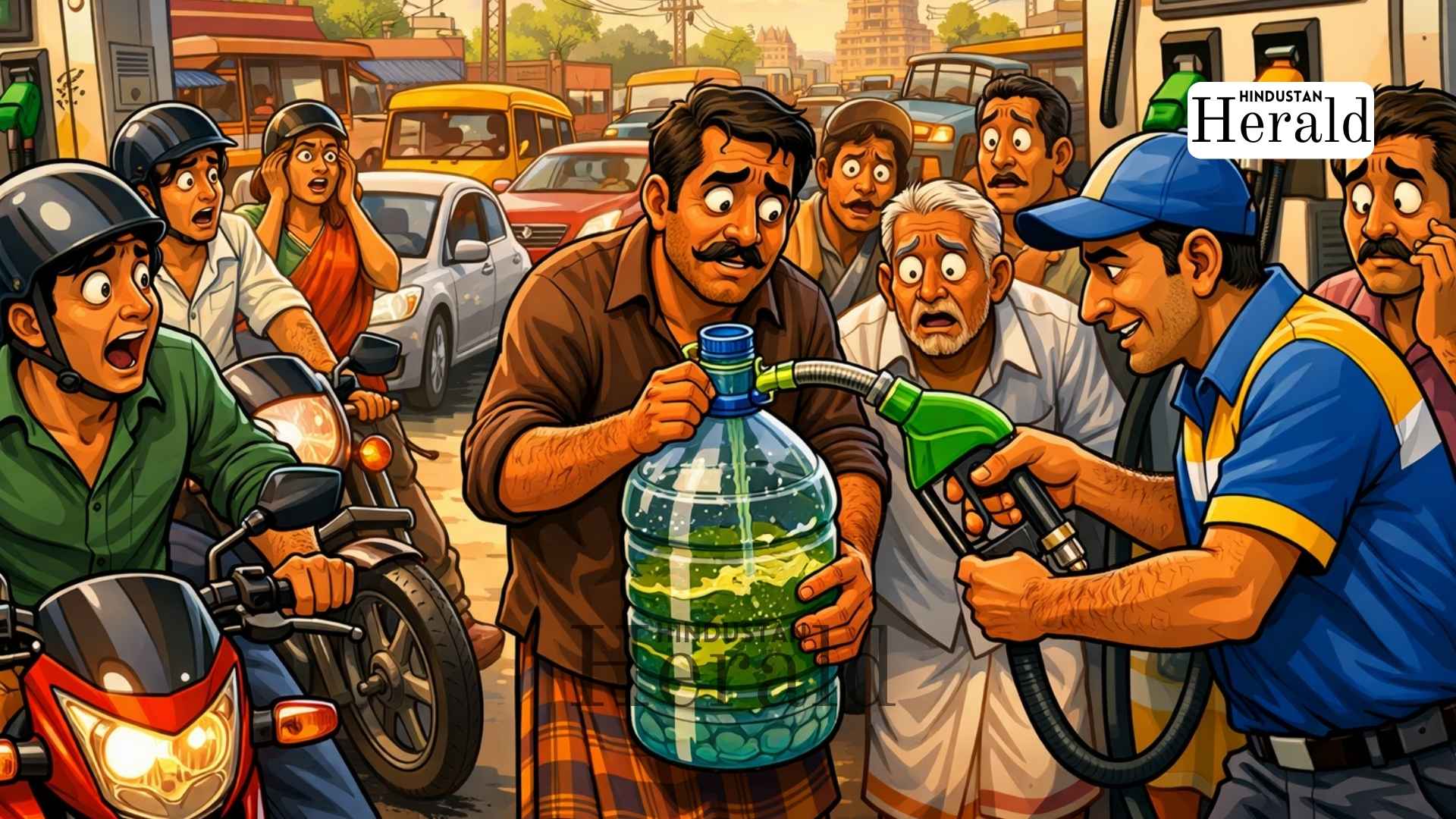
New Delhi, March 14: Saturday mornings are usually quiet at petrol pumps. Not today.
From Chennai to Coimbatore, queues stretched past the road. People carried plastic cans, old water bottles, even steel tiffin boxes. One man in Villupuram held out a large plastic water jar and asked the attendant to fill it with petrol. The attendant did. Someone filmed it. That clip has now been seen by lakhs of people, and it set off a chain reaction that ended with a government ministry issuing a national advisory before noon.
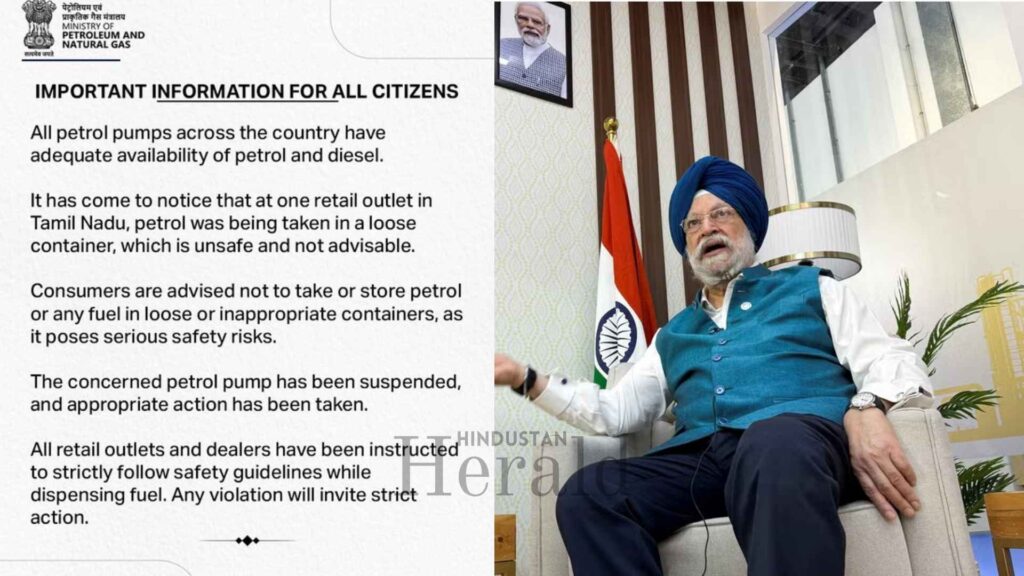
The Union Ministry of Petroleum and Natural Gas came out swinging on Saturday. Their message, posted on their official X account, was short and direct. Fuel is available. Stop panic buying. And please, do not store petrol in plastic bottles.
That Villupuram Video Explains Everything
If you have not seen the clip, here is what happens in it.
A motorcyclist at a petrol station in Villupuram, Tamil Nadu does not fill his bike. He holds out a big plastic water container instead. The attendant fills it. Then another person steps up with a 2-litre bottle and asks for the same treatment.
People watching this read it as proof that something is very wrong. Why else would someone fill a water jar with petrol, right?
But here is what the video actually proves. People are scared. And when people get scared, they do things that make the situation worse for everyone else.
Storing petrol in a plastic container is not just illegal, it is genuinely dangerous. Petrol vapour does not stay put inside plastic the way water does. It seeps. It builds up. In a closed car boot or a small room, that vapour can ignite from something as small as a static spark. The safety rules against this have existed for decades. You can only legally carry fuel in certified metal containers, not in anything plastic, not in water bottles, not in anything you picked up from your kitchen.
The Villupuram pump has been suspended. The ministry was clear about that. And the message to every other pump operator in the country is: crowd pressure is not an excuse.
Here Is the Actual Situation, Broken Down Simply
People have been mixing up two very different problems this week. Once you separate them, things become a lot clearer.
Problem one: LPG. This one is real. Cooking gas, the kind that fills the cylinders in your kitchen, is genuinely hard to get right now in parts of Tamil Nadu. Restaurants in Chennai, Madurai, and Coimbatore are shutting down partially. Some have switched to firewood. Some are using induction stoves. The Tamil Nadu Hotels Association says thousands of eateries are hit. Auto-rickshaws that run on gas have stopped plying in certain areas.
This is not rumour. This is actually happening.
Problem two: Petrol and diesel. This one is not real, at least not yet. IndianOil confirmed on Saturday that all 14 of its storage terminals in Tamil Nadu are fully stocked. Trucks are moving. Refineries are running. The State Level Oil Industry Coordinator, M. Annadurai, said refinery supply has not been disrupted at any point this week.
K. P. Murali of the Tamil Nadu Petroleum Dealers’ Association told PTI something worth reading twice. The state has fuel stock for at least three weeks. The queues you are seeing at some pumps exist because of panic, not because of a shortage.
When everyone rushes to buy something at the same time, it runs out. That does not mean there was a shortage to begin with. It means the panic created one.
Why Is Any of This Even Happening
The root of all this is sitting thousands of kilometres away, in the waters between Iran and Oman.
The Strait of Hormuz is a narrow stretch of sea through which roughly one-fifth of the world’s oil passes every day. India imports about 85 per cent of its crude. A big chunk of that comes through this route. When the US-Iran situation escalated recently, following what has been reported as Operation Epic Fury, the Strait became a source of serious anxiety for energy markets globally.
LPG got squeezed first. India buys a lot of its cooking gas through short-term shipping contracts, meaning the supply chain is more sensitive to disruptions than crude oil, which operates on longer, more stable agreements. When ships get rerouted or delayed, cooking gas cylinders are the first thing that dries up on the ground.
Petroleum Minister Hardeep Singh Puri has said India has a 70-day petroleum reserve. That is the government’s main reassurance right now, and it is a real number, built precisely for situations like this one.
The Government Moved Fast Today
This was not just a tweet and a press release kind of Saturday for the administration.
In Madurai, two people were arrested under the Goondas Act after police found 398 LPG cylinders hoarded at an open plot. These were subsidised domestic cylinders meant for household kitchens. They were being held back to sell on the black market at prices reportedly touching Rs 4,000 per cylinder. The going official rate is nowhere close to that figure.
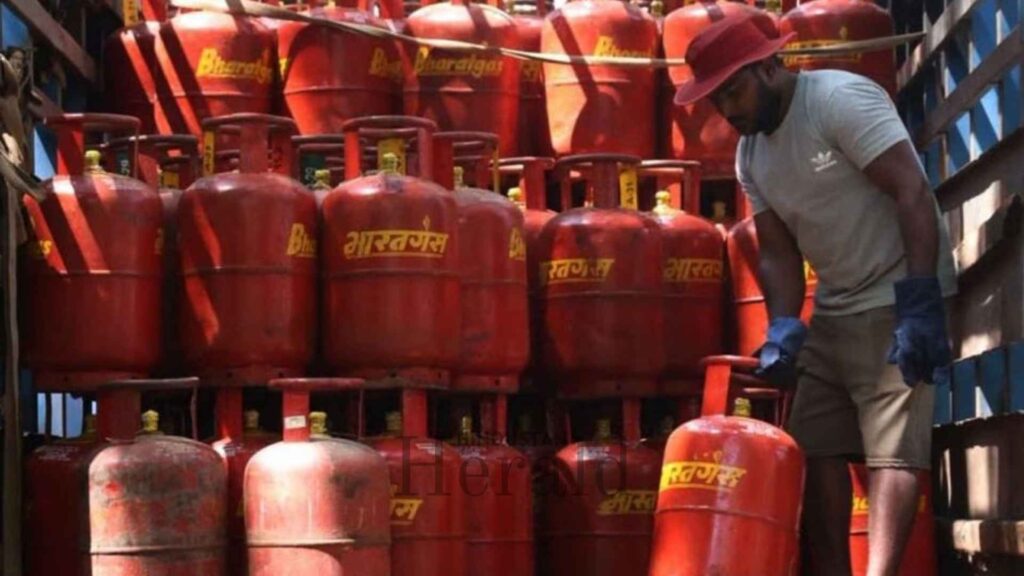
The Goondas Act is not something authorities pull out for minor offences. It is reserved for people seen as a persistent threat to public order. Using it for gas cylinder hoarding tells you how seriously the state is treating this.
Uttar Pradesh, Karnataka, and Haryana all launched coordinated raids on Saturday. The Centre has also capped LPG cylinder rebooking at 25 days, meaning you cannot book a fresh cylinder until 25 days after your last delivery. The idea is to stop bulk booking that leaves ordinary households empty-handed.
If You Are in UP or Delhi-NCR, Here Is Your Situation
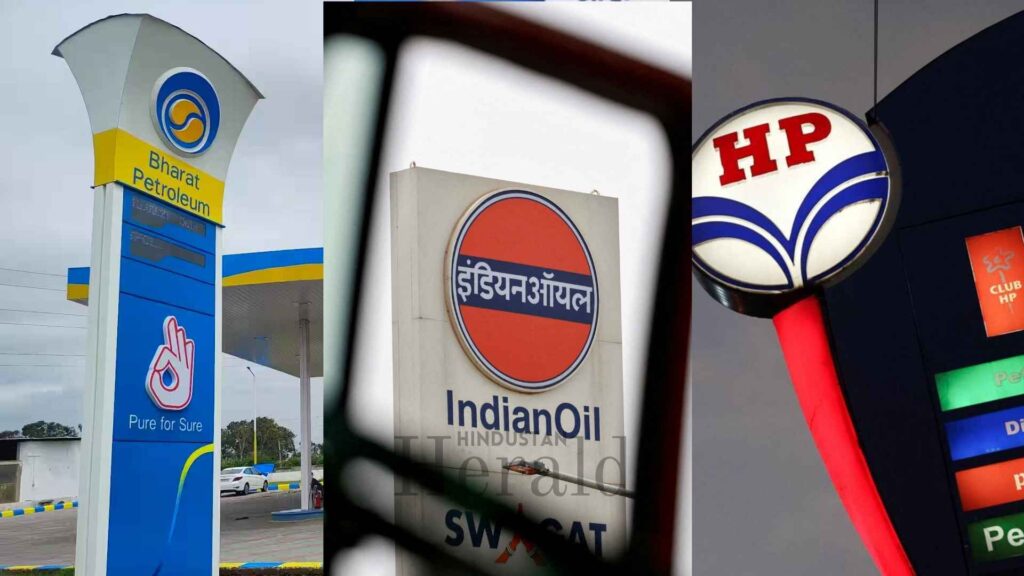
For people in Dadri and the surrounding areas in Uttar Pradesh, there is nothing to worry about on the petrol and diesel front. Prices are holding steady at around Rs 95.14 per litre for petrol and Rs 88.27 per litre for diesel. No queues. No disruption. Normal supply.
If you go to fill up today, just fill your tank. Do not carry extra containers. If you try to fill a spare can, the attendant is now legally required to say no, and most of them will.
That is all there is to it for this part of the country right now.
One Last Thing Worth Saying
What is playing out across India this week is something that has happened before and will happen again. A real problem, the LPG crunch, exists in one corner of the country. Social media turns it into a national emergency in people’s minds. And then the reaction to the imagined emergency starts creating real problems in places where none existed before.
The Villupuram video is a good example. Most people who watched it probably do not know the first thing about petroleum safety rules or terminal stockpiles. What they saw was a man filling a water jar with petrol, and they thought: if he is doing that, things must be really bad.
Things are not really bad. Not for petrol. Not for diesel. The LPG situation in Tamil Nadu needs fixing, and the government knows it. But the answer to that is better supply chain policy, not panic at pumps in states that have three weeks of stock sitting in terminals.
Hardeep Singh Puri has the 70-day buffer number on his side. Whether that is enough to calm a country that just watched a viral video of a man filling a plastic jar with petrol is a different question altogether.
For now, fill up your tank, keep the plastic bottles in the kitchen where they belong, and let the government deal with the Strait of Hormuz.
Stay ahead with Hindustan Herald — bringing you trusted news, sharp analysis, and stories that matter across Politics, Business, Technology, Sports, Entertainment, Lifestyle, and more.
Connect with us on Facebook, Instagram, X (Twitter), LinkedIn, YouTube, and join our Telegram community @hindustanherald for real-time updates.

Covers Indian politics, governance, and policy developments with over a decade of experience in political reporting.
- Ananya Sharma

- Ananya Sharma
- Ananya Sharma
- Ananya Sharma