
 By Ananya Sharma and Neeraj Kapoor
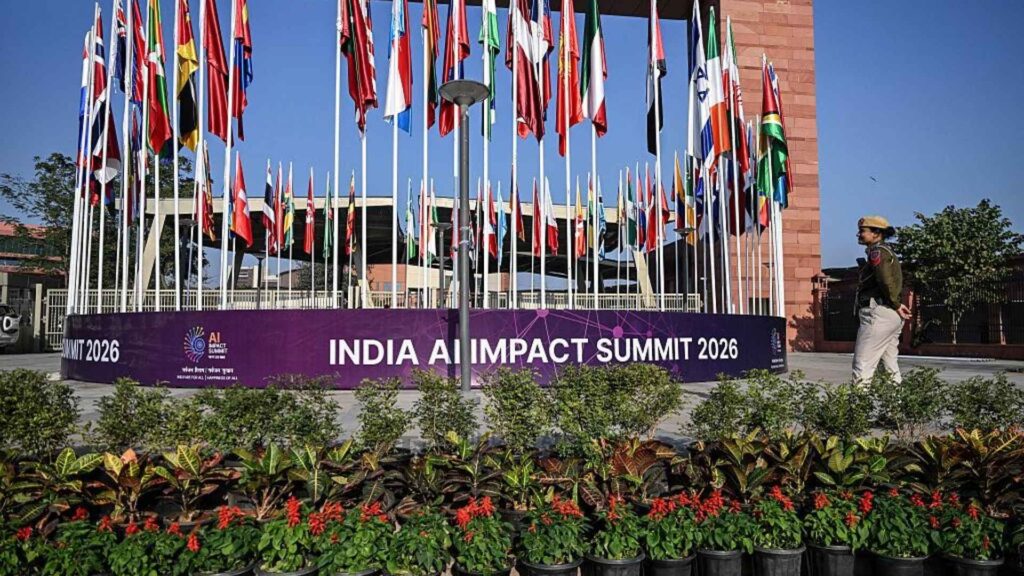
New Delhi, February 16: There was a particular kind of buzz inside Bharat Mandapam this morning. Not the polite, corporate applause of a routine tech event. It felt heavier than that. Policymakers in crisp bandhgalas. Startup founders are glued to their phones. Foreign delegates slipping in and out of side rooms. Artificial Intelligence has officially moved from PowerPoint slides to the centre of India’s economic conversation.
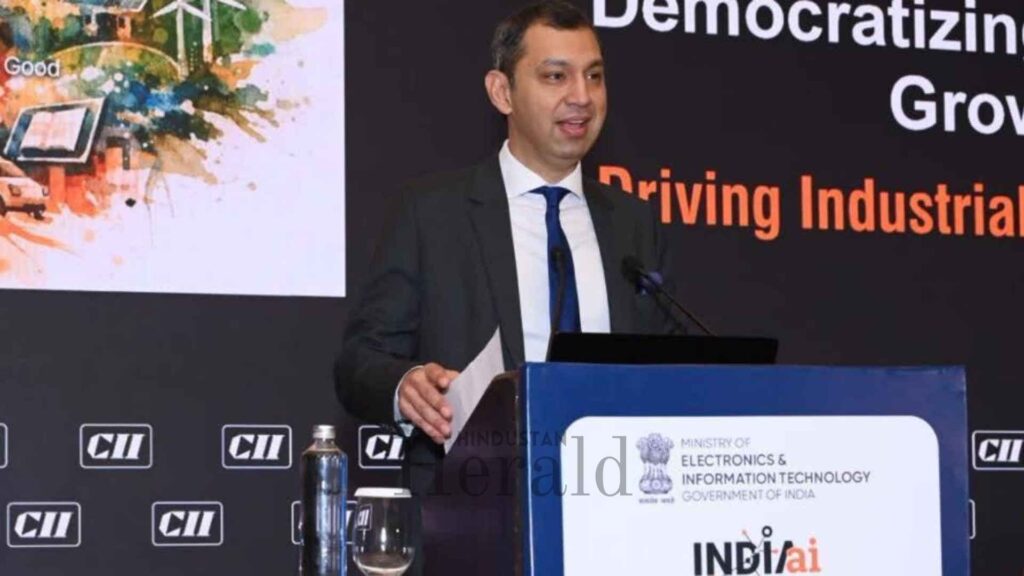
When Puneet Chandok, President of Microsoft India and South Asia, walked up to the podium at the India AI Impact Summit 2026, he did not open with jargon. He went straight at the fear.
“AI will not kill jobs. It will unbundle them.”
In a country where employment is not just an economic issue but a political one, that distinction matters.
What Does “Unbundling” Even Mean?
Strip away the conference lighting and the terminology, and Chandok’s point was fairly straightforward. Think of any job. A bank officer, a sales executive, a hospital administrator, even a journalist. No job is one single activity. It is a bunch of tasks tied together.
Some of those tasks are repetitive. Filling out forms. Sorting data. Checking compliance boxes. Drafting standard emails. Others require judgment. Deciding whether to approve a loan. Handling a difficult client. Making a diagnosis. Asking the right questions.
AI, Chandok argued, will handle more of the repetitive work. Humans will focus on the thinking, negotiating, and creative part.

It sounds reassuring. And for many white-collar workers already using AI tools to draft presentations or analyse spreadsheets, it feels familiar.
But outside the auditorium, the reality is more complicated. For years, entry-level jobs have been built around those repetitive tasks. If AI absorbs that layer, how does a fresher gain experience? That question did not get a simple answer.
What Chandok offered instead was a warning disguised as advice. If you are not learning AI, you are falling behind. Harsh, perhaps. But not inaccurate.
India Thinks It Has Seen This Movie Before
At one point, Chandok compared this moment to the rollout of UPI and Aadhaar. A decade ago, both seemed ambitious and uncertain. Today, they are so embedded in daily life that most Indians cannot imagine functioning without them.
The suggestion was clear. AI could follow a similar path. What feels advanced today could feel routine in five years.
He cited figures claiming that 92 per cent of knowledge workers in India are already using some form of AI tool. Even if that number invites scrutiny, there is no denying the broader trend. From small businesses using chatbots for customer service to large companies automating internal workflows, AI is quietly spreading.
Walk into any corporate office in Gurugram or Bengaluru and you will find employees experimenting with generative AI to write reports faster or summarise documents. It is no longer niche.
Still, adoption is not the same as leadership.
India has been an enthusiastic adopter of global technology before. The bigger challenge is building foundational products, owning intellectual property, and setting standards rather than simply consuming tools built elsewhere.
The 1000X Line That Made Heads Turn
Then came the boldest claim of the morning. Chandok predicted 1000X growth in the AI sector over the next three years.
It is the kind of number that makes people sit up. It also invites scepticism.
A thousand-fold increase in revenue in three years would be staggering. More realistically, the projection may refer to usage, deployment scale, or enterprise integration rather than pure financial expansion.
Even so, the ambition is clear. Indian businesses are being told not to think incrementally. The message is not “adopt AI slowly.” It is “redesign your business around it.”
That shift from “cloud first” to “AI first” thinking could change how companies hire, invest, and compete.
Manufacturing Intelligence Sounds Big Because It Is
Perhaps the most striking phrase from the speech was Chandok calling AI the first technology that can “manufacture intelligence.”
In simpler terms, AI allows companies to scale decision-making. Instead of one analyst reviewing thousands of transactions, a system can scan millions in seconds and flag anomalies. Instead of a teacher creating separate lesson plans manually, adaptive software can personalise content for each student.
It feels almost invisible when it works well. But the impact is real.
Intelligence, which was once tied strictly to human effort and education, is becoming embedded in systems. Factories. Hospitals. Supply chains. Customer service desks.
That raises a new kind of competition between nations. Not just who has cheaper labour or larger markets, but who has better data, stronger infrastructure, and clearer rules.
India has the scale. It has a massive, diverse population generating data in multiple languages and contexts. Whether it can turn that advantage into responsible innovation remains to be seen.
AI As A Colleague, Not Just A Tool
Another point that drew attention was the idea of AI agents acting as “digital colleagues.” According to Chandok, 59 per cent of Indian businesses are already exploring AI systems that do more than respond to prompts. These systems can plan tasks, coordinate workflows, and act semi-independently within set boundaries.
For a small business owner, that could mean software that handles inventory tracking, customer follow-ups, and even basic accounting alerts. For a large corporation, it might mean AI systems managing procurement cycles or compliance checks.
It sounds efficient. It also shifts responsibility.
If an AI agent makes a flawed decision, who answers for it? The company? The software provider? The employee overseeing it? India’s regulatory framework will have to catch up quickly.
Microsoft’s Big Bet On Indian Soil

Behind the speech is a serious financial commitment. Microsoft has announced plans to invest 17.5 billion dollars in expanding data centre capacity across India.
Why does that matter to the average person?
Because AI runs on computing power. If data centres are local, services become faster and more secure. It also reduces dependence on overseas infrastructure. In a world where technology and geopolitics are increasingly linked, that matters.
It also signals confidence. Global tech companies do not invest billions without expecting long-term returns.
The Global Audience Was Not Accidental
The presence of French President Emmanuel Macron and United Nations Secretary General António Guterres was not ceremonial. AI policy is becoming a global diplomatic issue.
Europe is pushing for strict regulation. The United States dominates advanced AI research. China is investing heavily in state-backed AI development.
India is trying to position itself somewhere distinct. Pro innovation, but aware of risks. Large enough to matter. Democratic enough to influence global standards.
That balancing act will not be easy.
The Real Test Is Not Technology. It Is People
Strip away the projections and the applause, and the real story is about people.
If AI truly unbundles jobs, millions of workers will need to adapt. That includes mid-career professionals, small-town graduates, and even government employees.
Skilling at India’s scale is a massive undertaking. Online courses alone will not solve it. Educational institutions must rethink curricula. Companies must invest in training rather than simply hiring ready-made talent. Government policy must support transition, especially for vulnerable sectors.
The demographic dividend India often celebrates can become a liability if skills do not keep pace with technology.
A Moment Of Confidence, And Caution
Walking out of the summit, one sensed optimism. India does not want to watch the AI revolution from the sidelines. It wants to shape it.
But ambition is the easy part. Execution is harder.
Will startups receive the support they need to build globally competitive AI products? Will smaller businesses outside metro cities have access to infrastructure? Will regulation protect citizens without strangling innovation?
Those questions will not be answered in a single summit.
For now, the message from Bharat Mandapam is clear. AI is not being framed as a threat to India’s workforce. It is being framed as an upgrade.
Whether that upgrade benefits millions or a privileged few depends on what happens next.
Stay ahead with Hindustan Herald — bringing you trusted news, sharp analysis, and stories that matter across Politics, Business, Technology, Sports, Entertainment, Lifestyle, and more.
Connect with us on Facebook, Instagram, X (Twitter), LinkedIn, YouTube, and join our Telegram community @hindustanherald for real-time updates.

Covers Indian politics, governance, and policy developments with over a decade of experience in political reporting.
- Ananya Sharma

- Ananya Sharma
- Ananya Sharma
- Ananya Sharma





Tech writer passionate about AI, startups, and the digital economy, blending industry insights with storytelling.
- Neeraj Kapoor
- Neeraj Kapoor
- Neeraj Kapoor
- Neeraj Kapoor




 Prakash Nair