
 By Rajiv Menon and Ananya Sharma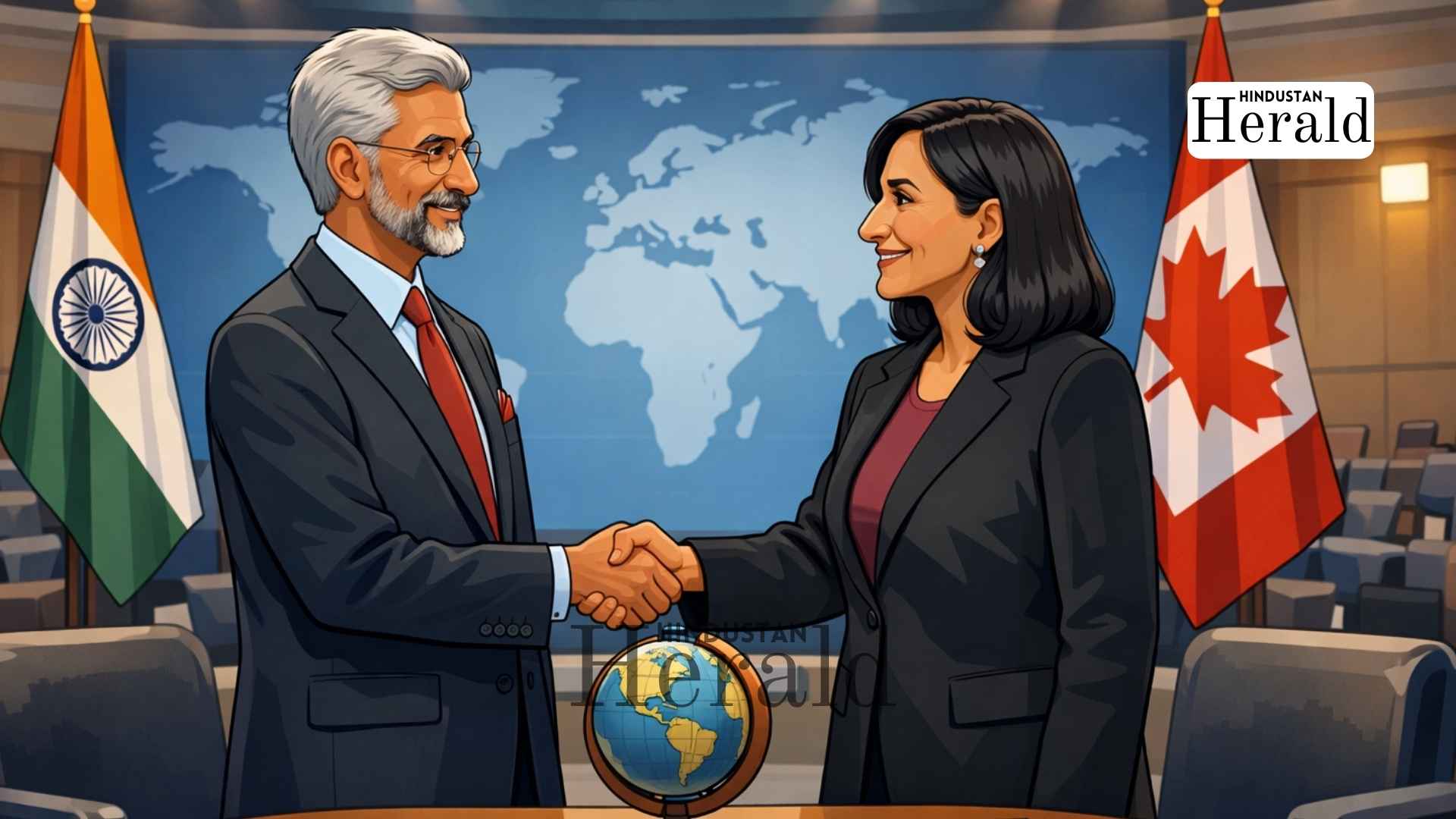
Munich/New Delhi, February 16: On the margins of the Munich Security Conference, amid the blur of motorcades and closed-door strategy sessions, a meeting took place that would have been unthinkable not too long ago.
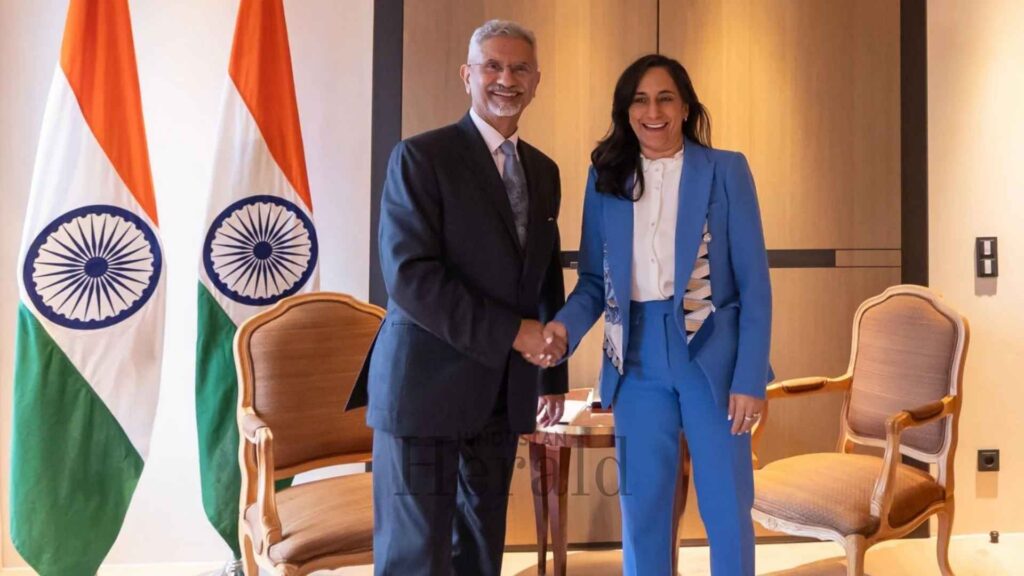
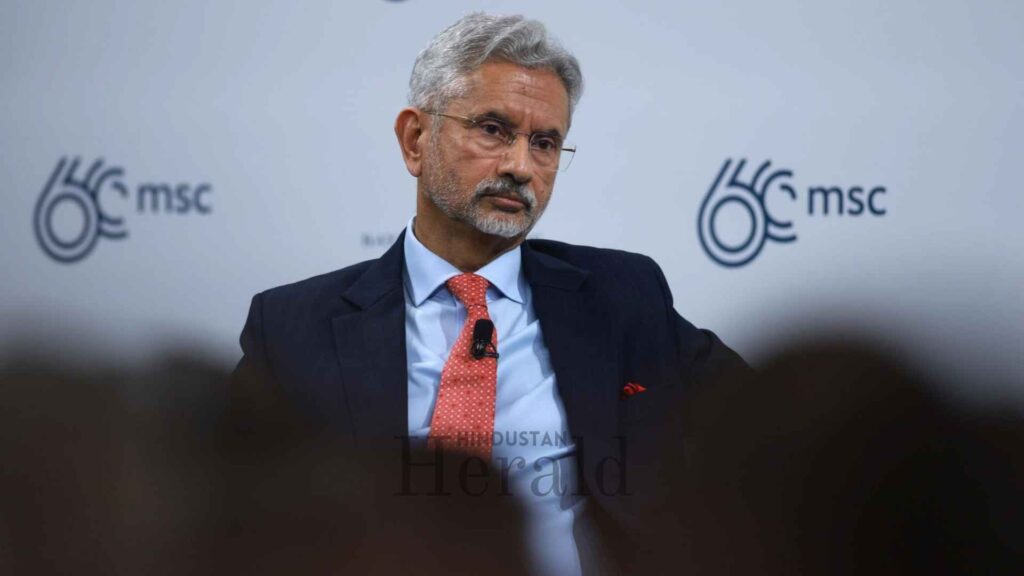
External Affairs Minister S. Jaishankar and Canada’s Foreign Minister Anita Anand sat down once again. Not for optics. Not for damage control. But, by all indications, to keep rebuilding something that nearly fell apart.
It was their fifth meeting since September 2025. That frequency alone tells its own story.
For a relationship that froze over during 2023 and much of 2024, this steady cadence of dialogue feels deliberate. Carefully managed. Quietly persistent.
And this time, the emphasis was unmistakable: trade, resilience, and a future that both sides now seem reluctant to jeopardize again.
Trade First, Politics Later
The official readouts spoke of “economic resilience.” In diplomatic language, that usually means one thing. Keep the commercial engines running even when politics wobble.
India and Canada are doing more than that. They are trying to deepen the engine room.
The ministers discussed diversifying trade, particularly in energy, technology, and critical minerals. Canada’s reserves of lithium, cobalt and other battery inputs have become strategically valuable in a world racing toward electric mobility. India, which is building its manufacturing ambitions at scale, needs reliable partners.
There is also a broader logic at play. Global supply chains remain fragile. Wars, sanctions, protectionism and climate disruptions have changed how governments think about trade. Dependence is now viewed as risk.
For Ottawa, India offers market size and growth that few advanced economies can match. For New Delhi, Canada offers stable capital and mineral security at a time when geopolitical lines are hardening elsewhere.
The numbers underscore the point. Bilateral trade reached about 23.66 billion dollars in 2024, despite diplomatic turbulence. Canadian pension funds never meaningfully pulled back from Indian infrastructure bets. Airports, highways, renewables, logistics parks. The money stayed.
In private, officials admit that continuity mattered. It kept the relationship from collapsing entirely.
The Road Map That Must Deliver
The two ministers also reviewed progress on the Joint Road Map for Canada-India Relations, unveiled in October 2025. The document itself is not flashy. Road maps rarely are. But it marks a shift from firefighting to structured planning.
Security cooperation is back on the table. So is cybersecurity. Counterterror coordination. Academic mobility. Investment frameworks.
These are not small adjustments. A few years ago, intelligence cooperation would have seemed politically radioactive. Now it is framed as necessary.
Still, rebuilding trust is not the same as announcing it.
Diplomats on both sides acknowledge that implementation will be the real test. Paper agreements are easy. Sustained alignment is not.
The Carney Factor
Attention is now turning to Canadian Prime Minister Mark Carney, who is expected to visit India in the coming weeks, according to reports circulating Monday.
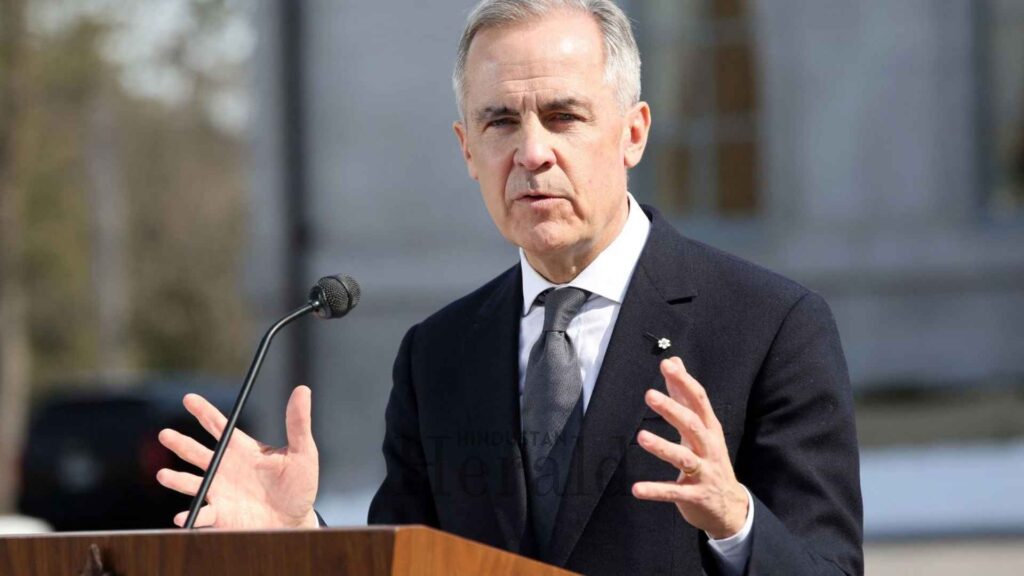
If the trip goes ahead, it will carry symbolism that neither side can ignore. Prime ministerial visits signal commitment at the highest political level. They also carry domestic implications.
Carney, who has positioned himself as economically pragmatic and globally engaged, understands India’s weight in the Indo-Pacific calculus. India, for its part, has shown it is willing to compartmentalize disagreements when strategic benefits are clear.
One senior Indian official described the expected visit as the moment the relationship shifts from “stabilization” to “expansion.” The phrasing is telling. It suggests the past year was about preventing further damage. The next phase is about rebuilding capacity.
But caution remains. Both governments know how quickly narratives can spiral.
CEPA Back On The Table
Perhaps the most tangible development is the expected resumption of negotiations on the Comprehensive Economic Partnership Agreement, or CEPA.
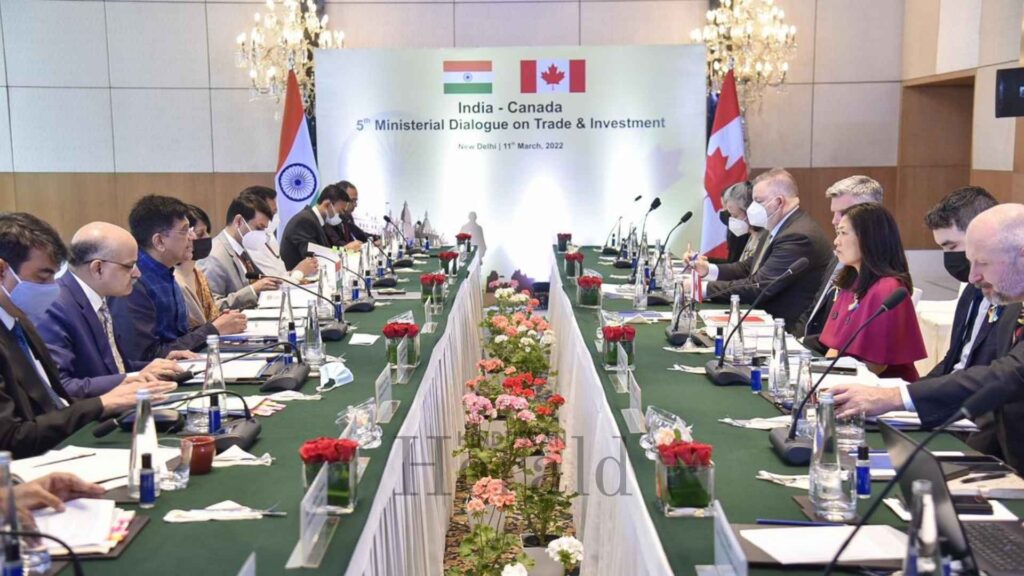
Indian High Commissioner Dinesh Patnaik has indicated that talks could formally restart by late February or early March. The goal is ambitious. Double bilateral trade to 50 billion dollars by 2030.
Ambition is easy to state. Execution is harder.
Tariff structures, agricultural sensitivities, professional mobility, and digital trade rules. These are complex files even between friendly governments. Between partners emerging from a period of strain, they require extra political management.
Yet the fact that negotiations are restarting at all is significant. CEPA had effectively stalled during the diplomatic chill. Its revival suggests both sides see more upside in cooperation than leverage in confrontation.
Energy And AI As Strategic Glue
The Munich meeting comes weeks after a joint statement on energy cooperation in late January. While details remain limited, officials described it as a framework for deeper collaboration on clean hydrogen and renewable integration.
Energy diplomacy has become the connective tissue of many modern partnerships. It is less politically combustible and more forward-looking.
There is also technology. Canadian startups and researchers are participating in the India AI Impact Summit opening today in New Delhi. Artificial intelligence may not be the first area that comes to mind in India-Canada relations, but it is quietly emerging as one of the most promising.
Canada’s research ecosystem is mature. India’s digital scale is unmatched. If aligned properly, the combination could be formidable.
But technology cooperation rests on trust. Data governance, intellectual property protection and regulatory harmonization will eventually need clearer guardrails.
A Relationship That Learned The Hard Way
It would be naïve to describe this moment as a full reset. The scars of the past few years have not vanished. Public opinion in both countries hardened during the peak of tensions. Visa suspensions disrupted students and families. Political rhetoric left its mark.
What has changed is the calculation.
Both governments now appear to accept that prolonged estrangement serves neither side. The global environment is too uncertain. The economic stakes are too high. And the diaspora connections between India and Canada are too deep to ignore indefinitely.
There is also a broader shift in how countries are approaching diplomacy. Pragmatism is back in fashion. Ideological purity rarely survives contact with economic reality.
In Munich, there were no dramatic announcements. No grand reconciliatory gestures. Just two ministers continuing a conversation that might have collapsed not long ago.
Sometimes that is how relationships recover. Quietly. Gradually. Without fanfare.
For now, the tone is measured optimism. The next few months will determine whether that optimism translates into structural change.
If CEPA talks gain momentum and Carney’s visit materializes, the thaw may harden into something sturdier. If not, the relationship could drift again into cautious distance.
Diplomacy often unfolds in increments invisible to the public. This week’s meeting was one of those increments.
It may not have grabbed headlines globally. But for India and Canada, it could mark the point where recovery stopped being tentative and started becoming intentional.
Stay ahead with Hindustan Herald — bringing you trusted news, sharp analysis, and stories that matter across Politics, Business, Technology, Sports, Entertainment, Lifestyle, and more.
Connect with us on Facebook, Instagram, X (Twitter), LinkedIn, YouTube, and join our Telegram community @hindustanherald for real-time updates.

Specializes in South Asian geopolitics and global diplomacy, bringing in-depth analysis on international relations.
- Rajiv Menon

- Rajiv Menon
- Rajiv Menon
- Rajiv Menon





Covers Indian politics, governance, and policy developments with over a decade of experience in political reporting.
- Ananya Sharma
- Ananya Sharma
- Ananya Sharma
- Ananya Sharma




 Sandeep Verma
  Prakash Nair