
 By Prakash Nair
Ahmedabad, March 8: The numbers are not yet final, but the story already is. Inside the Narendra Modi Stadium on Sunday evening, India played a brand of cricket so commanding, so unapologetically brutal, that New Zealand’s players were left doing something cricketers rarely do in a T20 World Cup final: they were offering each other consolation mid-match, long before the last ball had been bowled.
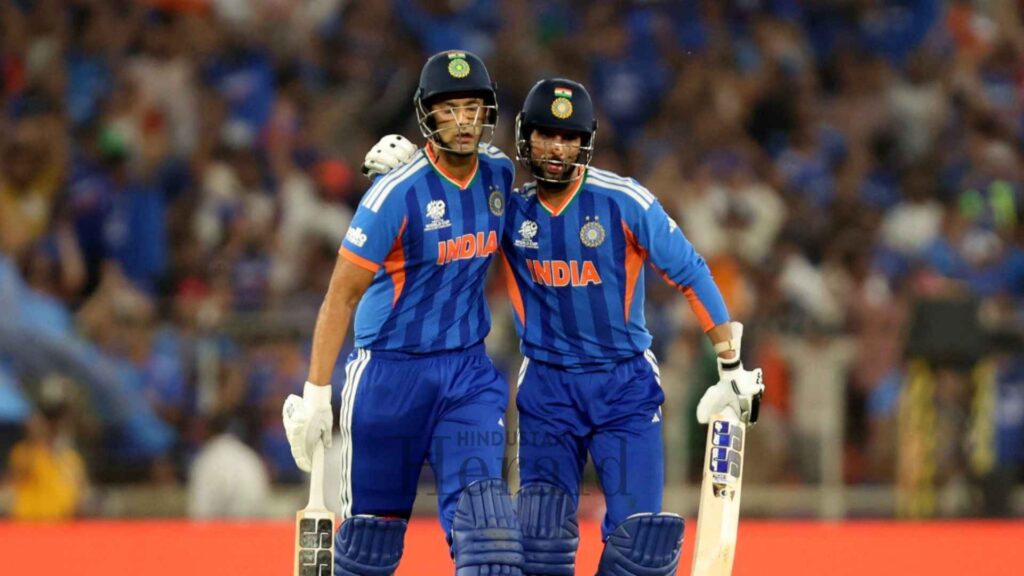
This was not just a batting performance. It was a statement. A civilisational argument, if you will, for why this Indian side deserves to stand alongside the greats of the format. When the final delivery of India’s innings was hit clean out of the ground by Shivam Dube off James Neesham, the scoreboard read 255 for 5, a number that will now be etched into every record book that cricket produces. It is the highest total ever posted in a T20 World Cup final.
A Morning Starts At Night

New Zealand captain Mitchell Santner won the toss and chose to field. On most nights, that is a reasonable call in Ahmedabad. The ground has historically been unkind to chasing sides, particularly in knockout cricket. According to ESPNcricinfo, only two of the last twelve night matches at this ground across internationals and the Indian Premier League have been won by the team batting second. Santner knew this. What he did not know was the kind of evening that was about to unfold.
Abhishek Sharma walked to the crease and spent precisely two deliveries looking cautious. After that, the evening belonged entirely to him. He ended the powerplay with a 50 off just 18 balls, the fastest half-century of the entire tournament, getting there with six fours and three sixes, as per ICC’s live coverage. In just six overs, India had raced to 92 for 0, a score that any side would be satisfied reaching at the halfway point of their innings.

The opening stand between Abhishek and Sanju Samson was, in itself, a record. As reported by the ICC, the two became the first opening pair in history to register a 50-plus partnership in a T20 World Cup final. That they did it while making the Black Caps’ attack look entirely toothless only deepened the wound. Matt Henry alone bowled four wides in the fifth over, contributing to eight extras in the powerplay overall, the most New Zealand have ever conceded in the first six overs of a T20 international.
Samson, The Man For The Moment
If Abhishek provided the ignition, Sanju Samson built the engine. Walking in at the top of the order after earning his first-choice spot with back-to-back masterclasses against West Indies and England in the knockouts, Samson batted with that particular brand of controlled devastation that only the best manage in World Cup finals.
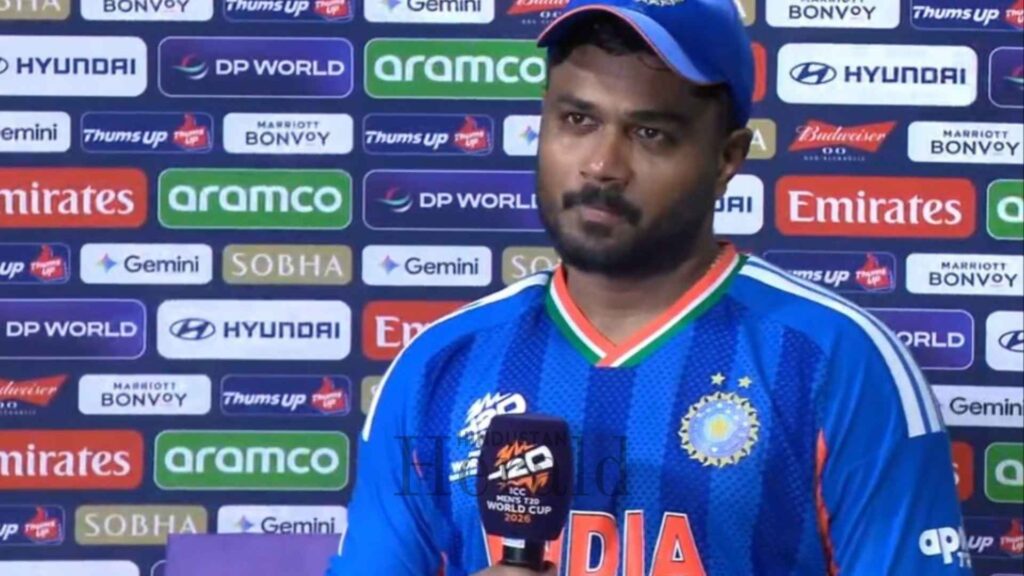
His knock of 89 off 46 balls, studded with 5 fours and 8 sixes and carrying a strike rate of 193.47, is now the highest individual score ever recorded in a T20 World Cup final, according to ESPNcricinfo. It is a number made more remarkable by the context. This was not some group stage game against a minnow. This was the final, under the most extreme pressure, in front of 130,000 people in his team’s home country. Samson fell to Neesham, caught at the boundary, and received a prolonged standing ovation that lasted well past the next delivery.
After losing Samson, Ishan Kishan arrived and did not waste a ball. He and Samson had shared a 105-run partnership off just 48 deliveries for the second wicket, as per ICC’s official coverage, a partnership that effectively put the match beyond New Zealand’s realistic grasp. Kishan’s own 50 came off 23 balls and he finished at 54 from 25, all swagger and timing, the kind of innings that makes it hard to believe this player had been dropped at the start of the tournament.
The Last Over That Settled Everything
There was a small wobble. Neesham bowled what Outlook India described as a “triple-wicket over,” taking three wickets in quick succession to drag India back to something approaching a tense finish. Hardik Pandya fell for 18 off 12. The momentum, briefly, swung.
And then Shivam Dube walked out.
The left-hander, known for his ability to destroy any plans a team may have had in the death overs, faced up to Neesham in the final over. What followed was 24 runs in six balls, including three fours and two sixes, to close the innings at 255 for 5. Dube finished unbeaten on 26 off just 8 deliveries. That final over, bowled by the same man who had taken three wickets to briefly rescue New Zealand’s bowling, ended up producing the runs that may well determine who lifts the trophy.
A Chase Nobody Believes In
New Zealand’s reply has been, at best, a valiant attempt to delay the inevitable. The required run rate of 17.5 from the outset was always going to demand an almost supernatural performance from their top order, and that top order disintegrated almost immediately.
Axar Patel, playing on his home ground in Ahmedabad to the sort of crowd that makes the ground shake, removed Finn Allen early, caught at long-on. He then castled Glenn Phillips with an arm ball that Phillips misjudged completely, and the crowd’s reaction was less celebration than confirmation of what they already suspected. Jasprit Bumrah then did something that has become almost routine for him in knockout cricket: he dismissed a batter off the first ball he bowled.
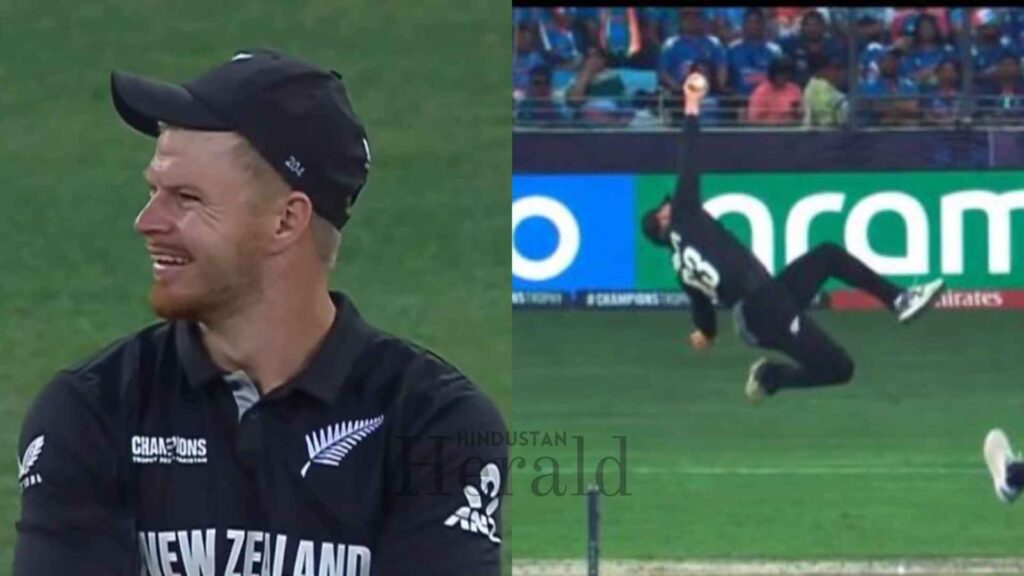
Rachin Ravindra flicked to leg side and Ishan Kishan took a diving catch that will feature in highlight reels for some time, as per ESPNcricinfo’s live coverage. Bumrah, in doing so, became the highest wicket-taker for India in T20 World Cup history with 37 scalps, overtaking Arshdeep Singh’s 36.
Tim Seifert was the only New Zealand batter who refused to accept the script. He batted with intelligence and aggression, working the ball into gaps, manufacturing boundaries when boundaries seemed impossible, and brought up a 23-ball half-century that gave Kiwi fans something to cheer.
As reported by Outlook India, his four fifty-plus scores in T20 World Cups are now the most by any New Zealand batter in the tournament’s history. He was eventually dismissed by Varun Chakaravarthy, and with him went New Zealand’s last real flicker of hope.
At last count, New Zealand sat at 106 for 5 after 11 overs, needing 150 more runs from 54 balls, with Daryl Mitchell and Mitchell Santner at the crease. The required rate is north of 16. In the conditions, against this bowling attack, it is not just difficult. It is a mathematical stretch.
What This Means For Indian Cricket
The records, as they stand, are staggering. India have become the first team in history to post 255 in a T20 World Cup final. If they hold on, and all indications suggest they will, they will become the first nation to win three T20 World Cups, the first to successfully defend the title in back-to-back editions, and the first host nation ever to win the tournament on home soil, as confirmed by the ICC. These are not incremental achievements. Each one carries genuine historical weight.
There is also a human story woven through the cricket. MS Dhoni and Rohit Sharma, the two men who captained India to their previous two T20 World Cup titles, walked out together to carry the trophy ahead of the match, as captured by Star Sports and shared widely. The gesture was deliberate and the crowd understood it immediately. This team has continuity running through it, from the 2007 generation that started it all to the side that won in the Caribbean in 2024, and now this squad pushing for something nobody has managed before.
Suryakumar Yadav, India’s captain, had sent a message to his players before the match: “Be courageous in tough situations,” he told them, as quoted by ESPNcricinfo. His batters listened. His bowlers, so far, have taken it to another level entirely.
For New Zealand, this is a painful night in a long history of painful nights at ICC events. They are the only major Test nation never to have won either a 50-over or 20-over World Cup. According to DNA India, the two teams share a history of final-stage meetings going back to 2000, and on each occasion the result has gone in New Zealand’s favour or India’s favour in alternating waves. This time, it has the feeling of a settling of accounts at scale.
Still, as Santner and Mitchell occupy the crease at the Narendra Modi Stadium, the match is technically ongoing. Cricket, on rare occasions, does produce miracles. For India, though, the tone of the evening suggests they are not in the business of allowing one.
The trophy is, for all practical purposes, already blue.
Stay ahead with Hindustan Herald — bringing you trusted news, sharp analysis, and stories that matter across Politics, Business, Technology, Sports, Entertainment, Lifestyle, and more.
Connect with us on Facebook, Instagram, X (Twitter), LinkedIn, YouTube, and join our Telegram community @hindustanherald for real-time updates.

Sports reporter covering cricket, football, and Olympic disciplines, with on-ground event experience.
- Prakash Nairhttps://hindustanherald.in/authors/prakash/

- Prakash Nairhttps://hindustanherald.in/authors/prakash/
- Prakash Nairhttps://hindustanherald.in/authors/prakash/
- Prakash Nairhttps://hindustanherald.in/authors/prakash/




 Arun Upadhayay