
 By Ananya Sharma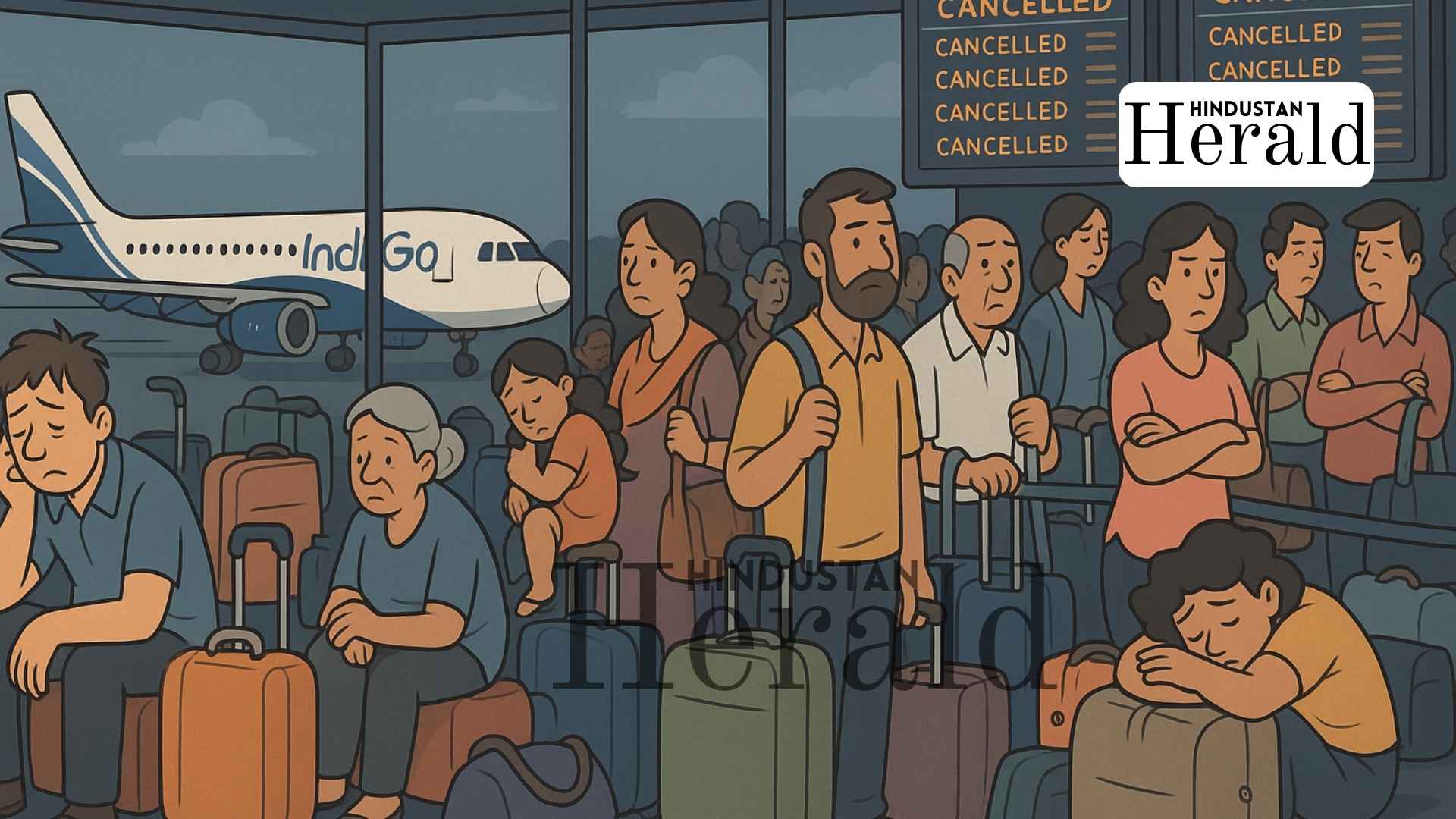
New Delhi, December 6: The trouble started early in the morning and kept piling up through the day. By the time Friday afternoon rolled in, IndiGo had already scrubbed well over 400 flights, mostly at the big four airports Delhi, Mumbai, Bengaluru, and Hyderabad. The figures kept shifting every hour, and honestly, so did the mood inside terminals. People walked in expecting delays, not outright cancellations plastered across departure boards.
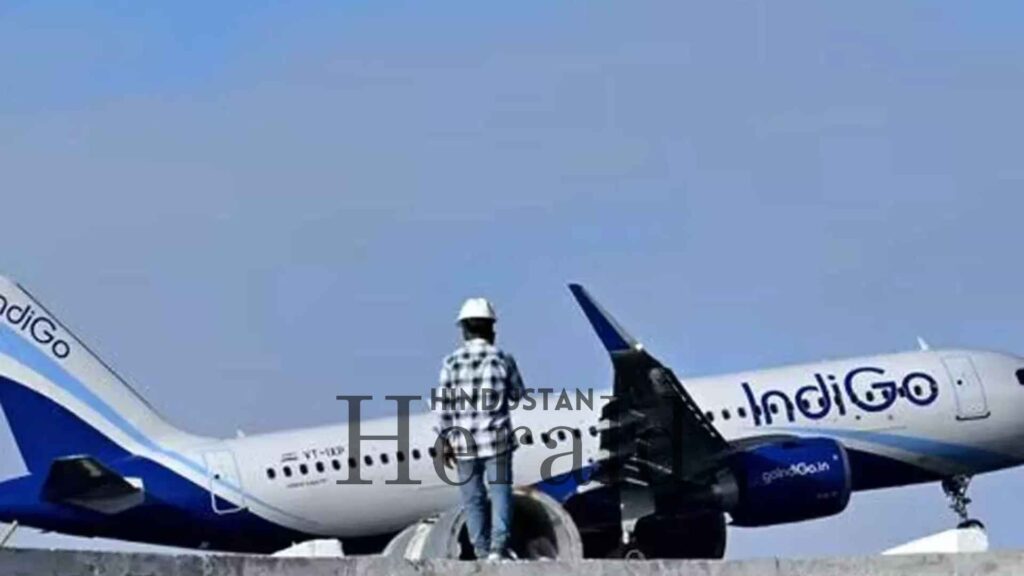
Some of the worst scenes came from places that usually sit outside national aviation chatter. Pune had roughly forty odd cancellations, Chennai not far behind, and Jaipur clocked around two dozen. A few smaller airports reported scattered last-minute scrubs. Friday started to feel like a day when Indian aviation hit a pothole big enough to jolt the entire network.
A Problem Everyone Saw Brewing, Just Not This Fast
The airline has been wrestling with a crew shortage, and while that message has done the rounds for months, the crisis finally broke through once the DGCA’s new rest and duty rules kicked in. These weren’t minor tweaks. Night duty restrictions tightened, required rest periods grew longer, and IndiGo’s rosters, which were already stretched thin just didn’t hold.
The Economic Times reported that fatigue concerns had been simmering in the cockpit community for weeks. Perhaps longer. Pilots were reportedly doing consecutive heavy-duty days, and the new limits basically shut the door on any wiggle room the airline hoped to use. When rules change overnight, the system needs slack. IndiGo didn’t have enough of it.
Once a few crew blocks fell apart, the cancellations snowballed. And when the country’s largest carrier sneezes, everyone else reaches for tissues.
Airports Packed, Patience Thinning
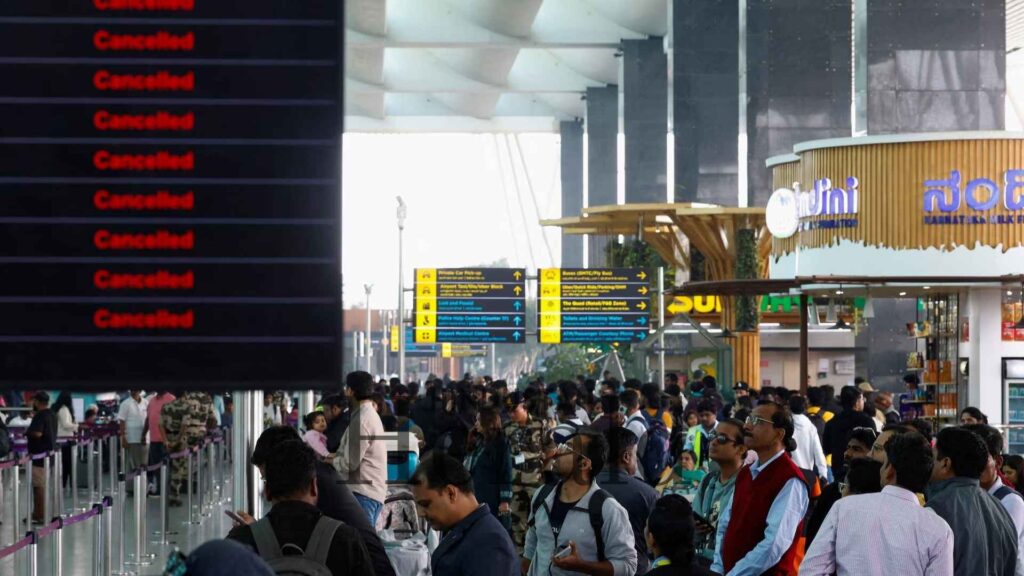
Anyone who was at Delhi Airport on Friday would describe the atmosphere the same way: loud, confused, and tiring. People hunched over luggage, scrolling through their phones every few seconds. The departure screens kept updating, but mostly with more red. Mint described passengers sitting on the floor, some in complete disbelief, others trying to explain to bosses and families why they weren’t going anywhere.

In Bengaluru, travellers said they had been stuck in lines that barely moved. One family returning from a wedding said they couldn’t find alternate tickets because fares had shot up instantly. Refunds were automatic, which helped on paper, but for many who had commitments to return to, the money wasn’t the problem. It was being stranded without a plan.
Railways appeared to sense the panic and moved in quickly with additional coaches on busy routes. The shift from airport queues to train stations was abrupt but necessary for a lot of people who simply needed to move, no matter how.
DGCA Steps In, But Not Without Raising Eyebrows
By mid-afternoon, the DGCA was already allowing a one-time relaxation of the stricter duty norms, specifically for IndiGo. It was a rare move. Uncomfortable too. Regulators don’t usually alter safety rules this quickly, but the scale of the disruption left them with few options.

A four-member panel has been set up to dig into what went wrong and how it swelled to this level. Was the transition to the new rest rules too abrupt? Did IndiGo misjudge its staffing? Did pilot fatigue reports go unaddressed? The upcoming weeks will likely bring a messy conversation on these questions.
Meanwhile, IndiGo’s CEO Pieter Elbers has said the airline expects to pull itself together between December 10 and December 15. It is a tight window, and while possible, seasoned observers know operational chaos doesn’t clear instantly. It lingers.
Why This Was Never Just IndiGo’s Problem
A point that keeps resurfacing today is this: IndiGo isn’t just another airline. It carries over sixty percent of India’s domestic flyers. If it stops, even for a day, the whole network feels the tremors. Fares on other airlines shoot up, airport traffic becomes erratic, and travellers get trapped in a domino effect.

Aviation experts have warned for a while that India’s sky-high passenger demand isn’t being matched with proportionate investment in training pipelines or rest safeguards. When everything is stretched to capacity, one small change, an updated regulation, an unexpected spike in demand,or a rostering slip can knock things over.
The DGCA’s new norms were brought in precisely because pilots were reporting fatigue. Rolling them back even temporarily risks sending mixed messages. But regulators also know what tens of thousands of stranded passengers look like. It is a no win situation.
Looking Beyond The Weekend
IndiGo is already trying to stabilise its busiest routes first. Delhi, Mumbai, Bengaluru, and Hyderabad are likely to see a gradual recovery sooner than regional sectors, where cancellations may linger well into next week.
Airports have begun advising passengers to arrive early and to brace for last-minute changes. Travellers seem resigned at this point. People just want predictability, even if it comes slowly.
Aviation circles will spend weeks processing how a roster imbalance spiralled into a national travel crisis. But for now, the focus is simpler: keep people moving and hope the next few days don’t bring fresh surprises.
Stay ahead with Hindustan Herald — bringing you trusted news, sharp analysis, and stories that matter across Politics, Business, Technology, Sports, Entertainment, Lifestyle, and more.
Connect with us on Facebook, Instagram, X (Twitter), LinkedIn, YouTube, and join our Telegram community @hindustanherald for real-time updates.

Covers Indian politics, governance, and policy developments with over a decade of experience in political reporting.
- Ananya Sharma

- Ananya Sharma
- Ananya Sharma
- Ananya Sharma




 Rajiv Menon and Ananya Sharma