
 By Ananya Sharma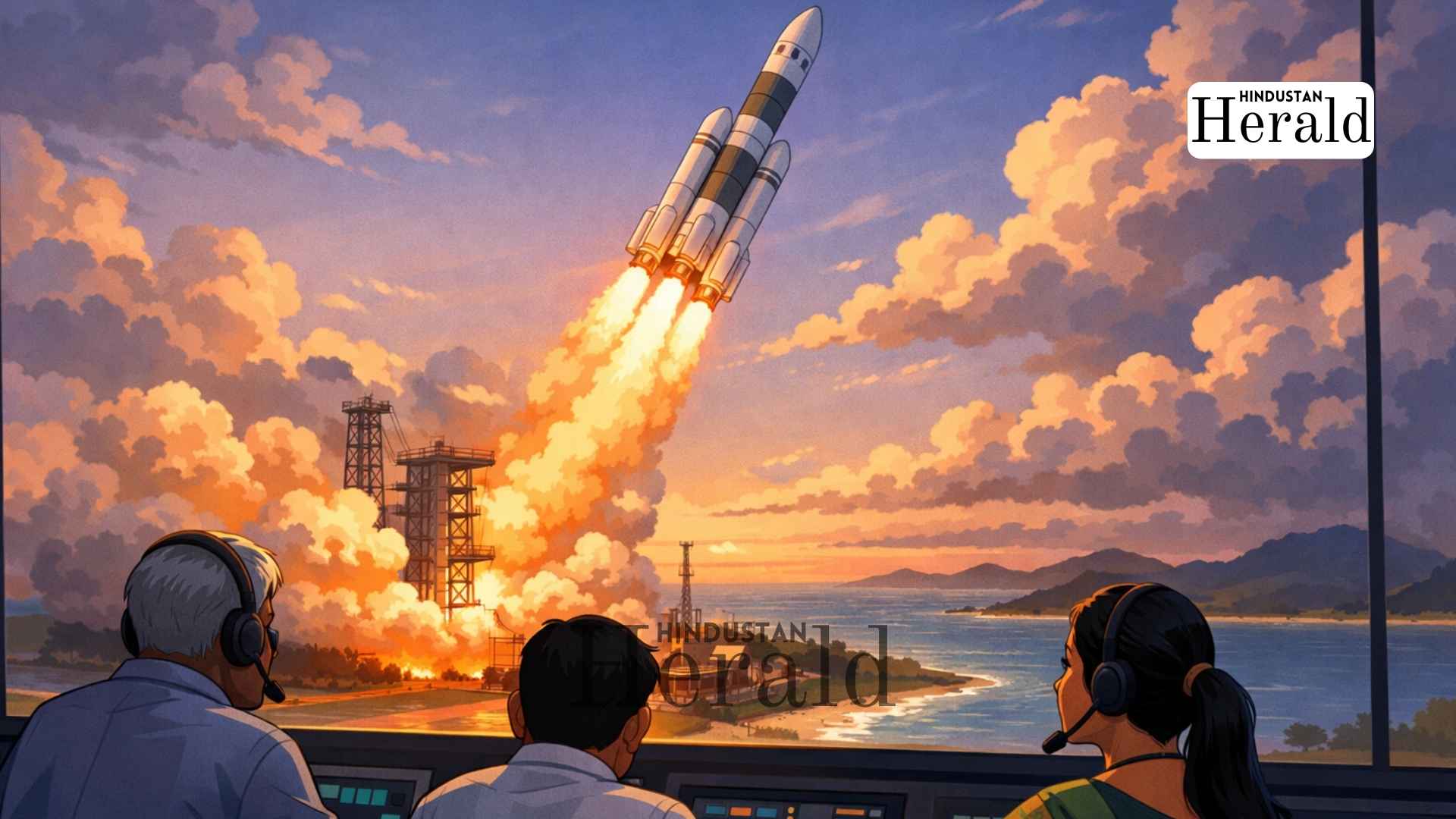
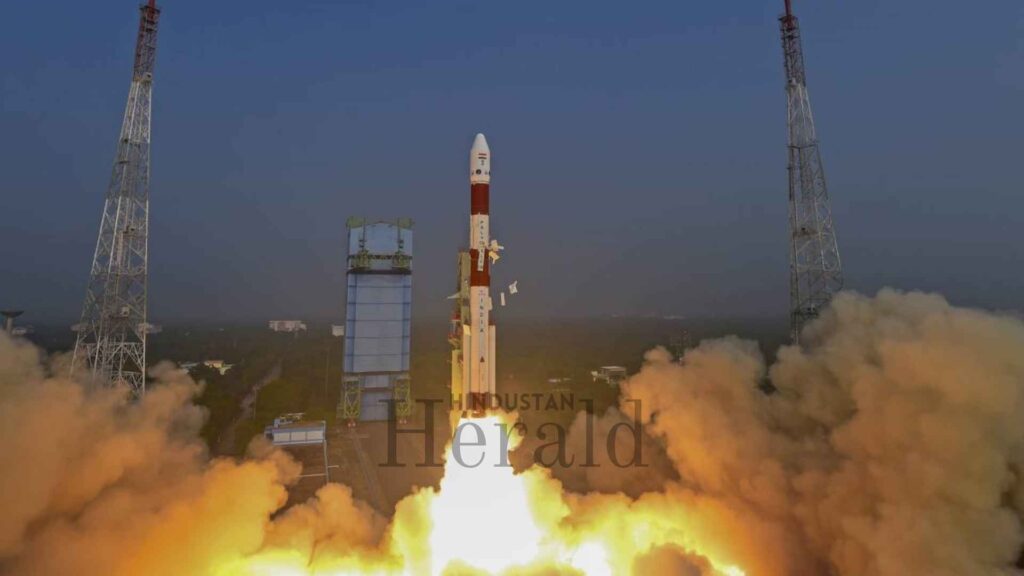
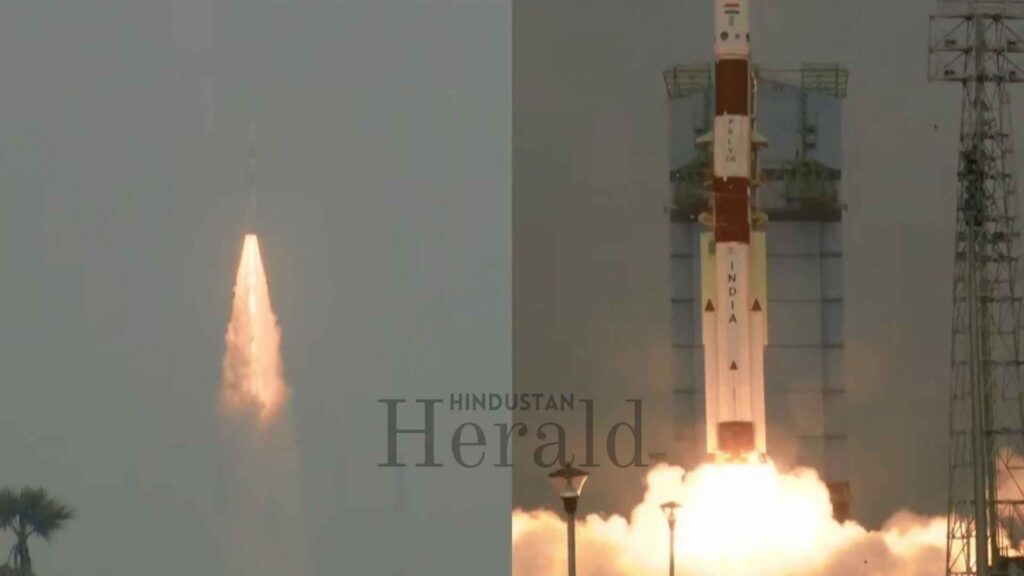
Sriharikota, January 12: For a brief stretch on Monday morning, everything felt normal at Sriharikota. The countdown ticked away, the familiar flame burst lit up the coast, and PSLV-C62 climbed steadily into the sky at 10:18:30 IST. Engineers watched their screens. Visitors craned their necks. Viewers across the country saw what looked like another clean launch by India’s most dependable rocket.
Then, quietly, the mood changed.
A short while into the flight, Indian Space Research Organisation (ISRO) confirmed that something was not right. A deviation had been noticed during the third stage of the mission. There was no explosion. No dramatic visuals. Just a line of technical words that, for those who know rockets, carried heavy meaning.
By the end of the day, it had become increasingly clear that all 16 satellites onboard were most likely lost.
A Launch That Looked Perfect Until It Wasn’t
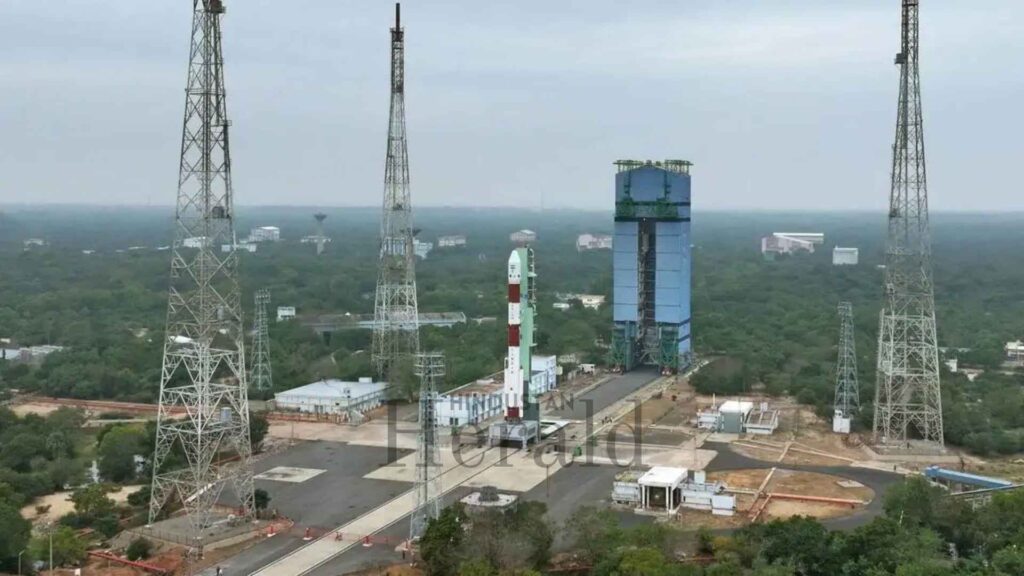
The Polar Satellite Launch Vehicle, standing 44.4 metres tall, lifted off exactly as planned from the Satish Dhawan Space Centre. The rocket was flying in its PSLV-DL configuration, equipped with two solid strap-on motors. The first stage fired cleanly. The second stage followed without issue.
Nothing seemed out of place.
The problem surfaced after the third stage ignited. This stage, while less dramatic to watch, is crucial. It fine-tunes the rocket’s path, making sure the satellites reach the right height and angle around Earth. According to ISRO, the rocket drifted off its planned trajectory during this phase.
ISRO has not yet detailed what caused the deviation. Officials have said telemetry data is being studied closely. What is known is that the satellites did not reach their intended sun-synchronous polar orbit, and there has been no confirmation of successful satellite separation.
In space missions, that combination usually points to only one outcome.
What Was Lost In This Mission
The main payload of PSLV-C62 was EOS-N1 (Anvesha), a hyperspectral Earth observation satellite developed by the Defence Research and Development Organisation (DRDO). In simple terms, Anvesha was designed to “see” the Earth in far more detail than ordinary satellites, picking up subtle changes in terrain, vegetation, and activity.
Such satellites are used for a wide range of purposes, from border surveillance and national security to disaster response and environmental monitoring.
Along with Anvesha were 15 smaller satellites, many built by Indian startups, universities, and international partners. These were not just experiments. For some teams, these satellites represented years of work, tight budgets, and high expectations.
Their loss is not just a technical statistic. It is a human blow to scientists, students, entrepreneurs, and customers who trusted the launch.
Why This Failure Hurts More Than Usual
PSLV is not just any rocket. Within ISRO, it is often described as the workhorse. It has flown more than six dozen times, placing satellites into orbit with remarkable consistency.
This was the 64th flight of PSLV, and its record includes missions that reshaped India’s space reputation, including Chandrayaan-1 and the Mars Orbiter Mission. In 2017, PSLV stunned the world by launching 104 satellites in a single mission, a feat that still stands out globally.
That history is why Monday’s anomaly feels unsettling.
It also comes uncomfortably close to PSLV-C61, a mission in 2025 that was aborted due to technical concerns before liftoff. PSLV-C62 was seen, quietly but clearly, as a way to put those worries behind.
Instead, it has reopened questions.
The Commercial Angle And Real Consequences
The mission was carried out under NewSpace India Limited (NSIL), ISRO’s commercial arm. This was NSIL’s ninth dedicated commercial PSLV mission, part of a larger push to make India a reliable launch hub for small satellites worldwide.
That ambition does not vanish overnight. But setbacks like this matter.
Commercial customers will now wait for answers. Insurance companies will examine the failure report line by line. Future clients may hesitate, at least briefly, before signing launch contracts.
People inside the space sector point out that failures happen everywhere. SpaceX has had them. Europe’s Ariane programme has had them. What matters is how quickly the issue is understood and fixed.
Still, reputation in spaceflight is built slowly and tested brutally.
Is This A Deeper Problem Or Just Bad Luck
Within India’s space community, opinions are cautious. Some engineers argue that solid rocket motors, especially in upper stages, are among the hardest systems to perfect. A tiny flaw can have oversized consequences.
Others note that ISRO is currently juggling an unusually heavy workload. Human spaceflight preparations, Earth observation missions, planetary science, and commercial launches are all running in parallel. That level of activity leaves little room for error.
ISRO has not pointed fingers or offered theories. As always, the agency has said it will rely on data, not speculation.
What Happens Now
A failure analysis committee is expected to review the mission in detail, reconstructing the flight second by second. Only after that will ISRO decide when PSLV will fly again.
For now, the status of EOS-N1 Anvesha and the 15 co-passenger satellites remains officially unconfirmed, though few in the industry expect a recovery.
Monday morning began with noise, fire, and pride. It ended in silence, with analysis charts and unanswered questions. For ISRO, the task ahead is familiar but demanding: understand what went wrong, fix it thoroughly, and prove once again that even after a stumble, India’s space programme knows how to stand back up.
Stay ahead with Hindustan Herald — bringing you trusted news, sharp analysis, and stories that matter across Politics, Business, Technology, Sports, Entertainment, Lifestyle, and more.
Connect with us on Facebook, Instagram, X (Twitter), LinkedIn, YouTube, and join our Telegram community @hindustanherald for real-time updates.

Covers Indian politics, governance, and policy developments with over a decade of experience in political reporting.
- Ananya Sharma

- Ananya Sharma
- Ananya Sharma
- Ananya Sharma




 Sandeep Verma
  Arun Upadhayay