
 By Ananya Sharma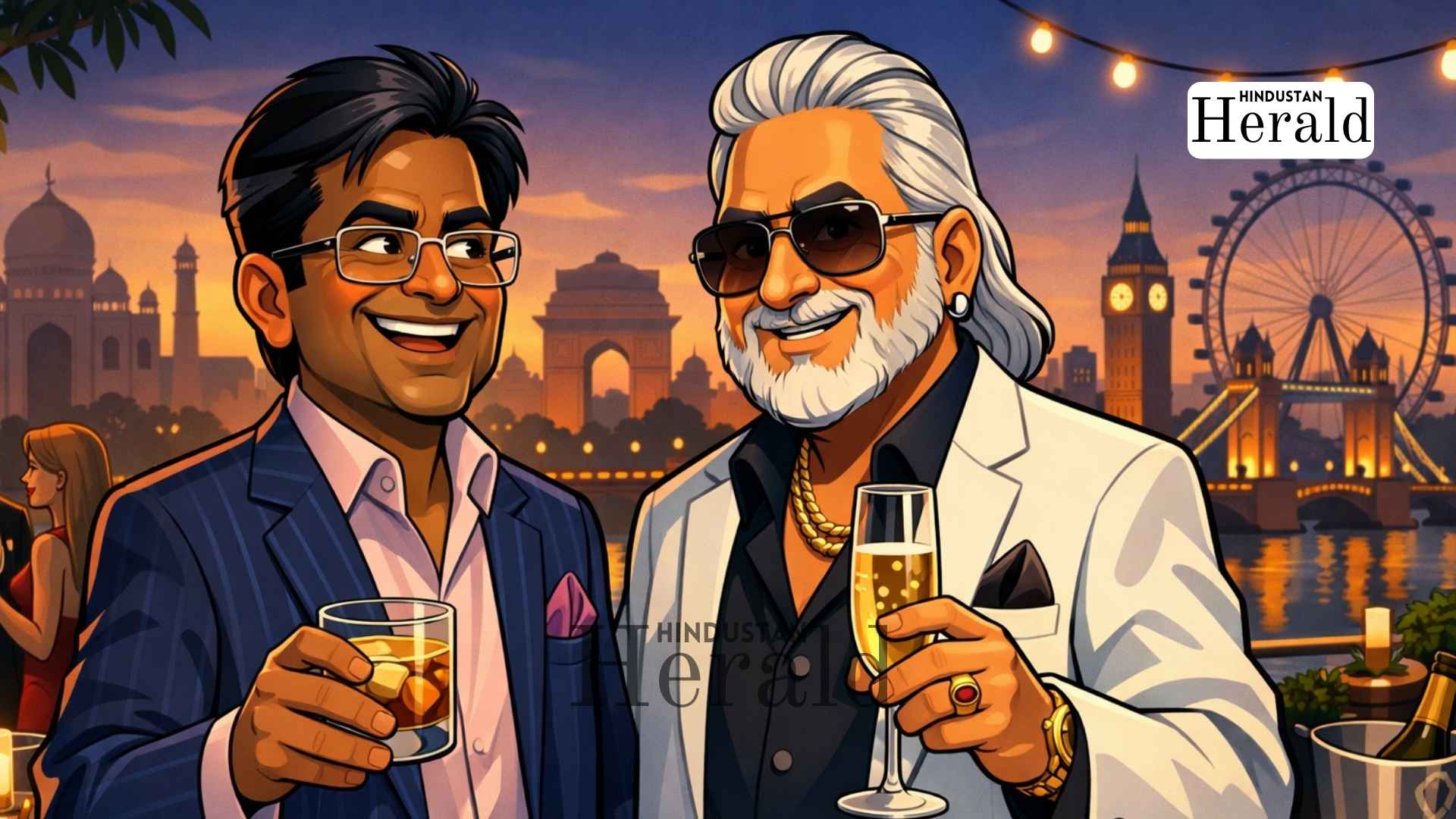
New Delhi, December 29: It took just a few seconds of video and one ill-judged line to set off a storm that Lalit Modi likely did not see coming. Late Sunday night in India, a clip from a birthday party in London began circulating online. In it, Modi, smiling and relaxed, introduces himself and businessman Vijay Mallya as “the two biggest fugitives of India”. The room laughs. Glasses clink. The moment passes.
Back home, it did not.
By Monday morning, the video had travelled far beyond Instagram. It was playing on television screens, being dissected by political commentators, and shared across WhatsApp groups with a mix of anger, disbelief, and resignation. Within hours, Modi issued a public apology.
The Apology and Why It Didn’t Settle Things
On X, Modi wrote that he was sorry “if” his words had hurt anyone, especially the Indian government, for which he claimed to have the “highest respect”. He said the remark had been misunderstood and was never meant the way it had been taken.
For many, the apology felt carefully worded and incomplete. The use of “if” stood out. So did the insistence that the problem lay in interpretation, not intent.
Still, the timing was telling. Modi apologised only after it became clear the backlash was not dying down. News channels had picked it up. Politicians were weighing in. And public anger was growing louder by the hour.
How It All Started

The video came from Vijay Mallya’s birthday celebration, reportedly attended by close friends and associates. It looked lavish, exactly the kind of setting that already irritates many Indians when it comes to high profile businessmen facing serious charges.
Modi did little to downplay the moment. His original Instagram caption almost seemed to invite attention. “Let me do something to break the internet down again,” he wrote, asking people to watch “with envy”.
Instead of envy, the response was fury.
The video was deleted soon after, but by then it was already everywhere. In the age of screen recordings, deletion rarely means disappearance.
Why People Took It Personally
This was not just about a joke landing badly.

For years, ordinary Indians have watched cases involving powerful figures drag on endlessly. Vijay Mallya is one of the most recognisable faces of that frustration. The collapse of Kingfisher Airlines, unpaid loans running into thousands of crores, and a long, complicated extradition process have left many feeling that justice moves very differently for the rich.
Seeing Mallya laughing at a party abroad, openly calling himself a fugitive, struck a nerve. Seeing him do it alongside Lalit Modi only made it worse.
To many, it felt like mockery. Not of critics online, but of a system that has so far failed to bring closure.
The Government’s Measured Response
The Ministry of External Affairs did not name Lalit Modi or Vijay Mallya directly. Instead, it stuck to its standard line, that India continues to pursue all those wanted by law and will bring them back to face justice.

Officials privately admitted the video was embarrassing. Not because of its legal impact, but because of its optics. At a time when India is repeatedly asserting its seriousness about economic offences, visuals like these weaken the message.
Extradition cases, officials stress, depend on foreign courts and legal systems. But public perception is harder to manage, and far less forgiving.
Lalit Modi and a Pattern of Provocation
This is not the first time Lalit Modi has found himself in trouble over social media. Since leaving India in 2010 amid allegations of financial irregularities linked to the IPL, he has maintained a strong online presence. Sometimes combative. Sometimes sarcastic. Often controversial.

For years, Modi has used platforms like Twitter and Instagram to push back at critics, air grievances, and make pointed comments about Indian institutions. Apologies have been rare.
That is why this one stood out. It suggested even Modi realised he had crossed a line this time.
What This Episode Really Says
Strip away the personalities, and the episode says something uncomfortable about the public mood.
There is deep fatigue around unresolved financial scandals. There is anger about perceived privilege. And there is growing impatience with a system that appears tough in words but slow in outcomes.
A short video from a party should not have carried this much weight. But it did, because it touched a raw nerve.
For now, the apology has cooled the immediate outrage. The clip is no longer trending. News cycles will move on.
But the feeling it triggered will linger. Every time another fugitive case drags on. Every time another photo from abroad surfaces.
Stay ahead with Hindustan Herald — bringing you trusted news, sharp analysis, and stories that matter across Politics, Business, Technology, Sports, Entertainment, Lifestyle, and more.
Connect with us on Facebook, Instagram, X (Twitter), LinkedIn, YouTube, and join our Telegram community @hindustanherald for real-time updates.

Covers Indian politics, governance, and policy developments with over a decade of experience in political reporting.
- Ananya Sharma

- Ananya Sharma
- Ananya Sharma
- Ananya Sharma


 Rajiv Menon and Ananya Sharma