
 By Sandeep Verma
Lucknow, December 29: The video is short and raw, the kind of video people scroll past every day. No background music. No filters. Just a phone camera switched on in a public street somewhere in Lucknow. Yet this particular clip has refused to disappear quietly. It has stayed, circulated, argued over, and picked apart, because it touches a nerve many would rather avoid.
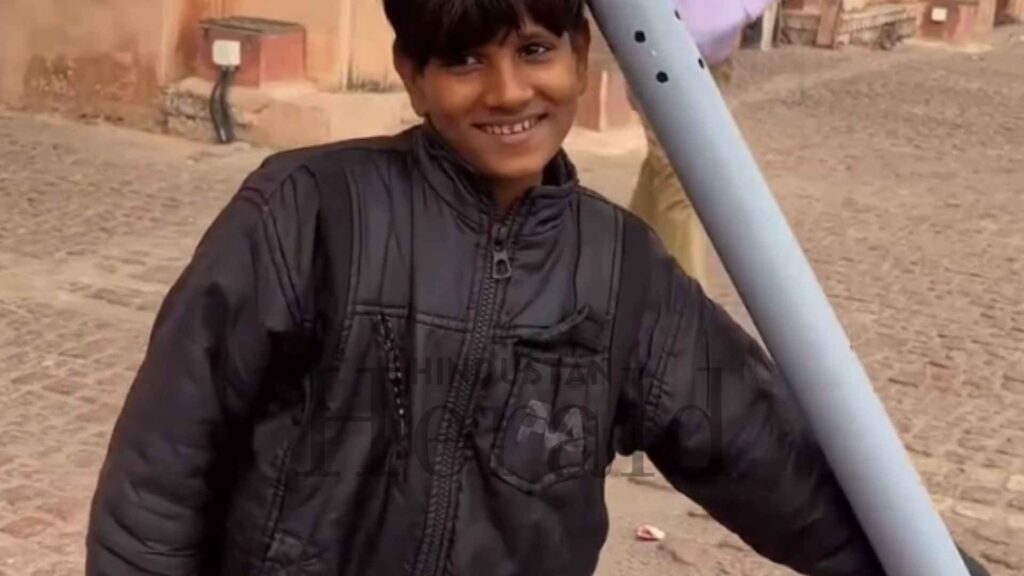
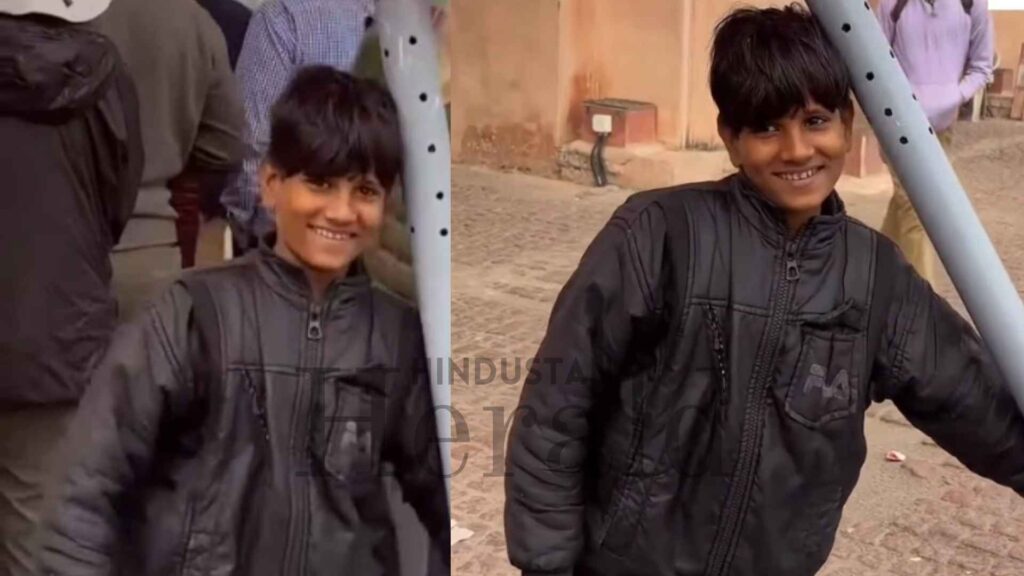
In the video, a foreign woman tourist is recording herself, likely for social media. She looks relaxed, focused on her camera, unaware of what is happening behind her. A young boy, standing a few steps away, makes an obscene hand gesture in her direction. It is quick. Casual. Almost confident.
She does not notice it at all.
What happens next is why people are still talking about this clip days later.
When Strangers Step In Without Being Asked
A few local men nearby notice the boy’s behaviour immediately. There is no confusion about what they are seeing. One of them reacts instinctively and confronts the child on the spot. His voice carries irritation and embarrassment. Not anger meant to humiliate, but disappointment that feels personal.
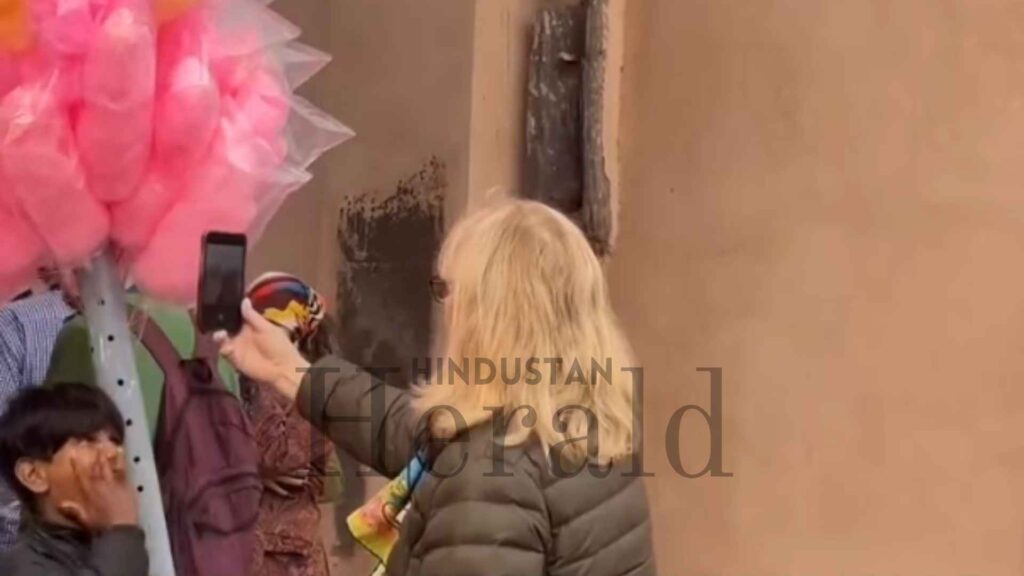
“भाई foreign से आ रहा है उसको ये करोगे,” he says. Brother, she has come from a foreign country, and this is how you behave with her?
The words land hard because they sound familiar. Like something a neighbour or elder would say. The kind of line heard on Indian streets long before smartphones and viral videos existed. The woman continues recording, unaware that anything has happened. For the locals, that does not matter. The behaviour was wrong, noticed, and addressed.
That single moment of intervention is what changed how people saw the video.
Why This Video Refused To Stay Quiet
The clip began spreading across Instagram between December 27 and December 29. Multiple accounts reposted it. Views climbed quickly. So did reactions. At first, most responses were angry. Angry at the gesture. Angry at how casually it was done. Angry that someone visiting the country could be treated with such disrespect, even unknowingly.
But as more people watched the full clip, the focus shifted.
Comment sections began filling with praise for the locals who spoke up. Many said this was how such moments should be handled. Immediately. Publicly. Without violence or drama. In a country where people are often accused of standing by silently, this felt like a rare example of doing the opposite.
Still, the discomfort lingered.
Questions About Children And What They Learn
A lot of the debate turned toward the boy himself. Not his identity, but his behaviour. People asked questions that did not have easy answers. Where does a child learn gestures like this? Why does he feel comfortable doing it in public? Why did he not expect to be stopped?
Parents and teachers weighed in online, pointing to mobile phones, unrestricted internet access, and social media content that normalises crude behaviour long before children understand its meaning. What unsettled many viewers was not just the gesture, but the confidence behind it. Until the locals intervened, the boy showed no sign of hesitation or fear of correction.
That says something about changing boundaries in public spaces.
Foreign Tourists And The Fear Of Embarrassment
Whenever a foreign tourist is involved, reactions tend to intensify. Not because Indians believe such behaviour is acceptable with locals, but because there is an added fear of how the country is seen.
Many comments admitted this openly. Not in defensive tones, but in reflective ones.
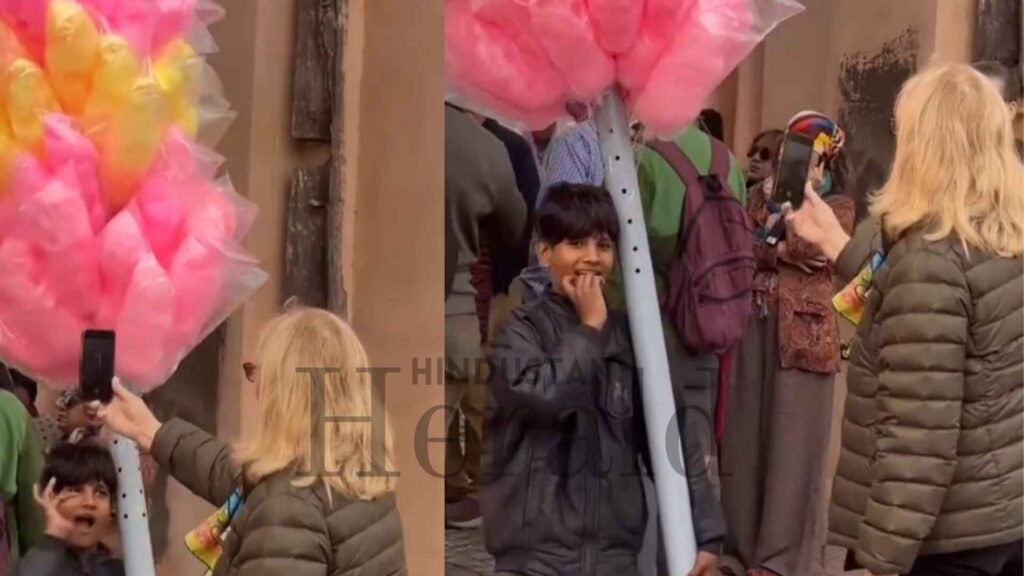
India works hard to project itself as welcoming and safe for visitors. But those images are fragile. A single clip can travel farther than any official campaign. What people kept coming back to was this. Had no one spoken up, the video would have told a very different story.
As of now, there is no confirmed police action related to this specific incident. There have been no official statements, and no verified information about the boy’s identity. The response has remained social, not legal.
Why The Locals’ Reaction Matters Most
Strip the situation down, and the facts are simple. The gesture was wrong. The response was right. The men did not shout for attention. They did not threaten the child. They did not pull out their phones to record themselves being moral.
They corrected him because they felt they should.
That matters.
Public spaces work only when people sharing them feel responsible for what happens there. Not just for themselves, but for others too. This was not about nationalism or image management. It was about basic decency.
A Reminder Hidden In An Awkward Clip
The video will eventually fade from social media. Another incident will replace it. That is how the internet works.
But the questions it raised are harder to scroll past.
Who teaches children where the line is? What happens when parents are not around? Do strangers have a right to intervene, or a duty to stay silent? In this case, a few ordinary men chose to speak up. They did not know the woman. They did not know the boy. Yet they understood that silence would have been easier and wrong.
For many watching, that moment mattered more than the gesture itself. Sometimes, it only takes one voice in a crowd to remind everyone else where the line still exists.
Stay ahead with Hindustan Herald — bringing you trusted news, sharp analysis, and stories that matter across Politics, Business, Technology, Sports, Entertainment, Lifestyle, and more.
Connect with us on Facebook, Instagram, X (Twitter), LinkedIn, YouTube, and join our Telegram community @hindustanherald for real-time updates.

Regional journalist bringing grassroots perspectives and stories from towns and cities across India.
- Sandeep Verma

- Sandeep Verma
- Sandeep Verma
- Sandeep Verma