
 By Rajiv Menon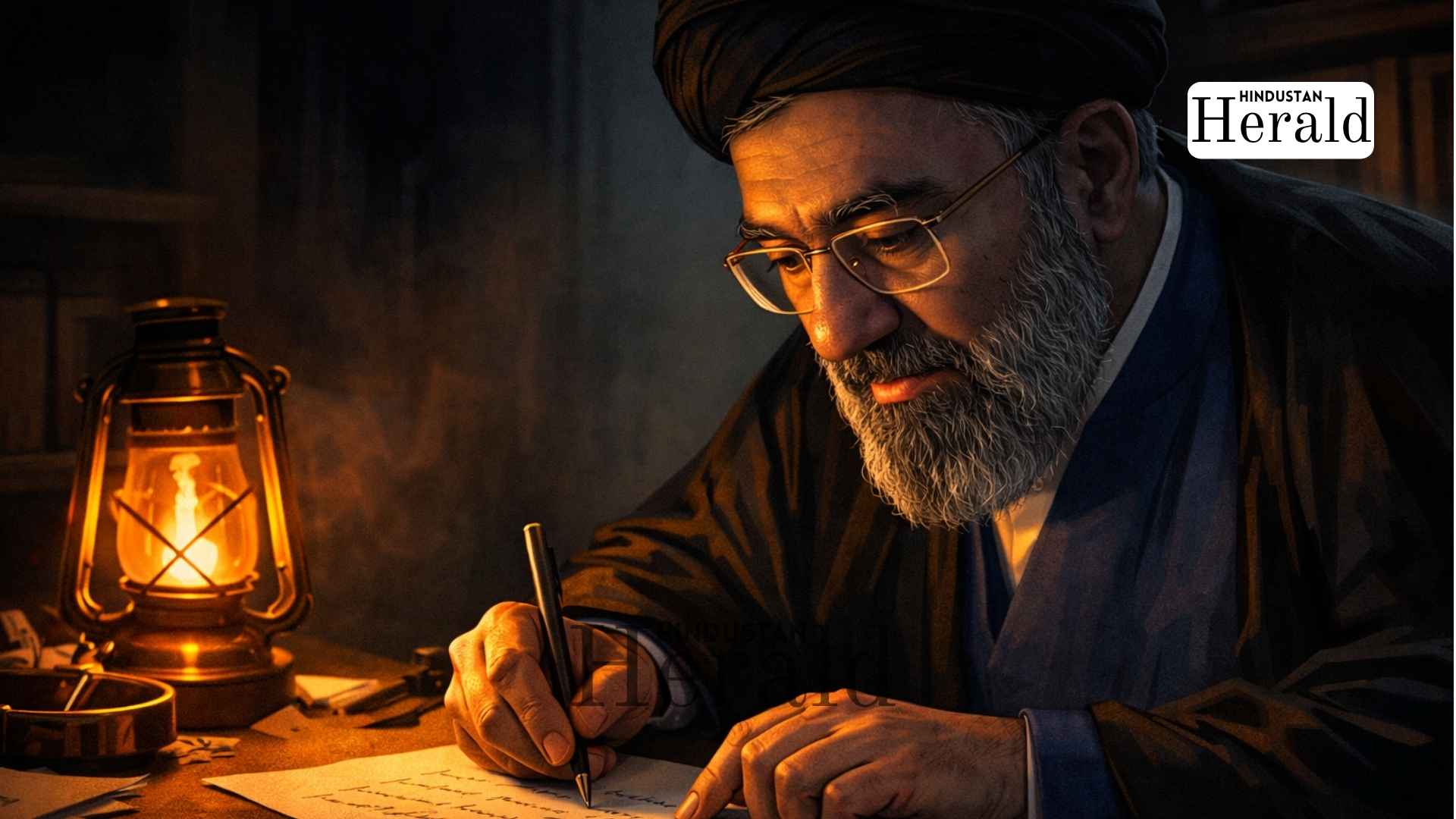
New Delhi, April 1: A letter went out from Tehran on Tuesday. Not a press conference. Not a televised address. Not even a recorded voice message. Just a letter, quietly handed to Hezbollah’s chief in Beirut, signed in the name of Iran’s new Supreme Leader, Ayatollah Mojtaba Khamenei.
The message was simple at its core: Iran is not backing down. The resistance continues. And the men who died fighting for this cause did not die for nothing.
For the world watching West Asia burn right now, that message matters enormously. For India, which is paying a steep price for a war it never joined, it matters even more.
The Man Behind the Letter Nobody Has Seen
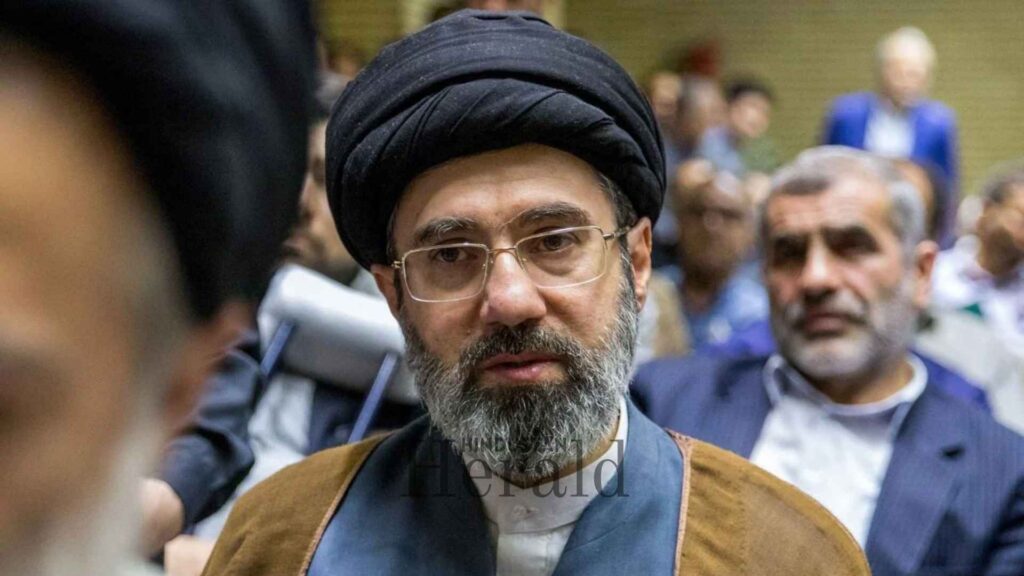
Here is the strange part. The man who sent this letter has not been seen in public since he became Iran’s Supreme Leader over three weeks ago.
Not once.
No speech. No video. No photograph that anyone can independently verify as recent. Just written statements, read out by news anchors on Iranian state television, while a still image of him sits on screen.
Mojtaba Khamenei is 56 years old. He is the second son of the late Ayatollah Ali Khamenei, who ran Iran with an iron fist for 32 years. On the morning of February 28, American and Israeli warplanes and missiles tore through Tehran in what Washington called “Operation Epic Fury.” The strikes killed Ali Khamenei. They killed his wife. They killed top generals of Iran’s Revolutionary Guard. And they changed the Middle East overnight.
Mojtaba was at the compound when the missiles hit. He survived, reportedly because he had stepped into the courtyard minutes before the strike landed. According to CNN, he came away with a fractured foot, a bruised eye, and cuts on his face. His mother, his wife, and others did not make it.
Days later, Iran’s Assembly of Experts chose him as the new Supreme Leader. The vote was rushed, the process secretive, and the building where the assembly normally meets in Qom had itself been bombed. But the decision was made. Mojtaba Khamenei was now the most powerful man in Iran.
And then he vanished from public view.
The Ghost Running Iran
The world’s intelligence agencies have been trying to figure out where he is ever since.
Russia’s ambassador to Tehran said last week that Mojtaba is in Iran, not in Moscow as some reports claimed, but is staying out of public view “for understandable reasons.” The CIA and Israeli intelligence, according to Axios, have been watching closely for any sign of him. When Iran’s Persian New Year, Nowruz, came and went in late March without Mojtaba making even a brief appearance, American officials described it as “a big red flag.”
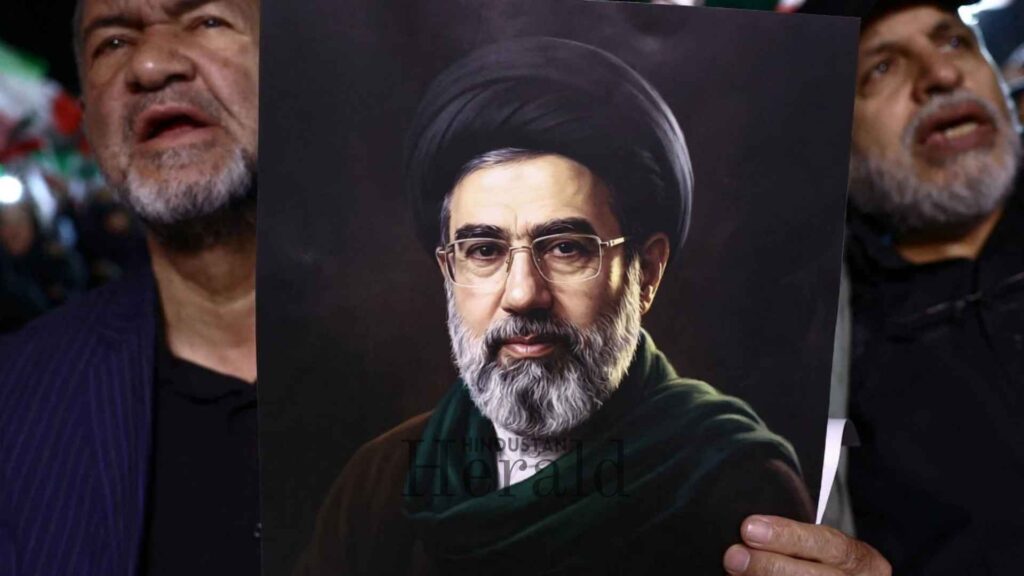
US Defense Secretary Pete Hegseth has claimed publicly that Iran’s new Supreme Leader is “wounded and likely disfigured.” Iran denies this. Iranian state media have been running what appear to be AI-generated videos of Mojtaba addressing crowds. Iranians on social media started calling him the “cardboard ayatollah.” The mockery spread fast.
That said, his communications have been consistent. And Tuesday’s letter to Hezbollah’s Sheikh Naim Qassem is the most detailed public position he has taken since assuming power.
What the Letter Actually Says
Strip away the religious language, and the letter delivers a clear political message across three points.
First, Iran’s support for Hezbollah is not changing. According to Press TV and Lebanon’s Al Mayadeen network, Mojtaba Khamenei wrote that the Islamic Republic’s policy remains one of “ongoing support for the resistance” against what Tehran calls the American and Zionist adversary. He described this as a continuation of the path his father laid before him.
Second, the men who died were not wasted. Mojtaba named them one by one. General Qassem Soleimani, Iran’s most celebrated military commander, was killed in a US drone strike in Baghdad back in January 2020. Hassan Nasrallah, Hezbollah’s longtime chief, was killed in an Israeli airstrike on Beirut in September 2024. Hashem Safieddine, Hezbollah’s executive council head, was eliminated weeks after Nasrallah. All of them, the letter says, are proof that the resistance is on the right path. Not failures. Martyrs. Proof.
Third, Hezbollah’s new chief has Tehran’s full backing. Sheikh Naim Qassem, who stepped up after Nasrallah’s killing, received a direct personal endorsement in the letter. Mojtaba wrote that Qassem is leading the movement “at this critical juncture” and expressed full confidence in his judgment and courage.
For Hezbollah, which has been through a brutal battering over the past 18 months, that public endorsement from Tehran is not a small thing.
Why India Cannot Afford to Look Away
Now here is where this story lands closer to home.
India did not start this war. India has no soldiers in West Asia. And yet this conflict is hitting Indian households harder than almost any external event in recent memory.
Here is what has happened since the strikes began on February 28.
India imports about 85 percent of its crude oil from overseas. Roughly half of that comes through the Strait of Hormuz, a narrow passage between Iran and Oman that links Gulf oil fields to the rest of the world. Since March 1, Iran has effectively blocked commercial shipping through that strait. The result has been an energy supply shock felt all the way from Mumbai refineries to kitchen stoves in Chennai.
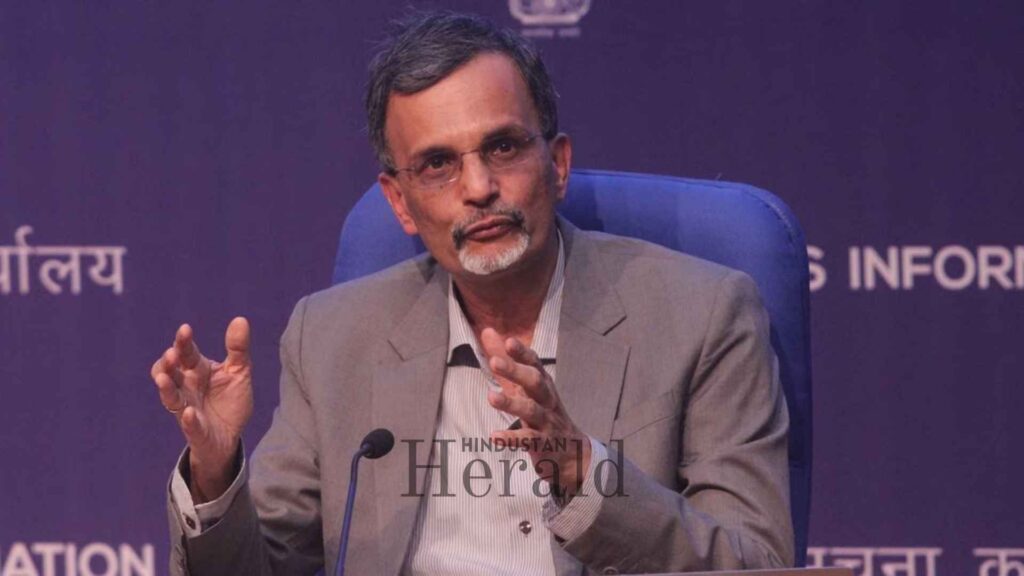
Brent crude climbed from below 80 dollars a barrel before the war to around 140 dollars in recent weeks, according to CNBC. The rupee hit a record low of 94.78 against the dollar. India’s own Chief Economic Adviser, V. Anantha Nageswaran, has warned that the country’s growth forecast for the year ending March 2027 now faces “considerable downside risk.” Private sector activity in March slowed to its weakest level since October 2022, according to the HSBC Purchasing Managers Index compiled by S&P Global.
LPG, the cooking gas that hundreds of millions of Indian families use every day, has become a flashpoint. India imports 91 percent of its LPG from Gulf states. Since the war began, domestic cylinder prices have gone up by Rs 60. The government has invoked the Essential Commodities Act, redirected refinery output toward household fuel, and put fertiliser plants and factories on capped gas allocations. In Bengaluru, hotel associations reported that only 10 percent of establishments received gas supplies on a single day in early March. In Mumbai, LPG refill delays stretched to eight days.
And it is not only fuel.
According to Al Jazeera, 9.1 million Indian citizens live and work across the six Gulf Cooperation Council countries, including the UAE, Saudi Arabia, Qatar, Kuwait, Oman, and Bahrain. Every year, they send home around 50 billion dollars in remittances, money that flows into families across Kerala, Uttar Pradesh, Bihar, Telangana, and Punjab. If the conflict drags on and conditions in the Gulf deteriorate further, that stream of money is at risk. So is the safety of those 9.1 million people.
India’s basmati rice trade has also taken a hit. According to Down to Earth, Iran alone accounts for roughly 25 percent of India’s total basmati exports. Iraqi importers take another 20 percent. Together, that is over two billion dollars in annual export value. With Gulf-bound shipping now a patchwork of cancelled insurance policies and halted sailings, exporters are in limbo.
India’s Diplomatic Tight Rope
The economic pressure would be difficult enough on its own. But India also finds itself in an awkward diplomatic position.
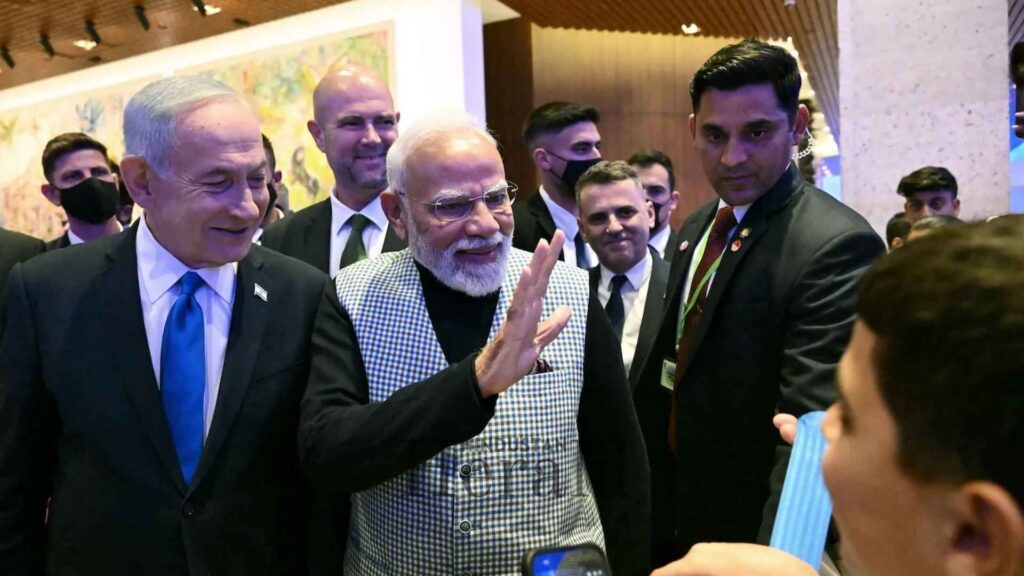
Prime Minister Narendra Modi visited the Israeli Knesset on February 26, two days before the US-Israeli strikes on Iran began. The timing was not India’s fault. But the optics were brutal. As the Christian Science Monitor noted, the visit effectively associated New Delhi with the Israeli camp at exactly the moment the conflict ignited. India stayed publicly silent for several days after the strikes, an unusual pause for a country that has long presented itself as a balancing power.
Pakistan, India’s arch-rival, quietly stepped into the diplomatic gap, reportedly playing a back-channel role in early ceasefire discussions. It was a visible reminder of India’s diminished room for manoeuvre.
New Delhi has since engaged with Iran cautiously, primarily around energy concerns. The US Treasury gave India a 30-day emergency waiver on March 6 to buy Russian crude oil already floating at sea, a temporary lifeline to manage the fuel shortage. But that waiver came with conditions. India had earlier committed to reducing Russian oil imports as part of an interim trade deal with the United States, and Washington made clear it would watch whether India used the waiver as an excuse to rebuild its Russian oil habit. That puts India in a bind whichever way it turns.
What Happens Next
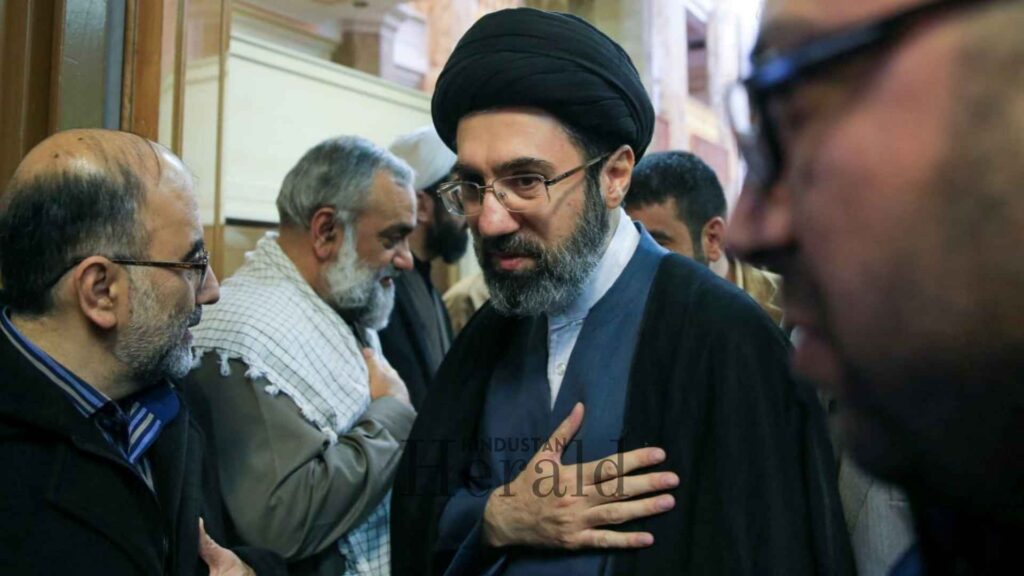
The letter Mojtaba Khamenei sent to Hezbollah on Tuesday does not fire a single bullet or launch a single missile. But it is consequential all the same.
It tells the world that whoever is running Iran right now, whether fully Mojtaba himself or a leadership structure propped up around him while he recovers, is not reconsidering the strategic direction Ali Khamenei built over 32 years. The resistance network is being held together. Hezbollah has been reassured. And the deaths of Nasrallah, Soleimani, and the others are being absorbed into a political narrative that frames sacrifice as proof of righteousness.
As it turns out, the question of whether Mojtaba Khamenei is visibly present or operating from an undisclosed location may matter less than the institutions and ideology that keep moving in his name. The IRGC, analysts have noted, now holds more operational authority inside Iran than at any time in recent memory.
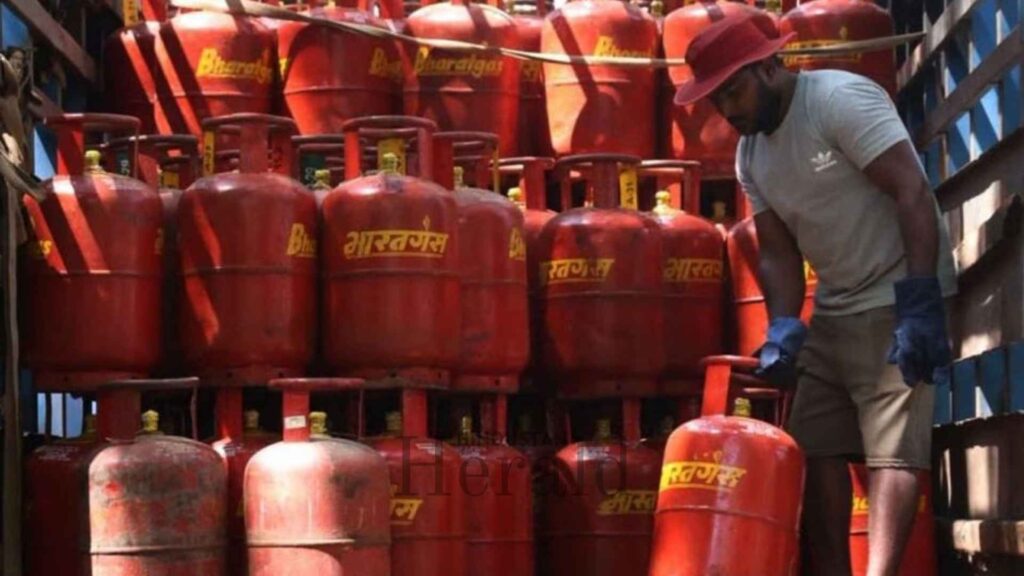
For India, the immediate concern is not the ideological argument Tehran is making. It is the Strait of Hormuz. It is the price of crude. It is the LPG cylinder in the kitchen and the remittance that funds the rent. These are the consequences of a war that started thousands of kilometres away, and they are not going away anytime soon.
The letter from Tehran is one more signal that this conflict has not reached a turning point. For a country as exposed as India is to the Gulf’s stability, that is the line that deserves the closest attention.
Stay ahead with Hindustan Herald — bringing you trusted news, sharp analysis, and stories that matter across Politics, Business, Technology, Sports, Entertainment, Lifestyle, and more.
Connect with us on Facebook, Instagram, X (Twitter), LinkedIn, YouTube, and join our Telegram community @hindustanherald for real-time updates.
Specializes in South Asian geopolitics and global diplomacy, bringing in-depth analysis on international relations.
- Rajiv Menon

- Rajiv Menon
- Rajiv Menon
- Rajiv Menon



 Sandeep Verma and Rajiv Menon