
 By Ananya Sharma
New Delhi, December 21: By the time December settles in across “No Aravallis, No AQI“, Delhi-NCR, people know the routine. Windows stay shut. Morning walks shrink to ten minutes. The smell of smoke lingers far longer than it should. This winter, though, the irritation feels sharper. Not just in the throat, but in the mood of the city itself. The conversation around pollution has shifted. It is no longer confined to weather patterns or crop residue fires. A more unsettling question has crept in, voiced loudly on television and quietly at dinner tables: what if some of this damage is being enabled, cleared, and normalised far from public scrutiny?
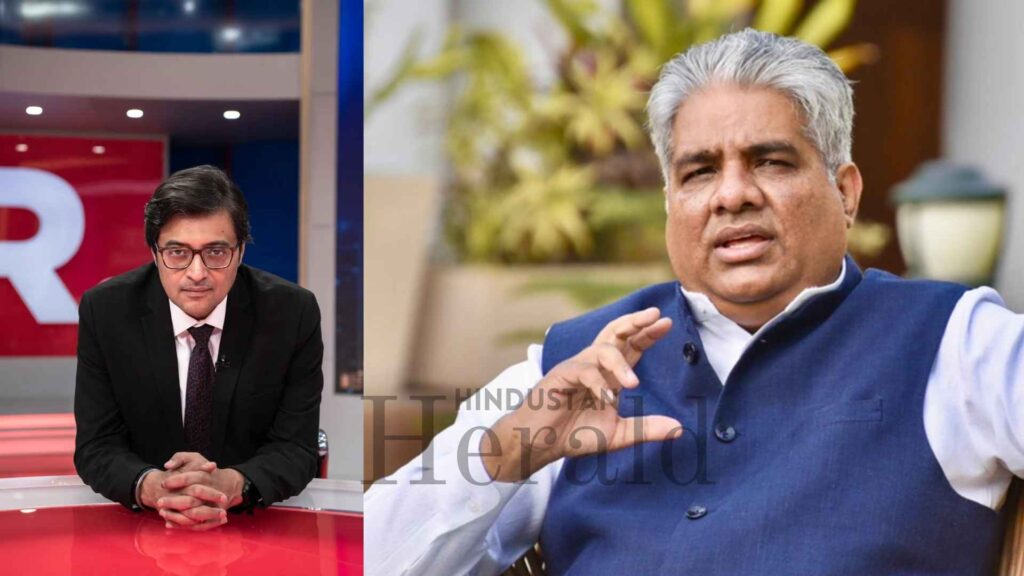
That question exploded into public view after a prime-time broadcast by Arnab Goswami, who framed the crisis in a phrase that refused to fade. “No Aravallis, No AQI.” Crude, perhaps. But it struck a nerve. Suddenly, the spotlight swung toward Bhupender Yadav, the Union Environment Minister, and a series of legal and administrative decisions that had previously attracted little public attention.
The Hills That Have Always Done The Quiet Work
The Aravalli Range has never demanded attention. It does not dominate skylines or tourist brochures. Yet these ancient, eroded hills quietly perform tasks no city can replace.
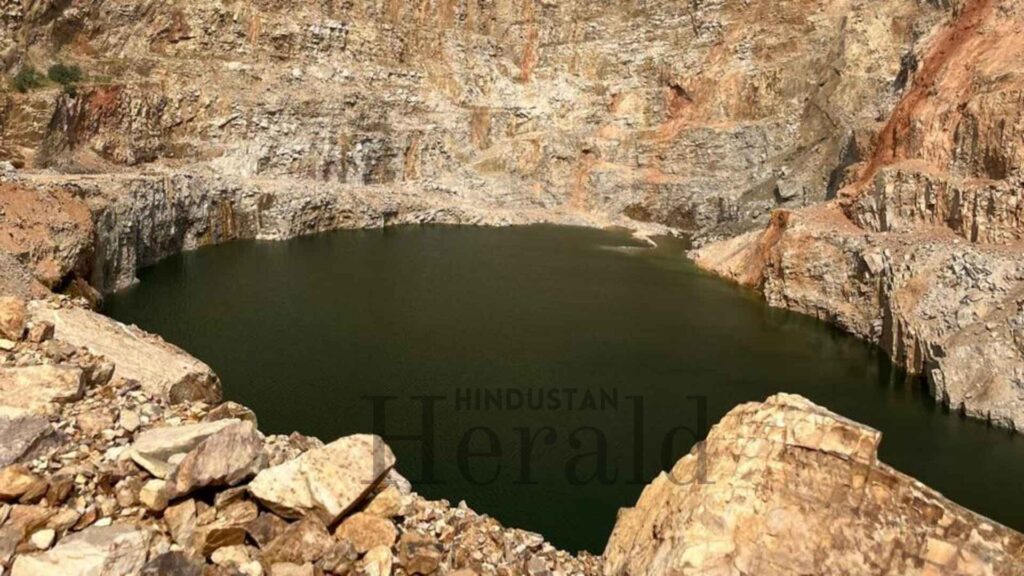
They slow the advance of desert winds from the west. They hold groundwater systems together. They trap dust that would otherwise drift unchecked into urban centres. Environmental scientists have repeated this for decades, often in technical reports that rarely escape policy circles.
Over time, mining, construction, and deforestation have steadily chipped away at the range, especially across Rajasthan and Haryana. Each clearance arrived with official justifications. Each project was approved in isolation. The cumulative impact, however, has been anything but isolated. What changed recently was not the pressure on the Aravallis, but how the law chooses to recognise them.
When Legal Language Reshapes Landscapes
A recent judgment by the Supreme Court of India narrowed the legal definition of the Aravalli range by relying heavily on revenue records, rather than geological continuity. To most readers, this sounded procedural. To environmental lawyers, it was a red flag.
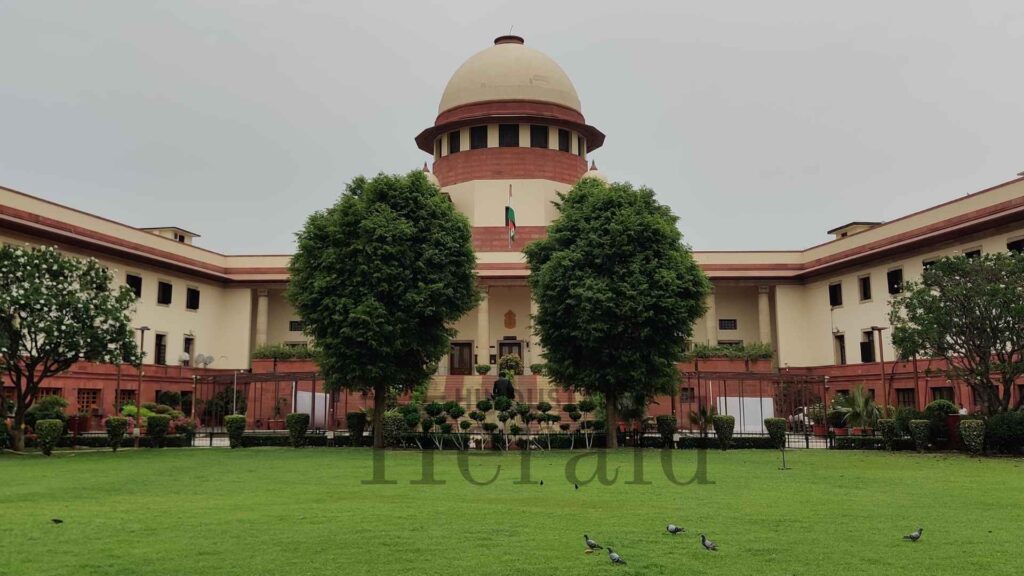
Land that is physically part of the Aravallis may now fall outside strict protection if it is not recorded as forest in official documents. According to The Economic Times, experts warn this interpretation could fast-track mining and construction approvals across sensitive zones. The response was immediate. The #SaveAravalli campaign gathered momentum, driven less by activism than by fatigue. Many see this as another quiet erosion of environmental safeguards, one technical clarification at a time.
Government officials insist that protections remain under other environmental laws and that states retain regulatory authority. Critics argue that ambiguity almost always benefits those seeking clearance, not ecosystems struggling to survive.
A Prime-Time Moment That Changed The Tone
The legal debate might have stayed within courtrooms if not for Arnab Goswami’s unusually confrontational broadcast. On Republic TV, he aimed a series of blunt questions at the Environment Minister, directly linking weakened protections for the Aravallis to the choking air outside.
According to Metro India, the segment stood out because Goswami is rarely seen placing the NDA government on the defensive. Whether it reflected a genuine editorial shift or momentary pressure, the effect was undeniable.
Environmental governance, usually treated as background noise, became unavoidable. Government sources privately dismissed the framing as simplistic. Pollution, they noted, cannot be traced to one mountain range alone. That is true. But simplification has a way of forcing accountability where nuance often dilutes urgency.
The Air Refuses To Wait
As debates played out, the numbers told their own story. The Times of India reported Delhi’s AQI sliding firmly into the severe category, with forecasts offering little immediate relief.
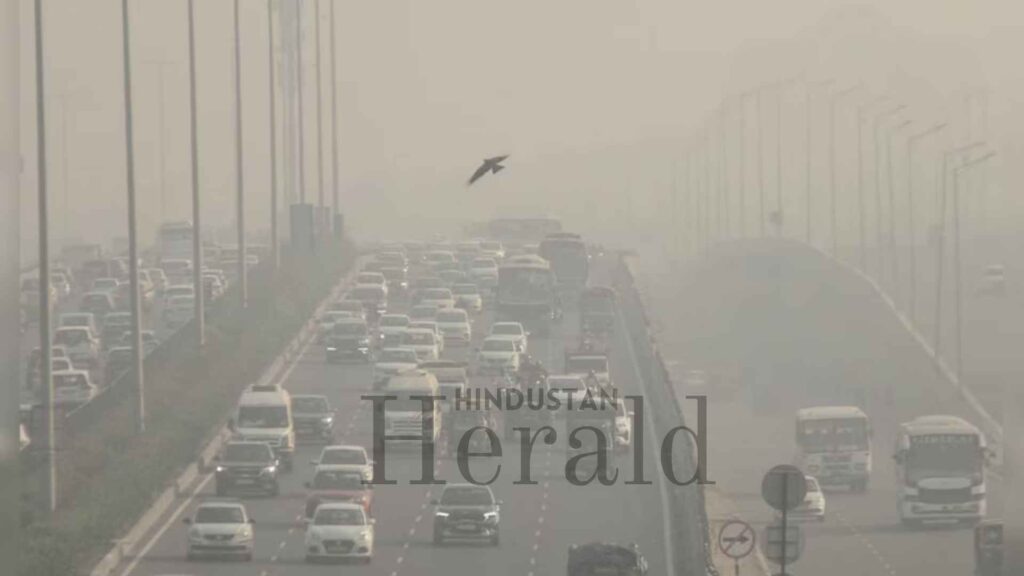
Doctors spoke of rising respiratory cases. Parents weighed school attendance against health risks. Outdoor workers had no such choice. In response, Bhupender Yadav instructed NCR authorities to ensure visible improvement in air quality within a week. Enforcement drives followed. Polluting units were warned. Construction activity slowed.

These steps arrive every winter. Their effectiveness remains limited.
Beyond Delhi, The Same Air
The pollution does not stop at state borders. In Bhiwadi, AQI touched 353, placing it firmly in the very poor category. Restrictions were imposed under the GRAP framework, but residents reported little change on the ground.
Bhiwadi’s experience reinforces an uncomfortable truth. Air pollution is regional. Administrative boundaries mean nothing to particulate matter.
Voices From The Hills
Away from studios and courtrooms, tribal communities in southern Rajasthan have entered the conversation. Quoted by The Times of India, they have pledged to protect the Aravallis, describing them as inseparable from their identity and survival.
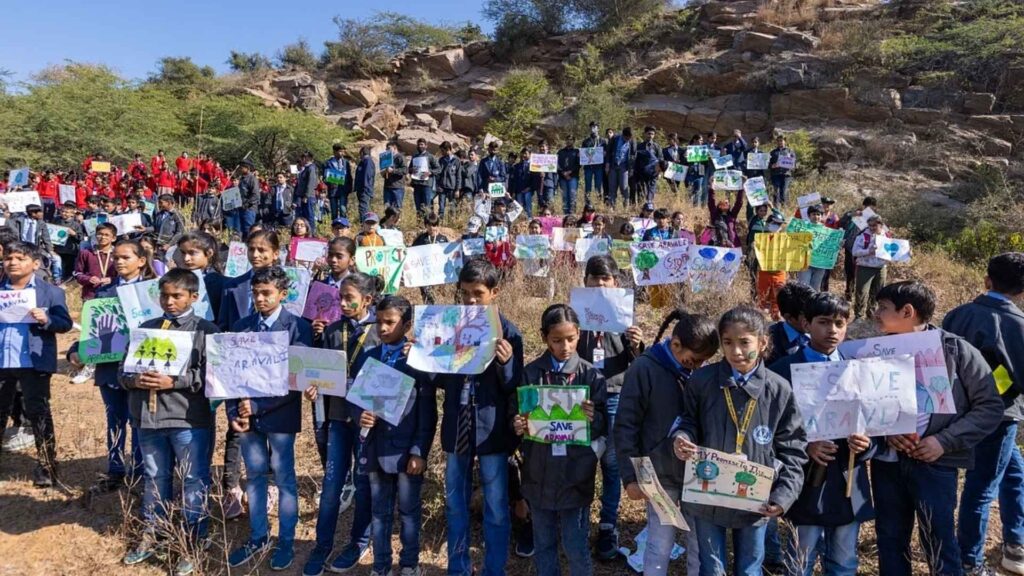
For them, this is not about legal definitions or television debates. It is about wells drying up, forests thinning, and livelihoods becoming fragile. Their voices strip the issue of abstraction and ground it in lived reality.
The Question That Refuses To Settle
No clear resolution has emerged. The government maintains that environmental safeguards remain intact. Environmentalists warn that the consequences of dilution will surface slowly, and by the time they are visible, they will be irreversible.
The phrase “No Aravallis, No AQI” may be inelegant, but it lingers because it captures a growing unease. A sense that environmental damage is being approved in increments, quietly, while its consequences arrive all at once, every winter, in air thick enough to taste.
The season is not over. Neither is the debate. And the hills, worn down by time and policy alike, may not get many more chances to hold the line.
Stay ahead with Hindustan Herald — bringing you trusted news, sharp analysis, and stories that matter across Politics, Business, Technology, Sports, Entertainment, Lifestyle, and more.
Connect with us on Facebook, Instagram, X (Twitter), LinkedIn, YouTube, and join our Telegram community @hindustanherald for real-time updates.

Covers Indian politics, governance, and policy developments with over a decade of experience in political reporting.
- Ananya Sharma

- Ananya Sharma
- Ananya Sharma
- Ananya Sharma