
 By Ananya Sharma
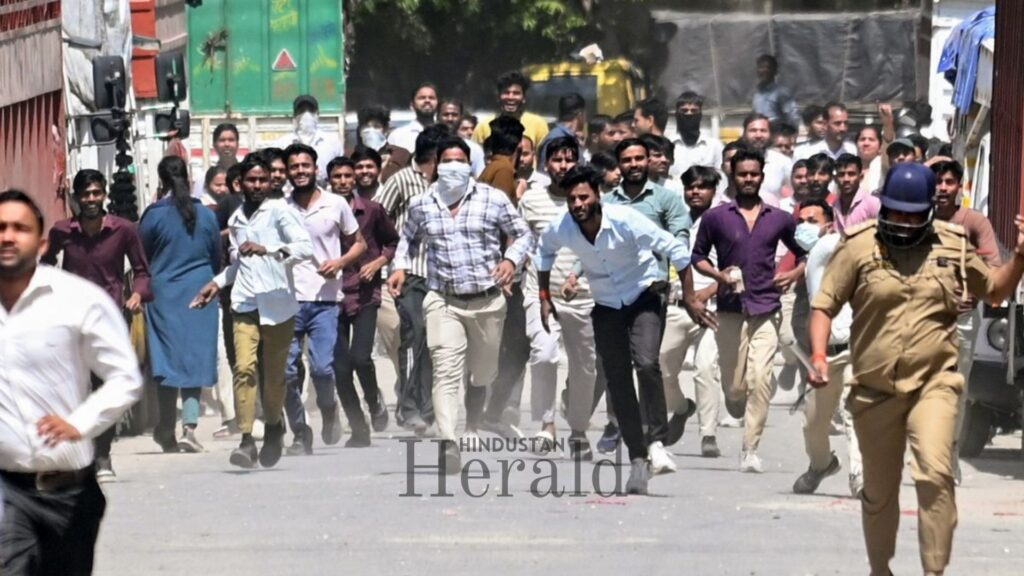
Noida, April 13: What started as yet another wage demand protest on Monday morning turned into one of the worst bouts of industrial violence the National Capital Region has seen in years. By the time the afternoon sun was burning over Phase-2 of Noida, vehicles had been set ablaze, police had fired tear gas shells and resorted to a lathi charge, 50 workers had been arrested, several police personnel were hospitalised, and the Delhi-Noida border was in near-total gridlock. The Noida workers’ protest over a salary hike was no longer just a labour dispute. It had become a full-blown law-and-order crisis, with ripple effects stretching from the Chilla border to the Faridabad-Agra National Highway.
How It All Began: The Slow Burn Before the Explosion
Tens of thousands of workers from multiple industrial units had been gathering in the Hosiery Complex area of Phase-2 over several days, pressing for salary revisions. The protest began peacefully enough. But tensions escalated sharply, and sections of the crowd clashed with police, sending the situation spiralling out of control.

This was not spontaneous rage. Officials confirmed that protests had been building over the past few days, with workers from multiple private manufacturing units joining hands over shared demands linked to wages and working conditions. The discontent had been building quietly for months inside factory corridors, and one external development finally cracked it open.
The key trigger was the recent decision by the Nayab Singh Saini-led Haryana government to increase minimum wages by 35 percent. Workers in Noida argued that they were being unfairly paid less than their counterparts in neighbouring Haryana for the same kind of work.
The numbers make the frustration easy to understand. Workers in Noida currently earn between Rs 13,000 and Rs 15,000 a month. Meanwhile, Haryana raised its minimum monthly wage from Rs 14,000 to Rs 19,000 a jump of nearly 35 per cent. Workers in Noida, employed in similar industries doing comparable work just across the state border, want the same. The Rs 6,000 gap between what a worker earns in Uttar Pradesh versus Haryana has become the sharpest symbol of the inequality driving the unrest.
A female employee put it plainly: “Even basic needs are difficult to meet. Prices are the same for everyone, but our salaries are not.”
The Demands on the Table
The workers’ list of grievances is concrete and, by any reasonable reading, not unreasonable.
Their main demand is increasing the minimum salary to Rs 26,000 per month, along with adherence to labour laws and a weekly off. Workers claimed they were being paid at the rate of Rs 500-700 daily and made to work for 10-12 hours, making it impossible to make ends meet.
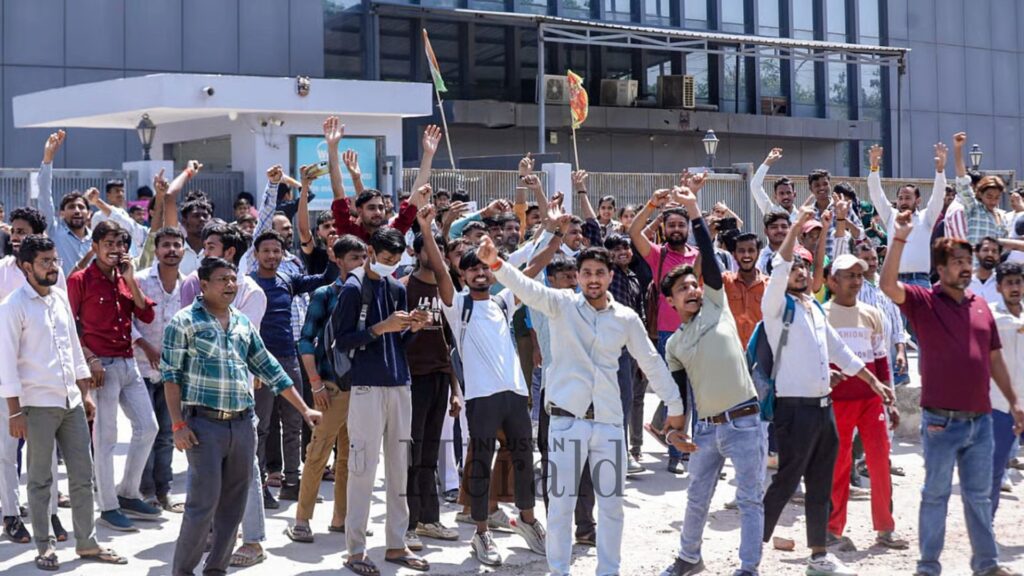
One protesting worker at Motherson, identified only as Laxmi, said: “Salary is less… everything is expensive… Pay us Rs 20,000, or the protest will continue,” while also alleging that workers were beaten despite staging a peaceful protest.
Other demands included payment of overtime at double the rate and a Diwali bonus. Many of these demands were reportedly accepted by state government representatives on Sunday. Still, workers held their ground, insisting that their core demand for a meaningful salary hike remained unaddressed.
The Violence: What Happened on the Ground
The unrest intensified in the Phase-2 area, particularly in Sectors 1 and 84, where protesting workers allegedly set at least two vehicles ablaze. Large crowds took to the streets, shouting slogans and blocking roads as tensions quickly spread across factory areas.
The situation turned volatile in Noida Phase 2, where employees gathered to press for wage increases but soon turned aggressive, damaging vehicles and property. Visuals from the spot showed burning vehicles and heavy police deployment, as thousands of workers occupied streets, creating a tense law-and-order situation.
As the protest intensified, clashes broke out between workers and police in multiple areas, including Greater Noida’s Ecotech zone. Protesters allegedly pelted stones, while police resorted to crowd-control measures, including firing tear gas shells. Vehicles were torched and properties vandalised in several locations, further escalating tensions.
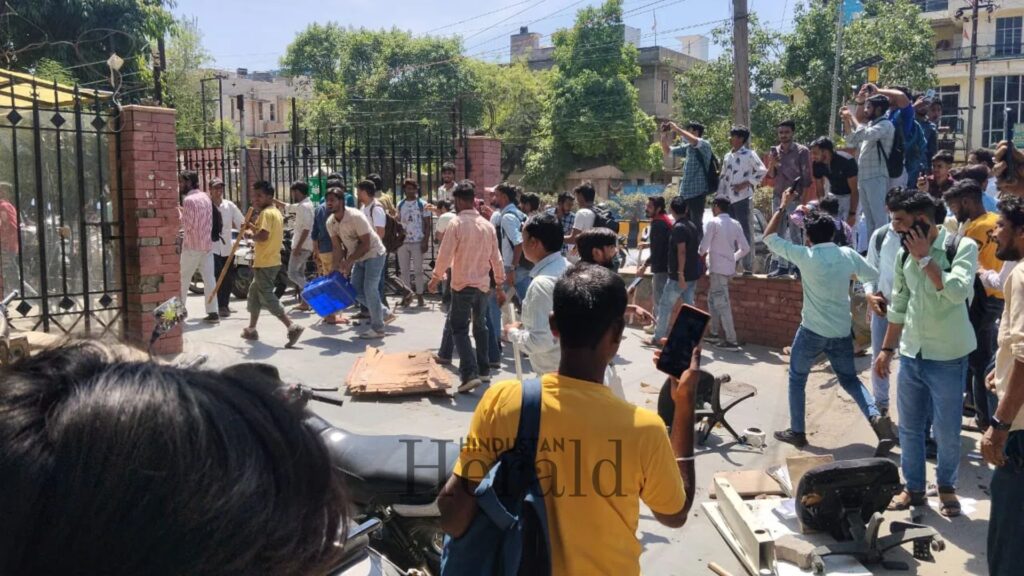
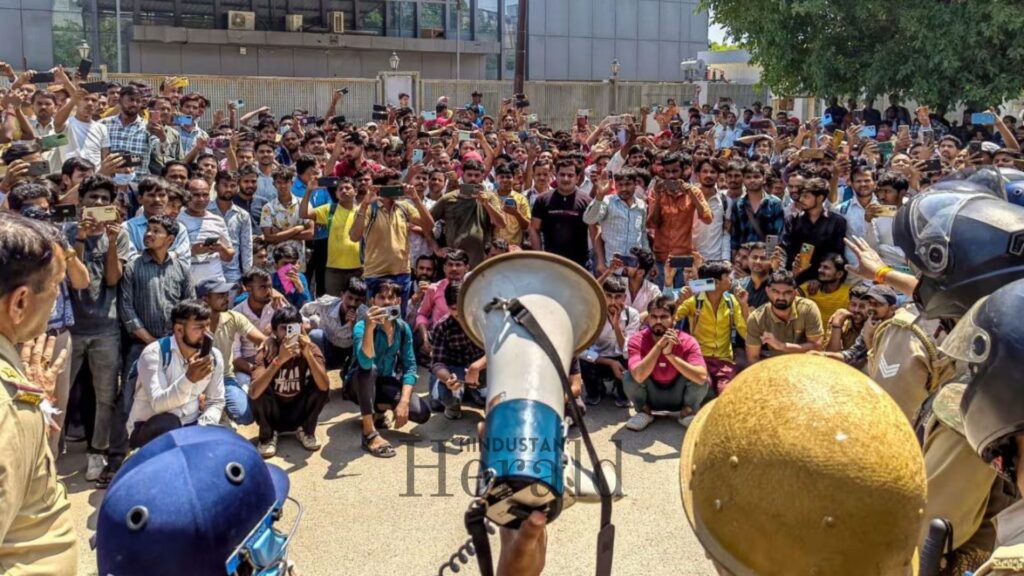
Officials said all leaves of police personnel in Gautam Buddh Nagar have been cancelled, and additional forces were rushed from neighbouring districts. Heavy deployment of Pradeshik Armed Constabulary (PAC) and Rapid Action Force (RAF) units was made across sensitive industrial zones, while barricading was intensified at key entry and exit points connecting Noida with Delhi.
The protest also spread to Sectors 60, 57, 63, 64, 65 and 59, where protesters blocked roads and raised slogans, halting normal activity across the industrial belt.
The Question That Cannot Be Ignored: Who Gave Them the Right to Burn?
The anger is legitimate. The cause is real. But the question hanging over every scorched vehicle and smashed windshield is a difficult one that cannot be brushed aside.
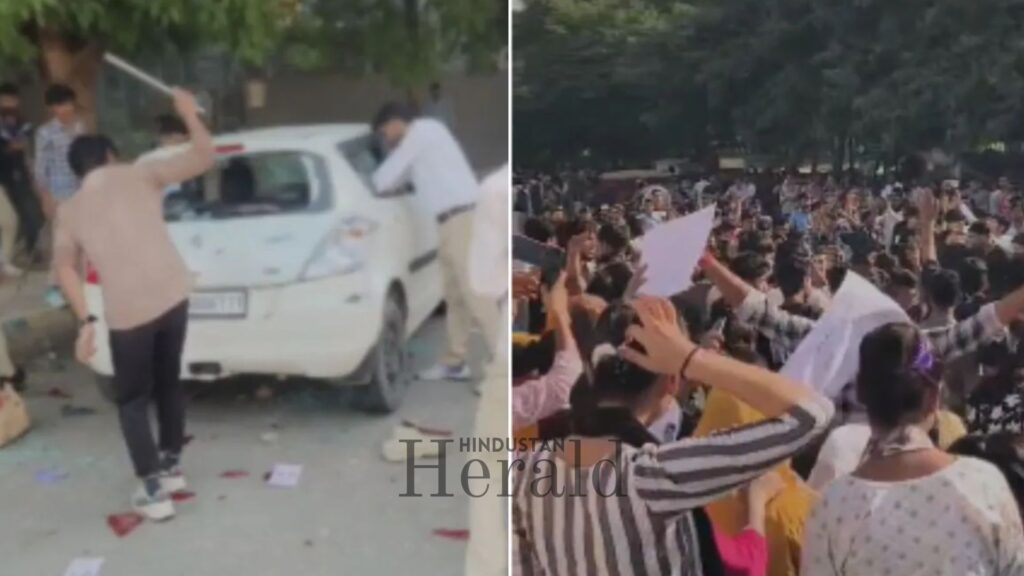
Factory workers in Noida earn wages that many economists would describe as poverty-level in an urban context. Their frustration with years of stagnant pay, brutal working hours, no weekly offs, and indifferent management is documented and valid. That said, the right to protest which every citizen holds does not extend to burning vehicles that belong to the police, to civilians, to ordinary people who have nothing to do with factory wage negotiations.
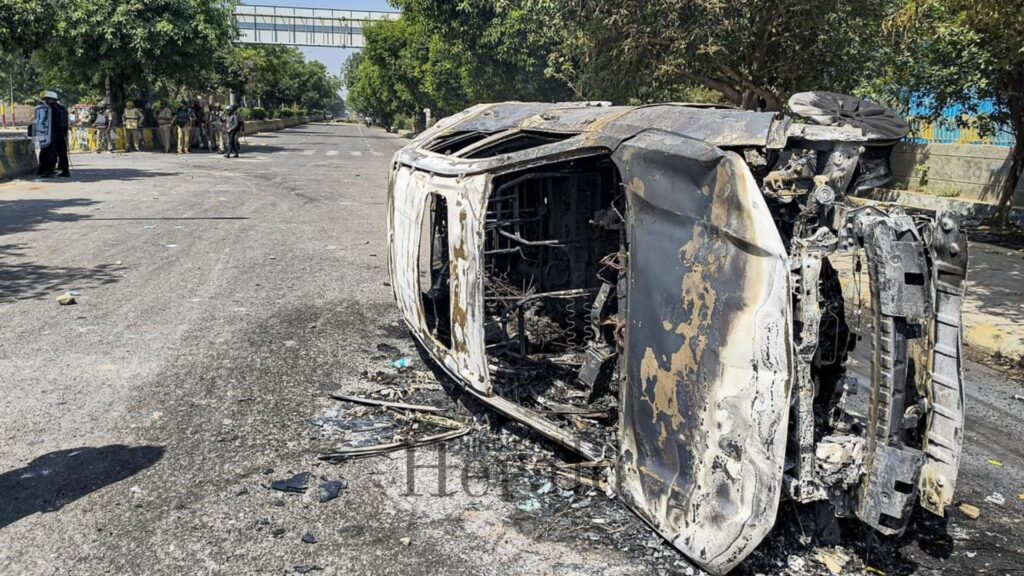
The workers who set police motorcycles on fire, who pelted stones at personnel attempting crowd control, who vandalised offices and damaged private cars on public roads, those individuals went beyond any legitimate expression of grievance. Several police personnel were injured in the violence and were hospitalised. These are government employees doing their job. Their injuries are not a footnote; they are a consequence of a protest that lost its moral compass the moment it turned to arson.
The commuters stuck for hours in gridlock on the Delhi-Meerut Expressway, the families stranded near the Chilla border, the ambulances reportedly delayed in traffic, none of them is responsible for Noida’s minimum wage policy. Burning public property does not pressure factory management or the state government half as much as it punishes ordinary working people who are, ironically, facing the same inflationary pressures as the protesters.
This is not a condemnation of the movement. It is a hard look at the tactics.
Why Did the Protest Turn Violent? The Real Reasons
The reason of the protest escalating was growing anger among workers over salary differences and long-pending labour demands. Tensions soon escalated, and clashes reportedly broke out between sections of the crowd and the police.
Several factors fed into the explosion:
First, the Haryana wage hike announcement served as a psychological flashpoint. Workers could now point to a concrete, neighbouring example of what they were being denied. That comparison turned simmering resentment into active outrage overnight.
Second, the government’s pattern of accepting demands on paper without credible enforcement had eroded trust entirely. Despite claims by labour authorities that most demands had been accepted and were under process, protests continued unabated. Workers had simply stopped believing that promises made in government offices would translate into anything on the factory floor.
Third, and critically, the Uttar Pradesh Police stated that workers instigated from other states staged protests at multiple locations in Noida. Whether this is entirely accurate or represents an attempt to deflect from genuine grassroots anger is a question worth probing. But the involvement of outside elements in accelerating violence a pattern seen in multiple industrial agitations across the country, cannot be dismissed either. The UP DGP Rajiv Krishna warned that instigators are being identified, and external elements involved in fuelling the unrest are also being tracked.
The Yogi Government’s Response: Action Taken, Questions Remain
The administration’s reaction has been a mixture of firm statements, limited concessions, and a visible struggle to contain a situation that had been allowed to fester.
On Sunday, Noida District Magistrate Medha Roopam held a meeting with the Principal Secretary (Labour) and Labour Commissioner of the state to discuss protection of workers’ interests, double payment for overtime, bonus, and workplace safety. That meeting, as events on Monday proved, came too little and too late.
Chief Minister Yogi Adityanath said every worker should receive a respectable salary, a safe working environment and basic facilities, and urged industrial units to comply with labour laws. The state labour department was directed to hold discussions with local authorities and industrial units.
Still, the CM’s words carried a dual edge. “Those creating nuisance in the name of workers must face strict action and security must be beefed up in industrial areas,” he said.
Fifty workers were arrested following the violence. Authorities have also set up a committee to look into the violent protests in Noida and the related issues, following the widespread unrest.
The critics, however, have a point worth making: if the minimum wage in Uttar Pradesh has been visibly lower than neighbouring Haryana for months if workers have been clocking 10-12 hour shifts for Rs 500-700 a day, why did the government wait for vehicles to burn before convening committees? The Sunday meeting with the DM and Labour Commissioner should have happened in January. The wage revision conversations should have preceded the Haryana announcement, not reacted to its aftermath.
The Yogi government’s promise of protecting workers’ rights is meaningful only if it is backed by proactive enforcement of existing labour laws, not just crisis management once protests turn violent.
The Protests Spread: Faridabad and Beyond
Following the Noida demonstration, a major protest erupted on the Delhi-Agra National Highway, as hundreds of women employees from private companies blocked the roadway between Faridabad and Palwal. The blockade led to severe traffic congestion, leaving thousands of commuters stranded.
The protesting women workers are demanding a substantial salary hike and enforcement of government-mandated minimum wages. They alleged that their concerns have been raised repeatedly over time, but no concrete action has been taken by management.
The protests echo similar agitations that began in Haryana’s Manesar on April 2, indicating a wider regional wave of labour unrest that is not confined to Noida alone.
What Happens Next: The Bigger Picture
This protest is not an isolated incident. It is the visible tip of a much larger problem the systematic failure to enforce minimum wage laws in India’s industrial belts, combined with a cost of living that has left lakhs of factory workers in a genuine survival crisis.
As one worker put it at the protest site: “It is extremely difficult for a family to survive on low wages in times of rising inflation. Only someone running a household can understand this.”
The government needs to move beyond committee formation and do the harder work: inspect factories for wage compliance, levy penalties on employers flouting the Minimum Wages Act, and build a wage revision mechanism that is automatic, not dependent on protests to trigger action.
For now, the Chilla border has been reopened for traffic movement after being completely blocked for hours, and the situation appears to be stabilising through the afternoon. The Delhi Traffic Police issued advisories directing commuters to use the DND flyway and alternative routes to Noida.
The fires on the ground may be out. The fire underneath the structural inequity in how India’s industrial workers are paid is very much still burning.
Stay ahead with Hindustan Herald — bringing you trusted news, sharp analysis, and stories that matter across Politics, Business, Technology, Sports, Entertainment, Lifestyle, and more.
Connect with us on Facebook, Instagram, X (Twitter), LinkedIn, YouTube, and join our Telegram community @hindustanherald for real-time updates.

Covers Indian politics, governance, and policy developments with over a decade of experience in political reporting.
- Ananya Sharma

- Ananya Sharma
- Ananya Sharma
- Ananya Sharma