
 By hindustanheraldin@gmail.com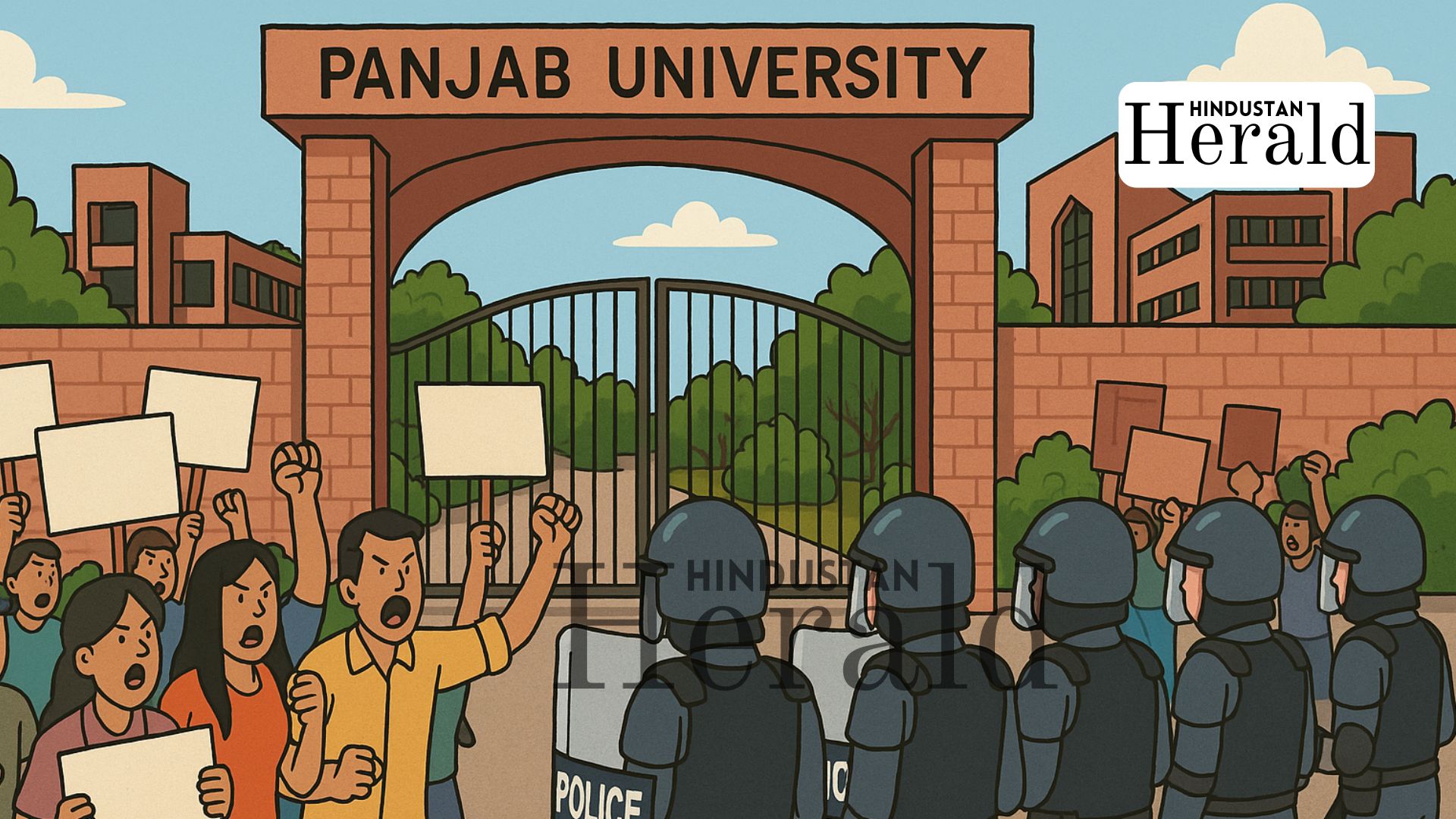
Chandigarh, November 10: The gates of Panjab University turned into a flashpoint on Monday as thousands of protesters stormed the campus, demanding the reinstatement of its elected Senate and accusing the Centre of meddling with the university’s autonomy.
By noon, chaos had broken out at Gate No. 1, where a sea of demonstrators, many shouting “Raj Karega Khalsa,” pushed past barricades and entered the grounds. Police stationed across the campus tried to hold the line, but the crowd swelled fast. Lathicharge followed, sirens echoed, and what began as a planned protest spiraled into a tense standoff that left Chandigarh Police struggling to restore order.
The Build-Up
This didn’t come out of nowhere. The unrest traces back to an October 28 notification from the Ministry of Education that restructured the university’s Senate and Syndicate the two governing bodies that decide everything from policy to appointments. The change slashed the Senate’s strength and gave the Centre a greater hand in nominations, effectively weakening the institution’s long-standing system of elected representation.
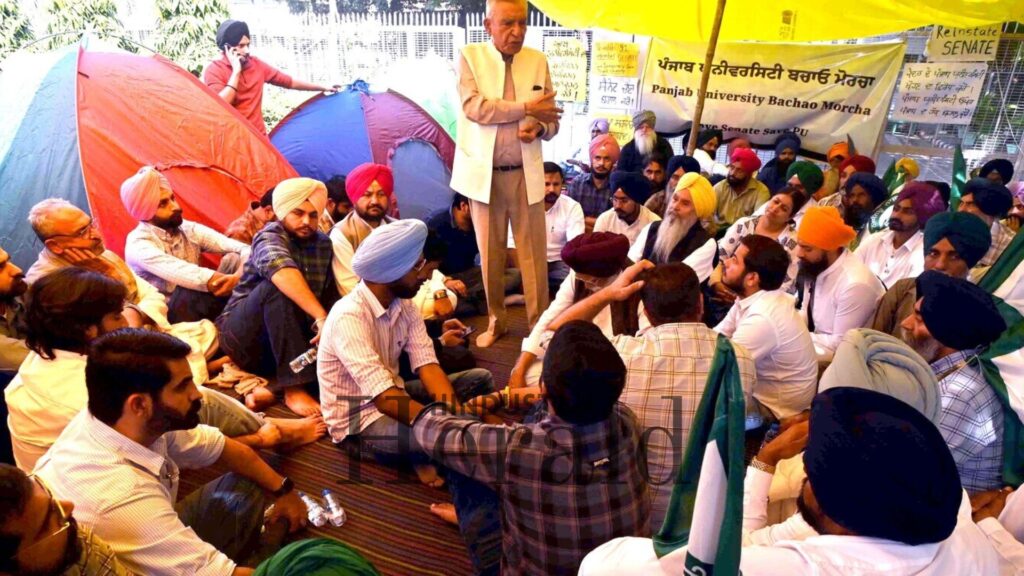
After days of backlash from students, faculty, political parties, and even the Punjab government, the Centre withdrew the notification on November 7. But by then, the spark had caught. Student groups said the rollback wasn’t enough; they wanted a formal election date for the 91-member Senate and a written assurance that PU’s governance would stay independent.
“The struggle will continue till the elections are notified,” one of the organizers said during the morning march. “Withdrawal means nothing if they can bring it back anytime they want.”
The Day of the Protest
PU looked like a garrison before sunrise. Over 2,000 police personnel had been stationed around the campus. Barricades went up at every gate. Entry was restricted to those with valid university IDs or official stickers. The administration had already declared November 10 and 11 as holidays, anticipating trouble.
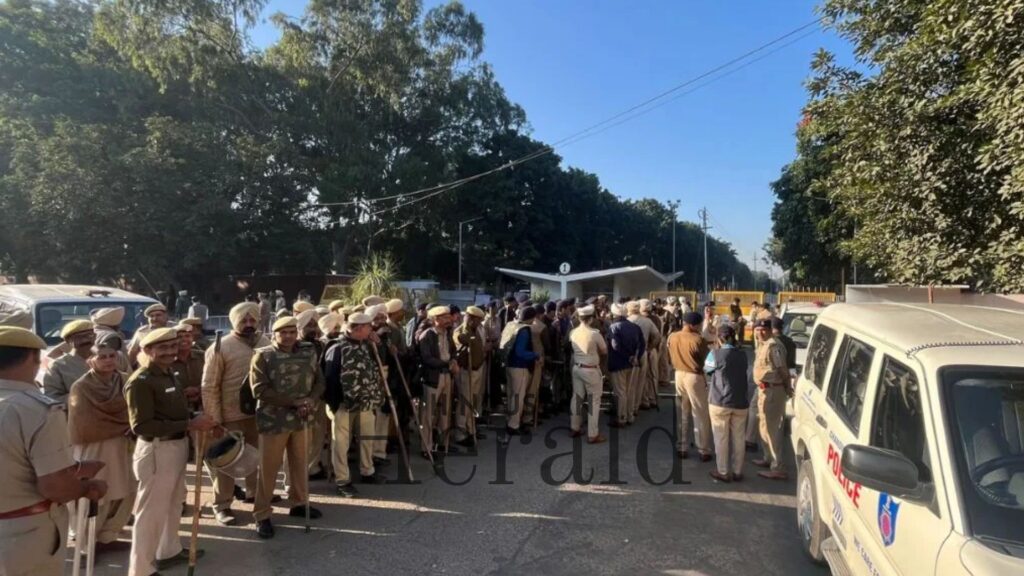
By mid-morning, protesters began gathering in the thousands. The call for a “PU Bandh” had drawn not only students but also alumni, faculty, and outside supporters from across Punjab. When the gates wouldn’t open, the crowd pushed through. Reports say MP Amritpal Singh’s father and the AISSF chief were among those who entered, underscoring how politically charged the protest had become.
Police Response and Fallout
Once the barricades fell, things moved quickly. Police tried containment, first with verbal warnings, loudspeaker appeals, and a few scuffles. But when demonstrators broke deeper into the campus, batons were used. Several students were detained, a few reportedly injured.
The Vice-Chancellor, Prof. Renu Vig, issued a statement urging restraint, saying that the process for Senate elections “had already been initiated” and was pending approval by the Chancellor, who is the Vice President of India. That didn’t calm the protesters. For them, “initiated” wasn’t the same as “announced.” They want a date, not a promise.
What’s Really at Stake
For most outsiders, this might look like a campus quarrel. It’s not. Panjab University isn’t just another college; it’s a symbol of Punjab’s academic and cultural autonomy. The university’s governance structure was designed decades ago to reflect regional representation and academic self-rule. When the Centre tried to alter that, it struck at something deeper, the fear of Delhi’s overreach into local institutions.
That’s why the movement has pulled in not just students but political parties and religious groups. The “Raj Karega Khalsa” chants may sound ideological, but underneath them lies a demand for control over one’s own institutions.
A Test of Governance
The administration’s decision to declare holidays, tighten access, and summon police was a calculated move an attempt to prevent damage or worse. Still, once thousands of people are on the move, order becomes a relative term. The breach at Gate No. 1 proved how fragile the containment plan was.
For the Ministry of Education, this confrontation is an embarrassment. The rollback that was meant to diffuse anger seems to have only reinforced the distrust. For Punjab’s political leaders, it’s an opportunity a chance to side with the students, frame the issue as another instance of central interference, and build their own narrative heading into the next election cycle.
What Comes Next
The next 48 hours will be crucial. PU remains closed, security is still thick, and both sides seem unwilling to blink first. The administration hopes the holiday period will cool tempers. The protesters, on the other hand, say the fight won’t end until the election schedule is out in black and white.
If that doesn’t happen soon, this could spread beyond the campus walls. Already, several politicians have visited the site to offer support. If the government doesn’t respond decisively and credibly, this might turn from a university protest into a wider political statement about governance, autonomy, and who gets to make the rules in India’s oldest institutions.
For now, Panjab University is quiet on the surface, classrooms locked, lawns empty, police jeeps parked near every gate. But inside the campus, the sentiment hasn’t cooled. The fight for control of PU’s Senate has become something much larger: a struggle over who truly runs the university, and by extension, who defines the limits of autonomy in Indian higher education.
Stay ahead with Hindustan Herald — bringing you trusted news, sharp analysis, and stories that matter across Politics, Business, Technology, Sports, Entertainment, Lifestyle, and more.
Connect with us on Facebook, Instagram, X (Twitter), LinkedIn, YouTube, and join our Telegram community @hindustanherald for real-time updates.

 Ananya Sharma
  Sandeep Verma