
 By Rajiv Menon and Ananya Sharma
Vicenza, December 21: The water looked clean. It always had. For people living across western Veneto, there was no obvious reason to question what came out of the tap. No smell, no colour, no official warning. Life carried on as usual. Only now, years later, are the full consequences of that silence coming into focus. Fresh reporting from Italian news agencies this week has pulled back the curtain on what judges say really happened inside Miteni, the chemical company at the centre of Italy’s worst PFAS contamination scandal. And the picture is harder to stomach than the verdict alone suggested.
According to details published by ANSA, the written reasoning behind the June 2025 ruling makes it clear that senior figures at Miteni were aware their operations were polluting groundwater well before regulators or the public were alerted. Internal data showed it. Technical reports flagged it. The risk was not theoretical.
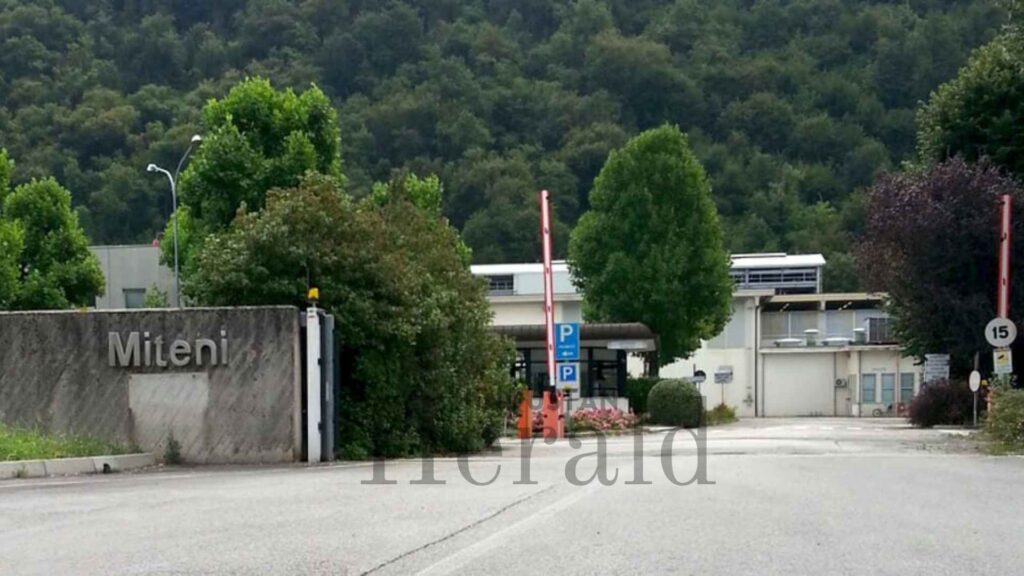
Still, the company stayed quiet. For families who later discovered that their drinking water had been contaminated for years, that finding lands like a second betrayal.
What The Judges Say Was Known
When the convictions were handed down in June, the headlines focused on the numbers. Eleven former executives found guilty. A combined 141 years in prison. A historic judgment. But the newly released court reasoning, running into more than 2,000 pages, explains why the court reached such a severe conclusion.

Judges concluded that Miteni did not merely fail to prevent pollution. According to the ruling, the company knew PFAS levels in groundwater were dangerously high and chose not to inform authorities who could have intervened sooner. As reported by ANSA, the court cited internal monitoring results and technical assessments showing contamination spreading beyond the factory site in Trissino. Despite this, no immediate warnings were issued to municipalities or water managers. No public alarm was raised.
The silence mattered. It meant exposure continued. Defence teams have argued that responsibility was blurred across decades of ownership changes and evolving environmental standards. Appeals are expected, and under Italian law, convictions are not final until all appeals are exhausted. Still, the judges’ language leaves little doubt about how they viewed the conduct. This was not ignorance. It was an omission.
A Slow Disaster, Measured In Years
PFAS contamination does not announce itself dramatically. There is no single day when everything collapses. It seeps, accumulates, lingers.
In Veneto, the impact stretched across dozens of towns and cities. According to findings referenced by the University of Padua’s Human Rights Centre, around 350,000 residents lived in areas affected by polluted groundwater. Blood tests later revealed elevated PFAS levels in thousands of people, including children. Health authorities began long-term monitoring programs. Anxiety settled into daily life.
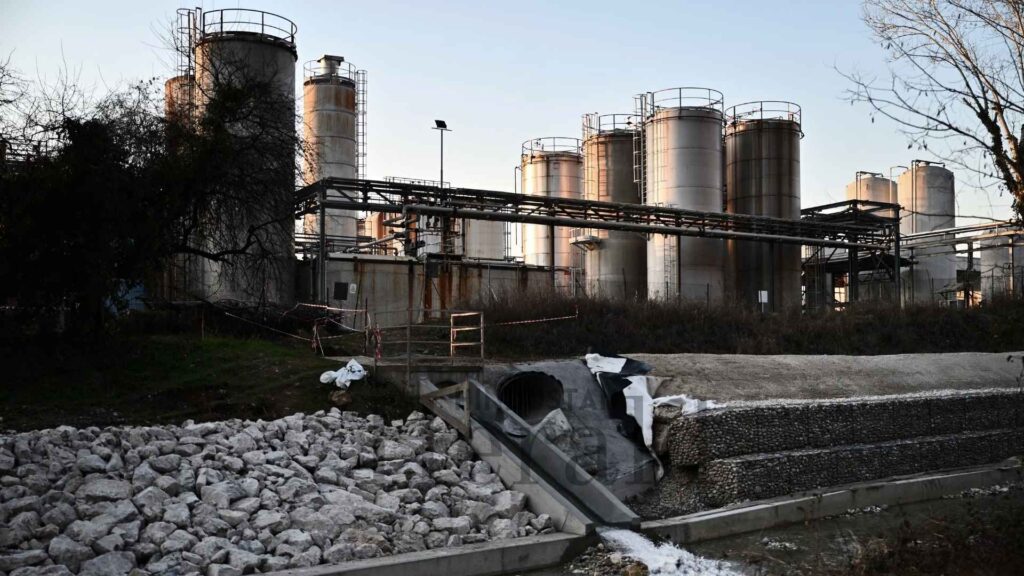
The chemicals involved are often called “forever chemicals” for a reason. They do not easily break down. Once they enter the body, they tend to stay.
Earlier this year, a separate court ruling quietly added another layer to the story. A labour tribunal in Vicenza recognised a causal link between PFAS exposure and the death of a former Miteni employee. It was the first time an Italian court formally connected workplace PFAS exposure to a fatal illness. For former workers and their families, it confirmed what many had suspected for years.
Money, But No Easy Closure
Alongside prison sentences, the court ordered substantial compensation. According to recent ANSA reporting, the Italian Ministry of the Environment is set to receive roughly €58 million. The Veneto regional government has been awarded around €6.5 million. Local water authorities and municipalities will also receive damages.
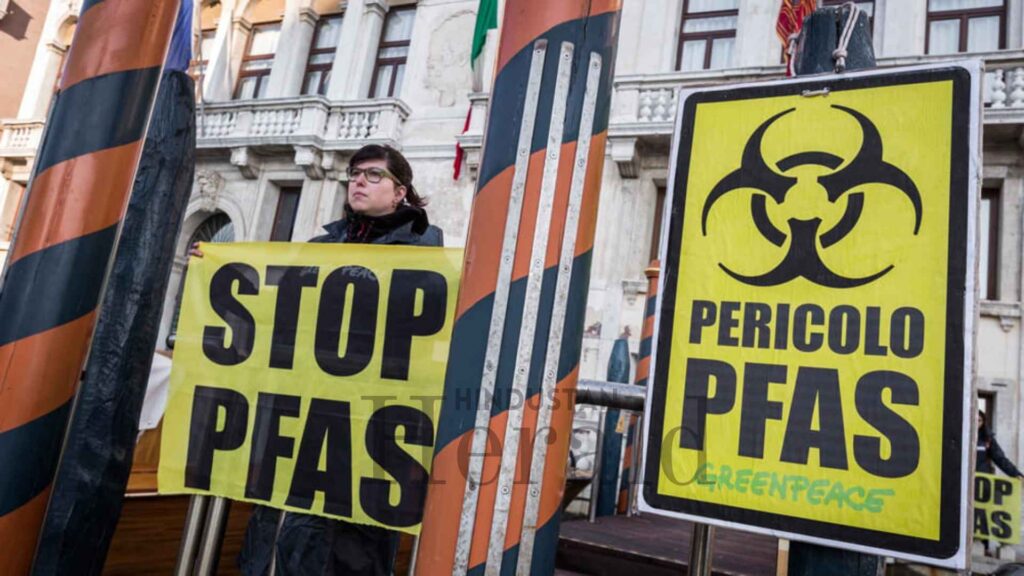
Individual residents who joined the case as civil parties are expected to receive compensation generally between €15,000 and €20,000, depending on their situation. No one involved pretends that money fixes the damage. Medical tests, lingering health fears, and the feeling of having been misled do not disappear with a payout.
But for many, the recognition matters. The harm has been named. Responsibility has been assigned.
Grassroots groups like Mamme No PFAS, formed by mothers in the affected zone, have described the ruling as vindication after years of being dismissed or told to wait for more data. Still, cleanup is far from over. PFAS remediation is slow, expensive, and technically complex. Some contamination cannot be fully reversed.
A Warning That Travels
The Vicenza case has not stayed within Italy’s borders. Across Europe, policymakers are now debating stricter limits on PFAS use, with regulators openly citing the Veneto disaster as evidence of what happens when oversight fails. At the same time, investigative reporting has shown how chemical production does not vanish. It moves.

An investigation by The Guardian earlier this year reported that equipment and technical expertise from the shuttered Miteni plant had been acquired by a company in India, where PFAS production reportedly resumed in Maharashtra. Environmental groups warned that without strong safeguards, communities elsewhere could face the same slow unfolding crisis.
For India, the implications are uncomfortable. Industrial growth and environmental protection are often in tension. The Veneto experience shows what that tension can cost when transparency is sacrificed.
Why This Case Will Not Fade
Environmental crimes rarely feel urgent at first. They do not explode. They accumulate. By the time the damage is undeniable, the window for prevention has closed.
What sets the Miteni case apart is the court’s insistence that long-term pollution, when paired with knowledge and silence, can rise to the level of a criminal act. For now, appeals will move through the system. Monitoring programs will continue. Families will keep testing their water, their blood, their patience.
But something fundamental has shifted. In Veneto, the story is no longer just about chemicals in the ground. It is about what happens when a company knows, says nothing, and lets the consequences spread outward for years. That lesson will outlast the verdict.
Stay ahead with Hindustan Herald — bringing you trusted news, sharp analysis, and stories that matter across Politics, Business, Technology, Sports, Entertainment, Lifestyle, and more.
Connect with us on Facebook, Instagram, X (Twitter), LinkedIn, YouTube, and join our Telegram community @hindustanherald for real-time updates.

Specializes in South Asian geopolitics and global diplomacy, bringing in-depth analysis on international relations.
- Rajiv Menon

- Rajiv Menon
- Rajiv Menon
- Rajiv Menon





Covers Indian politics, governance, and policy developments with over a decade of experience in political reporting.
- Ananya Sharma
- Ananya Sharma
- Ananya Sharma
- Ananya Sharma




 Ananya Sharma