
 By Ananya Sharma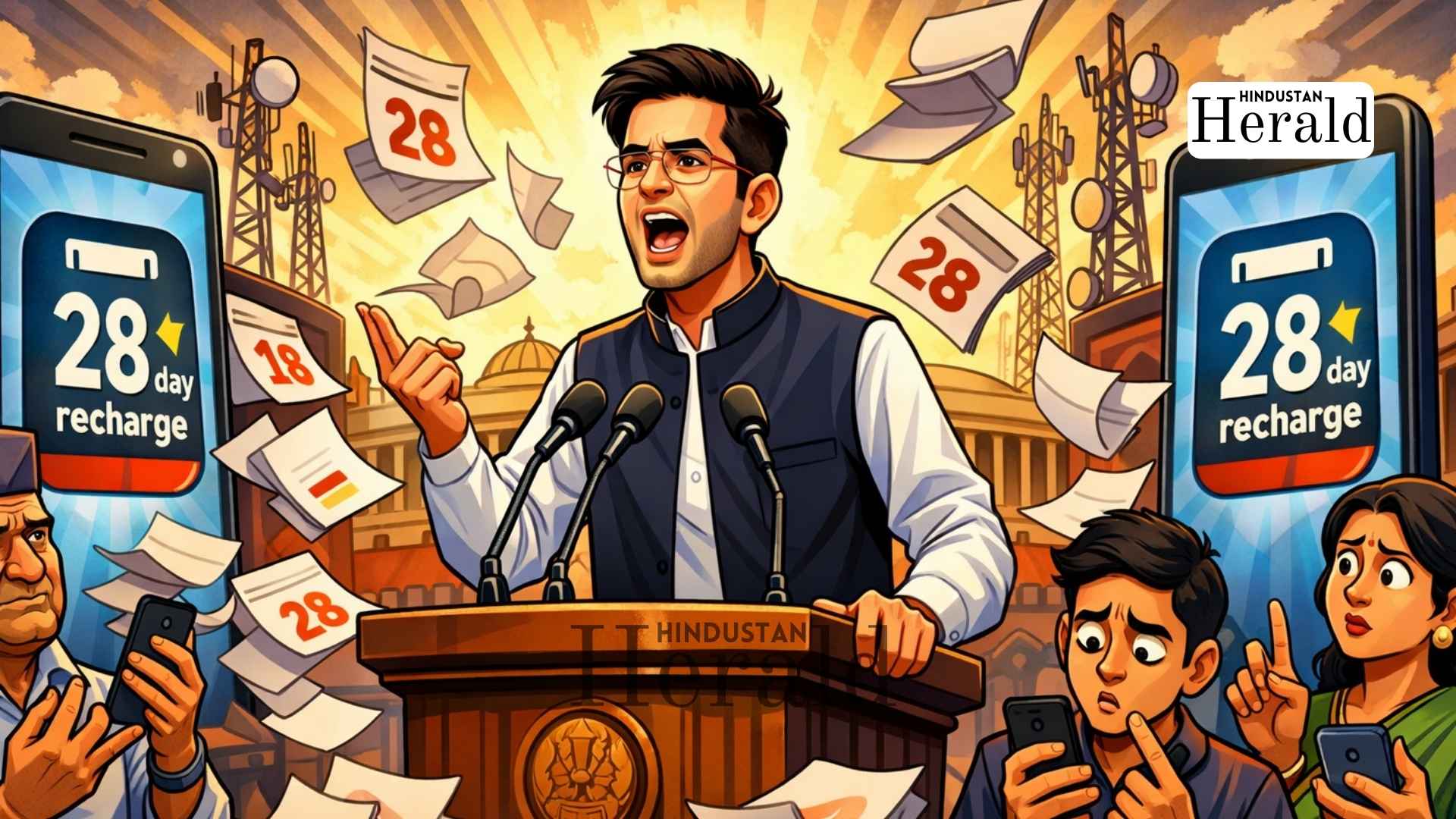
New Delhi, March 11: Let’s start with the math, because the math is where it gets uncomfortable.
A month has 30 days. Sometimes 31. February has 28 days, occasionally 29. Every schoolchild knows this. Every phone company also knows this, which is precisely why their “monthly” prepaid plans run for exactly 28 days and not a day more. The result, if you care to work it out on the back of a grocery receipt, is that you end up recharging 13 times in a 12-month year. Every single year. Quietly. Without anyone announcing it.

Raghav Chadha announced it on Wednesday, in the Rajya Sabha, and the reaction suggested that plenty of people had simply never sat down to count.
He Called It a Scam. He Wasn’t Wrong.
The Aam Aadmi Party MP from Punjab has built a reputation for picking consumer battles that look like niche grievances until he explains them, at which point they don’t look niche at all. Airline delays. Food adulteration. Wage stagnation. Wednesday’s target was the Indian telecom industry, specifically what he described, without apparent hesitation, as the systematic exploitation of 125 crore prepaid mobile subscribers, nearly 90 per cent of India’s total mobile user base.
The 28-day billing cycle was the opening charge. By framing a 28-day plan as “monthly,” operators extract a 13th payment each year from subscribers who reasonably believe they are paying month to month. For someone on a Rs 300 plan, that is an extra Rs 300 annually, taken without disclosure, without negotiation, and without the faintest possibility of refusal because every major operator does the same thing. Reliance Jio, Airtel, Vi, and the entire industry follow the same convention. When the whole market moves in lockstep, the subscriber has nowhere to go.
Chadha’s demand here was straightforward: mandate that a monthly plan actually covers a calendar month. Thirty days, minimum. It is not a radical ask. It is the kind of thing that should have been obvious from the beginning.
The Part That Actually Cuts Deeper
The 28-day argument was sharp. The second part of his speech was sharper.
Think about what happens the moment your prepaid balance runs out or your validity lapses. In most cases, both outgoing and incoming services go dark simultaneously. You cannot call out. Fine, that makes commercial sense you have no credit. But you also cannot receive calls. No incoming SMS. No bank OTP. No hospital appointment alert. No message from your employer telling you whether to come in tomorrow. Nothing.
Chadha stood before the Upper House and said, plainly, that this is wrong. Not inconvenient. Wrong.
The argument he made is one that becomes more urgent with every passing year of India’s digital expansion. A mobile number in 2026 is not a communication tool in the way a landline was in 1995. It is a digital identity. It is the key that unlocks your bank account, processes your UPI payment, authenticates your Aadhaar, and connects you to every welfare scheme the government has spent years building digital pipelines for. The moment incoming services are blocked on a lapsed prepaid number, a subscriber is not just unable to chat with a friend. They are functionally expelled from the digital economy.
That consequence lands differently depending on where you sit. For someone in a salaried job with a credit card and a broadband connection at home, a lapsed recharge is an irritant solved in three minutes. For a daily wage worker waiting on a call about tomorrow’s job, or a patient in a government hospital queue waiting for a doctor’s callback, or a migrant worker whose family has no other way to reach them in an emergency, it is something considerably worse.
This is the part of Chadha’s speech that should travel further than the parliamentary record.
What He Actually Asked For
Three specific demands, placed on record before the House.
First: incoming calls and SMS must remain active for at least one year after the last recharge. Second: mobile numbers should not be permanently deactivated for at least three years after the last activity. Third: operators must offer a low-cost, incoming-only plan, something stripped down to the bare minimum for users who only need to receive essential alerts and calls.
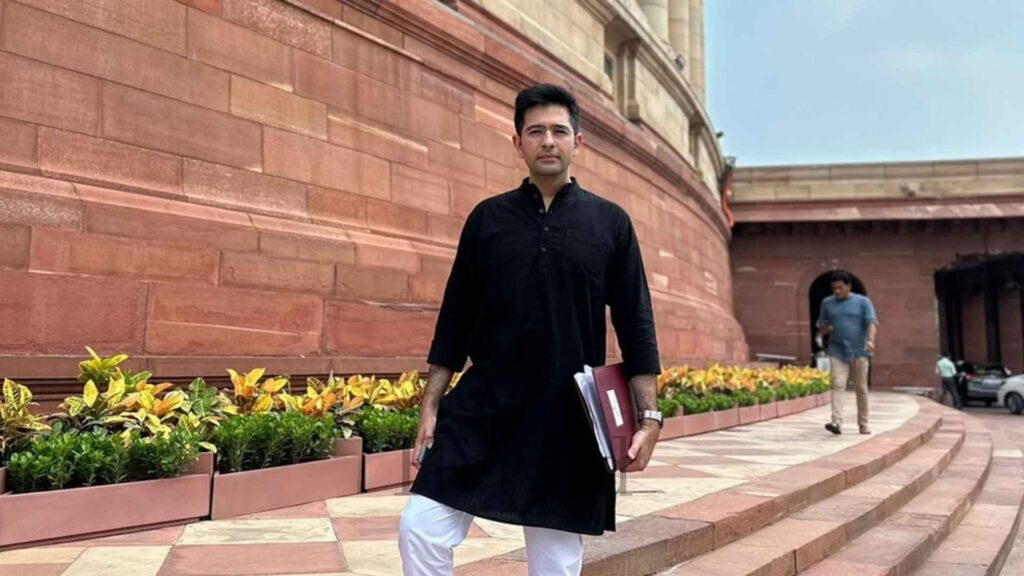
The third proposal carries more weight than it might initially appear. The logic maps cleanly onto what Jan Dhan accounts did for banking access: a zero-frills entry point that keeps the most economically exposed people inside the system rather than forcing them out of it because they cannot afford a full-featured product. An incoming-only plan would cost operators very little to provide. It would mean everything to the users who need it.
The deactivation window matters too, for reasons that go beyond sentimentality about keeping an old number. When a telecom operator recycles a dormant number and reassigns it to a new subscriber, the original user’s digital identity attached to that number across banks, insurance databases, Aadhaar records, and government portals does not disappear. It drifts. The consequences range from misdirected OTPs to genuine identity confusion in financial systems. Three years of protection before permanent deactivation is not excessive. It is basic hygiene for a country that has tied so much of its governance infrastructure to the mobile number.
A Market With Nowhere to Turn
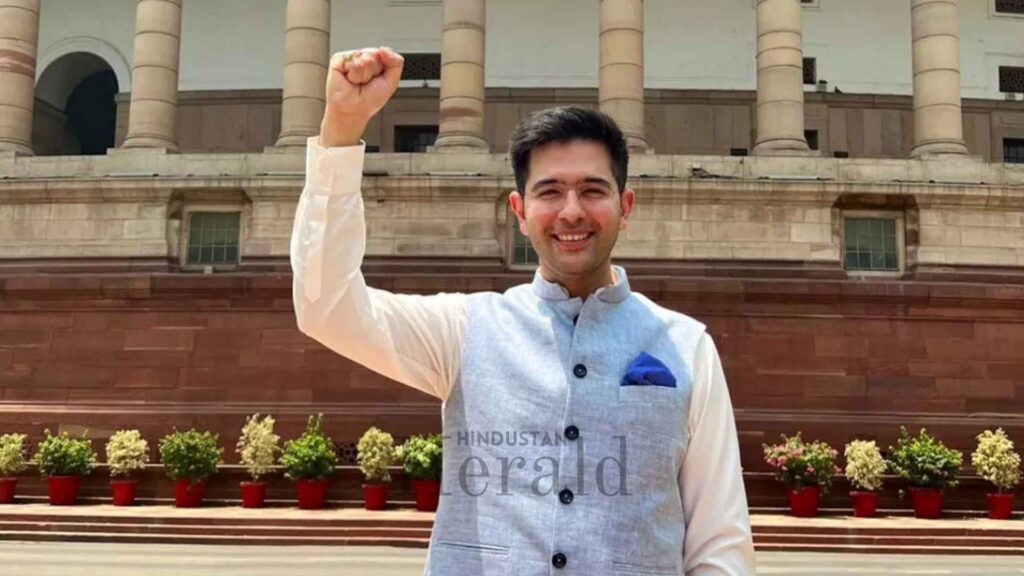
Chadha used the word “monopolistic” during his address, which is technically a stretch for what is, in form, a duopoly. That said, when two players control the overwhelming majority of a market and both follow identical pricing conventions, the subscriber’s practical experience of monopoly is accurate enough. There is no operator offering genuine 30-day plans. There is no competitor whose incoming services stay active through a grace period. The market has, on these specific questions, moved as a single block.
That alignment is not accidental. The 28-day billing cycle has persisted for years, across multiple rounds of regulatory review, because it quietly and reliably generates additional revenue without appearing, on any individual bill, to be doing anything unusual. It takes a Rajya Sabha speech, or a viral social media post, to make the arithmetic visible enough to provoke a reaction.
After leaving the chamber, Chadha did exactly that he took the numbers to social media, where the 13-recharge calculation spread quickly among users who recognised, possibly for the first time, that the calendar discrepancy they had vaguely noticed was not a coincidence.
Whether Any of This Changes Anything
The Telecom Regulatory Authority of India has the authority to act on every one of the reforms Chadha proposed. It has done so before, on other issues, when political and public pressure built sufficiently. The regulator has also, on other occasions, moved with extraordinary patience on matters that directly touched the revenue models of the large operators it oversees.
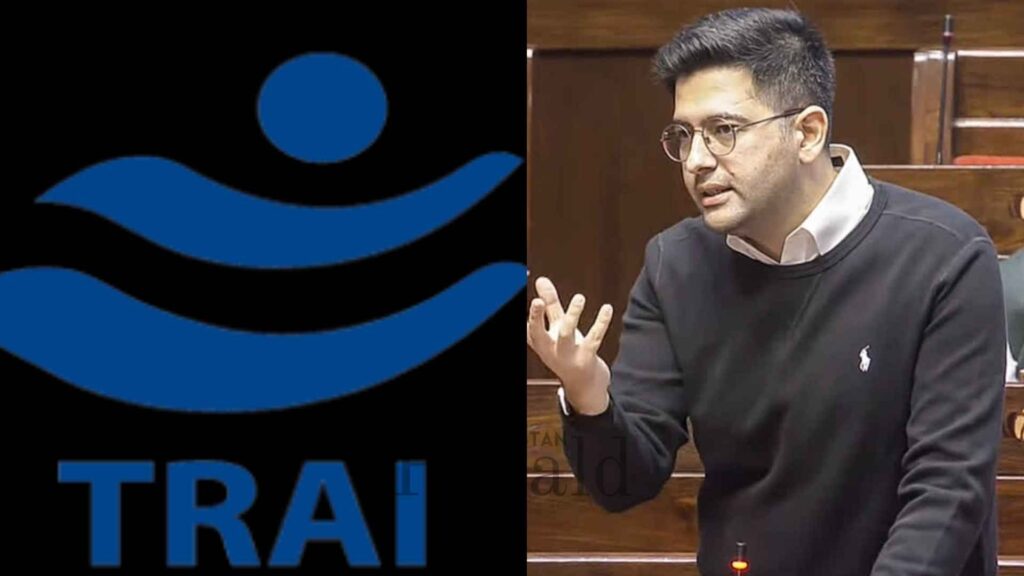
There is no commitment from the government bench on the record. No timeline. No indication that TRAI has been directed to examine the incoming services question or the billing cycle convention. Wednesday’s speech is, for now, a parliamentary intervention, which means it is documented, it is public, and it can be cited in future proceedings, but it is not yet policy.
Still, some things shift before a regulation is written. The 13-recharge calculation is now out in public, clearly stated, in language anyone can check on their own phone. The case for an incoming-only plan has been made in Parliament by an elected representative on behalf of 125 crore subscribers who were not present to speak for themselves.
That is nothing. It is rarely enough on its own. But as starting points go, it is at least an honest one.
Stay ahead with Hindustan Herald — bringing you trusted news, sharp analysis, and stories that matter across Politics, Business, Technology, Sports, Entertainment, Lifestyle, and more.
Connect with us on Facebook, Instagram, X (Twitter), LinkedIn, YouTube, and join our Telegram community @hindustanherald for real-time updates.

Covers Indian politics, governance, and policy developments with over a decade of experience in political reporting.
- Ananya Sharma

- Ananya Sharma
- Ananya Sharma
- Ananya Sharma