
 By Rajiv Menon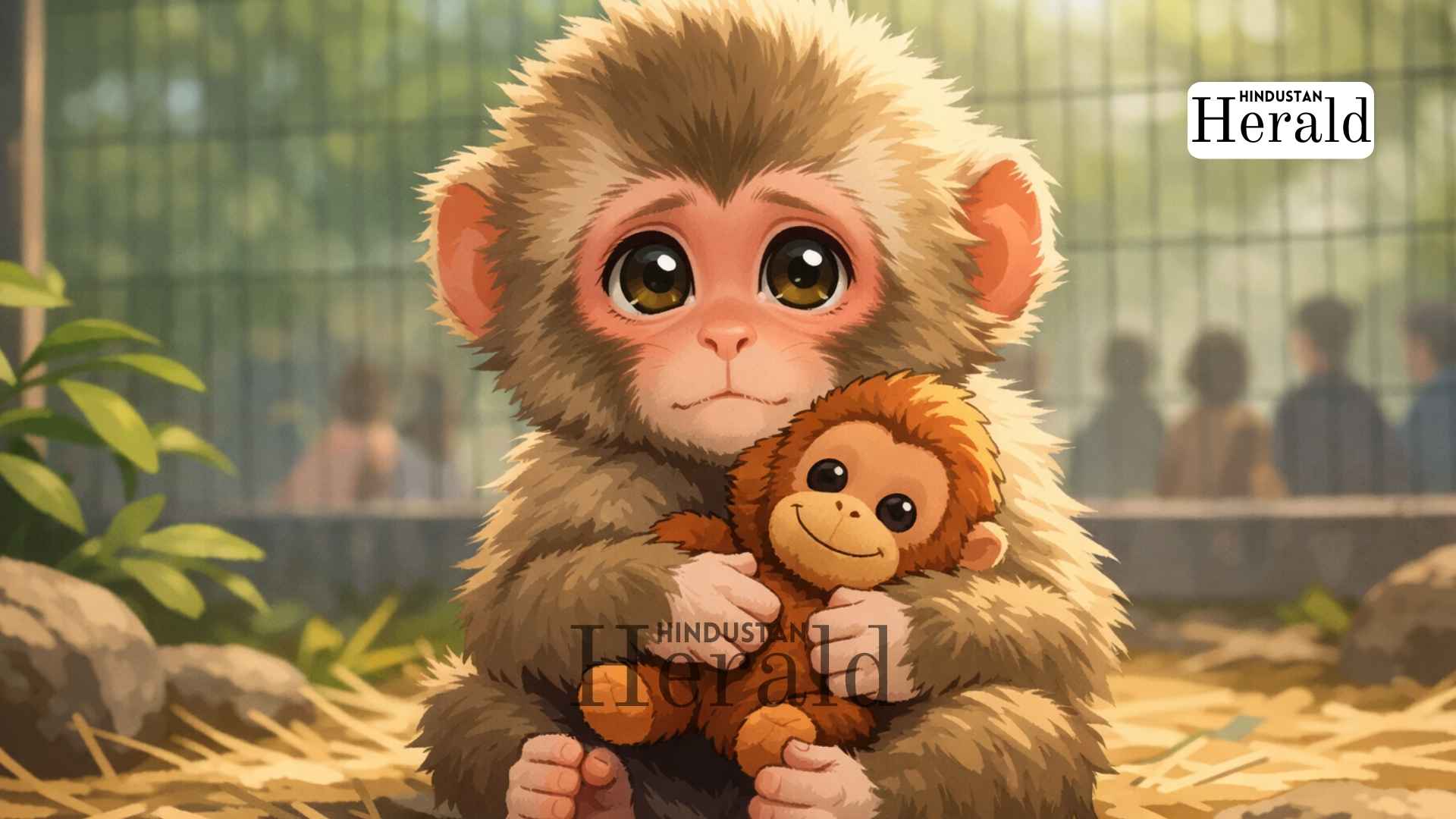
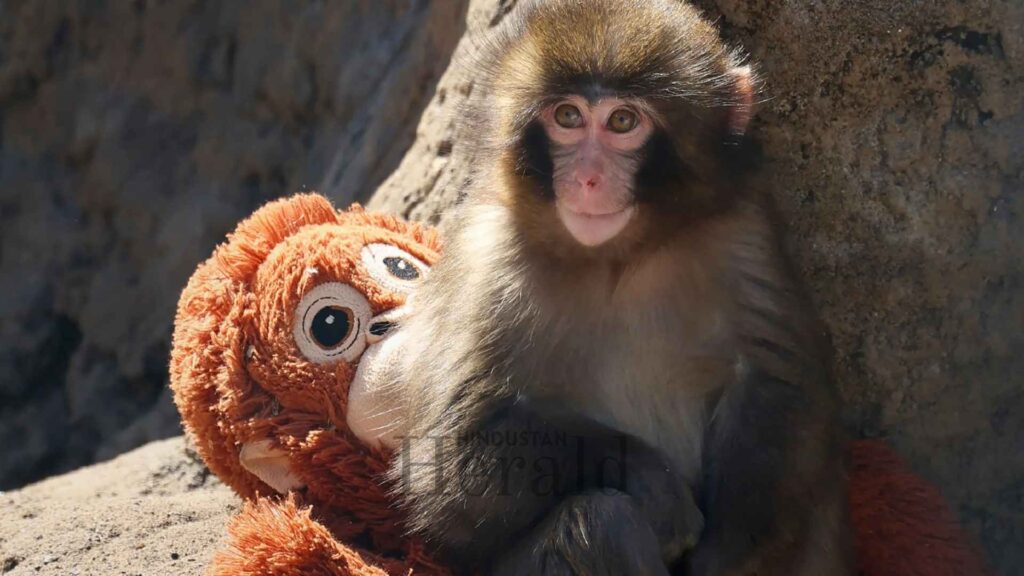
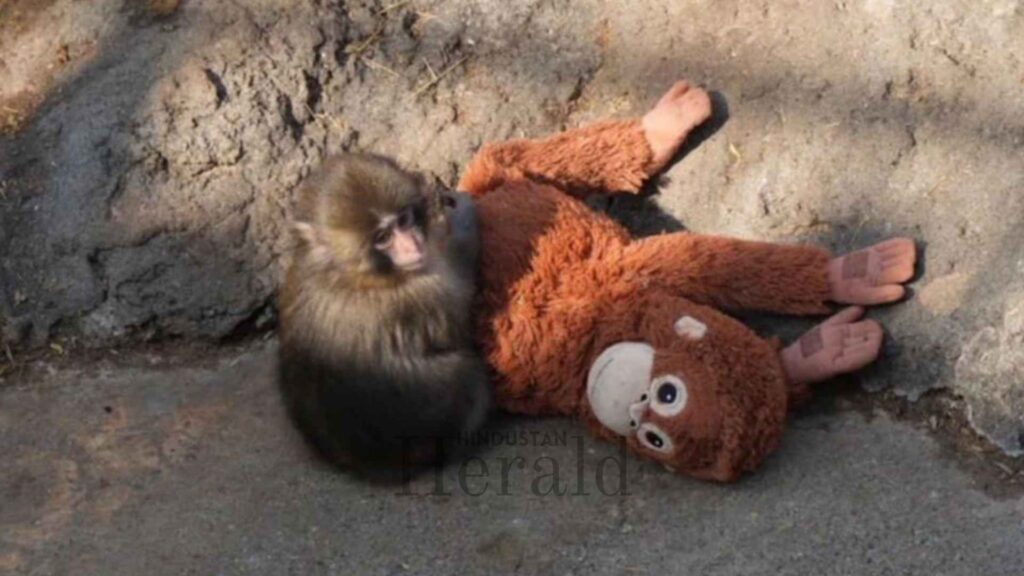
Tokyo, February 21: By mid-morning on Friday, the line outside Ichikawa City Zoo had begun to snake past the ticket counters and into the parking lot. Parents held up phones. Teenagers whispered about the videos they had seen the night before. And somewhere inside, clinging as always to a slightly worn stuffed orangutan, a six-month-old Japanese macaque named Punch chewed on a twig, unaware he had become a global symbol of resilience.
There were no dramatic new milestones to report on February 21. No sudden reconciliation with his biological mother. No sweeping change in the troop’s hierarchy. But the crowds kept coming.
The story, by now, is familiar. According to earlier reporting by India Today, Punch was rejected at birth by his mother. In macaque society, that kind of rejection can shape an infant’s entire future. The first few days matter enormously. Warmth, grooming, constant physical contact. Without it, a baby monkey can drift to the margins of troop life.
Zoo staff stepped in. They ensured he was fed and safe, but crucially, he remained within the troop’s enclosure. At some point, a stuffed orangutan toy was introduced. What happened next was not orchestrated. Punch adopted it.
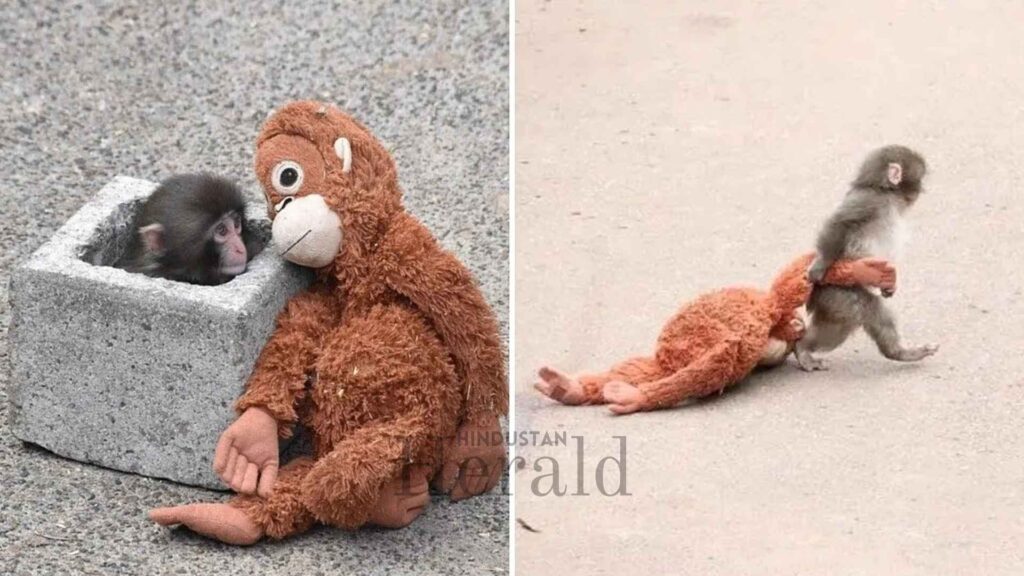
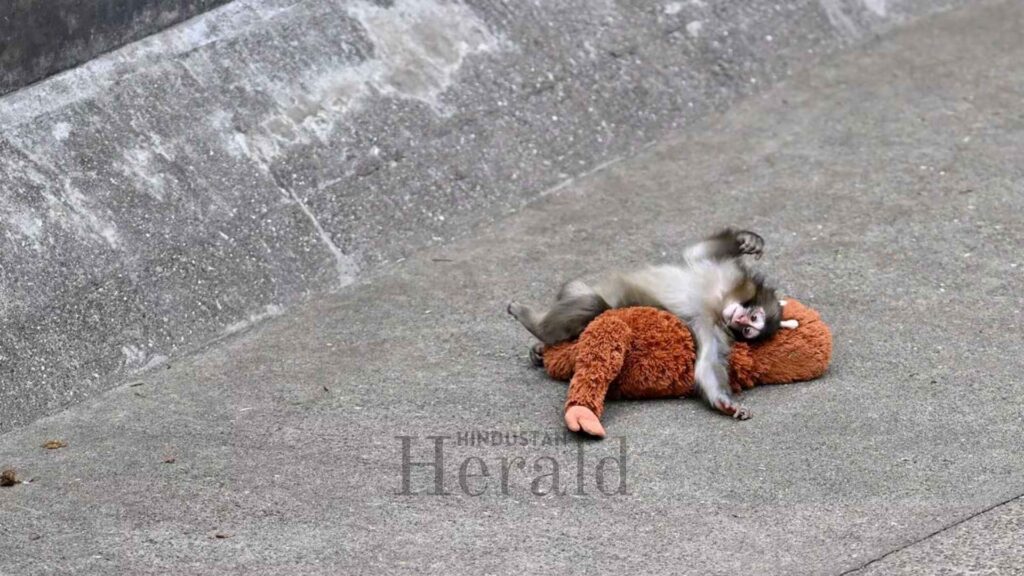
He drags it everywhere. He clutches it during moments of uncertainty. In some clips, he seems to bury his face into its fabric. The toy became more than an enrichment. It became a stand-in for what he lost.
When videos of that image began circulating online last week, they spread quickly. People projected themselves into the story. Abandonment, comfort, persistence. The emotional shorthand was immediate.
By February 21, international coverage had shifted from the initial heartbreak to something more complex. As reported by ABC News, fans were now flocking to the zoo in large numbers, some travelling significant distances just to see Punch in person. Staff had to manage foot traffic while maintaining a calm environment inside the enclosure.
Inside that enclosure, life has not stopped to accommodate virality.
Earlier this week, according to NDTV, Punch was seen being groomed by adult macaques. To the untrained eye, grooming may look like idle picking at fur. In a primate society, it is acceptance. It is a signal that an individual belongs, even if tentatively.
There have also been awkward moments. One widely shared clip showed an adult macaque dragging Punch away after he approached another baby. The video alarmed viewers unfamiliar with troop dynamics. Social media did what it does best, amplifying a few seconds into a narrative of danger.
Zoo officials clarified that the behaviour was protective. A mother guarding her own infant. No injuries. No sustained aggression. In macaque society, correction can be blunt but brief. The line between discipline and hostility is visible to those who study it closely.
Still, it is easy to forget that Punch is not a cartoon protagonist. He is a young primate navigating a rigid hierarchy without the natural shield of maternal status. Japanese macaques operate within matrilineal systems. Rank is inherited. Protection often flows through maternal lines. Without that anchor, an infant must negotiate space more carefully.
What appears to be happening now is gradual integration. He plays with peers. He receives mild scoldings. He is learning boundaries.
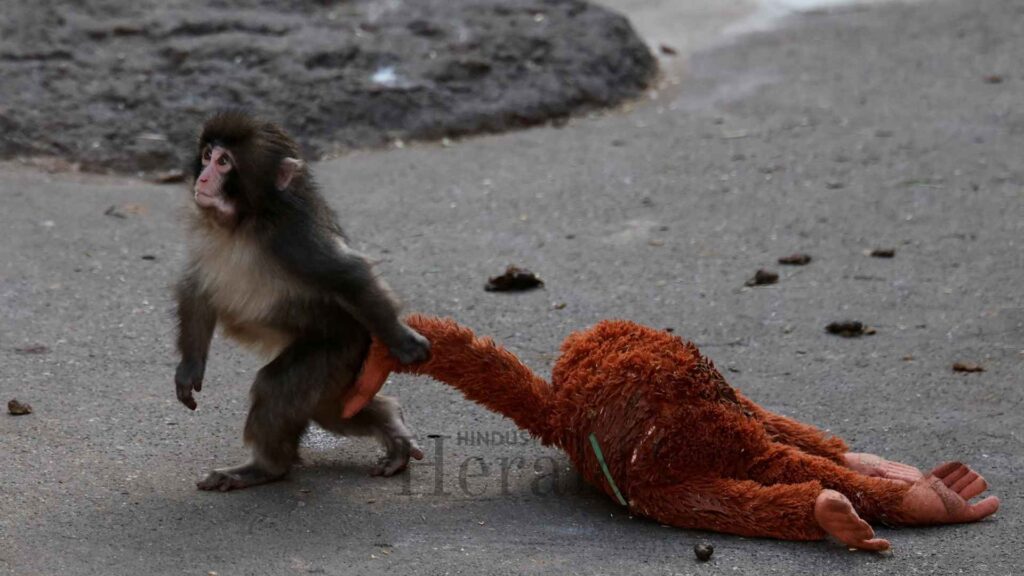
And through it all, he keeps hold of the toy.
There is something undeniably human about that image, though experts caution against excessive anthropomorphism. Surrogate objects are not rare in captive settings, especially when maternal bonds are disrupted. Comfort can be tactile. Familiar texture. Predictable presence.
Whether Punch will eventually outgrow the toy remains to be seen. Zoo officials have not indicated any immediate plans to remove it. For now, it appears to serve its purpose.
What has changed most dramatically is not Punch’s behaviour but the public response.
As Euronews reported, visitors are arriving in waves. Some speak of being moved by his persistence. Others say they wanted to see for themselves whether the online portrayal matches reality. Children press against viewing barriers. Adults narrate the scene softly, as though explaining a parable.
There is, of course, a double edge to that attention.
Viral fame can benefit institutions. Increased ticket sales, renewed interest, and donations. But it also brings scrutiny. Are enclosures adequate? Is stress being monitored? Are interactions truly safe? A single clip, taken out of context, can undo months of careful management.
Zoo authorities have responded with measured updates. They describe Punch as showing “mental strength” in adapting to troop life. They emphasize normalcy where viewers see drama. They ask supporters to allow time for natural processes to unfold.
Time is the operative word.
Integration into a primate troop is not a cinematic arc. There is no soundtrack swelling in the background. Progress comes in increments. A grooming session here. A shared play session there. A reduction in avoidance behaviours.
For those who follow wildlife behaviour, the recent signs are cautiously encouraging. Acceptance in a matrilineal society without maternal backing is not impossible. It simply requires negotiation, observation, and often a degree of tolerance from dominant females.
That tolerance appears to be emerging.
But the internet does not wait for slow stories. It prefers crescendos. Redemption. Reunion. Clear victories.
Punch’s reality is quieter.
On Friday, visitors watched as he gnawed on a stick, a toy tucked under one arm. An adult female passed by without incident. A juvenile paused, then engaged him briefly in play. No one intervened. No one fought. The scene was ordinary.
And perhaps that is the real development.
The absence of crisis.
There were no confirmed reports on February 21 of new aggression or setbacks. Nor were there dramatic breakthroughs. The zoo continues to monitor interactions closely. Staff remain attentive to subtle shifts in behaviour.
For now, Punch’s story sits in that in-between space. Not tragic. Not triumphant. Ongoing.
In a week crowded with geopolitical tension and economic headlines, the image of a small macaque clutching a plush toy has unexpectedly cut through the noise. It reminds people, perhaps, of vulnerability that does not harden into defeat.
Whether the attention sustains or fades will depend on forces far removed from the enclosure in Chiba Prefecture. Algorithms move on. Audiences shift.
Punch, however, will still wake up tomorrow within the same social order, negotiating his place one interaction at a time.
If there is a lesson here, it may not be about viral fame at all. It may be about patience. About allowing a young animal to grow into its world without scripting the outcome.
For now, the crowd outside Ichikawa City Zoo waits. Inside, Punch holds on. Not to the spotlight, but to a faded orange toy that has become, against all expectations, a small symbol of endurance.
Stay ahead with Hindustan Herald — bringing you trusted news, sharp analysis, and stories that matter across Politics, Business, Technology, Sports, Entertainment, Lifestyle, and more.
Connect with us on Facebook, Instagram, X (Twitter), LinkedIn, YouTube, and join our Telegram community @hindustanherald for real-time updates.

Specializes in South Asian geopolitics and global diplomacy, bringing in-depth analysis on international relations.
- Rajiv Menon

- Rajiv Menon
- Rajiv Menon
- Rajiv Menon




 Sandeep Verma and Rajiv Menon