
 By Sandeep Verma and Ananya Sharma
Bengaluru, November 15: Word of Saalumarada Thimmakka’s death moved across Karnataka almost in waves, first through small WhatsApp groups in Ramanagara, then through local reporters, and only after that through major outlets. The silence that followed felt heavier than usual. People knew she had been unwell, but there was still a sense that she might somehow keep going, the way her trees kept going no matter how hard the summers hit them.
Early Years That Shaped A Reluctant Environmental Icon
She entered the world in 1911 in Gubbi taluk, long before Tumakuru district looked anything like it does today. Most of what we know about her childhood comes from older interviews where she recalled working from a young age. Her family didn’t have much, and the idea of formal schooling never became a real possibility.
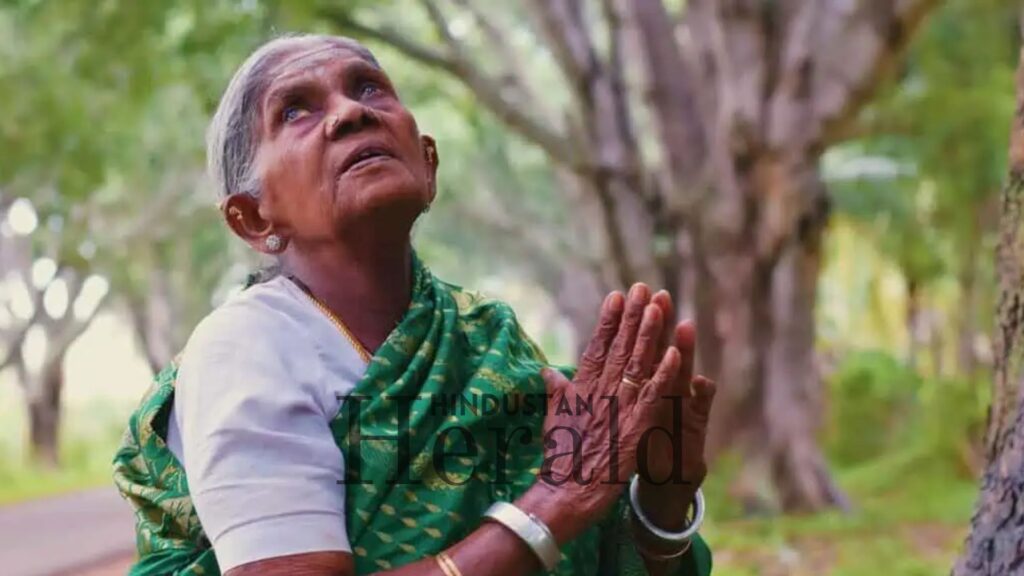
Her marriage to Chikkayya didn’t erase those struggles. The couple spent years dealing with the pain of not having children. In rural Karnataka of that era, the judgment directed at women in such situations could be ruthless. She carried that weight quietly. Friends in the area would later say she rarely spoke about it, but they understood how much it affected her.
What followed wasn’t a planned decision or some grand environmental philosophy. It was a simple act that felt natural to the two of them: planting saplings along the road between Hulikal and Kudur. They began with a few banyan saplings. Then a few more. Then a stretch long enough that neighbours started to notice. The News Minute reports that the final count reached 385 banyan trees along roughly 4.5 km, a detail that sounds neat on paper but hides years of backbreaking work.
They fetched water in metal containers that bruised the hands. They walked when buses were rare. They guarded the saplings from grazing cattle. No one clapped. No one congratulated them. No one even asked why they were doing it. That was the rhythm of their life.
Her Final Hours And The Shock That Followed
According to NDTV, Thimmakka passed away in Bengaluru earlier today after age-related complications. Those close to her had been aware of her health issues for months, but the confirmation still cut sharply. For a woman who outlived her husband, most of her friends, and practically an entire generation, the end still felt abrupt.
Chief Minister Siddaramaiah released a statement describing her contributions as “immortal”. Normally, such a word might feel too heavy, but here it matches the facts. Trees that she planted decades ago continue to shade travellers on hot afternoons. They’ll likely be around for another century, long after every person who knew her is gone.
Forest Minister Eshwar B. Khandre called her a symbol of Karnataka’s pride. Those who grew up near the Hulikal–Kudur stretch say she treated her saplings with the same caution and tenderness that parents reserve for newborns. One misstep in the early years can kill a young banyan. She knew that. She tended to them with the kind of patience that most people now reserve only for family.
Recognition Arrived Late, But It Did Arrive
When she was awarded the Padma Shri in 2019, she was already close to a century old. The honour didn’t suddenly change her status at home, but it brought national attention. School textbooks added her name. Newsrooms began revisiting earlier interviews. Environmental organisations invoked her story in workshops and public campaigns.
The Times of India highlighted how her approach became a reference point for grassroots environmentalism in Karnataka. Officials began bringing up her name in meetings on afforestation. Several towns named a tree park after her. It wasn’t tokenism; it was acknowledgment of someone who understood environmental care long before governments wrote policies about it.
Another Times of India piece pointed out the emotional spine of her journey. Her environmental devotion grew out of personal grief. She channelled a quiet, lifelong ache into nurturing something that couldn’t speak back but could still thrive under her care. That’s the part of her story people rarely forget.
Karnataka’s Environmental Debate Will Feel Different Now
The state is in the middle of messy arguments over shrinking tree cover, especially in Bengaluru, where road expansions and public works have taken out hundreds of old trees. Residents protest. Authorities defend. The cycle repeats.
In the middle of this, Thimmakka’s approach stood as a benchmark that embarrassed everyone a little. She didn’t have projects or budgets or technical teams. She had a routine: plant, water, protect. Repeat. The gap between her method and current plantation drives, many of which lose most saplings within a year, is uncomfortable.
Her passing might force a more honest conversation inside the government. When public figures reference her legacy in speeches, they can now expect tougher questions about whether their actions reflect any of her principles.
The National Picture She Quietly Influenced
Her influence spread far beyond Karnataka even if she never intended it to. She showed that environmentalism doesn’t always start with data, reports, or climate summits. Sometimes it begins with a single person deciding that a barren stretch of road deserves shade.
She also reminded people that lived environmental knowledge is often sharper than institutional knowledge. She understood soil, moisture, and sapling behaviour without needing scientific terminology. That experience is disappearing in many rural belts as younger generations move to cities.
What stays with people today is the simplicity of her routine. She didn’t lecture. She didn’t frame her work as activism. She just kept showing up.
What Remains After The Tributes Fade
Those 385 banyan trees still stand. Their branches cover the highway in a way that makes the road look older, calmer, and a little protected from the chaos of modern Karnataka. Drivers often pass under them without knowing who planted them, which might be the purest tribute of all. Her work helps people who may never hear her name.
The grief today isn’t theatrical. It’s quieter. Karnataka didn’t just lose a Padma Shri awardee. It lost someone whose life offered a blueprint for care without expecting applause. That kind of example is rare now.
Stay ahead with Hindustan Herald — bringing you trusted news, sharp analysis, and stories that matter across Politics, Business, Technology, Sports, Entertainment, Lifestyle, and more.
Connect with us on Facebook, Instagram, X (Twitter), LinkedIn, YouTube, and join our Telegram community @hindustanherald for real-time updates.

Regional journalist bringing grassroots perspectives and stories from towns and cities across India.
- Sandeep Verma

- Sandeep Verma
- Sandeep Verma
- Sandeep Verma





Covers Indian politics, governance, and policy developments with over a decade of experience in political reporting.
- Ananya Sharma
- Ananya Sharma
- Ananya Sharma
- Ananya Sharma




 Ananya Sharma